Restaurant Equipment Breakdown Insurance: Safeguarding Your Kitchen Backups

Your kitchen equipment is the backbone of your restaurant’s operations. When a refrigerator, fryer, or oven fails unexpectedly, the financial damage extends far beyond the repair bill-lost revenue from closed service windows can devastate your bottom line.

Restaurant equipment breakdown insurance protects you from these costly surprises. At Briggs Agency, Inc., we help restaurant owners understand how this coverage works and why it matters for your business.

What Equipment Breakdown Insurance Actually Covers

Equipment breakdown insurance protects your restaurant from the sudden, internal failure of mechanical and electrical systems that standard property policies ignore. When your walk-in freezer’s compressor fails, a power surge fries your POS system, or your commercial oven’s heating element burns out, this coverage pays for repairs, replacement costs, and the income you lose while equipment sits idle. Your standard policy covers external threats like fire or theft, but it leaves you exposed when equipment fails from the inside. Equipment breakdown insurance fills that gap by covering the seven most common kitchen failures: ovens and ranges, dishwashers, grills and griddles, mixers, fryers, food processors, and steam tables. It also protects electrical systems including transformers and panels, refrigeration units like walk-ins and ice machines, boilers and pressure equipment, HVAC systems, and even computers and security gear. The coverage includes not just repair or replacement costs but also spoilage losses when refrigeration fails and perishable inventory spoils, plus lost business income during downtime.

A compact list highlighting the seven most common restaurant kitchen equipment failures covered by equipment breakdown insurance.

Why Spoilage Coverage Matters More Than You Think

Spoilage protection separates adequate coverage from inadequate coverage. A single refrigeration failure costs thousands in spoiled inventory within hours-far more than the repair bill itself. If your walk-in cooler breaks on a Friday night, you replace hundreds of dollars in meat, produce, and prepared foods on top of paying a technician. Equipment breakdown insurance covers these replacement costs directly, preventing one equipment failure from wiping out your weekly food cost margin. This protection proves especially valuable for restaurants that stock high-value proteins or specialty ingredients.

The Real Cost of Downtime Without Protection

The financial impact of equipment failure extends beyond spoilage and repair bills. When your fryer stops working during lunch service, you lose the revenue from every order you cannot fulfill. When your dishwasher fails, you either close for service or manually wash dishes and slow your entire operation to a crawl. Equipment breakdown insurance reimburses this lost income, helping you stay afloat during unexpected closures. Without it, a three-day equipment failure forces you to dip into operating capital or take on debt just to cover payroll and rent while repairs happen.

Coverage That Protects Your Entire Kitchen Ecosystem

Equipment breakdown insurance covers far more than just cooking equipment. Your electrical systems (transformers, panels, power cables) receive protection, as do communications and security systems (computers, POS terminals, CCTV, fire alarms). Mechanical systems like water pumps, ventilation, motors, and specialized production equipment fall under coverage. Boilers and pressure equipment (heating units, hot water systems, cookers, sterilizers) are typically included, along with refrigeration systems that keep your inventory safe. This comprehensive approach means a single policy protects the interconnected systems your restaurant depends on every single day.

What Separates Equipment Breakdown from Standard Property Insurance

Standard commercial property insurance covers external perils-fire, theft, weather damage-but explicitly excludes internal mechanical and electrical failures. Equipment breakdown insurance addresses the opposite risk: it covers sudden, accidental internal failures while excluding wear and tear or gradual faults. The two policies complement each other (not compete), creating a complete protection strategy. Most restaurant owners discover this gap only after an equipment failure leaves them unprotected, which is why understanding the distinction matters before you need to file a claim. The next step involves assessing your specific equipment inventory and determining what coverage limits actually protect your operation.

Why Restaurant Owners Need Equipment Breakdown Coverage

The True Cost of Your Kitchen Equipment

Commercial kitchen equipment represents one of your largest capital investments, and unexpected failure creates severe financial consequences. A walk-in freezer compressor costs $3,000 to $8,000 to replace, but the spoiled inventory inside costs far more. A commercial oven replacement runs $5,000 to $15,000 depending on capacity. A commercial kitchen equipment replacement costs POS system overhaul hits $1,000 to $5,000.

A compact list summarizing typical replacement cost ranges for critical restaurant equipment. - Restaurant equipment breakdown insurance

These aren’t theoretical numbers-they’re the actual replacement costs restaurant owners face when equipment fails. Standard property insurance ignores these internal failures entirely, leaving you personally responsible for both the replacement equipment and the income lost while your kitchen sits idle.

How Equipment Breakdown Insurance Protects Your Bottom Line

Equipment breakdown insurance fills this gap that standard policies leave open. The coverage pays for repair costs, replacement expenses, and the revenue you lose during downtime. Without it, a single equipment failure forces you to choose between closing temporarily and absorbing thousands in losses or staying open while operating at reduced capacity. One failed compressor or burned-out heating element can drain your cash reserves faster than you can recover.

The Hidden Financial Impact of Downtime

The financial impact of downtime extends far beyond the repair bill itself. The National Restaurant Association projects U.S. foodservice sales to exceed $1 trillion in 2025, which means downtime affects not just your daily revenue but your ability to meet customer expectations and maintain your reputation. When your dishwasher fails during dinner service, you face two bad options: close for service and lose that night’s revenue, or manually wash dishes and slow your entire operation while customers wait longer for tables.

A three-day refrigeration failure forces you to discard hundreds of dollars in perishable inventory on top of paying for emergency repairs and losing the income from meals you couldn’t prepare. Equipment failures hit hardest during peak seasons when you cannot afford to close, yet that’s precisely when your equipment works hardest and fails most often. For restaurants operating on typical 3 to 5 percent profit margins, a single week of equipment downtime without protection eliminates an entire month’s profit.

Why Spoilage Coverage Separates Adequate Protection from Inadequate Protection

Equipment breakdown insurance reimburses lost income during repairs, covers spoilage costs directly, and pays for emergency labor charges-protecting your cash flow when you need it most. Spoilage protection alone justifies the coverage cost. A single refrigeration failure costs thousands in spoiled inventory within hours, far exceeding the repair bill. If your walk-in cooler breaks on a Friday night, you replace hundreds of dollars in meat, produce, and prepared foods on top of paying a technician. Equipment breakdown insurance covers these replacement costs directly, preventing one equipment failure from wiping out your weekly food cost margin.

Understanding what your kitchen equipment actually costs to replace and how long you could survive without that equipment reveals why this coverage matters. The next step involves assessing your specific equipment inventory and determining what coverage limits actually protect your operation.

How to Choose the Right Equipment Breakdown Policy

Inventory Your Equipment and Calculate Real Replacement Costs

Start with a complete inventory of your kitchen equipment and its replacement cost. Walk through your kitchen and list every piece of commercial equipment that would disrupt service if it failed: refrigerators, freezers, ovens, ranges, fryers, grills, dishwashers, ice machines, POS systems, HVAC units, boilers, and any specialized equipment specific to your cuisine. Contact your equipment suppliers or check recent invoices to determine actual replacement costs, not guesses. A commercial walk-in cooler runs $8,000 to $15,000 installed. A high-capacity commercial oven costs $5,000 to $12,000. A POS system overhaul hits $1,000 to $5,000. These specific numbers matter because your coverage limits must reflect what you would actually spend to replace failed equipment. Underestimating replacement costs leaves you exposed to gaps when you file a claim. Most restaurant owners discover this mistake too late, after equipment fails and they cannot replace it quickly because their coverage limits fall short of actual replacement expenses.

Set Coverage Limits That Match Your Equipment Value

Your coverage limits should equal your total equipment replacement value plus estimated spoilage losses. For a full-service restaurant with extensive cooking equipment, this typically ranges from $50,000 to $150,000 depending on kitchen size and equipment mix. Fast-casual restaurants with fewer fryers and griddles may need $30,000 to $75,000. The National Restaurant Association notes that bundling equipment breakdown coverage into a Business Owner’s Policy typically saves 20 to 30 percent compared to purchasing separate policies, and costs often start around $5 per month when added as an endorsement.

Percentage range showing typical savings when equipment breakdown coverage is bundled into a Business Owner's Policy. - Restaurant equipment breakdown insurance

Choose a Deductible That Fits Your Cash Flow

Your deductible directly affects your premium: a $1,000 deductible costs less than a $500 deductible, but forces you to absorb more of each claim. Choose a deductible you can comfortably pay from operating cash without straining your business. A higher deductible works well if your restaurant maintains strong cash reserves and can weather small repair costs. A lower deductible makes sense if equipment failures would strain your ability to pay out of pocket (for example, if your profit margins run thin or seasonal revenue fluctuates significantly).

Work with a Local Agent to Customize Your Protection

A local insurance agent can walk you through your specific equipment, help you calculate realistic replacement costs, and recommend coverage that matches your actual risk profile rather than generic industry averages. They compare multiple carriers to find the best combination of coverage, cost, and claims support for your restaurant’s unique equipment mix and operational needs. We at Briggs Agency, Inc. represent multiple top-rated carriers, which allows our experienced local agents to tailor policies that deliver competitive pricing and the right protection for your restaurant’s specific situation.

Final Thoughts

Equipment breakdown insurance protects your restaurant from financial devastation when mechanical or electrical failures strike. The coverage pays for repairs, replacement costs, spoilage losses, and lost income during downtime-gaps that standard property insurance simply does not address. For restaurants operating on thin profit margins, a single week without critical equipment can eliminate an entire month’s earnings, making restaurant equipment breakdown insurance a practical investment rather than an optional add-on.

Your next step is straightforward: inventory your kitchen equipment, calculate realistic replacement costs, and determine what coverage limits actually protect your operation. Choose a deductible that fits your cash flow situation, then connect with an insurance professional who understands restaurant operations and can compare multiple carriers to find competitive pricing and the right protection for your specific equipment mix. We at Briggs Agency, Inc. represent multiple top-rated carriers, which means we compare options rather than push a single solution.

Contact Briggs Agency, Inc. today to discuss how equipment breakdown coverage fits into your complete protection strategy. Our local agents are ready to walk you through your specific situation and help you avoid the financial devastation that equipment failures cause.

The information provided in this blog is for general informational purposes only and does not constitute legal, financial, or insurance advice. Coverage options, terms, and availability may vary. Please consult with a licensed professional for advice specific to your situation.
Artificial intelligence may have been used to generate text and images in some blog articles.

You Won’t Believe These Claims Were Actually Covered 

You Won’t Believe These Claims Were Actually Covered

Real stories, real lessons… and what they mean for YOUR coverage

Insurance can feel confusing… until something crazy happens and suddenly it matters a LOT

One of the biggest surprises for people? The kinds of claims that actually get covered. Some of them sound made up—but they’re very real, and they highlight just how important it is to have the right protection in place.

Let’s break down some unbelievable (but true-to-life) scenarios—and what you can learn from them 👇


🚗 1. The Runaway Shopping Cart Incident

What happened:
A shopper left their cart unattended in a parking lot. The wind picked up… and that cart rolled straight into someone’s car door

Was it covered?
👉 YES. The car owner’s auto insurance covered the damage under collision or comprehensive coverage (depending on the situation).

Lesson:
Even small, random accidents can turn into real claims. You don’t always need another driver involved for coverage to apply.


🐾 2. The “Friendly” Dog Bite

What happened:
A neighbor’s dog—normally super sweet—got startled and bit a visitor

Was it covered?
👉 YES. Many homeowners insurance policies include liability coverage for dog bites (depending on breed, history, and policy details).

Lesson:
Liability coverage isn’t just for major disasters—it protects you from everyday situations that can quickly get expensive.


🌳 3. The Neighbor’s Tree… On Your House

What happened:
A storm rolled through and knocked over your neighbor’s tree… right onto your roof

Was it covered?
👉 YES. Typically, your homeowners insurance covers damage to your home—even if the tree came from next door.

Lesson:
Insurance is designed to protect your property first, regardless of where the problem started.


🍷 4. Red Wine on White Carpet Disaster

What happened:
A guest accidentally spills red wine all over your brand-new carpet during a party

Was it covered?
👉 SOMETIMES. If it’s considered sudden and accidental damage, your policy may cover it—but not all policies do.

Lesson:
Not everything is automatically covered. The wording in your policy matters more than you think.


🚙 5. Your Friend Crashes Your Car

What happened:
You let a friend borrow your car… and they get into an accident

Was it covered?
👉 YES (in most cases). Auto insurance usually follows the car, not the driver.

Lesson:
If you lend your car, you’re also lending your insurance. Choose wisely


🔥 6. Kitchen Fire from Cooking Gone Wrong

What happened:
You step away from the stove for “just a minute” … and suddenly there’s a grease fire

Was it covered?
👉 YES. Most homeowners’ insurance policies cover accidental fire damage.

Lesson:
Even honest mistakes can lead to major damage—but insurance is there to help you recover.


💻 7. Cyber Scam or Online Fraud

What happened:
You click a suspicious link and unknowingly give away personal info

Was it covered?
👉 SOMETIMES. Some policies offer identity theft or cyber protection add-ons.

Lesson:
Modern risks require modern coverage. If you’re not asking about cyber protection—you might be missing it.


🧊 8. Frozen Pipes Flooding Your Home

What happened:
Temperatures drop in Northwest Indiana and your pipes freeze… then burst

Was it covered?
👉 YES (if you’ve taken reasonable precautions).

Lesson:
Maintenance matters. Insurance helps—but only if you’re doing your part too.


🤯 So… What’s the Big Takeaway?

Here’s the truth:
👉 Insurance covers more than you think…
👉 BUT it also doesn’t cover everything

The difference comes down to:

  • Your specific policy
  • Your coverage limits
  • Your deductible
  • And the details most people never read

💡 Why This Matters for You

A lot of people assume they’re covered… until they’re not.

That’s why working with an independent insurance agency (like us) makes a huge difference. Instead of a one-size-fits-all policy, you get coverage that actually fits your life.


🛡️ Final Thought

Life is unpredictable.
Insurance is how you stay protected when things get weird, unexpected… or just plain unlucky

If any of these scenarios made you think,
“Wait… would I be covered?”

👉 It might be time for a quick policy review.

You can experience being a part of and full-serviced independent Insurance Agency today! Simply contact Briggs Agency Inc, if you are interested in an insurance review at 219-769-4840 or visit our website at www.BriggsAgency.com. We look forward to hearing from you!


Blog post written by: Zachary Pelke

Restaurant Liquor Liability Insurance: What It Covers and Why It Matters

Running a restaurant means managing countless risks, and alcohol service creates exposure that many owners underestimate. A single incident-whether it’s a patron injured after overservice or a drunk driving accident-can result in lawsuits that threaten your business.

Restaurant liquor liability insurance protects you from these financial and legal consequences. At Briggs Agency, Inc., we help restaurant owners understand exactly what this coverage includes and why it’s not optional in most states.

What Restaurant Liquor Liability Insurance Covers

Restaurant liquor liability insurance protects you from the financial fallout when a patron you served alcohol causes injury or property damage to someone else. This distinction matters: the policy protects you from third-party claims, not claims from the customer who drank at your establishment. If a patron leaves your restaurant intoxicated and causes a car accident, injuring another driver, that injured driver can sue your business under dram shop laws that hold bars, restaurants, and other alcohol-serving establishments legally liable for injuries caused by intoxicated patrons. Your liquor liability policy covers the medical bills for that injured third party, property damage to their vehicle, and your legal defense costs-which can easily reach tens of thousands of dollars before any settlement is paid.

Overview of what restaurant liquor liability insurance typically covers, including third-party injuries, property damage, defense costs, assault and battery, and policy limits.

Assault, Battery, and On-Premises Incidents

The policy also covers assault and battery claims when an intoxicated customer injures someone on your premises or nearby. A fight that breaks out between patrons, or an intoxicated customer who becomes aggressive toward staff or other guests, creates direct liability exposure. Your coverage pays for the injured party’s medical expenses, the cost of defending yourself in court, and any settlement or judgment awarded against your business. Additionally, the policy covers property damage caused by intoxicated patrons, such as breaking furniture, damaging fixtures, or destroying other customers’ belongings during an incident.

How Defense Costs Work

Legal defense costs are covered separately from settlement amounts, which matters significantly. If someone sues your restaurant over an alcohol-related incident, your insurer typically pays your attorney fees and court expenses as the claim progresses, regardless of whether you ultimately win or lose. This protection is essential because defense costs alone often exceed $10,000 to $50,000 for straightforward cases, and complex litigation can push that figure much higher. Many restaurant owners don’t realize that without liquor liability coverage, they personally fund these legal expenses upfront while the claim is investigated and litigated.

Coverage Limits and Risk Assessment

With coverage in place, your insurer handles the defense cost obligation, protecting your cash flow during what can be a lengthy process. Coverage limits matter here too-typical policies offer $1 million per occurrence and $2 million aggregate, though limits vary based on your risk profile. Higher-risk establishments with significant alcohol revenue should consider limits at the $2 million or $5 million level to account for potential catastrophic incidents. Understanding your specific exposure helps you select limits that actually match your operation rather than settling for a standard policy that leaves gaps.

Why Your Restaurant Needs This Coverage

Legal Liability in 43 States Plus DC

Dram shop laws in 43 states plus Washington DC create direct legal liability for restaurants that serve alcohol, making liquor liability coverage a compliance requirement, not a luxury. In states like South Carolina, regulations mandate $1 million in coverage after 5 PM, while Oregon requires a $300,000 minimum. Even in states without statutory minimums, landlords and lenders frequently require proof of liquor liability before allowing alcohol service or approving commercial loans.

Key drivers that make liquor liability insurance necessary for restaurants in the United States. - Restaurant liquor liability insurance

Without coverage, your restaurant operates in violation of lease terms or financing agreements, risking eviction or foreclosure regardless of whether a claim ever materializes. The National Conference of State Legislatures documents that dram shop statutes hold establishments liable when they serve visibly intoxicated individuals or minors, with liability extending to third-party injuries-meaning an intoxicated patron who causes a car accident can trigger a lawsuit against your business.

The True Cost of a Single Incident

The financial exposure from a single incident justifies coverage immediately. Defense costs for alcohol-related litigation typically range from $25,000 to $100,000 before any settlement is considered, and major incidents routinely exceed $500,000 when settlements, medical expenses, and reputational damage combine. A patron served at your bar who causes a multi-car accident involving serious injuries generates catastrophic liability-medical bills, lost wages, pain and suffering claims, and punitive damages in some states can easily reach $2 million or higher. Without coverage, your personal assets, business bank accounts, and future earnings become targets for judgment collection.

Protecting Your Liquor License and Operations

Insurance also protects your liquor license itself; many states suspend or revoke licenses following uninsured alcohol-related incidents, effectively shutting down your revenue stream. Licensing investigations consume months and legal fees totaling six figures, even when coverage would have resolved the claim in weeks. The cost of a liquor liability policy-typically $25 to $200 monthly depending on alcohol sales volume and location-is negligible compared to the financial and operational destruction a single uninsured claim creates. This protection extends beyond the immediate incident; it safeguards your ability to continue operating and serving your community.

What Claims Actually Happen at Restaurants

Alcohol-related incidents at restaurants follow predictable patterns, and understanding them helps you recognize your actual exposure. These incidents fall into three categories that liquor liability claims address directly, and each demands different operational responses from your team.

Three claim categories restaurants face: drunk driving, on-premises assaults, and over-service medical emergencies, with typical cost ranges.

Drunk Driving Claims and Third-Party Injuries

Drunk driving claims represent the largest category of liquor liability lawsuits against restaurants. A patron drinks at your establishment, leaves intoxicated, and causes a traffic accident that injures another driver or passenger. That injured third party sues your restaurant under dram shop law, claiming you overserved or failed to recognize visible intoxication before allowing the customer to leave. Defense costs for these cases range from $30,000 to $75,000 for straightforward accidents, and settlements frequently exceed $250,000 when injuries are moderate to severe.

Your staff’s ability to recognize impairment matters legally. If your server failed to observe obvious signs like slurred speech, unsteady movement, or repeated ordering of strong drinks, liability becomes harder to defend. Training programs like TIPS alcohol service certification directly reduce your risk profile. Staff who complete this training learn to identify intoxication early and intervene before a customer reaches dangerous levels of impairment.

On-Premises Fights and Assault Claims

On-premises fights and assaults create immediate, visible liability that many restaurant owners underestimate. An intoxicated patron becomes aggressive toward another customer, staff member, or both, resulting in injuries that require medical treatment or hospitalization. Your business faces claims not just for the injured party’s medical bills but also for the cost of defending yourself against assault allegations, which can reach $40,000 to $60,000 in legal fees alone.

Security measures directly impact these claims. Restaurants with trained security staff, visible camera systems, and clear protocols for removing disruptive patrons experience fewer incidents and lower insurance costs. These investments signal to your insurer that you take risk seriously, and many carriers reward proactive establishments with premium reductions. The presence of security also deters aggressive behavior before it escalates into costly incidents.

Over-Service and Medical Emergencies

Over-service that leads to medical emergencies represents the third major claim category. A customer drinks excessively at your restaurant and experiences alcohol poisoning, seizures, or other health crises requiring emergency room treatment or hospitalization. While these claims sometimes involve the customer themselves rather than third parties, they still trigger significant liability exposure and defense costs. Medical bills for alcohol-related emergency room visits and hospitalizations routinely exceed $5,000 to $15,000 per incident, and your establishment’s liability depends on whether staff recognized the customer needed help.

Your server’s decision to cut someone off, provide water and food, or call emergency services directly influences claim outcomes and demonstrates reasonable care under dram shop laws. Staff who notice warning signs-extreme drowsiness, difficulty standing, or slurred speech-and respond appropriately protect both the customer and your business from catastrophic outcomes. This intervention also shows regulators and insurers that your team prioritizes safety over additional drink sales.

Final Thoughts

Restaurant liquor liability insurance protects your business from the financial devastation that follows alcohol-related incidents. Whether a drunk driving claim, an on-premises fight, or an over-service emergency occurs, the coverage pays for defense costs, settlements, and medical expenses that would otherwise drain your business bank account or force you into personal liability. The cost of this protection-typically $25 to $200 monthly-is insignificant compared to the six-figure exposure a single incident creates.

The real value extends beyond claim payments. Liquor liability coverage keeps your liquor license intact, maintains your ability to operate, and demonstrates to landlords and lenders that you take risk seriously. In 43 states plus DC, dram shop laws make this coverage a legal and practical necessity, not an optional add-on. Your staff’s training, your security measures, and your responsible service policies all work together with insurance to create a complete risk management strategy.

At Briggs Agency, Inc., we help restaurant owners understand their actual exposure and select coverage that matches their operation. Contact us to discuss your restaurant’s liquor liability needs and receive a customized quote-we’ll walk you through coverage options, explain what your restaurant liquor liability insurance covers, and help you implement risk management practices that reduce claims and lower premiums.

The information provided in this blog is for general informational purposes only and does not constitute legal, financial, or insurance advice. Coverage options, terms, and availability may vary. Please consult with a licensed professional for advice specific to your situation.
Artificial intelligence may have been used to generate text and images in some blog articles.
Adulting 101: Insurance Basics You Wish You Knew Sooner

Let’s be real—no one teaches you insurance in school. One day you’re splitting fries with your friends, the next you’re Googling “what is a deductible??” at 11:47 PM.

Welcome to Adulting 101, where we break down insurance in a way that actually makes sense (and might save you some serious money).


🚗 1. Liability = “I messed up… now what?”

Liability coverage is your financial safety net when you cause damage or hurt someone else.

Think:

  • You rear-end someone
  • Your dog bites a neighbor
  • Someone slips on your icy driveway

👉 Liability helps pay for their damages—not yours.

Why it matters:
Without enough liability coverage, you could be paying out of pocket… and that can get expensive FAST. Like, life-altering expensive.


💸 2. Deductible = You go first

Your deductible is what you pay before insurance kicks in.

Example:

  • Damage = $5,000
  • Deductible = $1,000
  • You pay $1,000 → insurance covers the rest

👉 The trade-off:

  • Higher deductible = lower monthly premium
  • Lower deductible = higher monthly premium

Adulting tip: Pick a deductible you could actually afford if something happened tomorrow.


💳 3. Premium = Your “subscription” to protection

Your premium is what you pay (monthly or yearly) to have insurance active.

Think of it like Netflix… except instead of movies, you get financial protection when life goes sideways

Your premium depends on things like:

  • Driving record
  • Credit/history
  • Location
  • Coverage levels

🏠 4. “Full Coverage” isn’t real

We hate to break it to you… but “full coverage” isn’t actually a real thing.

What people usually mean is a mix of:

  • Liability
  • Collision
  • Comprehensive

👉 But every policy has limits, exclusions, and gaps.

Translation: There is ALWAYS something not covered. That’s why working with an independent agency matter—they help you fill those gaps.


🌪️ 5. Not everything is covered (seriously)

A lot of people assume insurance covers everything… until it doesn’t.

Common surprises:

  • Flood damage (usually NOT covered on homeowners)
  • Wear & tear
  • Certain high-value items
  • Business use from home

Adulting reality: You don’t want to find out what’s excluded during a claim


🔗 6. Bundling = Easy savings

Bundling means combining policies (like home + auto) with the same agency.

👉 Why it’s popular:

  • Discounts
  • Simpler management
  • Better overall coverage options

Bonus: Independent agencies can shop multiple carriers to find the best bundle for YOU—not just one company.


🧠 7. Being “cheap” can cost you more

We get it—saving money feels good.

But choosing the cheapest policy can mean:

  • Low liability limits
  • High out-of-pocket costs
  • Gaps in coverage

👉 One bad accident could wipe out years of savings.

Smart adult move: Balance price AND protection.


🚨 8. If you don’t have insurance… you’re the insurance

No backup. No safety net. Just you and the bill.

Whether it’s:

  • A car accident
  • A house fire
  • A lawsuit

👉 Without coverage, you’re paying 100% out of pocket.


🎯 Final Thoughts: You don’t have to figure this out alone

Adulting is already hard enough—insurance shouldn’t feel like a guessing game.

The goal isn’t just to “have insurance” … it’s to have the right protection for your life.

At an independent agency like Briggs Insurance Agency, you’re not locked into one option—we help compare multiple carriers, find savings, and make sure you’re actually covered where it counts.


You can experience being a part of and full-serviced independent Insurance Agency today! Simply contact Briggs Agency Inc, if you are interested in an insurance review at 219-769-4840 or visit our website at www.BriggsAgency.com. We look forward to hearing from you!


Blog post written by: Zachary Pelke

Restaurant General Liability Insurance: Essentials for Dining Establishments

Running a restaurant means managing countless moving parts, and liability risk is one you can’t afford to overlook. A single slip-and-fall accident or food-related incident can result in costly lawsuits that threaten your business.

Restaurant general liability insurance protects you from these financial disasters. At Briggs Agency, Inc., we help dining establishments understand what coverage they need and how to choose the right limits for their operation.

What General Liability Insurance Actually Covers for Restaurants

General liability insurance protects your restaurant from the financial fallout of customer injuries and property damage claims that happen on your premises or during your operations. Slip-and-fall accidents are remarkably common in dining establishments and can result in significant liability exposure. When a customer is injured on your property, general liability covers their medical expenses, ambulance transport, and your legal defense fees if they file a lawsuit. The coverage also pays court judgments and settlements, including funeral expenses in fatal incidents. Most restaurants purchase general liability as their first policy because it addresses everyday operational hazards that directly threaten the business.

Key protections included in restaurant general liability insurance

Average coverage typically ranges from $500,000 to $1,000,000 per occurrence, with average premiums around $73 per month for food and beverage establishments.

Bodily Injury Protection That Matters

When a customer slips on a wet floor or gets injured in your dining area, general liability covers their medical treatment and related legal costs. Your policy pays for hospital visits, emergency care, and ongoing treatment without forcing you to pay out of pocket first. This protection extends to employees and third parties on your property, though workers’ compensation handles on-the-job employee injuries separately. Many policies offer $0 deductibles, meaning you pay nothing before coverage kicks in for a covered claim.

Property Damage and Food-Related Liability

If your restaurant accidentally damages a customer’s property, general liability covers replacement costs and legal fees. The coverage also addresses liability from foodborne illnesses and contaminated food, which typically fall under product liability endorsements within your general liability policy. Your general liability coverage protects you financially when food safety issues result in customer claims, helping you manage the financial impact without depleting your reserves.

Legal Costs That Won’t Drain Your Budget

General liability covers legal defense expenses, including attorney fees, court costs, and settlement negotiations. Your insurer assigns legal representation and handles the defense, meaning you’re not paying these substantial costs yourself. This coverage applies whether the claim is legitimate or frivolous, protecting your business from the financial burden of defending yourself in court.

Understanding what your general liability policy covers is only half the battle. The real question becomes whether your restaurant faces specific risks that standard coverage alone won’t address-and that’s where assessing your operation’s unique exposure becomes essential.

Why Your Restaurant Can’t Skip General Liability Insurance

Restaurants experience structure fires at roughly twice the rate of other commercial buildings, with cooking equipment as the leading cause. Yet fires represent only one category of risk that general liability addresses. The real exposure comes from everyday operations: a customer slips on a wet floor near the bar, orders food contaminated during preparation, or suffers an allergic reaction from undisclosed ingredients. The CDC estimates that foodborne illness sickens about 48 million Americans annually, and one outbreak can force a restaurant to close for weeks while investigations proceed and legal claims accumulate. General liability covers the medical expenses, legal defense, and settlement costs that follow these incidents, preventing a single accident from bankrupting your operation. Without this coverage, you’re personally liable for all costs, which can easily exceed $500,000 for a serious slip-and-fall case or foodborne illness outbreak. Most restaurants carry coverage limits between $500,000 and $1,000,000 per occurrence, with premiums averaging $73 per month-a modest investment compared to the financial devastation of an uninsured claim.

The Food Safety Reality

Food poisoning claims fall under product liability endorsements within your general liability policy, covering contamination incidents that result in customer illness or injury. Health code violations carry fines up to $1,000 per violation in many states and may lead to license suspension or closure if you don’t remedy them promptly. General liability helps cover the legal costs of defending your operation during regulatory investigations. Your policy protects you when customers file claims alleging foodborne illness, regardless of whether your restaurant was actually at fault. This distinction matters because frivolous claims still require legal defense, and those attorney fees alone can reach tens of thousands of dollars before a case settles or goes to trial.

Slip-and-Fall Claims Cost More Than Most Owners Expect

Slip-and-fall accidents represent the most common liability exposure in restaurants due to wet floors, spilled food, and busy service areas. Prevention strategies-rapid spill cleanup, wet floor signs, non-slip mats, and documenting incidents with photos and witnesses-reduce risk significantly, yet accidents still occur despite best efforts. When they do happen, medical costs can exceed $500,000, and customers often pursue legal action to cover treatment, lost wages, and pain and suffering.

Practical steps that reduce slip-and-fall risk in restaurants

General liability covers these expenses without forcing you to deplete operating capital or take out loans. Your insurer handles the legal defense and negotiates settlements, allowing you to focus on running the business rather than managing litigation.

Why Coverage Limits Matter for Your Bottom Line

A single serious injury claim can exhaust inadequate coverage limits, leaving your restaurant responsible for amounts exceeding your policy maximum. Standard limits of $500,000 to $1,000,000 per occurrence protect most small to mid-sized establishments, but your specific operation may warrant higher limits depending on annual revenue, customer volume, and whether you serve alcohol. Choosing the right limit requires honest assessment of your exposure and consultation with someone who understands restaurant operations. The difference between a $500,000 limit and a $1,000,000 limit typically costs only $20–$30 more per month, yet that additional protection can mean the difference between staying open and closing permanently after a major claim.

Understanding what your restaurant faces financially is one thing; selecting the actual coverage that fits your operation is another. The next step involves evaluating your specific risks and comparing what different policies actually offer.

How to Choose the Right Coverage for Your Restaurant

Choosing general liability coverage for your restaurant requires more than picking a number that sounds reasonable. Start by documenting your operation: dining and kitchen square footage, projected annual sales, number of employees, and whether you serve alcohol or offer delivery services. These specifics directly influence your liability exposure and the coverage limits you actually need. A 2,000-square-foot casual dining establishment with 15 employees faces different risks than a 5,000-square-foot steakhouse with 50 staff members. Most restaurants operate with $500,000 to $1,000,000 per occurrence limits, but your lease agreement may impose minimum requirements you must meet. Failing to verify lease requirements creates a dangerous situation: you could face mid-year policy increases or lease violations if your coverage falls short of what your landlord demands.

Coverage Limits That Match Your Operation

Many commercial leases require higher limits-typically $2 million per occurrence and $4 million aggregate-so review your lease before settling on limits. The premium difference between $500,000 and $1,000,000 coverage typically runs $20–$30 monthly, making the upgrade inexpensive insurance against catastrophic exposure. Your specific operation determines whether standard limits suffice or whether higher coverage makes sense for your financial protection. A restaurant with high customer volume and alcohol service warrants stronger limits than a small café with minimal foot traffic.

Understanding Deductibles and Real-World Costs

Deductibles represent what you pay before your insurance covers a claim, and this choice directly impacts both your monthly premium and your financial risk. Many restaurants purchase policies with $0 deductibles, meaning coverage activates immediately when a claim occurs. A $0 deductible policy costs more monthly than a $1,000 or $2,500 deductible option, but eliminates the risk of scraping together cash during a crisis. For restaurants operating on thin margins, a $0 deductible makes financial sense because you avoid unexpected out-of-pocket expenses when slip-and-fall accidents or food-related claims emerge.

If you choose a higher deductible to reduce premiums, maintain enough cash reserves to cover that amount without disrupting operations. A single serious injury claim could cost $500,000 or more in medical expenses and legal fees; your deductible determines how much of that you personally absorb before coverage kicks in. The decision between deductibles ultimately depends on your financial position and risk tolerance, not on what sounds cheapest at first glance.

Working with Agents Who Understand Restaurant Operations

Independent agents who understand restaurant operations make the difference between generic coverage and protection tailored to your actual risks. Independent agents represent multiple insurance carriers, meaning they can shop your quote across different companies rather than steering you toward a single insurer. This access to multiple carriers typically results in 15–25% lower premiums compared to buying directly from one company.

Estimated premium savings range when using independent insurance agents - Restaurant general liability insurance

An agent familiar with restaurants knows which endorsements matter for your specific menu and service model. If you serve alcohol, your agent identifies liquor liability gaps that general liability alone won’t address. If you operate delivery or catering, the agent verifies you have hired and non-owned auto coverage for vehicles transporting food. If you’ve recently upgraded kitchen equipment, the agent confirms your property limits reflect current replacement value rather than outdated figures. Your agent should ask detailed questions about your staffing, menu offerings, facility layout, and equipment rather than simply quoting a standard package. Agents who take time to understand your operation catch exposures you might miss entirely, potentially saving you from devastating underinsurance.

Final Thoughts

Restaurant general liability insurance forms the foundation of financial protection for any dining establishment, yet purchasing a policy marks only the start of your protection strategy. Review your coverage annually with your agent to confirm limits still match your lease requirements, equipment value, and customer volume-especially after you expand your dining area, add staff, or begin serving alcohol. Risk management practices reduce claims and lower insurance costs over time, so implement rapid spill cleanup protocols, maintain non-slip flooring in high-traffic areas, and train staff on food safety procedures that prevent contamination incidents.

Document all accidents with photos and witness statements, even minor ones, because this information proves invaluable if claims emerge later. Regular maintenance of kitchen equipment and dining areas prevents equipment failures and injuries that could otherwise trigger expensive claims. These proactive steps work alongside your restaurant general liability insurance to protect both your employees and your bottom line.

We at Briggs Agency, Inc. understand the specific risks restaurants face in our community. As an independent agency representing multiple carriers, we compare options across different insurers to find competitive pricing and coverage tailored to your operation. Contact us today to discuss your restaurant’s coverage needs and receive a personalized quote that reflects your actual exposure rather than generic industry assumptions.

The information provided in this blog is for general informational purposes only and does not constitute legal, financial, or insurance advice. Coverage options, terms, and availability may vary. Please consult with a licensed professional for advice specific to your situation.
Artificial intelligence may have been used to generate text and images in some blog articles.
⚠️ Are You Underinsured? 7 Warning Signs You Shouldn’t Ignore

Are You Underinsured? 7 Warning Signs You Shouldn’t Ignore

When it comes to insurance, most people think they’re covered… until something actually happens

The truth is, being underinsured is way more common than people realize — and it can cost you thousands (or even hundreds of thousands) of dollars out of pocket

At Briggs Agency Inc., we see this all the time. People have some coverage… just not enough when it really matters.

Let’s break it down 👇


🧠 What Does “Underinsured” Actually Mean?

Being underinsured means your insurance policy doesn’t fully protect you financially in the event of a loss.

👉 In simple terms:
You have insurance… but not enough to cover the real cost.

That gap?
That’s what YOU pay out of pocket


🚨 7 Warning Signs You Might Be Underinsured

1. Your Coverage Hasn’t Been Updated in Years

Life changes fast:

  • Home values go up
  • Cars get more expensive
  • Your income increases
  • You accumulate more assets

But if your policy hasn’t been updated in 3–5+ years, there’s a good chance your coverage is outdated.

👉 Example:
Your home was insured for $200,000 years ago… but now it costs $320,000 to rebuild.

That gap = major financial risk.


2. You Only Carry State Minimum Auto Coverage

Minimum coverage might save you money upfront… but it’s risky ⚠️

👉 If you cause an accident:

  • Medical bills can exceed $100,000+
  • Lawsuits can go even higher

If your policy only covers a small portion, YOU are responsible for the rest


3. You Don’t Have Umbrella Insurance ☔

Umbrella insurance is one of the most overlooked protections.

It kicks in after your other policies max out.

👉 Without it:

  • A serious accident
  • A lawsuit
  • A major liability claim

…could wipe out your savings, home equity, or future income


4. Your Home Insurance Is Based on Market Value (Not Rebuild Cost) 🏠

This is a HUGE mistake.

👉 Your insurance should cover:
What it costs to rebuild your home — not what you paid for it.

Why?

  • Construction costs
  • Labor shortages
  • Material price increases

All of these can make rebuilding WAY more expensive than expected.


5. You Have Valuable Items That Aren’t Specifically Covered 💍

Standard policies have limits on things like:

  • Jewelry
  • Watches
  • Electronics
  • Collectibles

👉 If you have high-value items and they’re not scheduled on your policy…

You may only get a fraction of their value back


6. You’re a Business Owner Without Proper Coverage 🏢

If you own a business, being underinsured can be devastating.

👉 Common gaps include:

  • Not enough liability coverage
  • No business interruption insurance
  • Missing cyber liability protection
  • No coverage for equipment or inventory

One claim could shut everything down.


7. You Chose the Cheapest Policy Without Understanding It 💸

We get it — everyone wants to save money.

But cheap insurance often means:

  • Higher deductibles
  • Lower limits
  • More exclusions

👉 Translation:
You save now… but pay BIG later


😳 What Happens If You’re Underinsured?

This is where it gets real.

If your coverage isn’t enough:

  • You pay the difference out of pocket
  • You could face lawsuits
  • Your assets could be at risk
  • Your financial future could take a major hit

✅ How to Make Sure You’re Properly Covered

Here’s what you should do:

✔️ Review your policies annually

✔️ Update coverage after major life changes

✔️ Increase liability limits

✔️ Consider umbrella insurance

✔️ Work with an independent agent

👉 Why independent?
Because they can compare multiple carriers to find the right coverage AND price.

Why This Matters (Especially Here in Northwest Indiana)

Living in the Midwest — especially the 219 — we deal with:

  • Severe storms
  • Wind damage
  • Flood risks

Having the right coverage isn’t optional… it’s essential.


You can experience being a part of and full-serviced independent Insurance Agency today! Simply contact Briggs Agency Inc, if you are interested in an insurance review at 219-769-4840 or visit our website at www.BriggsAgency.com. We look forward to hearing from you!


Blog post written by: Zachary Pelke

Garage Workshop Insurance Indiana: Coverage for Repairs and Services

Running a garage workshop in Indiana means managing significant risks every single day. Your tools, equipment, and customer interactions all expose your business to potential losses that standard business insurance simply won’t cover.

At Briggs Agency, Inc., we’ve helped countless shop owners understand why garage workshop insurance Indiana is essential for protecting their operations. This guide walks you through the coverage options available and how to find the right policy for your specific needs.

What Your Garage Workshop Insurance Actually Covers

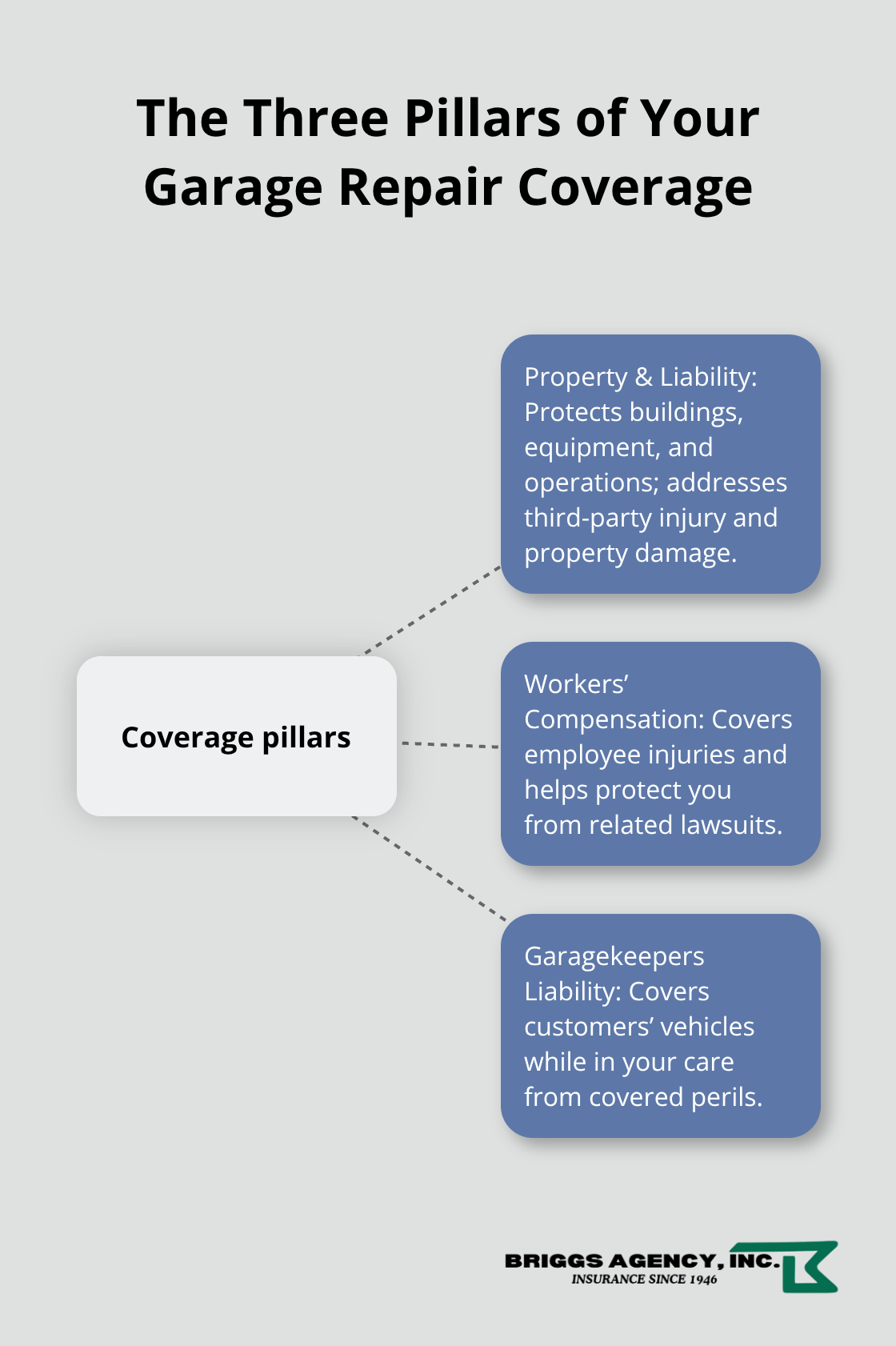
Garage workshop insurance in Indiana protects three distinct areas of your operation, and understanding what each covers prevents costly gaps in your protection.

Garagekeepers Coverage Protects Customer Vehicles

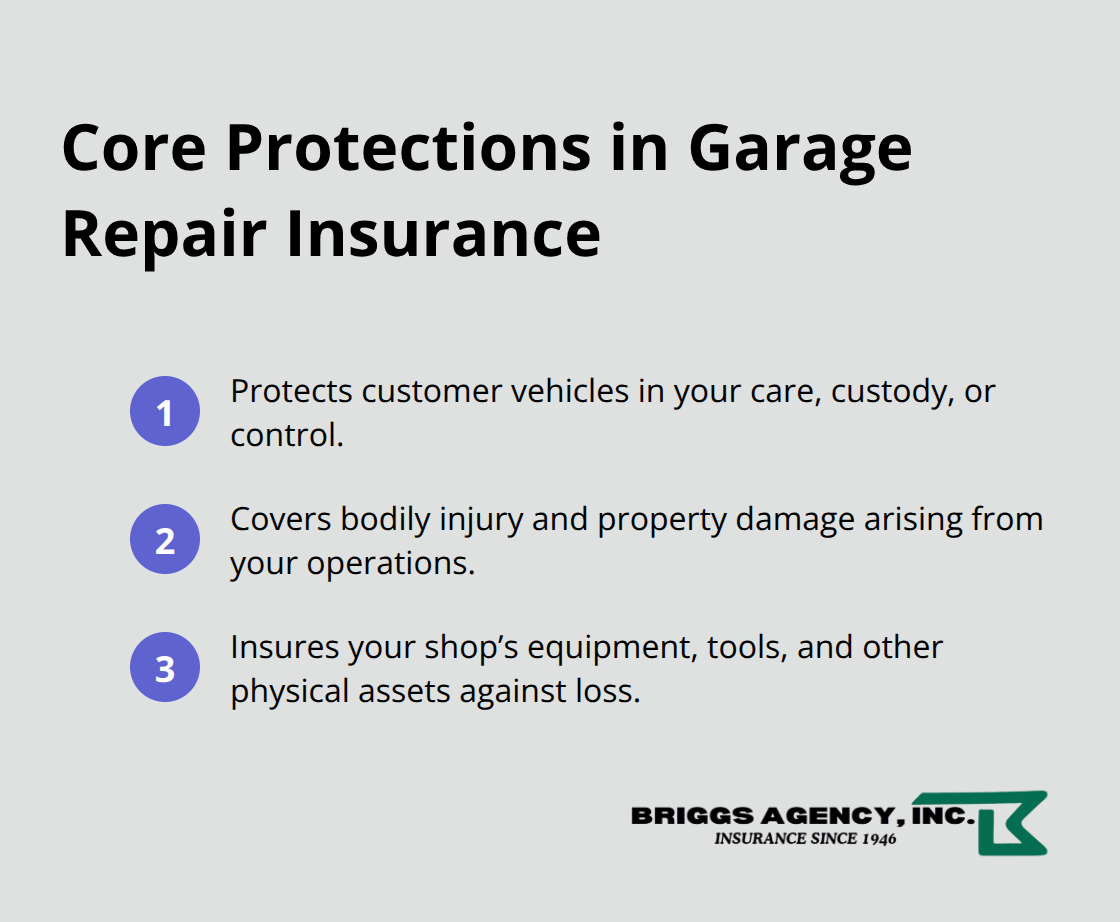
Garagekeepers coverage handles physical damage to customer vehicles in your care, custody, or control-whether a car sits in your bay during service, suffers damage from fire or theft, or sustains harm from employee negligence. This protection matters because a customer’s personal auto policy often won’t pay if their vehicle is damaged while you service it, leaving your shop liable for the full repair cost. Direct primary garagekeepers coverage pays claims regardless of fault, which speeds resolution and keeps customers satisfied, though it typically costs more than direct excess coverage that only activates after a customer’s insurance limits are exhausted.

Commercial Auto Covers Your Service Vehicles

Commercial auto coverage protects your service vehicles-tow trucks, diagnostic vans, pickup trucks-when you use them for business purposes. This coverage handles liability and physical damage from accidents or collisions, ensuring your mobile operations stay protected on the road.

Liability and Property Coverage Address Multiple Risks

General liability and garage liability address bodily injury claims if a customer gets hurt on your premises or alleges that faulty repair work caused them harm. These policies also cover legal defense costs when lawsuits arise. Property insurance protects your tools, diagnostic equipment, lifts, inventory, and shop building itself against fire, theft, vandalism, and weather damage-critical since a single hoist or diagnostic computer can represent substantial capital investment.

Visual hub showing essential insurance coverages for an Indiana garage workshop.

Tools and Equipment Require Actual Replacement Value Protection

Your shop’s tools and specialized equipment represent significant replacement costs that standard business policies often exclude or severely limit. Property insurance under a garage policy covers these items at their actual replacement value, protecting against theft, fire, or damage from storms.

Workers’ Compensation Covers Employee Injuries

Workers’ compensation coverage pays for employee medical expenses and replaces a portion of lost wages if someone gets injured on the job-mandatory in Indiana if you have employees. This coverage protects everything from cuts sustained while working on vehicles to back injuries from lifting heavy components. Understanding these distinct coverage areas helps you identify what your operation actually needs and prevents you from overpaying for protection you don’t require.

Why Standard Business Insurance Leaves Garage Owners Exposed

A general business owners policy treats your garage like any other commercial operation, which means it fundamentally misses the specific exposures that define your work. Standard coverage typically excludes or severely limits protection for vehicles in your care, specialized equipment like diagnostic computers and hydraulic lifts, and liability claims tied to repair work itself. When a customer’s vehicle catches fire in your bay, a standard policy won’t cover it. When an employee suffers a back injury while removing an engine, gaps appear between what your policy promised and what actually pays. The reality is that auto repair shops face distinct risks-test drives that end in accidents, tools worth thousands that disappear, customer vehicles damaged during service-that generic business policies simply don’t address.

Repair Work Creates Liability That Most Policies Exclude

Faulty repair work generates a specific type of liability that standard general liability policies exclude entirely. If you install new brakes and the customer’s brake line fails two weeks later, causing an accident, that claim falls outside typical coverage. Mechanics errors and omissions coverage exists specifically for this exposure, protecting you when repair work causes bodily injury or property damage. Similarly, products completed operations coverage extends your protection beyond the moment the customer leaves your shop, covering harm caused by defective parts or poor workmanship weeks or months later. Without these specialized coverages, a single lawsuit over a failed repair can devastate your business finances. Indiana shop owners working with transmission specialists, brake shops, or full-service repair facilities face particularly high exposure to these claims.

Your Equipment and Inventory Need Replacement Value Protection

A single diagnostic computer can cost $8,000 to $15,000, and a four-post vehicle lift runs $5,000 to $12,000. Standard property insurance often caps coverage on tools and equipment far below replacement cost, leaving you to absorb the difference after theft or fire. Garage-specific property coverage protects these items at their actual replacement value, meaning you receive what you’d pay today to replace that equipment, not what it cost five years ago. Fire, theft, and vandalism represent real threats to your shop. Your inventory of parts, fluids, batteries, and accessories also requires proper valuation. Without adequate property protection, a single break-in or shop fire could force you to operate from a severely diminished position or shut down entirely while rebuilding.

Coverage Gaps Create Financial Exposure You Can’t Ignore

The spaces between what your standard policy covers and what your garage actually needs represent serious financial risk. A customer’s vehicle damaged in your care, an employee injured on the job, a faulty repair that causes an accident weeks later-each scenario exposes your shop to costs that standard business insurance won’t pay. These gaps don’t just affect your finances; they threaten your ability to keep operations running and maintain customer relationships. The solution requires moving beyond generic coverage to policies specifically designed for auto repair environments. Finding the right garage workshop insurance in Indiana means understanding exactly which coverages address your shop’s unique exposures and which carriers offer the protection you actually need.

Selecting Coverage That Matches Your Shop’s Operations

Different repair shops face vastly different insurance needs, and selecting coverage starts with honestly assessing what your operation actually does. An oil-and-lube shop storing customer vehicles for a few hours requires different protection than a full-service transmission shop keeping cars for days or an auto body shop with expensive diagnostic equipment. Garagekeepers coverage becomes non-negotiable if customers leave vehicles in your care, but the type matters significantly. Direct primary garagekeepers pays claims regardless of fault, resolving situations faster and typically costs more than direct excess coverage that activates only after a customer’s personal insurance exhausts its limits. For dealerships storing inventory on open lots, dealer’s physical damage coverage provides specialized protection. Your choice between these options hinges on your risk tolerance and customer expectations. A shop performing test drives needs commercial auto coverage that explicitly includes hired and non-owned vehicle liability, since a test drive accident creates exposure most standard policies exclude entirely. Shops with employees performing brake work, transmission repairs, or engine diagnostics face elevated mechanics errors and omissions exposure that justifies the additional premium. Property coverage becomes critical if you’ve invested in diagnostic equipment, vehicle lifts, or parts inventory exceeding $50,000. The specificity matters because a generic garage policy won’t give you adequate limits on specialized equipment, leaving you underinsured after a theft or fire.

Comparing Quotes Across Multiple Carriers

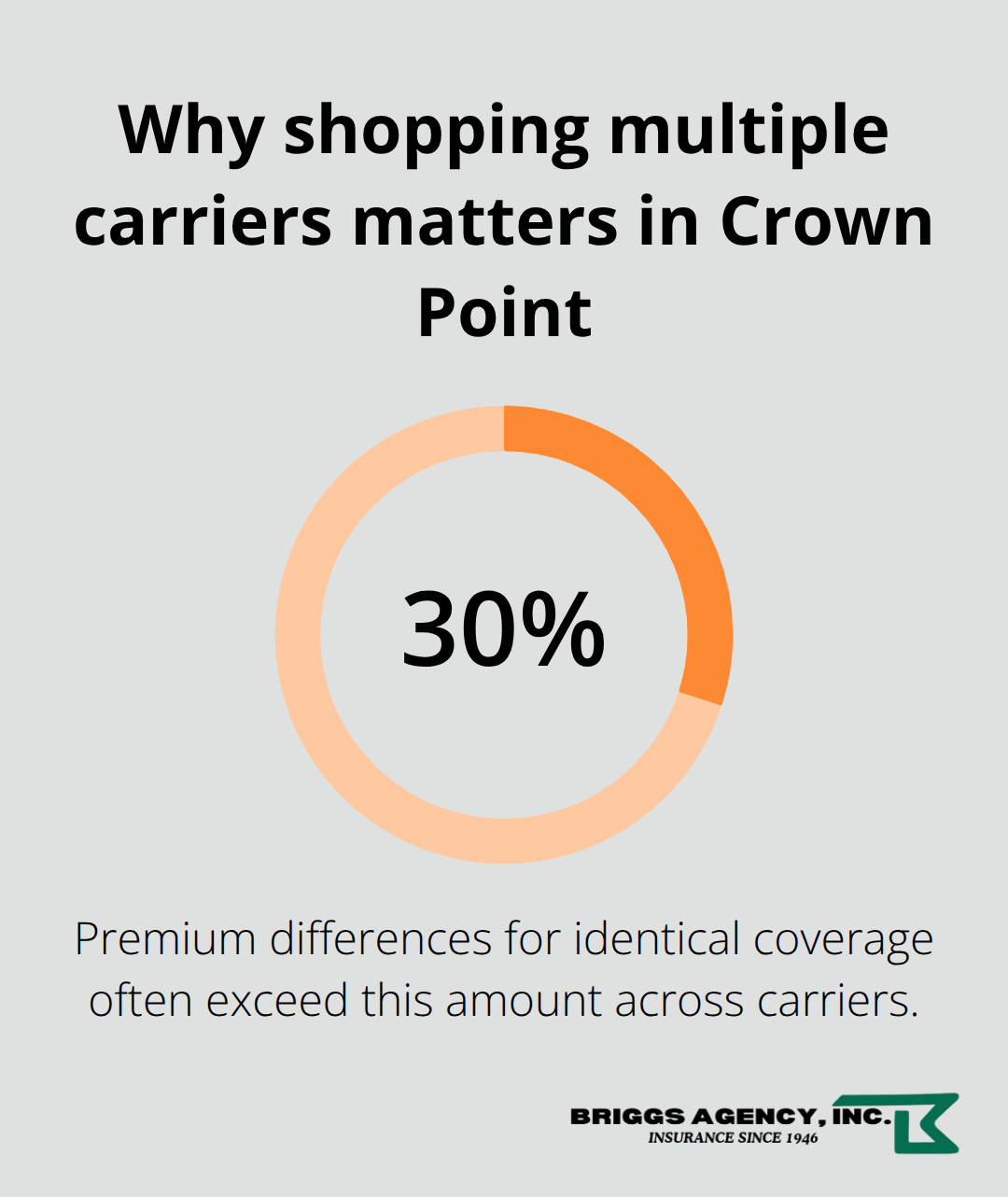
Comparing quotes across multiple carriers reveals dramatic price differences for identical coverage needs. Contact at least three carriers before deciding, since premiums for the same shop type can vary by 30-40% depending on how each insurer prices your specific exposures.

Bar chart showing lower and upper bounds of premium variability between insurance carriers. - Garage workshop insurance Indiana

When requesting quotes, provide detailed information about your operation: square footage of your facility, number of employees, types of repairs you perform, average number of customer vehicles on-site daily, annual revenue, and your claims history for the past five years. Carriers weight these factors differently, meaning one company might charge significantly more for a shop with recent claims while another offers competitive rates if your overall loss history remains favorable. Request quotes that include both your core coverage needs and optional add-ons so you can see true total costs rather than comparing base policies. This comparison process takes time but prevents the mistake of selecting a policy based solely on premium without understanding what protection you’re actually purchasing.

Ask each carrier about bundle discounts, since adding property to your auto coverage or bundling workers’ compensation with liability often reduces overall costs by 10-15%. Verify that quotes include the specific coverage limits you need rather than accepting default minimums that may leave your shop underprotected.

Working with an Agent Who Understands Your Shop

Selecting an insurance agent matters more than most shop owners realize because coverage gaps often emerge after a claim happens, when it’s too late to fix them. An agent familiar with garage operations knows which coverage combinations address real exposures in your specific shop type rather than simply selling policies based on price. When you meet with an agent, bring documentation about your operation: your facility lease or deed, photos of your equipment and workspace, a list of services you provide, and your employee roster. Walk your agent through a typical workday so they understand exactly what happens in your shop, from how you store customer vehicles to which employees handle which tasks.

Checklist of documents and discussion points to cover with an insurance agent for garage workshops. - Garage workshop insurance Indiana

This conversation prevents the common mistake of accepting generic coverage recommendations without customizing limits and deductibles to your actual situation.

Ask your agent which claims they’ve handled for similar shops and what exposures surprised shop owners after incidents occurred. This real-world perspective helps you avoid coverage gaps that statistics alone won’t reveal. Discuss your deductible strategy explicitly, since choosing a higher deductible reduces premiums but increases out-of-pocket costs when claims happen. Many shop owners select $1,000 deductibles for property coverage and $500 for liability, balancing manageable premium costs against reasonable claim expenses. Your agent should also explain exactly what your policies exclude and what situations fall outside coverage, preventing the assumption that your insurance covers something it doesn’t.

Final Thoughts

Garage workshop insurance Indiana protects your shop against the specific risks that standard business policies ignore. Garagekeepers coverage handles customer vehicles in your care, commercial auto protects your service vehicles, and specialized liability coverage addresses repair-related claims that generic policies exclude entirely. Property protection ensures your diagnostic equipment, lifts, and inventory stay covered at replacement value, while workers’ compensation safeguards your employees.

Your next step is straightforward: gather information about your shop’s operations and request quotes from multiple carriers. Document your facility size, employee count, services offered, and claims history, then contact at least three insurers to compare pricing and coverage options. This comparison process typically reveals significant premium differences for identical protection, sometimes 30-40% or more between carriers (and verifying that coverage limits match your actual needs rather than accepting default minimums prevents underinsurance).

At Briggs Agency, Inc., we work with Indiana businesses to deliver hands-on expertise that matters when protecting your shop. Our experienced local agents represent multiple top-rated carriers, comparing options to deliver competitive pricing and the right protection tailored to your operation. Contact Briggs Agency, Inc. today to discuss your garage workshop insurance needs and receive a customized quote that protects what you’ve built.

The information provided in this blog is for general informational purposes only and does not constitute legal, financial, or insurance advice. Coverage options, terms, and availability may vary. Please consult with a licensed professional for advice specific to your situation.
Artificial intelligence may have been used to generate text and images in some blog articles.

Indiana Trucking Insurance: Finding the Right Coverage for Your Fleet

Running a trucking fleet in Indiana means navigating insurance requirements that go far beyond standard commercial auto policies. The liability limits, cargo protections, and specialized coverage your operation needs are substantial and legally mandated.

At Briggs Agency, Inc., we work with fleet operators across Indiana who need Indiana trucking insurance that actually fits their business. This guide walks you through the coverage types that matter, how to evaluate providers, and what to look for when protecting your fleet.

Why Trucking Insurance Costs More Than Standard Commercial Auto

Trucking insurance operates in a different risk universe than standard commercial auto policies, which is why Indiana carriers face significantly higher premiums and stricter coverage requirements. The Federal Motor Carrier Safety Administration mandates minimum liability of $750,000 for non-hazardous freight and up to $5,000,000 for hazmat shipments, depending on cargo type. These aren’t suggestions-they’re legal floors that protect you from catastrophic exposure. A semi-truck operator in Indiana with $750,000 liability coverage pays roughly $9,500 annually, but increase that to $1,000,000 in liability limits and the cost rises to approximately $14,200 per year. The reason is straightforward: trucking claims are expensive. A single bodily injury incident involving a commercial truck can easily exceed $500,000, and catastrophic cases push into the millions.

Summary of major factors increasing Indiana trucking insurance costs in Indiana

Indiana’s litigation environment is relatively conservative compared to neighboring Illinois, which helps keep premiums lower than some regions, but the baseline costs still reflect genuine risk.

Cargo Type and Specialized Endorsements Drive Premium Increases

Your cargo matters significantly. Hauling steel coils introduces load-shifting risks that many standard policies exclude entirely. In Northwest Indiana, where coil shipments are common, carriers often require a dedicated metal coil endorsement on your cargo policy-sometimes adding $500 to $1,500 annually depending on your operation’s volume and history. Without this endorsement, a claim involving coil cargo could be denied outright, wiping out your entire profit margin on that load. High-value or temperature-sensitive loads require higher limits and careful alignment with actual cargo risk. Many shippers now demand $1,000,000 in liability and $100,000 in cargo coverage as a baseline for coil shipments and specialized freight.

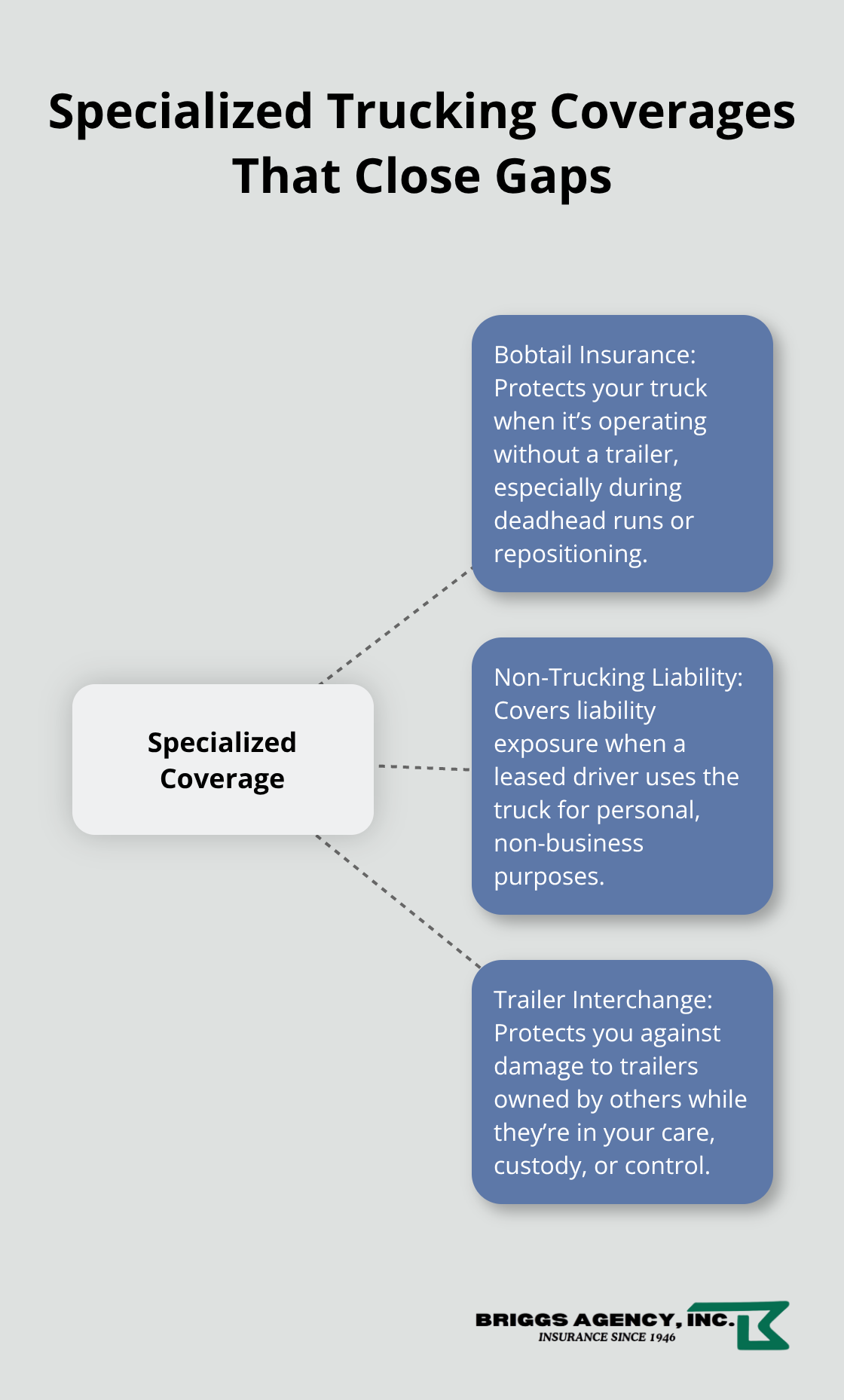
Bobtail Coverage Fills a Critical Gap in Your Protection

Most trucking liability policies contain a critical gap: they exclude coverage when you drive without a dispatch load. This non-trucking use-moving between loads, heading to maintenance, or running personal errands-leaves you exposed to six-figure claims if you cause an accident. Primary liability insurance often excludes these situations entirely, meaning you could face a judgment with zero policy protection. Bobtail coverage fills this gap and should be non-negotiable in your policy. The cost is modest, typically running between $1,000 to $3,000 annually, but the protection is essential. Indiana’s winter weather, jackknifes on high-traffic corridors around Indianapolis and Gary, and congested routes create real bodily injury and property damage risk even when you’re not under dispatch.

Physical Damage Coverage and Deductible Strategy

Physical damage coverage for your truck and trailers requires careful attention to deductibles. A $1,000 to $2,500 deductible range balances premium savings with your ability to cover repairs without destroying cash flow. Deductibles above $2,500 force you to self-fund major repairs, which can cripple operations if you face multiple claims in a season. Your trailer cargo coverage must scale with actual shipment values-set limits at roughly 120 percent of your typical load value to protect against spikes without overpaying for coverage you won’t use. Coordinate these limits closely with your shipper’s requirements, since many now demand specific coverage thresholds as a condition of doing business.

Understanding these cost drivers helps you see why Indiana trucking insurance demands more than a standard commercial auto quote. The next step is identifying which specific coverage types your operation actually needs to stay compliant and protected.

Essential Coverage Beyond Liability

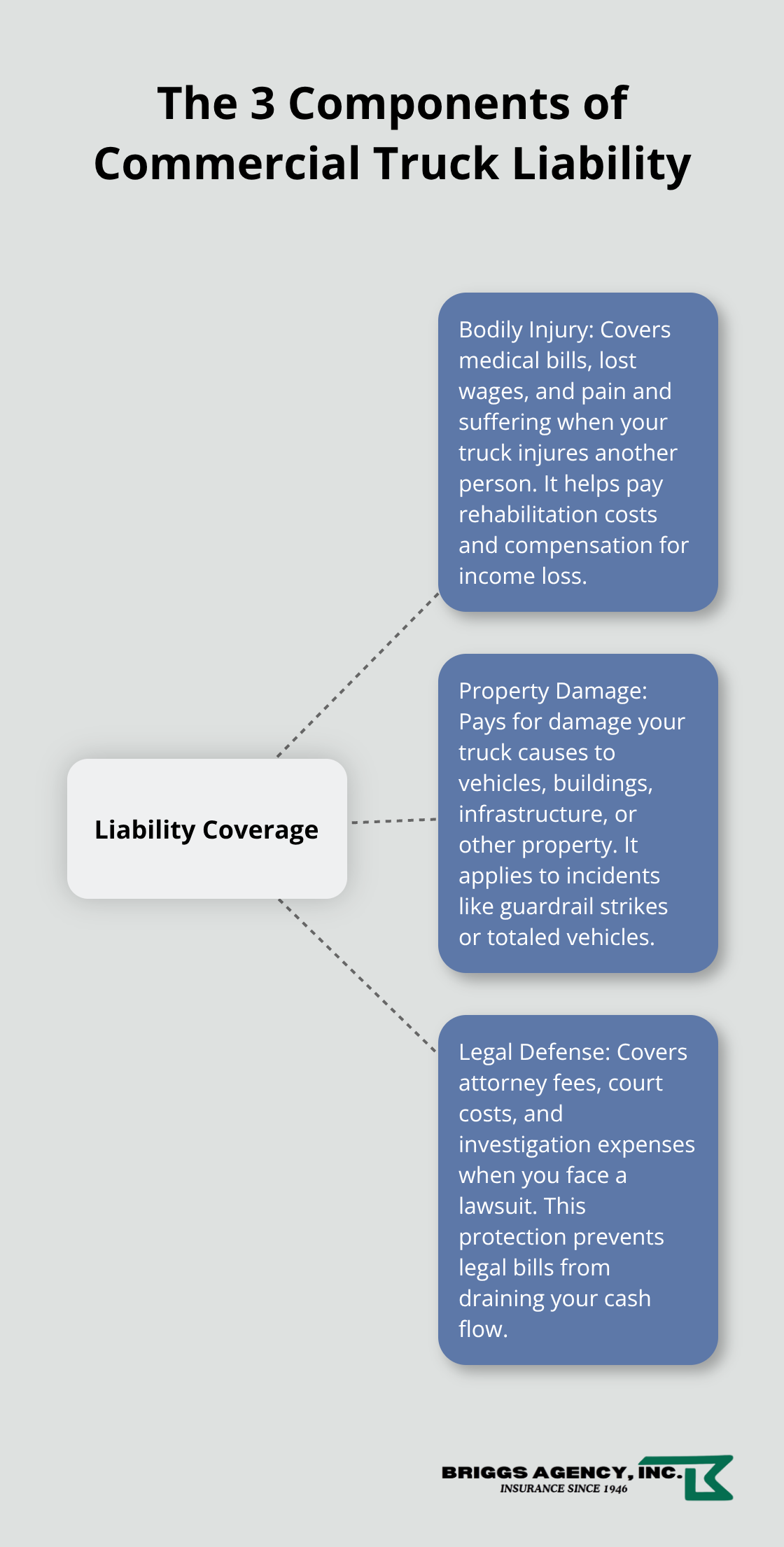
Your trucking operation needs three additional coverage layers that protect your assets, employees, and bottom line beyond the baseline liability limits Indiana law requires. Commercial General Liability insurance, Workers’ Compensation for your team, and Bobtail coverage each fill specific gaps that your primary truck liability policy leaves open. Understanding what each covers and why it matters helps you build a protection strategy that actually matches your operation.

Commercial General Liability Protects Your Facilities and Operations

Commercial General Liability insurance covers bodily injury and property damage claims that occur at your facilities, loading docks, or customer locations-situations where your primary truck liability policy won’t respond. A $1,000,000 CGL limit typically costs $300 to $500 annually and becomes essential the moment you lease yard space, employ staff, or operate from a fixed facility. This coverage protects against third-party claims unrelated to active driving, such as someone injured on your property or damage to a customer’s dock during loading operations.

Hub-and-spoke view of essential coverages for Indiana trucking operations beyond auto liability

Many carriers overlook CGL entirely because they focus exclusively on vehicle liability, then face gaps when claims arise outside the truck itself. Your operation exposes you to liability beyond the road, and CGL fills that exposure directly.

Workers’ Compensation Protects Your Employees and Your Business

Workers’ compensation insurance is mandatory in Indiana if you employ drivers or warehouse staff. Your insurer charges a rate per $100 of payroll based on your industry classification and claims history. On average, trucking companies in Indiana can expect to pay between $0.75 to $2.00 per $100 of payroll for workers’ compensation insurance. This coverage protects your operation from catastrophic exposure: a driver with a back injury or a loading dock employee with a crushed foot generates $50,000 to $250,000 in medical and wage-replacement costs. Without workers’ compensation, you face personal liability for these expenses plus potential regulatory penalties that can shut down your operation.

Bobtail Coverage Protects Non-Dispatch Driving

Bobtail and non-trucking liability coverage rounds out this protection layer by covering accidents that occur when your truck operates without a dispatch load. Most primary policies exclude coverage when you drive without revenue cargo-moving between loads, heading to maintenance, or running personal errands. The annual cost runs $1,000 to $3,000 depending on your vehicle type and driving record, but this modest expense prevents six-figure exposure during personal use, maintenance runs, or repositioning between loads. Indiana’s winter conditions and congested corridors around Indianapolis and Gary create genuine accident risk even without revenue cargo, making bobtail coverage a practical necessity rather than an optional add-on.

Layering Coverage Creates Complete Protection

These three coverage types cost between $4,000 and $7,000 annually for a typical owner-operator but prevent catastrophic gaps that eliminate years of profit from a single claim. Each layer addresses a specific exposure your primary liability policy leaves uncovered. The question shifts now from what coverage you need to how you identify a provider who understands Indiana’s trucking landscape well enough to build the right combination for your specific operation.

Finding the Right Indiana Trucking Insurance Provider

Choosing a trucking insurance provider in Indiana requires more than comparing price quotes side by side. You need a carrier or agent who understands the specific risks your operation faces, can navigate state compliance requirements accurately, and responds quickly when claims arise. The difference between a provider who simply sells a policy and one who builds customized protection for your fleet often surfaces in claim time or when you discover coverage gaps during an incident.

Request Detailed Quotes from Multiple Carriers

Start by requesting quotes from at least three carriers or independent agents who specialize in Indiana trucking operations. Identical coverage limits can carry 30 to 40 percent premium differences depending on how each carrier prices your specific operation, so comparing multiple options reveals whether you’re paying a fair rate. When you request quotes, provide detailed information about your actual operation: what cargo you haul, where you operate geographically, how often you drive without dispatch loads, your average and maximum load values, and your annual mileage in high-density corridors. Vague information produces vague quotes that don’t reflect your real risk profile.

Range of premium differences among Indiana trucking insurers for the same coverage limits - Indiana trucking insurance

Progressive, for example, has over 40 years of experience with Indiana commercial truck insurance and was named the number one truck insurer in America in 2024 by S&P Global Market Intelligence based on national written premium data. That national ranking, however, doesn’t automatically mean their local Indiana pricing matches your operation’s needs.

Evaluate Trucking-Specific Experience

Experience with trucking operations matters far more than general commercial insurance knowledge. Ask potential providers how many owner-operators and small fleets they currently serve in Indiana, whether they handle IOA-1 intrastate filings and Form E submissions directly, and whether they audit cargo policies for exclusions like coil gaps that could deny claims on your typical loads. A provider unfamiliar with metal coil endorsements or bobtail coverage gaps will miss critical protections your operation requires.

Local knowledge becomes essential when winter weather or high-traffic corridors around Indianapolis and Gary drive up your bodily injury exposure, or when you haul specialized cargo that demands specific endorsements. Ask how they handle claims: whether you can file and track claims online, how quickly they respond to roadside incidents, and whether they provide heavy truck roadside assistance beyond standard coverage.

Partner with Agents Who Understand Your Routes

The provider who invests time understanding your routes, cargo types, and non-dispatch usage patterns will identify coverage gaps and adjust your policy accordingly, preventing the costly discovery of excluded exposures during a claim. Briggs Agency, Inc. represents multiple top-rated carriers, which allows local agents to compare options and tailor policies that deliver both competitive pricing and the right protection for your specific fleet.

Final Thoughts

Protecting your Indiana trucking fleet requires layered coverage that extends well beyond minimum legal liability. Your operation needs commercial general liability for facility-based exposures, workers’ compensation for your team, bobtail protection for non-dispatch driving, and cargo coverage scaled to your actual shipment values. Physical damage deductibles between $1,000 and $2,500 balance premium savings with your ability to absorb repairs without destroying cash flow, while these combined layers cost $4,000 to $7,000 annually but prevent catastrophic gaps that eliminate years of profit from a single claim.

The provider you select matters as much as the coverage itself. A carrier or agent who understands Indiana’s specific risks-winter weather, congested corridors around Indianapolis and Gary, specialized cargo like steel coils-will build protection that matches your actual operation rather than a generic template. They handle IOA-1 filings, audit your cargo policy for exclusions, and respond quickly when claims arise, so comparing quotes from at least three carriers reveals whether you pay a fair rate (identical coverage often carries 30 to 40 percent premium differences).

Briggs Agency, Inc. represents multiple top-rated carriers and can compare options to deliver competitive pricing and the right Indiana trucking insurance protection for your fleet. Our experienced local agents understand the routes, cargo types, and non-dispatch usage patterns that shape your actual risk, then tailor policies accordingly. Contact us to discuss your fleet’s specific needs and secure a customized quote that protects what you’ve built.

The information provided in this blog is for general informational purposes only and does not constitute legal, financial, or insurance advice. Coverage options, terms, and availability may vary. Please consult with a licensed professional for advice specific to your situation.
Artificial intelligence may have been used to generate text and images in some blog articles.
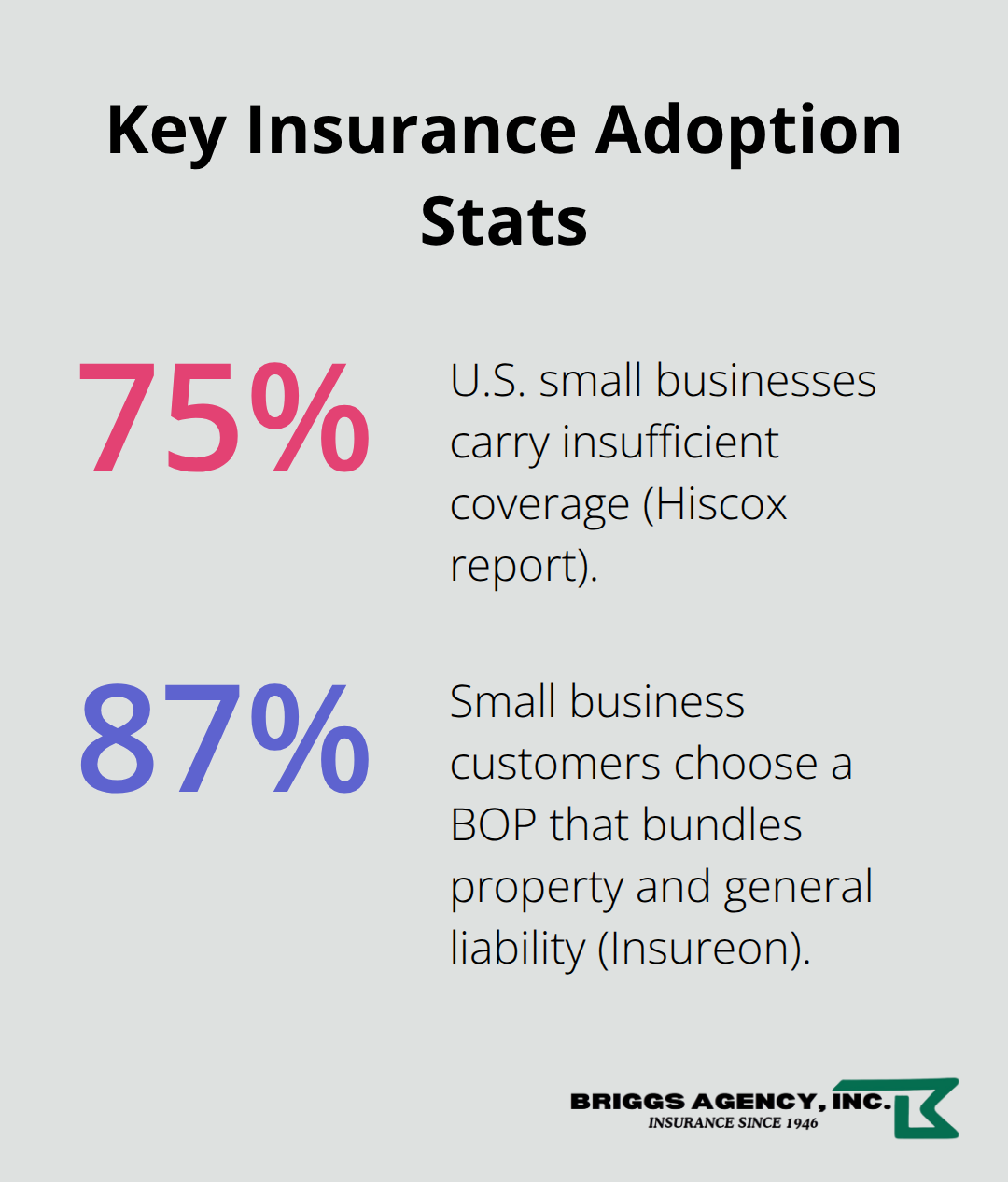
Commercial Garage Insurance Indiana: Coverage for Vehicle and Property Risks

Running a garage in Indiana means managing significant risks every single day. Your customers’ vehicles, your equipment, and your business itself all need protection that standard policies simply don’t cover.

Commercial garage insurance in Indiana is specifically designed to handle the unique exposures your operation faces. At Briggs Agency, Inc., we help garage owners understand exactly what coverage they need and why it matters for their bottom line.

What Your Garage Insurance Actually Covers

Vehicle Coverage for Customers and Employees

Commercial garage insurance in Indiana protects three critical areas of your operation that standard business policies leave exposed. First, it covers vehicles in your care-both customer cars you service and employee vehicles used for business. Second, it protects your liability when someone gets hurt or property gets damaged as a result of your garage operations. Third, it shields your tools, equipment, and inventory from loss.

Infographic showing three core protections in Indiana commercial garage insurance - Commercial garage insurance Indiana

Indiana Code Title 27 defines garage liability to include selling, leasing, repairing, servicing, delivering, testing, road testing, parking, or storing motor vehicles. This broad scope means your coverage should extend from the moment a customer’s car pulls into your lot through test drives and storage until it leaves. The care, custody, or control exclusion found in standard policies creates a major gap-it excludes damage to customer vehicles left with you for repair or storage.

Closing the Garagekeepers Coverage Gap

Garagekeepers liability specifically covers a customer’s vehicle damaged while it sits on your premises, whether from weather, theft, vandalism, or accidents during storage. You have three garagekeepers options: Legal Liability covers damage only when you’re negligent, Direct Primary covers losses regardless of fault (including weather and theft), and Direct Excess provides the broadest protection by paying regardless of liability and only in excess of other insurance.

For most Indiana shops, Legal Liability is the standard choice, but if you store vehicles regularly or operate in high-risk areas, Direct Primary deserves serious consideration. Your liability coverage addresses what happens when a mechanic test-drives a customer’s vehicle and causes an accident or when a customer gets injured on your property. Garage liability covers bodily injury and property damage claims from these situations, protecting your business from lawsuits that could otherwise devastate operations.

Equipment, Tools, and Inventory Protection

Commercial auto coverage protects vehicles you own or operate-tow trucks, service vehicles, and pickup trucks used for business purposes. Tools, equipment, and inventory protection covers everything from diagnostic machines and lifts to spare parts and supplies stored on-site. This coverage responds to theft, fire, vandalism, and other perils that could shut down your operation.

Indiana garages should map their actual operations against policy language to confirm coverage for road testing, vehicle storage, and delivery activities. Ask your insurer specifically whether overnight vehicle storage, test drives on public roads, and equipment stored in work bays are covered under the policy you’re considering.

Aligning Your Operations with Your Policy

Misalignment between what you do daily and what your policy covers is where problems emerge. The broad language in garage operations definitions can be interpreted differently by insurers, so confirmation matters. Your specific business model-whether you focus on repairs, sales, storage, or a combination-determines which coverages you actually need and how much protection each one should provide.

Why Indiana Garage Owners Can’t Skip This Coverage

The Real Financial Exposure You Face

Indiana garage owners face real financial exposure that most don’t fully appreciate until something goes wrong. Indiana Code Title 27 explicitly recognizes garage liability as a distinct coverage category because standard commercial policies leave dangerous gaps. When a customer’s vehicle sits damaged in your lot overnight or a mechanic causes an accident during a test drive, your basic liability policy won’t respond. A single incident involving a customer’s vehicle can trigger lawsuits that exceed $50,000 in damages, and without proper garagekeepers coverage, you absorb the full amount personally.

Multiple Exposure Points Throughout Your Day

Indiana’s broad definition of garage operations-which includes selling, leasing, repairing, servicing, delivering, testing, road testing, parking, and storing vehicles-creates multiple exposure points throughout your day. The care, custody, or control exclusion means that standard policies specifically exclude the very situations garage owners face most frequently. Your operation exposes you to liability at every stage, from the moment a customer’s car arrives through test drives and storage until it leaves your premises.

Three key exposure points for Indiana garage operations explained

How Coverage Gaps Damage Your Reputation

Your business reputation depends on how you handle customer vehicles and property. A single incident where a customer’s car suffers damage under your watch spreads quickly through local networks, costing you far more in lost business than the actual insurance claim would have covered. Direct Primary garagekeepers coverage removes the negligence requirement entirely, protecting you from weather events, theft, and storage incidents regardless of fault-this matters enormously in Indiana’s climate where hail and winter storms damage vehicles regularly.

Location-Specific Risks in Indiana

If you operate in areas like Evansville, Jasper, or Henderson, vehicle storage during service represents a standard practice that requires explicit coverage confirmation with your carrier. Working with a local broker who understands Indiana’s specific requirements helps you avoid the common mistake of assuming your current policy covers situations it explicitly doesn’t. The right policy protects not just your vehicles and equipment but the trust your customers place in your operation.

Understanding what your current coverage actually includes-and what it excludes-is the first step toward protecting your business. The next section walks you through how to assess your specific risks and choose the right commercial garage insurance for your operation.

How to Choose the Right Commercial Garage Insurance

Start by mapping exactly what happens at your garage each day. Do you test-drive vehicles after service? Store customer cars overnight? Operate tow trucks for deliveries? Sell or lease vehicles? Each activity creates specific insurance needs that differ from your neighbors’ operations. An Indiana body shop focusing on collision work faces different exposures than a transmission specialist or a used car dealership. List your actual business activities and the vehicles involved before comparing carriers or requesting quotes. This inventory becomes your foundation for evaluating whether a policy truly covers your operation.

Confirm Coverage for Your Specific Activities

The care, custody, or control exclusion in standard policies means you cannot assume coverage exists just because your current insurer wrote your general liability policy. Contact your existing carrier and ask them to confirm in writing whether your policy covers vehicle test drives on public roads, overnight vehicle storage on your premises, and delivery of vehicles to customers. Most garage owners discover gaps only after a claim gets denied, so push for specific answers about your exact business model. Indiana Code Title 27 recognizes garage operations as distinct because the exposures are real and substantial.

When comparing policies from different carriers, request sample policy language showing how garagekeepers coverage applies to your situation. Progressive Commercial and other major carriers offer online quotes where you can enter your ZIP code and describe your operations, generating location-specific options within minutes. The quote process itself clarifies what coverage types exist and helps you understand pricing differences between Legal Liability, Direct Primary, and Direct Excess garagekeepers options.

Evaluate Cost Against Your Risk Profile

Insurance cost varies significantly based on your claims history, the types of vehicles you handle, and your coverage selections. If you store high-value vehicles or operate in areas prone to weather damage, Direct Primary garagekeepers coverage costs more upfront but eliminates the negligence requirement, meaning weather or theft losses get paid regardless of fault. For shops storing primarily customer vehicles awaiting routine service, Legal Liability garagekeepers coverage typically provides adequate protection at lower cost.

Bundling commercial auto coverage with property protection yields average discounts around 12 percent, so request a bundled quote to reduce your overall premium. Request quotes from multiple carriers rather than accepting the first proposal, especially if your current agent represents only one company. This approach reveals actual differences in how insurers price your specific operation and what each carrier includes in their standard garage policies.

Average discount when bundling commercial auto with property coverage - Commercial garage insurance Indiana

Partner with a Local Agent Who Understands Indiana Garage Operations

An agent familiar with Indiana garage operations understands the specific language in Indiana Code Title 27 and how different insurers interpret broad definitions like garage operations. Briggs Agency, Inc., a family-owned independent agency in Crown Point serving the community since 1946, represents multiple top-rated carriers, which means our experienced local agents can compare options and show you actual differences in coverage and pricing rather than presenting a single solution. Local agents throughout Indiana know the regional risks affecting garages, from winter weather damage to theft patterns in specific communities.

Ask any potential agent whether they can explain in plain language exactly what your policy covers and what it excludes, using your specific business activities as examples. An agent who hesitates or relies on vague language like “everything should be covered” is not the right fit. Confirm that your agent will review your insurance premium payments annually as your business changes, because adding new services or equipment can create coverage gaps in your existing policy.

Final Thoughts

Commercial garage insurance in Indiana protects your operation from exposures that standard policies explicitly exclude. The care, custody, or control exclusion creates real gaps, and a single incident involving a customer’s vehicle, employee injury, or equipment loss can cost tens of thousands of dollars and damage your reputation in the community. The right policy structure-combining garage liability, garagekeepers coverage, and commercial auto protection-addresses these exposures directly and keeps your business operational when problems occur.

Start by listing your actual business activities and contact your current insurer to confirm in writing what your existing policy covers and excludes. Ask specifically about test drives, vehicle storage, and equipment protection, and if your carrier hesitates or provides vague answers, that signals a need to seek quotes from other carriers. Request proposals from multiple companies rather than accepting the first option, and compare how each insurer prices your specific operation (the 12 percent average discount available through bundling commercial auto with property coverage makes this comparison financially worthwhile).

We at Briggs Agency, Inc. understand Indiana garage operations because we’ve served Crown Point and the surrounding community since 1946. As an independent agency representing multiple top-rated carriers, our experienced local agents compare actual coverage options and pricing rather than presenting a single solution. Contact Briggs Agency, Inc. today to discuss your commercial garage insurance needs and receive a customized quote that reflects your actual exposures.

The information provided in this blog is for general informational purposes only and does not constitute legal, financial, or insurance advice. Coverage options, terms, and availability may vary. Please consult with a licensed professional for advice specific to your situation.
Artificial intelligence may have been used to generate text and images in some blog articles.
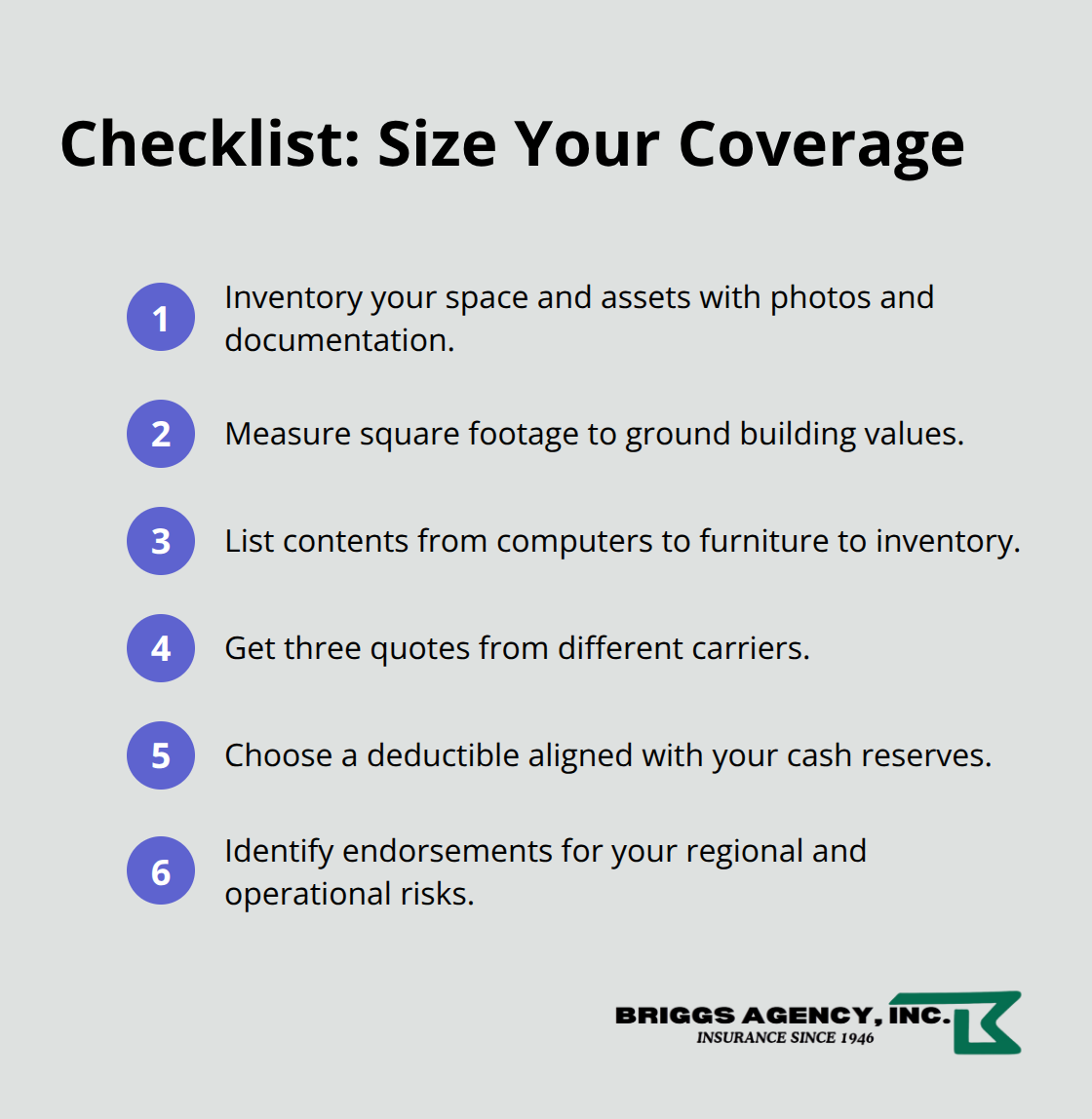
Indiana Restaurant Liability Insurance: Shielding Your Eatery and Guests

Running a restaurant in Indiana means managing countless daily risks. From foodborne illness claims to slip-and-fall accidents, one incident can threaten your business financially and legally.

Indiana restaurant liability insurance protects you and your guests when the unexpected happens. At Briggs Agency, Inc., we help restaurant owners understand what coverage they actually need and how to get it right.

Why Restaurant Liability Insurance Protects Your Bottom Line

Foodborne Illness Claims Hit Hard

Foodborne illness claims strike Indiana restaurants with serious financial consequences. A single outbreak costs tens of thousands in medical claims, lost revenue from closure, and reputation damage that takes months to recover from. Liability insurance covers these medical expenses and legal defense costs, preventing a food poisoning incident from draining your operating capital.

Food safety protocols work hand-in-hand with your coverage. Implementing supplier approval systems, inventory controls, safe food handling training, and cross-contamination prevention lowers both your risk and your insurance premiums. This dual approach-strong operations plus solid coverage-protects your guests and your business.

Slip-and-Fall Accidents: Your Most Common Liability

Slip-and-fall accidents represent the most common premises liability claim in Indiana restaurants. A guest slips on a wet floor, falls in your restroom, or trips over an uneven surface-and suddenly you face medical bills, lost wages claims, and legal fees.

Liability coverage handles third-party bodily injury claims on your premises, including the guest’s medical payments and your defense costs if the claim goes to court. These incidents are entirely preventable with consistent floor maintenance, prompt spill cleanup, clear signage for hazards, and regular staff training on safety protocols. Your insurance protects you when prevention falls short.

Liquor Liability: A Non-Negotiable Coverage

If your restaurant serves alcohol, liquor liability coverage becomes non-negotiable. Dram shop laws vary significantly by location in Indiana, and you face heightened exposure when guests become intoxicated on your premises. This coverage protects you from claims arising from an intoxicated patron’s actions or injuries, covering both third-party bodily injury and your legal defense.

Without liquor liability protection, a single altercation involving an intoxicated guest could exhaust your general liability limits and leave you personally liable for damages. The financial and legal stakes are simply too high to skip this coverage.

Understanding these three core liability exposures-foodborne illness, slip-and-falls, and alcohol-related incidents-shapes the foundation of your restaurant’s protection strategy. Each risk demands specific coverage, and each coverage type addresses real claims that happen in Indiana restaurants every year. The next step is determining exactly which coverages fit your operation and how much protection you actually need.

What Your Restaurant Liability Insurance Actually Covers

Three Core Protection Components

Restaurant liability insurance protects against three main financial exposures when incidents happen on your premises. Bodily injury and property damage coverage pays for a guest’s medical expenses, lost wages, and pain-and-suffering claims if they suffer injury at your restaurant or damage their property while there. Medical payments coverage steps in quickly to cover immediate medical bills without requiring the injured person to prove fault, which often resolves minor incidents before they become lawsuits. Your policy also covers legal defense costs-attorney fees, court costs, and expert witness fees. Indiana courts allow plaintiffs to pursue non-economic damages for pain and suffering, so having adequate legal representation protects both your finances and your ability to defend your operations in court.

Coverage Limits That Match Your Operation

The coverage limits you choose directly impact your protection level and your premium cost. General liability policies typically start at $1 million per occurrence for bodily injury and property damage, though restaurants serving alcohol often carry $2 million limits to account for higher exposure from intoxicated patron claims. Medical payments coverage usually ranges from $1,000 to $10,000 per person and covers treatment costs regardless of fault, making it a practical tool for keeping minor incidents out of the courtroom.

Selecting limits that match your restaurant’s size, seating capacity, alcohol service volume, and equipment value matters far more than picking the cheapest option available. An undersized policy leaves you exposed to personal liability; an oversized policy wastes premium dollars on coverage you don’t need.

How Claims Actually Work

When you file a claim, your insurance company assigns a claims adjuster to investigate, gather evidence, and manage negotiations with the injured party’s attorney. This process typically takes weeks to months depending on claim complexity, but having professional representation from your insurer protects you from making damaging statements or admissions that could increase your liability. The adjuster handles communication with the other party’s legal team, preserves evidence, and works toward settlement or court defense.

Understanding what happens after an incident occurs helps you respond appropriately when it matters most. Your next decision-choosing the right carrier and agent-determines whether you get responsive claims support and coverage that actually fits your restaurant’s unique risks.

Picking Coverage That Fits Your Restaurant

Assess Your Specific Risks and Operations

Start with your operation’s actual risk profile instead of guessing what coverage you need. A pizzeria with a wood-fired oven and delivery fleet faces different exposures than a fine-dining establishment with a full bar and valet parking. Walk through your restaurant systematically: count your employees and their roles, identify which areas see the most guest traffic, assess whether you serve alcohol and how much revenue comes from liquor sales, evaluate your kitchen equipment and its replacement value, and note any unique hazards like open flames or raw bars.

OysterLink data from Indiana restaurants between January 2021 and July 2024 shows that equipment breakdown ranks as the top claim category, followed closely by employee injuries, customer slip-and-falls, theft, and vandalism. This means property coverage protecting your refrigeration and cooking equipment deserves serious attention, not an afterthought. Employee injury claims average around $1,800 for cuts but can exceed $22,800 for fractures, making workers’ compensation non-negotiable.

Compact list of leading restaurant claim types and typical employee injury costs in Indiana - Indiana restaurant liability insurance

Once you understand your specific exposures, you can request quotes that address them directly instead of accepting generic packages that either over-insure or leave gaps.

Compare Quotes from Multiple Carriers

Comparing quotes requires looking past price alone, which is where most restaurant owners stumble. Indiana general liability insurance averages $142 per month, and a complete package combining general liability, workers’ compensation, and property coverage runs roughly $359 monthly for a small two-employee operation according to industry data. Bundling multiple coverages typically saves 20 to 30 percent compared to buying policies separately, so always ask carriers about package discounts.

However, the cheapest quote often excludes critical coverages or carries high deductibles that hurt when claims happen. Compare three to five quotes side by side using the same coverage limits, deductibles, and endorsements, then evaluate what each carrier actually covers. Some insurers exclude food spoilage from equipment breakdown claims unless you add an endorsement; others include it automatically. Liquor liability limits, cyber liability options, and business interruption coverage vary significantly between carriers.

Work with a Local Agent

An independent agent gives you access to multiple carriers’ quotes without shopping around yourself, saving hours while ensuring you see all viable options. Local agents understand Indiana’s specific liability landscape, neighborhood crime patterns, and which carriers respond fastest to claims in our state. Before meeting with an agent, assess what kind of coverage you’re seeking so your conversation stays focused and productive. At Briggs Agency, Inc., our experienced local agents represent multiple top-rated carriers and compare options to tailor policies that deliver competitive pricing and the right protection for your restaurant’s unique needs.

Final Thoughts

Restaurant liability insurance protects your business from financial devastation when incidents happen. The three core exposures-foodborne illness, slip-and-fall accidents, and liquor liability-account for the majority of claims Indiana restaurants face each year. Indiana restaurant liability insurance works best when it matches your actual operation, not a generic package designed for every restaurant equally.

Your next step is straightforward: assess your specific risks, gather quotes from at least three carriers, and review coverage options side by side. Look past price alone, since a policy that costs $50 less monthly but excludes food spoilage or carries inadequate liquor liability limits creates dangerous gaps when claims arrive. An independent agent who understands Indiana’s liability landscape, knows which carriers respond fastest to claims in our state, and represents multiple top-rated insurers saves you time while ensuring you see all viable options.

At Briggs Agency, Inc., our experienced local agents compare coverage options to deliver competitive pricing and the right protection for your restaurant’s unique needs. Contact us to discuss your restaurant’s coverage today and reduce risk while safeguarding what you’ve built.

The information provided in this blog is for general informational purposes only and does not constitute legal, financial, or insurance advice. Coverage options, terms, and availability may vary. Please consult with a licensed professional for advice specific to your situation.
Artificial intelligence may have been used to generate text and images in some blog articles.