
Garage Workshop Insurance Indiana: Coverage for Repairs and Services
Running a garage workshop in Indiana means managing significant risks every single day. Your tools, equipment, and customer interactions all expose your business to potential losses that standard business insurance simply won’t cover.
At Briggs Agency, Inc., we’ve helped countless shop owners understand why garage workshop insurance Indiana is essential for protecting their operations. This guide walks you through the coverage options available and how to find the right policy for your specific needs.
What Your Garage Workshop Insurance Actually Covers
Garage workshop insurance in Indiana protects three distinct areas of your operation, and understanding what each covers prevents costly gaps in your protection.
Garagekeepers Coverage Protects Customer Vehicles
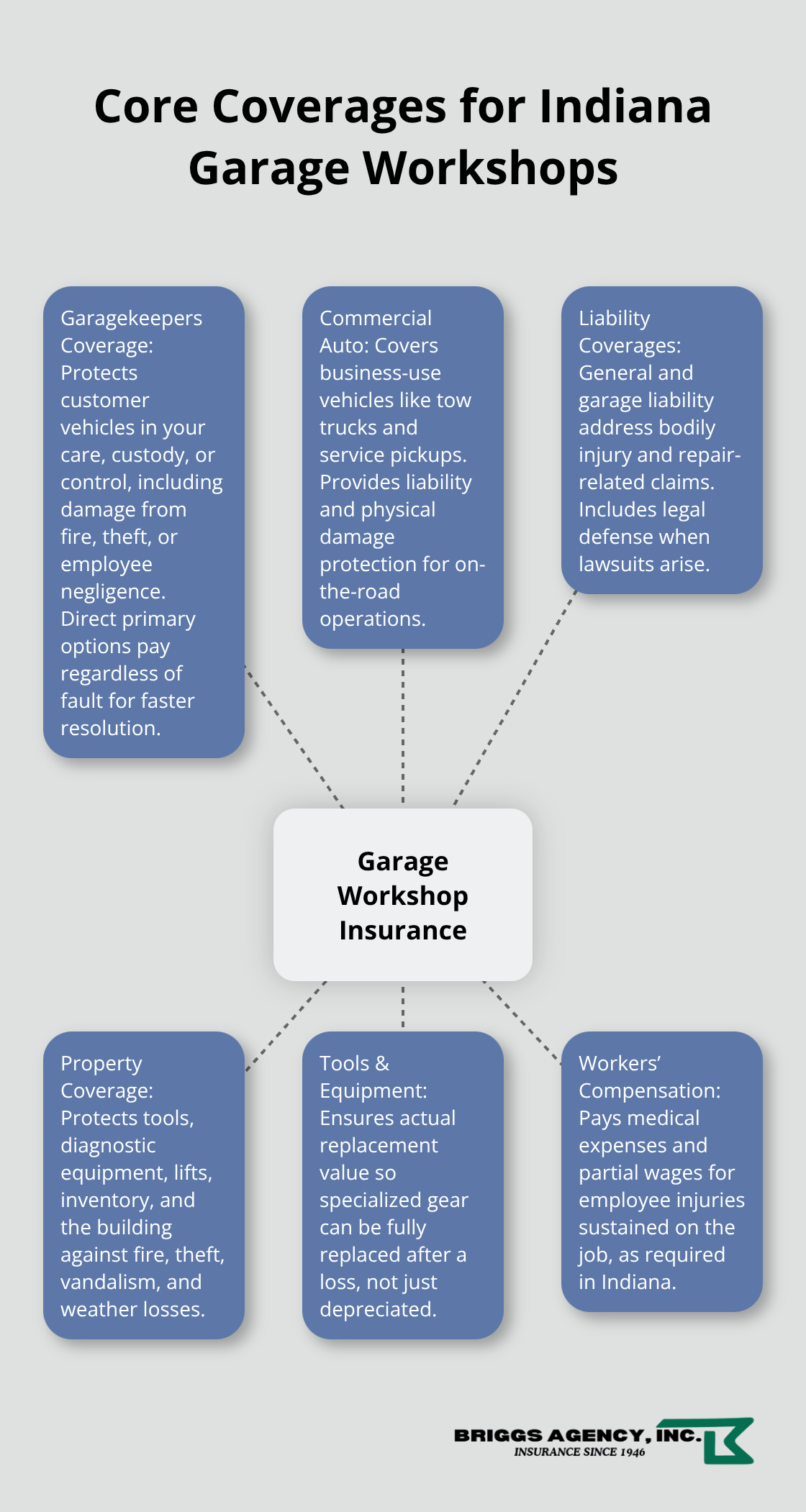
Garagekeepers coverage handles physical damage to customer vehicles in your care, custody, or control-whether a car sits in your bay during service, suffers damage from fire or theft, or sustains harm from employee negligence. This protection matters because a customer’s personal auto policy often won’t pay if their vehicle is damaged while you service it, leaving your shop liable for the full repair cost. Direct primary garagekeepers coverage pays claims regardless of fault, which speeds resolution and keeps customers satisfied, though it typically costs more than direct excess coverage that only activates after a customer’s insurance limits are exhausted.
Commercial Auto Covers Your Service Vehicles
Commercial auto coverage protects your service vehicles-tow trucks, diagnostic vans, pickup trucks-when you use them for business purposes. This coverage handles liability and physical damage from accidents or collisions, ensuring your mobile operations stay protected on the road.
Liability and Property Coverage Address Multiple Risks
General liability and garage liability address bodily injury claims if a customer gets hurt on your premises or alleges that faulty repair work caused them harm. These policies also cover legal defense costs when lawsuits arise. Property insurance protects your tools, diagnostic equipment, lifts, inventory, and shop building itself against fire, theft, vandalism, and weather damage-critical since a single hoist or diagnostic computer can represent substantial capital investment.
Tools and Equipment Require Actual Replacement Value Protection
Your shop’s tools and specialized equipment represent significant replacement costs that standard business policies often exclude or severely limit. Property insurance under a garage policy covers these items at their actual replacement value, protecting against theft, fire, or damage from storms.
Workers’ Compensation Covers Employee Injuries
Workers’ compensation coverage pays for employee medical expenses and replaces a portion of lost wages if someone gets injured on the job-mandatory in Indiana if you have employees. This coverage protects everything from cuts sustained while working on vehicles to back injuries from lifting heavy components. Understanding these distinct coverage areas helps you identify what your operation actually needs and prevents you from overpaying for protection you don’t require.
Why Standard Business Insurance Leaves Garage Owners Exposed
A general business owners policy treats your garage like any other commercial operation, which means it fundamentally misses the specific exposures that define your work. Standard coverage typically excludes or severely limits protection for vehicles in your care, specialized equipment like diagnostic computers and hydraulic lifts, and liability claims tied to repair work itself. When a customer’s vehicle catches fire in your bay, a standard policy won’t cover it. When an employee suffers a back injury while removing an engine, gaps appear between what your policy promised and what actually pays. The reality is that auto repair shops face distinct risks-test drives that end in accidents, tools worth thousands that disappear, customer vehicles damaged during service-that generic business policies simply don’t address.
Repair Work Creates Liability That Most Policies Exclude
Faulty repair work generates a specific type of liability that standard general liability policies exclude entirely. If you install new brakes and the customer’s brake line fails two weeks later, causing an accident, that claim falls outside typical coverage. Mechanics errors and omissions coverage exists specifically for this exposure, protecting you when repair work causes bodily injury or property damage. Similarly, products completed operations coverage extends your protection beyond the moment the customer leaves your shop, covering harm caused by defective parts or poor workmanship weeks or months later. Without these specialized coverages, a single lawsuit over a failed repair can devastate your business finances. Indiana shop owners working with transmission specialists, brake shops, or full-service repair facilities face particularly high exposure to these claims.
Your Equipment and Inventory Need Replacement Value Protection
A single diagnostic computer can cost $8,000 to $15,000, and a four-post vehicle lift runs $5,000 to $12,000. Standard property insurance often caps coverage on tools and equipment far below replacement cost, leaving you to absorb the difference after theft or fire. Garage-specific property coverage protects these items at their actual replacement value, meaning you receive what you’d pay today to replace that equipment, not what it cost five years ago. Fire, theft, and vandalism represent real threats to your shop. Your inventory of parts, fluids, batteries, and accessories also requires proper valuation. Without adequate property protection, a single break-in or shop fire could force you to operate from a severely diminished position or shut down entirely while rebuilding.
Coverage Gaps Create Financial Exposure You Can’t Ignore
The spaces between what your standard policy covers and what your garage actually needs represent serious financial risk. A customer’s vehicle damaged in your care, an employee injured on the job, a faulty repair that causes an accident weeks later-each scenario exposes your shop to costs that standard business insurance won’t pay. These gaps don’t just affect your finances; they threaten your ability to keep operations running and maintain customer relationships. The solution requires moving beyond generic coverage to policies specifically designed for auto repair environments. Finding the right garage workshop insurance in Indiana means understanding exactly which coverages address your shop’s unique exposures and which carriers offer the protection you actually need.
Selecting Coverage That Matches Your Shop’s Operations
Different repair shops face vastly different insurance needs, and selecting coverage starts with honestly assessing what your operation actually does. An oil-and-lube shop storing customer vehicles for a few hours requires different protection than a full-service transmission shop keeping cars for days or an auto body shop with expensive diagnostic equipment. Garagekeepers coverage becomes non-negotiable if customers leave vehicles in your care, but the type matters significantly. Direct primary garagekeepers pays claims regardless of fault, resolving situations faster and typically costs more than direct excess coverage that activates only after a customer’s personal insurance exhausts its limits. For dealerships storing inventory on open lots, dealer’s physical damage coverage provides specialized protection. Your choice between these options hinges on your risk tolerance and customer expectations. A shop performing test drives needs commercial auto coverage that explicitly includes hired and non-owned vehicle liability, since a test drive accident creates exposure most standard policies exclude entirely. Shops with employees performing brake work, transmission repairs, or engine diagnostics face elevated mechanics errors and omissions exposure that justifies the additional premium. Property coverage becomes critical if you’ve invested in diagnostic equipment, vehicle lifts, or parts inventory exceeding $50,000. The specificity matters because a generic garage policy won’t give you adequate limits on specialized equipment, leaving you underinsured after a theft or fire.
Comparing Quotes Across Multiple Carriers
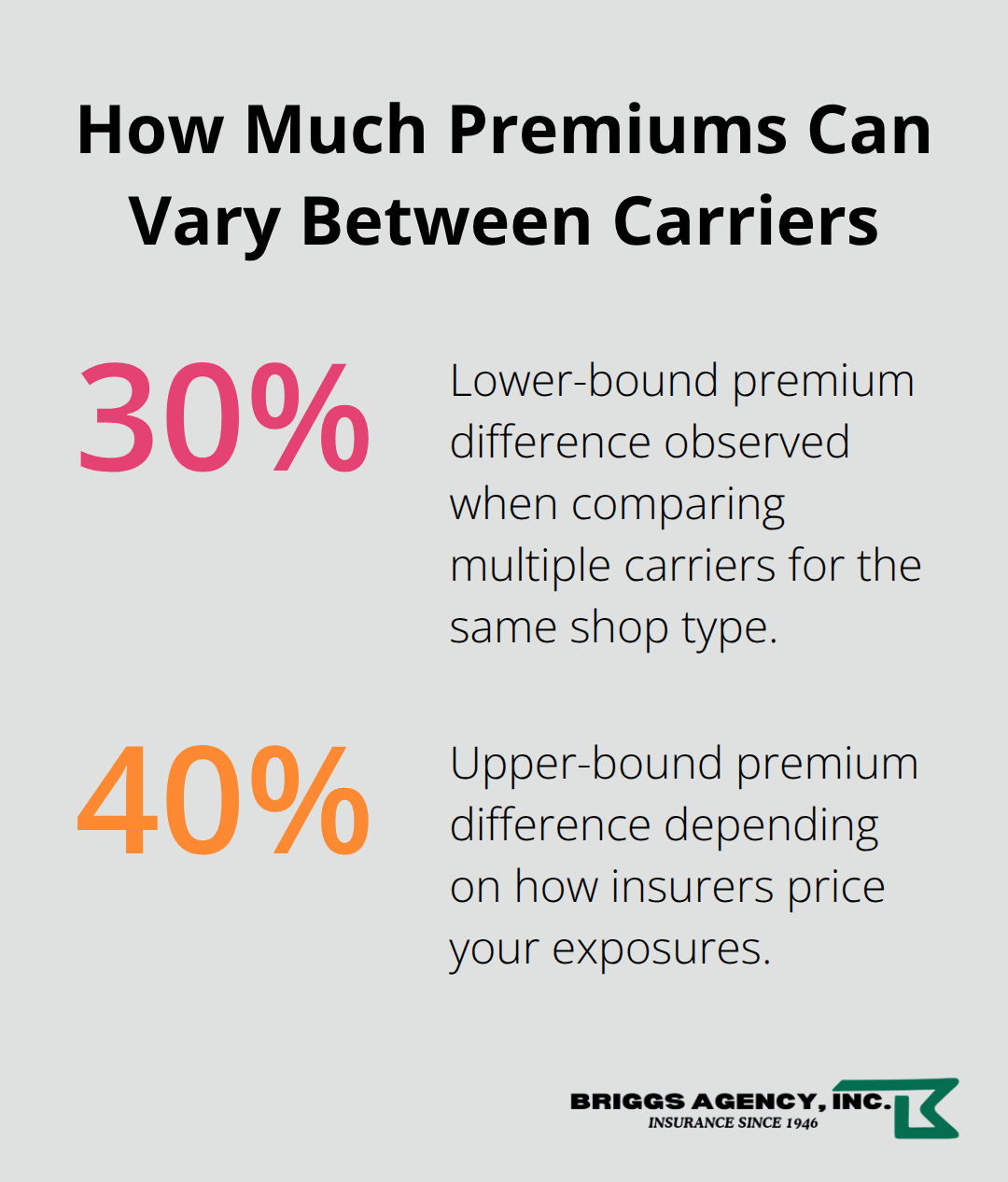
Comparing quotes across multiple carriers reveals dramatic price differences for identical coverage needs. Contact at least three carriers before deciding, since premiums for the same shop type can vary by 30-40% depending on how each insurer prices your specific exposures.
When requesting quotes, provide detailed information about your operation: square footage of your facility, number of employees, types of repairs you perform, average number of customer vehicles on-site daily, annual revenue, and your claims history for the past five years. Carriers weight these factors differently, meaning one company might charge significantly more for a shop with recent claims while another offers competitive rates if your overall loss history remains favorable. Request quotes that include both your core coverage needs and optional add-ons so you can see true total costs rather than comparing base policies. This comparison process takes time but prevents the mistake of selecting a policy based solely on premium without understanding what protection you’re actually purchasing.
Ask each carrier about bundle discounts, since adding property to your auto coverage or bundling workers’ compensation with liability often reduces overall costs by 10-15%. Verify that quotes include the specific coverage limits you need rather than accepting default minimums that may leave your shop underprotected.
Working with an Agent Who Understands Your Shop
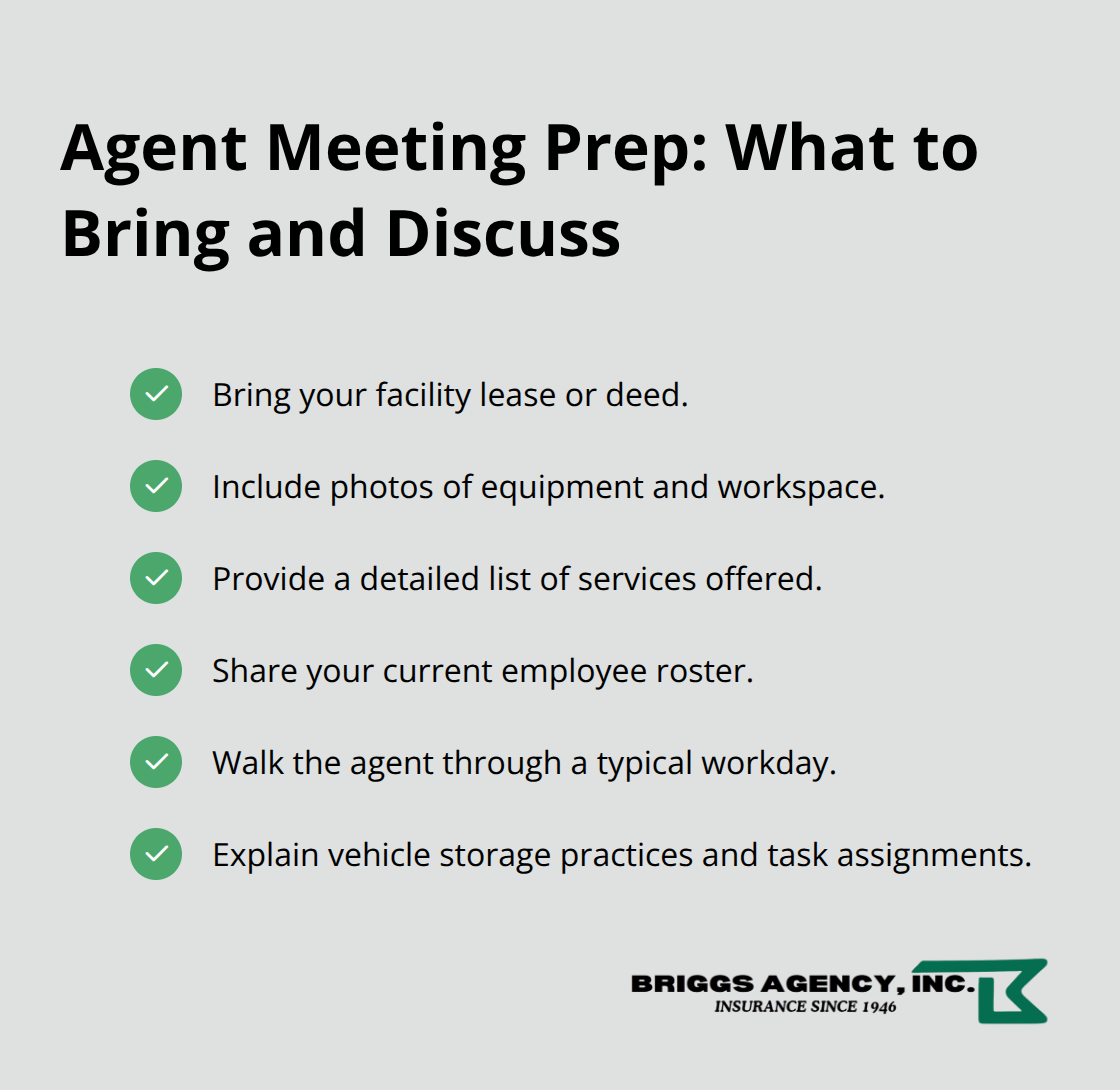
Selecting an insurance agent matters more than most shop owners realize because coverage gaps often emerge after a claim happens, when it’s too late to fix them. An agent familiar with garage operations knows which coverage combinations address real exposures in your specific shop type rather than simply selling policies based on price. When you meet with an agent, bring documentation about your operation: your facility lease or deed, photos of your equipment and workspace, a list of services you provide, and your employee roster. Walk your agent through a typical workday so they understand exactly what happens in your shop, from how you store customer vehicles to which employees handle which tasks.
This conversation prevents the common mistake of accepting generic coverage recommendations without customizing limits and deductibles to your actual situation.
Ask your agent which claims they’ve handled for similar shops and what exposures surprised shop owners after incidents occurred. This real-world perspective helps you avoid coverage gaps that statistics alone won’t reveal. Discuss your deductible strategy explicitly, since choosing a higher deductible reduces premiums but increases out-of-pocket costs when claims happen. Many shop owners select $1,000 deductibles for property coverage and $500 for liability, balancing manageable premium costs against reasonable claim expenses. Your agent should also explain exactly what your policies exclude and what situations fall outside coverage, preventing the assumption that your insurance covers something it doesn’t.
Final Thoughts
Garage workshop insurance Indiana protects your shop against the specific risks that standard business policies ignore. Garagekeepers coverage handles customer vehicles in your care, commercial auto protects your service vehicles, and specialized liability coverage addresses repair-related claims that generic policies exclude entirely. Property protection ensures your diagnostic equipment, lifts, and inventory stay covered at replacement value, while workers’ compensation safeguards your employees.
Your next step is straightforward: gather information about your shop’s operations and request quotes from multiple carriers. Document your facility size, employee count, services offered, and claims history, then contact at least three insurers to compare pricing and coverage options. This comparison process typically reveals significant premium differences for identical protection, sometimes 30-40% or more between carriers (and verifying that coverage limits match your actual needs rather than accepting default minimums prevents underinsurance).
At Briggs Agency, Inc., we work with Indiana businesses to deliver hands-on expertise that matters when protecting your shop. Our experienced local agents represent multiple top-rated carriers, comparing options to deliver competitive pricing and the right protection tailored to your operation. Contact Briggs Agency, Inc. today to discuss your garage workshop insurance needs and receive a customized quote that protects what you’ve built.
The information provided in this blog is for general informational purposes only and does not constitute legal, financial, or insurance advice. Coverage options, terms, and availability may vary. Please consult with a licensed professional for advice specific to your situation.
Artificial intelligence may have been used to generate text and images in some blog articles.

