Will Insurance Cover It? 15 Real-Life Scenarios

Will Insurance Cover It? 15 Real-Life Scenarios (Some Might Surprise You)

Insurance can feel straightforward… until something actually happens. Then suddenly it’s:
“Wait… am I covered for THIS?!”

The truth is—coverage depends on your policy, your limits, and sometimes the fine print. Let’s break down 15 real-life scenarios people ask about all the time 👇


🚗 1. Your Friend Crashes Your Car

Covered? → Usually YES

Most auto insurance follows the car, not the driver.
If you gave permission, your policy is typically primary.

👉 BUT: If your friend was intoxicated or excluded from your policy, things get messy.


🌳 2. Your Neighbor’s Tree Falls on Your House

Covered? → YES (Usually your policy)

Even if it’s your neighbor’s tree, your homeowner’s insurance typically covers the damage.

👉 Exception: If the tree was dead and your neighbor knew it, they could be liable.


💻 3. You Get Hacked or Experience a Cyber Attack

Covered? → SOMETIMES

Standard policies usually don’t include cyber coverage.

👉 You may need:

  • Cyber liability (business)
  • Identity theft endorsement (personal)

🐶 4. Your Dog Bites Someone

Covered? → YES (with conditions)

Most homeowners’ policies include liability coverage for dog bites.

👉 BUT:

  • Some breeds may be excluded
  • Prior bite history can void coverage

🔥 5. Kitchen Fire Damages Your Home

Covered? → YES

Fires are one of the most standard covered perils.

👉 Even if it was your fault (like leaving the stove on), you’re typically covered.


🌊 6. Basement Flooding

Covered? → NO (usually)

This one surprises a LOT of people.

👉 Standard homeowners’ insurance does NOT cover:

  • Flooding from outside water
  • Rising groundwater

You need flood insurance for that.


🚘 7. Hit-and-Run Accident

Covered? → YES (if you have the right coverage)

Uninsured motorist coverage can step in here.

👉 Without it, you could be paying out of pocket.


🛍️ 8. Package Stolen Off Your Porch

Covered? → YES

This is considered theft, which is typically covered under homeowners or renters’ insurance.

👉 Deductible applies, so small claims may not be worth filing.


🧊 9. Frozen Pipes Burst

Covered? → YES (if you maintained heat)

Insurance covers sudden pipe bursts…

👉 BUT if you left your home unheated and pipes froze due to neglect, it may be denied.


🏢 10. Someone Slips and Falls at Your Business

Covered? → YES

This is exactly what general liability insurance is for.

👉 Covers medical bills, legal fees, and settlements.


🚗 11. You Hit a Deer

Covered? → YES (Comprehensive coverage)

This falls under comprehensive, not collision.

👉 If you only have liability, you’re not covered.


🏠 12. Your Home-Based Business Causes a Loss

Covered? → NO (usually)

Running a business out of your home?

👉 Your homeowner’s policy likely won’t cover:

  • Business equipment
  • Liability from clients

You need a business policy or endorsement.


💍 13. You Lose an Expensive Ring

Covered? → LIMITED

Homeowners policies have low limits for valuables like jewelry.

👉 For full protection, you need:

  • Scheduled personal property coverage

⚡ 14. Power Surge Fries Your Electronics

Covered? → YES (sometimes)

If caused by a covered peril (like lightning), you’re likely covered.

👉 Wear-and-tear or internal issues? Not covered.


🚧 15. Your Car Is Stolen

Covered? → YES (if you have comprehensive)

Comprehensive coverage protects against theft.

👉 Without it, there’s no payout.


🧠 The Big Takeaway

Insurance isn’t just about having a policy—it’s about having the RIGHT coverage.

Most coverage gaps come from:

  • Missing endorsements
  • Low limits
  • Assuming something is covered when it’s not


You can experience being a part of and full-serviced independent Insurance Agency today! Simply contact Briggs Agency Inc, if you are interested in an insurance review at 219-769-4840 or visit our website at www.BriggsAgency.com. We look forward to hearing from you!


Blog post written by: Zachary Pelke

Trucking Insurance Coverage Indiana: How to Bundle for Real Savings

Running a trucking operation in Indiana means managing multiple insurance policies, and most fleet owners overpay because they haven’t bundled their coverage. We at Briggs Agency, Inc. work with trucking companies across the state who discover significant savings simply by combining their liability, physical damage, and cargo coverage with one carrier.

The right bundle cuts your premiums while eliminating the headache of juggling separate policies and agents. Let’s walk through how trucking insurance coverage Indiana actually works and where your real savings hide.

What Indiana Trucking Insurance Actually Covers

Liability Coverage: Your Legal Foundation

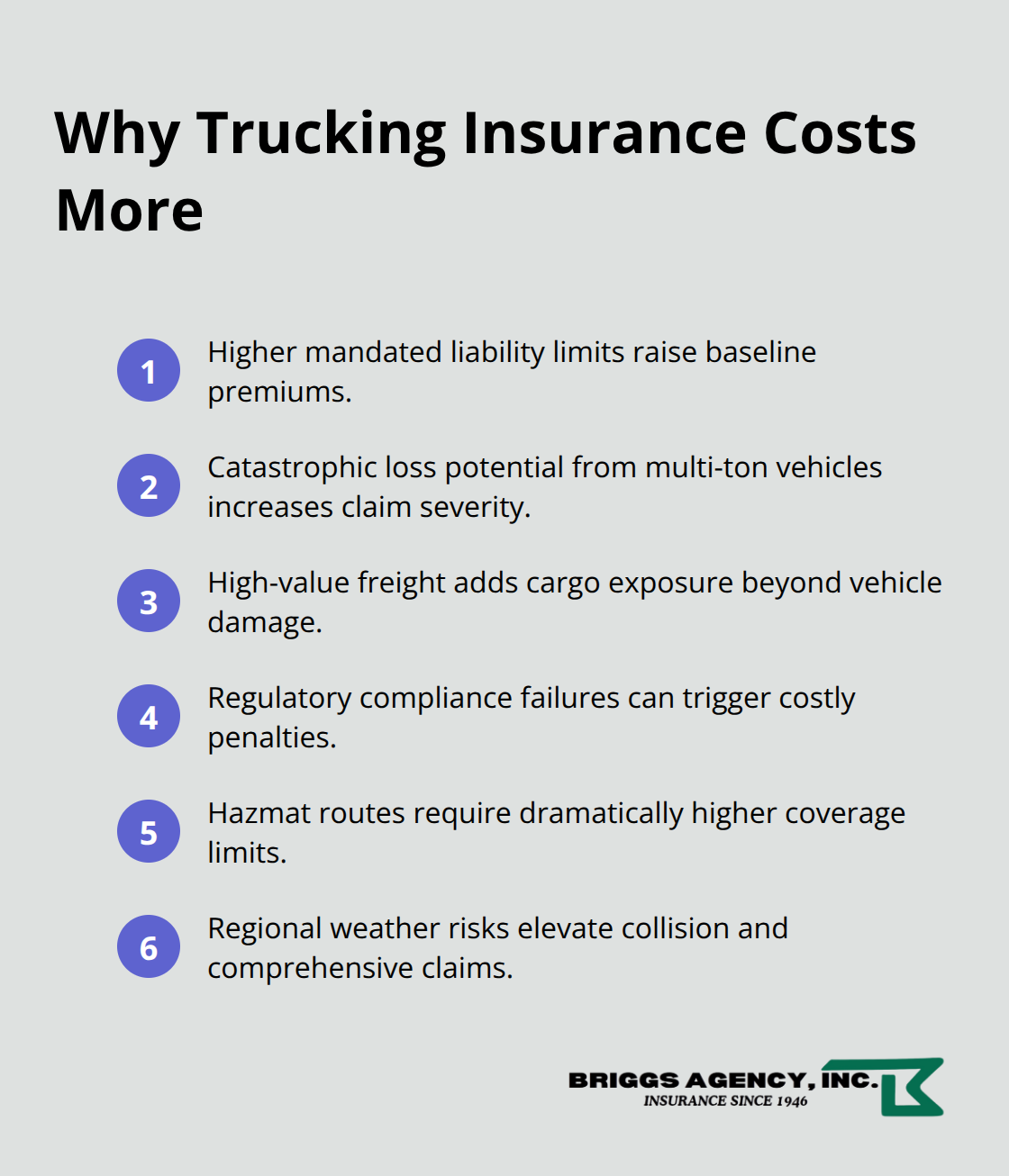
Indiana requires primary liability insurance with minimums of $750,000 for non-hazardous freight and up to $5,000,000 for hazardous materials, according to the Indiana Department of Revenue. Most shippers and brokers demand at least $1,000,000 in primary liability regardless of what the state requires, which means your actual floor sits higher than the legal minimum. In 2025, owner-operators typically pay $8,000–$15,000 annually for $1,000,000 in primary liability coverage, with new authorities landing at the higher end of that range.

Every liability policy includes an MCS-90 endorsement that guarantees public liability coverage and can cover defense costs exceeding $100,000 even when you’re not at fault. The Federal Motor Carrier Safety Administration reports 152,000+ truck accidents occurred in 2024, and the average injury-related crash costs around $148,279, which underscores why under-insuring exposes you to catastrophic financial risk.

Physical Damage and Cargo Protection

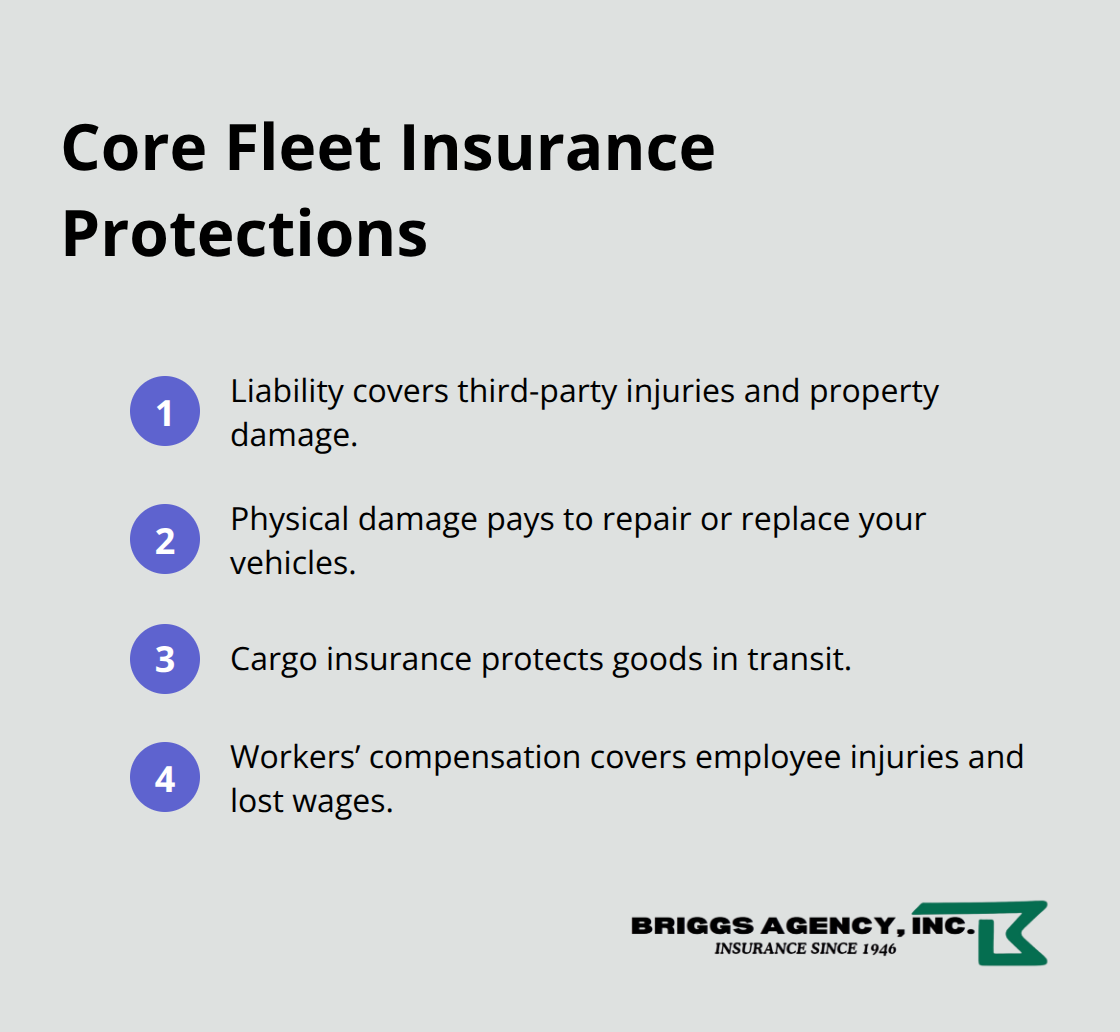
Physical damage coverage protects your truck and trailer from collision and comprehensive losses, and lenders almost always require it for financed equipment. Your typical operator equipment has a value between $150,000–$250,000, so the protection matters significantly to your bottom line. Motor truck cargo insurance commonly covers $100,000 by default for around $500–$1,800 per year, but specialized cargo demands higher limits. Auto haulers typically need $250,000 in cargo coverage, while refrigerated freight operators should expect $2,500–$3,500 annually.

Cargo theft costs the trucking industry more than $30 billion annually according to industry data, and many 2024–2025 policies exclude theft unless you add a specific endorsement. This gap in coverage can expose you to substantial losses if you transport high-value or theft-prone freight.

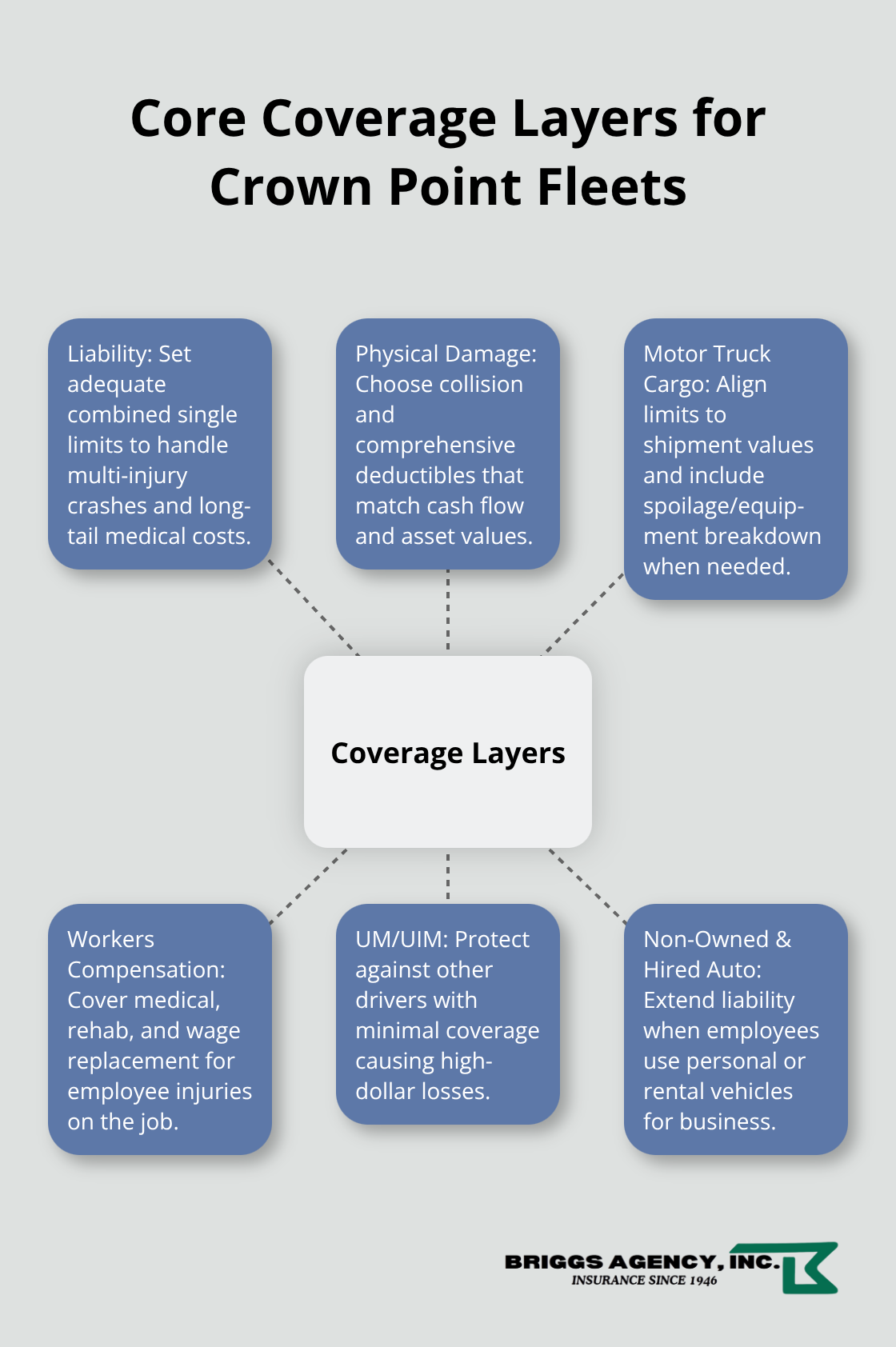
Visual overview of the core insurance coverages Indiana trucking operations commonly bundle and what each one addresses. - Trucking insurance coverage Indiana

Additional Coverage for Indiana Operations

Beyond these core coverages, Indiana operations often need additional protection depending on what you haul and how you operate. Bobtail insurance covers liability when you drive a truck without a trailer and runs about $240–$720 yearly. Non-trucking liability insurance protects personal use of the truck off dispatch and costs roughly the same, but it differs from bobtail and many lease agreements require it.

Occupational accident insurance offers medical, disability income, and death benefits ranging from $600–$2,400 annually with typical limits of $500,000–$1,000,000, and most lease agreements make this mandatory. General liability insurance covers premises-related injuries and damage at loading docks or warehouses for about $606 per year with typical limits of $1,000,000.

How Your Driving Record and Safety Practices Affect Costs

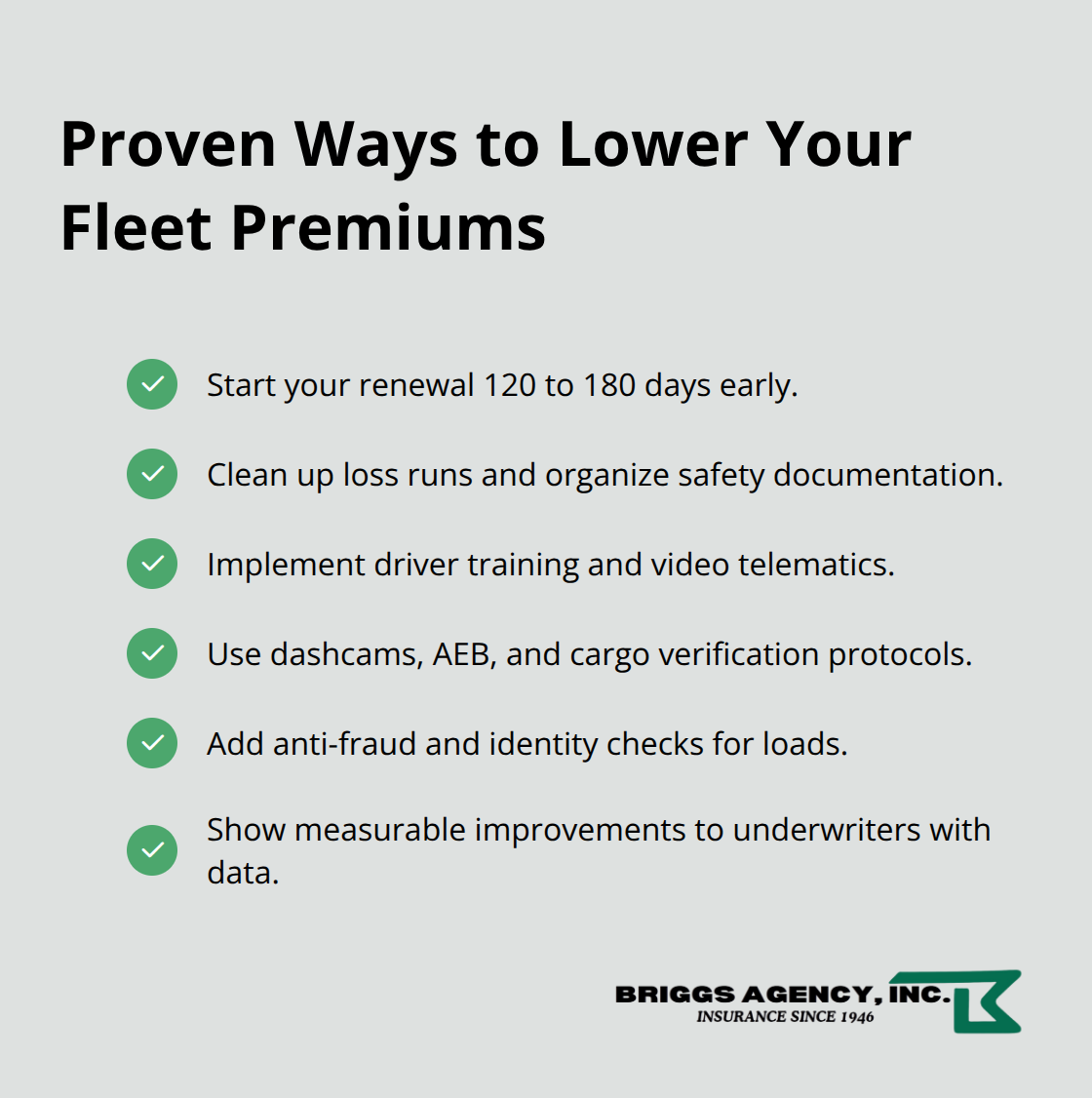
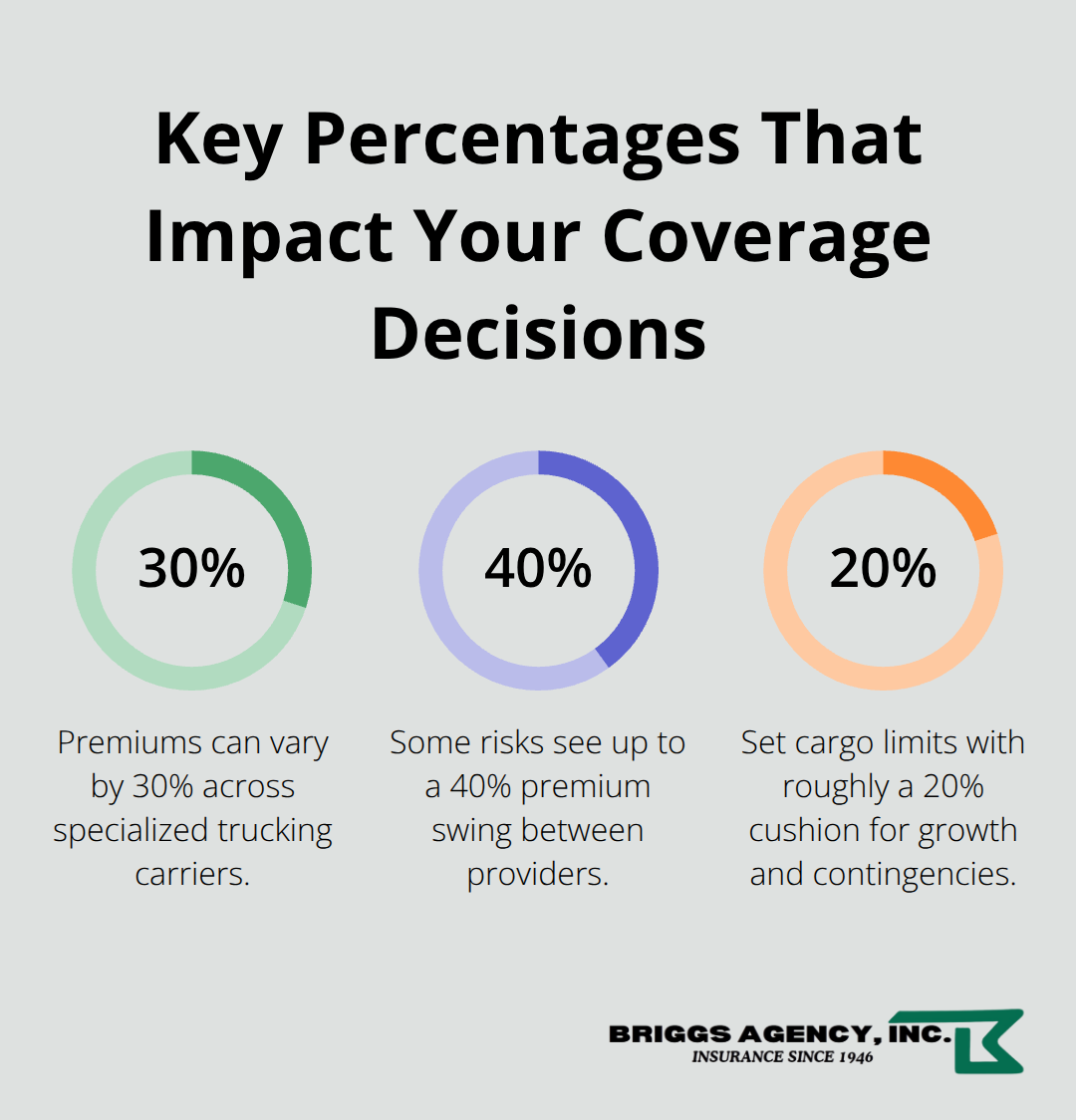
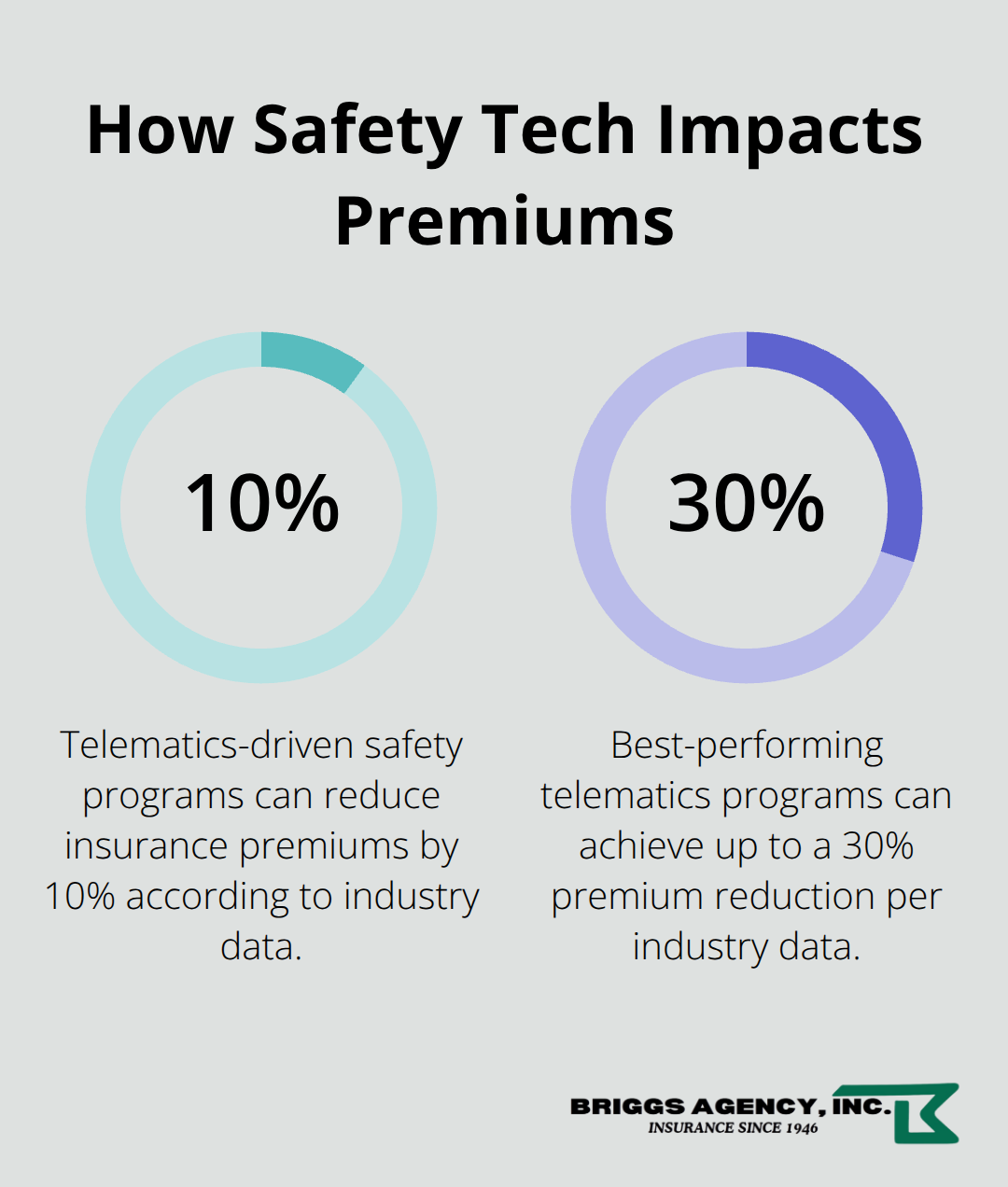
Your motor vehicle record stands as the single most important rating factor for premiums, so maintaining a clean driving record directly lowers costs. Adding dual-facing dash cameras can reduce premiums by 5–15% and help protect against false claims. Telematics and safety data programs also unlock discounts as insurers reward technology-driven safety approaches.

Choosing the right coverage limits depends on your actual operation. Local and short-haul operations with non-hazardous goods may need lower limits than long-haul carriers, but the baseline remains substantial. The specific cargo you transport and your route patterns should shape your coverage strategy-and that’s where bundling multiple policies with one carrier starts to make real financial sense.

How Bundling Cuts Your Actual Trucking Costs

The Real Numbers Behind Bundled Savings

Bundling saves 10–15% on premiums according to industry standards, but the real value extends far beyond that percentage discount. When you combine auto liability, physical damage, and cargo coverage under one policy, carriers reward that consolidation because it reduces their administrative overhead and attracts customers who stay longer. In 2025, an Indiana owner-operator paying $8,000–$15,000 for primary liability, $500–$1,800 for cargo, and $600–$2,400 for occupational accident insurance across three separate carriers could easily trim $1,500–$2,500 annually by moving everything to a single provider. That’s not theoretical savings-that’s real money staying in your operational budget.

Three key reasons bundled trucking insurance reduces total cost and complexity for Indiana operators. - Trucking insurance coverage Indiana

The discount compounds when you add physical damage coverage, bobtail insurance, or general liability, since each additional policy bundled often qualifies for an additional percentage reduction. Many Indiana trucking operations pay more than necessary simply because their policies sit scattered across multiple agents with no coordination between them.

Operational Simplicity That Reduces Your Workload

The second major advantage is operational simplicity that directly reduces your administrative burden. Managing policies with one agent means a single renewal date, one invoice, one point of contact for claims, and one source of truth for your coverage limits and exclusions. When a claim happens-and it will-you contact one person who understands your entire operation rather than hunting through three different policy documents and three different customer service lines.

Renewal time becomes straightforward instead of chaotic, and you avoid the common mistake of letting a policy lapse while you’re juggling paperwork from multiple carriers. Additionally, bundling forces clarity about coverage gaps that exist when policies are separate.

Closing Coverage Gaps Before They Cost You

A specialized trucking insurer can identify where your auto liability ends and your cargo coverage begins, or where your physical damage exclusions create exposure you didn’t realize. That gap-closing alone often prevents costly underinsurance situations that could cost tens of thousands when a claim occurs. Your local agent should customize your bundle around your actual operation rather than accepting a generic package designed for all trucking operations.

The specifics of what you haul, where you operate, and how your equipment is financed all shape which coverages matter most to your bottom line. This is where the conversation shifts from what you should buy to what actually protects your Indiana trucking business.

How to Build Your Indiana Trucking Bundle Step by Step

Assess What You Actually Own and Operate

Start with a complete inventory of your operation. List your truck values, trailer worth, typical cargo types, annual mileage, whether you haul hazardous materials, and which routes dominate your schedule. This inventory becomes your baseline for coverage decisions.

Compact checklist of steps to assemble a customized, cost-optimized trucking insurance bundle in Indiana.

An owner-operator hauling refrigerated freight across three states needs entirely different coverage than someone running local deliveries with a box truck. The specifics matter because they determine which policies genuinely protect your operation and which ones you can optimize for cost.

Review Your Current Policies for Overlaps and Excess Coverage

Pull your current policies and note the coverage limits, deductibles, and annual premiums for each. Many Indiana trucking operators pay for overlapping coverage or carry limits that far exceed their actual exposure. If you haul non-hazardous freight within a 150-mile radius, you probably don’t need the $5,000,000 hazmat liability limit that long-haul carriers require. That misalignment between your risk profile and your coverage costs you money every single year.

Request Bundled Quotes from Multiple Carriers

Contact at least three specialized trucking insurers and request quotes for bundled packages rather than individual policies. The difference in pricing can be substantial. An operator bundling $1,000,000 primary liability, $250,000 cargo coverage, and $150,000 physical damage with one carrier will typically pay significantly less than spreading those same limits across three separate providers. Request quotes that show the per-policy cost and the bundled discount separately so you see exactly where the savings come from.

Work with a Local Agent to Customize Your Package

Bring those quotes to a local agent who understands Indiana operations. A specialized trucking agent can identify which deductible levels make sense for your cash flow, whether you need bobtail coverage based on your dispatch patterns, and whether your equipment financing requires physical damage protection. The right bundle structure often saves $1,500–$2,500 annually while actually expanding coverage in critical gaps. Your agent should also confirm that your bundle complies with Indiana Department of Revenue requirements and any shipper or broker mandates you’re contractually bound to meet.

Reject Generic Packages in Favor of Customized Solutions

Never accept a generic package. The best bundle reflects your specific operation, not a template designed for all trucking businesses. Your local agent should tailor coverage around your actual needs rather than forcing you into a one-size-fits-all structure that leaves you either overinsured or exposed.

Final Thoughts

Bundling your trucking insurance coverage in Indiana delivers real savings that compound over time. An owner-operator moving from three separate policies to one bundled package typically saves $1,500–$2,500 annually while gaining the operational simplicity of a single renewal date, one invoice, and one agent who understands your entire operation. That money stays in your business instead of flowing to multiple carriers, and the administrative burden of managing separate policies disappears entirely.

Start by listing what you own and operate, then pull your current policies to identify overlaps and excess coverage you’re paying for unnecessarily. Request bundled quotes from at least three specialized trucking insurers, comparing the per-policy costs and bundled discounts side by side. The variation in pricing across carriers is substantial, and you won’t know your actual savings until you see those numbers in writing.

Work with a local agent who specializes in trucking operations and understands Indiana’s specific requirements (your agent should customize your bundle around your actual risk profile rather than forcing you into a generic package). We at Briggs Agency, Inc. have worked with Indiana trucking companies for decades, helping them build bundled packages that protect their equipment, cargo, and liability exposure while cutting unnecessary costs. Reach out to discuss your operation and get a customized quote that shows exactly where your savings hide.

The information provided in this blog is for general informational purposes only and does not constitute legal, financial, or insurance advice. Coverage options, terms, and availability may vary. Please consult with a licensed professional for advice specific to your situation.
Artificial intelligence may have been used to generate text and images in some blog articles.

Motor Carrier Insurance Indiana: From Compliance to Peace of Mind

Running a motor carrier operation in Indiana means navigating federal and state regulations that can feel overwhelming. The right motor carrier insurance Indiana protects your fleet, your drivers, and your business from costly gaps in coverage.

At Briggs Agency, Inc., we’ve helped countless carriers move from simply checking compliance boxes to actually feeling confident about their protection. This guide walks you through what you need to know.

What Compliance Actually Costs Motor Carriers in Indiana

Federal Minimums vs. Real-World Protection

Federal regulations set the floor for motor carrier insurance, but Indiana’s specific requirements and enforcement practices determine what you actually need to carry. The Federal Motor Carrier Safety Administration requires a minimum of $750,000 in liability insurance for most operations, though many insurers push carriers toward $1,000,000 to account for real-world claim severity. If you operate under your own authority in Indiana, primary liability insurance is non-negotiable, and if you employ drivers, workers’ compensation becomes mandatory under state regulations.

The gap between federal minimums and what carriers actually need is where most operators stumble. A single catastrophic accident involving an 80,000-pound truck can generate damages far exceeding $750,000, which means staying at the legal minimum exposes your business to personal liability and potential asset seizure. Indiana’s dense truck traffic on interstates and highways combined with varying weather conditions and mixed urban-rural roads creates hazardous driving environments that increase crash severity and claim frequency.

Hub-and-spoke chart showing Indiana motor carrier risk factors that exceed federal minimum insurance levels.

Financial Penalties for Coverage Gaps

Violations carry real financial consequences that most carriers underestimate. Operating without proof of insurance, filing late forms, or misrepresenting coverage results in out-of-service orders that halt your revenue immediately. The FMCSA tracks safety violations through CSA scores, and a poor score directly impacts your insurability and premium rates.

Many carriers discover too late that their coverage gaps leave them personally liable for settlements, medical expenses, and lost wages from injured parties. For leased owner-operators, non-trucking liability coverage and downtime expense coverage address blind spots that basic policies miss entirely.

Beyond Standard Commercial Policies

Cargo coverage, including bulk commodity options for specialized shipments, protects against losses that standard auto policies ignore completely. Equipment coverage, trailer interchange, and motor carrier reimbursement coverage exist because standard commercial policies were never designed for trucking operations.

The practical reality is that compliance means more than filing paperwork with the state; it means having the right coverage structure in place before something goes wrong. Reviewing your current policy against your actual operation takes a few hours and prevents months of financial and legal headache down the road. Once you understand what your operation truly requires, the next step is identifying which specific coverage options actually protect your fleet and your bottom line.

Coverage Options That Protect Your Fleet

Liability Insurance: Your First Line of Defense

Liability insurance forms the foundation of any motor carrier operation, and the federal minimum is genuinely insufficient for most Indiana operations. A single serious accident involving your truck generates medical bills, lost wages, and pain-and-suffering awards that easily exceed that threshold. Many carriers operate with $1,000,000 in primary liability coverage because they’ve learned from claims that the federal floor leaves them personally exposed.

If you lease owner-operators or operate under your own authority, primary liability protects you against third-party claims-meaning it covers injuries or property damage your truck causes to someone else. The practical reality is that moving to higher coverage limits costs far less than the gap between what your minimum policy covers and what a catastrophic accident actually costs.

Physical Damage and Equipment Protection

Physical damage coverage protects your vehicles themselves-your trailers, trucks, and equipment-from collisions, theft, weather, and mechanical breakdown. This matters more than many carriers realize because a single totaled tractor runs $120,000 to $150,000 to replace, and downtime during repairs kills your revenue while repair costs mount.

Checkmark list highlighting key protections and costs for physical damage and equipment coverage. - Motor carrier insurance Indiana

Equipment coverage extends protection to specialized attachments and tools, while lease value and financed value coverage specifically protect asset values for equipment you don’t own outright. These layers work together to keep your operation moving when accidents happen.

Cargo Coverage and Specialized Freight Protection

Cargo coverage is where most Indiana carriers discover they have dangerous gaps in their protection. Standard commercial policies don’t cover cargo loss, which means if your load shifts, spoils, or gets damaged in transit, you absorb the full cost and potentially face liability claims from your shipper.

Bulk commodity coverage addresses the specific risks of hauling specialized freight. Bobtail coverage (also called non-trucking liability) protects you when you operate outside standard trucking duties or deadhead without a load. Indiana’s mixed urban and rural roads, combined with winter weather and dense interstate traffic, create conditions where cargo shifts and accidents happen more frequently than carriers expect.

Additional Coverages That Close the Gaps

Trailer interchange coverage handles situations where you use someone else’s trailer, protecting you if that equipment causes damage. Motor carrier reimbursement coverage reimburses you for certain expenses when claims occur. These coverages exist because standard commercial policies were never designed for trucking operations.

The carriers we work with typically recommend layering these coverages rather than picking and choosing, because a single accident scenario often triggers multiple coverage needs simultaneously. Understanding what each coverage actually does and what gaps exist in your current policy reveals which risk management strategies reduce your claims frequency and keep your operation running smoothly.

Risk Management Strategies That Lower Your Insurance Costs

Driver Training Prevents the Accidents That Generate Claims

Driver fatigue remains the leading cause of semi-truck crashes according to the Federal Motor Carrier Safety Administration, yet most carriers treat fatigue management as a compliance checkbox rather than a cost-reduction strategy. Indiana’s enforcement of hours-of-service regulations varies across jurisdictions, which means carriers who invest in training programs that exceed minimum legal requirements see measurable reductions in claims frequency. A carrier operating tractor-trailers on Indiana interstates faces concrete hazards: distracted driving increases crash risk substantially when you’re piloting an 80,000-pound vehicle, speeding reduces reaction time on mixed urban-rural roads, and improperly secured cargo destabilizes trailers during the heavy truck traffic common on Indiana highways.

Three-point list showing how training and Indiana-specific hazards affect crash risk and insurance outcomes. - Motor carrier insurance Indiana

Structured driver safety programs directly lower your CSA scores, which insurers use to calculate premiums. Mandatory training on Indiana-specific road hazards, winter weather response, and load securement prevents the accidents that generate claims in the first place.

Vehicle Maintenance Creates Safer Operations and Lower Premiums

Mechanical failures in brakes, tires, and other components cause crashes that expose your operation to liability claims and out-of-service orders that halt revenue immediately. Regular inspection schedules that document maintenance create both safer operations and evidence of due diligence if a claim occurs.

Carriers reducing their insurance costs most aggressively treat maintenance as an investment that pays for itself through lower premiums and fewer downtime incidents. A single catastrophic accident involving your fleet doesn’t just generate immediate claim costs; it damages your safety profile for years, triggering premium increases across your entire operation.

How Loss Control Connects to Your Bottom Line

Carriers with strong safety records and documented maintenance programs qualify for better premium rates because insurers recognize reduced risk. The relationship between loss control and your insurance costs works in both directions-your operational practices directly influence what you pay for coverage.

Risk management becomes the bridge between your coverage structure and your actual costs. Implementing these strategies before you need them positions your operation to absorb unexpected incidents without derailing your business financially. Carriers operating most efficiently in Indiana understand that insurance isn’t just about compliance or coverage limits; it’s about building operational practices that prevent claims from happening in the first place.

Final Thoughts

Proper motor carrier insurance in Indiana protects your business when accidents happen in dense traffic and variable weather conditions. Coverage limits of $1,000,000 combined with cargo protection and equipment coverage mean a catastrophic accident doesn’t force you to liquidate assets or declare bankruptcy. Your drivers trained on Indiana-specific hazards and your fleet maintained on schedule prevent claims in the first place, which keeps your premiums lower and your CSA scores stronger.

Peace of mind comes from knowing exactly what your operation requires and having that protection in place before you need it. Review your current policy against your actual operation and compare your coverage limits against the real costs of accidents in your industry. Identify which specialized coverages you’re missing-cargo protection, equipment coverage, non-trucking liability-and understand what those gaps could cost you (a single totaled tractor runs $120,000 to $150,000 to replace, and downtime during repairs kills your revenue while repair costs mount).

Finding the right partner matters because motor carrier insurance requires someone who understands Indiana’s specific regulatory environment and the coverage structures that actually protect your business. Contact Briggs Agency, Inc. to review your current coverage and strengthen your protection with experienced local agents who work with motor carriers to build policies tailored to your actual needs.

The information provided in this blog is for general informational purposes only and does not constitute legal, financial, or insurance advice. Coverage options, terms, and availability may vary. Please consult with a licensed professional for advice specific to your situation.
Artificial intelligence may have been used to generate text and images in some blog articles.
Restaurant Insurance for Owners: Protect Your Business and Investment

Running a restaurant means managing countless moving parts, and one critical piece many owners overlook is proper insurance coverage. Restaurant insurance for owners isn’t just a box to check-it’s your financial safety net when accidents, fires, or foodborne illness claims threaten your business.

At Briggs Agency, Inc., we’ve helped restaurant owners across our community understand what coverage they actually need and why it matters. This guide walks you through the protection options available and how to build a policy that fits your operation.

What Your Restaurant Insurance Actually Protects

General Liability: Your First Line of Defense

General liability coverage is non-negotiable, and most policies cost between $500 and $6,000 annually with no deductible. This protection covers third-party bodily injuries that occur on your premises-a customer slips on a wet floor, or a server accidentally spills hot coffee on someone. It also covers property damage claims, foodborne illness lawsuits, and even copyright infringement if someone alleges you’ve used their recipe or image without permission. The National Safety Council data shows that workplace and premises incidents remain common in food service, making this foundational coverage essential.

Visual map of core restaurant insurance coverages for U.S. restaurant owners - Restaurant insurance for owners

Property Insurance: Protecting Your Equipment and Building

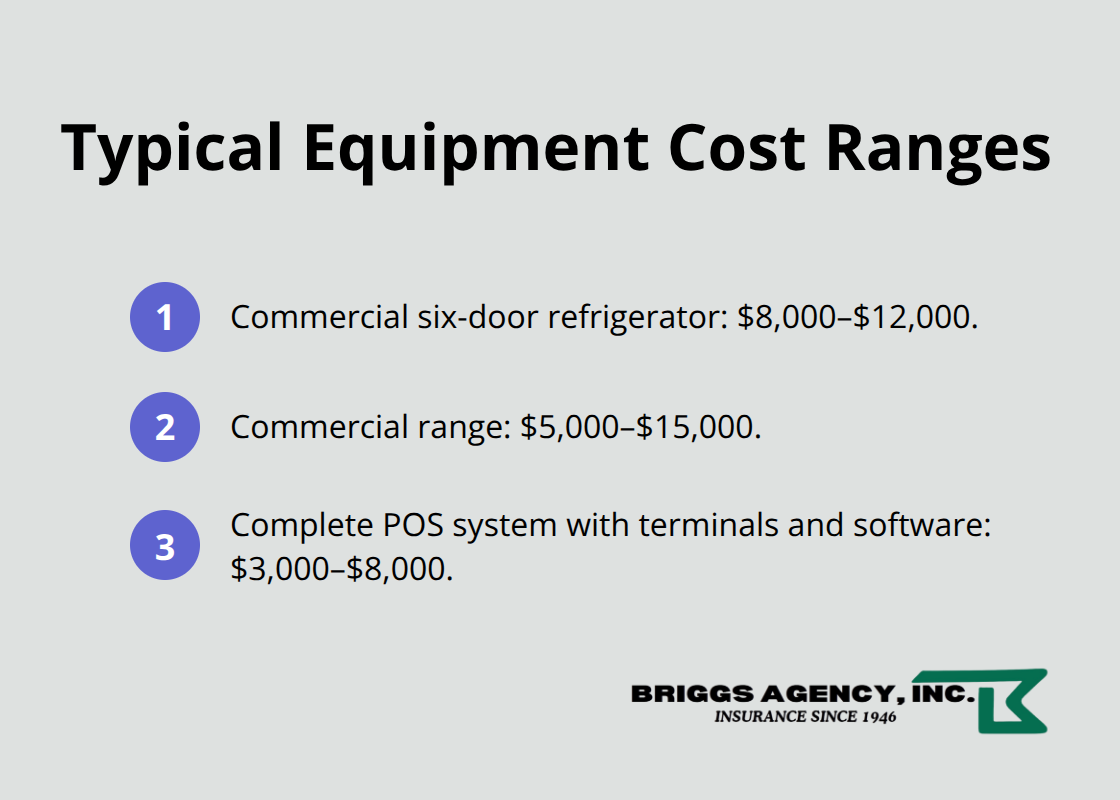
Property insurance typically runs $1,000 to $2,500 per year with a $1,000 deductible and protects your kitchen equipment, furniture, inventory, and the building itself if you own it. Cooking areas and kitchens account for 41 percent of restaurant fires, underscoring why this coverage matters-fire can destroy your entire operation in minutes. If you lease your space, confirm whether the landlord’s policy covers the building structure; your policy must cover everything inside, from your $15,000 commercial range to your point-of-sale system and inventory.

Workers’ Compensation: Protecting Your Team

Workers’ compensation insurance costs roughly $2.25 per $100 of payroll with no deductible and is legally required in nearly all states if you have employees. This coverage pays medical bills and lost wages when an employee sustains an injury on the job-a kitchen burn, a fall in the walk-in cooler, or a repetitive strain injury. Most workers’ compensation policies also include Employer’s Liability Insurance, which protects you if an employee sues over workplace conditions.

Specialty Coverage That Fills Critical Gaps

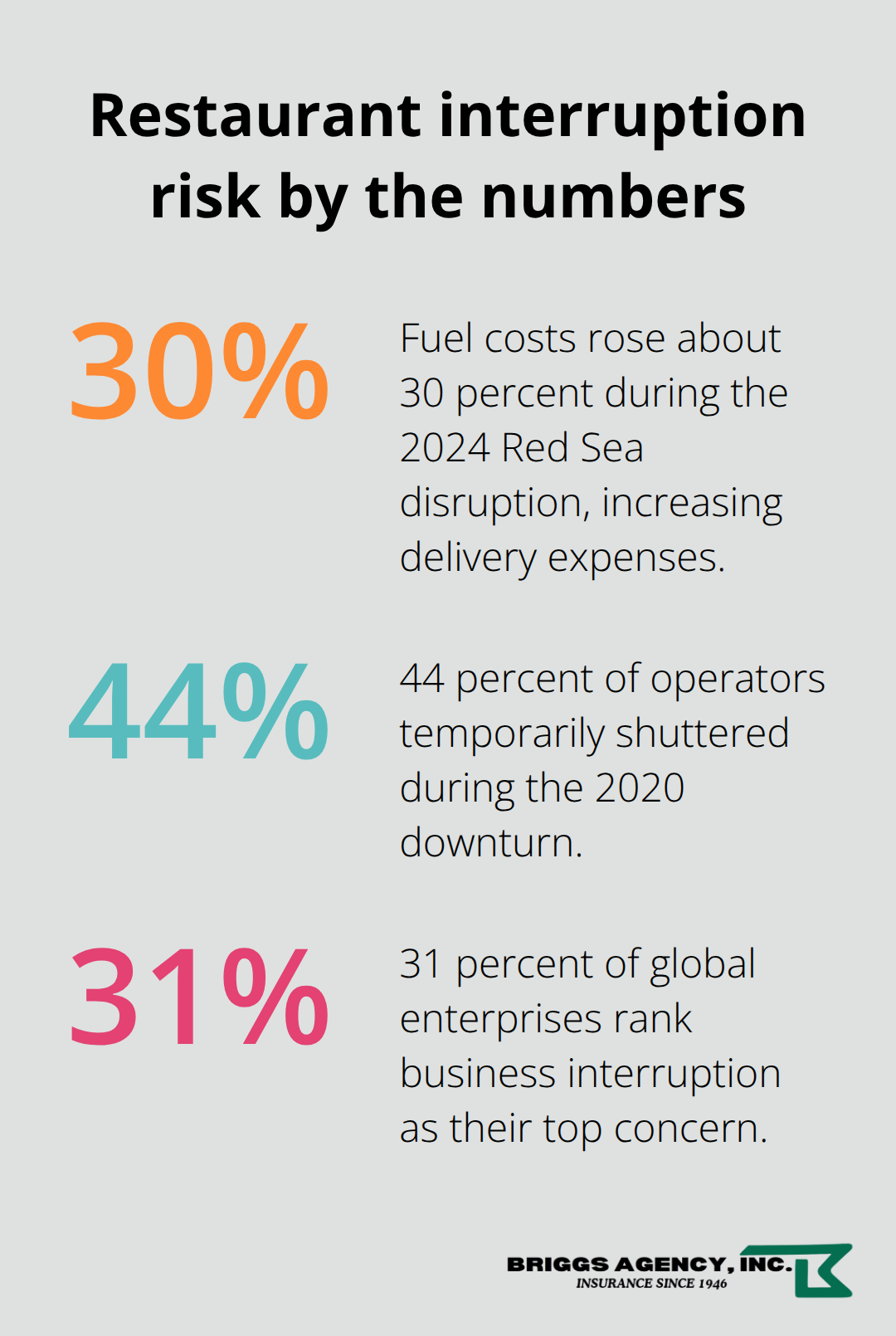
Beyond these three core coverages, specialty protections fill gaps that standard policies miss. Liquor liability insurance costs $400 to $3,000 annually and covers damages if an intoxicated patron injures someone or damages property-essential if you serve or sell alcohol. Business interruption insurance, averaging $750 to $10,000 per year, replaces lost income and covers ongoing expenses when a covered event forces temporary closure, whether that’s a fire, theft, or severe weather.

Food contamination insurance averages around $1,800 annually and reimburses losses from spoiled or contaminated food during power outages or water-contamination events. If you offer delivery or catering services, commercial auto insurance typically costs $1,200 to $2,500 annually and covers accidents involving business vehicles. General liability alone won’t cover delivery-related incidents, creating a dangerous gap if you skip this protection.

Tailoring Coverage to Your Operation

The right combination of coverages depends on your specific operation-a pizza shop with delivery needs different protection than a fine-dining establishment without alcohol service. Your restaurant’s unique risks determine which specialty coverages matter most, which is why the next step involves assessing your business needs and comparing options with someone who understands your operation.

Common Risks Restaurants Face

Foodborne Illness and Contamination Claims

Foodborne illness claims represent one of the costliest exposures restaurant owners face, yet many underestimate how quickly a contamination incident spirals into legal liability and operational shutdown. Cross-contamination during food prep, improper storage temperatures, and inadequate handwashing protocols create real pathways to illness, and a single outbreak triggers multiple lawsuits, regulatory fines, and mandatory closure. A single foodborne outbreak could cost a restaurant millions of dollars in lost revenue, fines, lawsuits, legal fees, and insurance premium increases.

Your general liability policy covers some food-related injuries, but the scope remains limited. Audit your vendor contracts and food-handling procedures to minimize exposure. Train your kitchen staff on temperature monitoring, cross-contamination prevention, and cleaning protocols specific to your menu items. Require vendors to carry their own liability coverage for any pre-packaged or prepared items they supply.

Slip-and-Fall Incidents

Slip-and-fall incidents on your dining floor or sidewalk happen more often than most owners realize, and they generate claims that can exceed $20,000 when serious injury occurs. A customer trips on a loose floor mat, another slips on a spill that wasn’t cleaned promptly, and suddenly you’re defending a negligence lawsuit and facing potential premium increases if claims repeat.

The solution isn’t just liability coverage-it’s proactive hazard management. Conduct safety inspections at least twice daily and mark wet floors immediately with visible signage. Implement a nightly closing checklist that includes floor inspection, and address any damaged tile or carpet within 48 hours. Document these efforts because they demonstrate due diligence if a claim arises.

Checklist of slip-and-fall prevention steps for restaurants in the United States - Restaurant insurance for owners

Kitchen Fires and Equipment Damage

Kitchen fires remain the most destructive risk in your operation, with cooking areas accounting for 41 percent of all restaurant fires according to the National Fire Protection Association. A single fire destroys your kitchen equipment, inventory, and building improvements in minutes, forcing closure and wiping out months of revenue.

Percentage of restaurant fires originating in cooking areas and kitchens

Property insurance protects against fire loss, but you must maintain your hood and duct system according to manufacturer specifications, service your fire suppression system quarterly, and train staff on fire extinguisher use.

These actions reduce both the likelihood of catastrophic loss and your insurance premiums over time. Understanding what threatens your restaurant helps you identify which coverage gaps matter most for your specific operation-the next section walks you through assessing your business risks and selecting the right protections.

How to Choose the Right Restaurant Insurance Policy

Assess Your Specific Business Risks and Needs

Start with your actual operation, not with what you think you should buy. Many restaurant owners begin by collecting basic information: your location, square footage, projected annual sales, inventory value, kitchen equipment list, whether you serve alcohol, and your operating hours. This data matters because a 2,000-square-foot casual pizzeria with delivery creates different risks than a 5,000-square-foot fine-dining establishment without alcohol service. Once you have these details documented, request quotes from at least three insurers who specialize in restaurants rather than general commercial insurance.

Specialists understand that standard liability policies exclude liquor incidents, foodborne illness claims, and delivery-related accidents-gaps that generic policies leave wide open. Your operation’s unique profile determines which specialty coverages matter most and what limits you actually need to protect your investment.

Compare Coverage Options and Limits

When comparing quotes, don’t fixate on premium alone; instead, examine coverage limits, deductibles, and what’s actually excluded. A $500-per-year policy with a $5,000 deductible and $500,000 liability limits won’t protect you the same way a $2,000-per-year policy with a $1,000 deductible and $2,000,000 limits does. Many restaurant owners bundle general liability and property coverage to save money, but bundled policies sometimes offer lower limits or narrower coverage than purchasing each protection separately.

Compare the specific coverage and limits between bundled and individual policies before assuming the bundle saves money overall. The cheapest option often leaves dangerous gaps that cost far more when a claim arises.

Work with a Local Agent Who Understands Your Operation

The real decision comes down to working with someone who understands your restaurant and your community. An independent insurance agent familiar with local fire codes, health department enforcement patterns, and neighborhood demographics can spot coverage gaps you’d miss alone. If you own the building, your needs differ substantially from a lessee; if you added a delivery service last year, your auto liability exposure changed.

Ask potential agents whether they’ve worked with restaurants similar to yours and request referrals from five other restaurant owners they represent. An experienced agent should ask detailed questions about your food-handling procedures, kitchen equipment maintenance, employee training, and vendor relationships before recommending coverage-not just plug numbers into a form.

Adapt Your Coverage as Your Restaurant Evolves

When your coverage needs shift because you’re adding catering, expanding to a second location, or increasing alcohol sales, your agent should proactively recommend adjustments rather than waiting for you to ask. This ongoing partnership matters more than the initial quote because restaurants evolve, risks change, and the insurance that protected you last year may leave gaps today. At Briggs Agency, Inc., we represent multiple top-rated carriers and compare options to tailor policies that deliver the right protection for your specific operation.

Final Thoughts

Restaurant insurance for owners protects your investment when accidents, fires, or contamination claims threaten your business. Your coverage needs shift as your operation evolves-adding delivery services, expanding your menu, or increasing alcohol sales all create new exposures that your current policy may not address. Start by auditing your existing policies against the risks we’ve discussed: Do your limits cover a serious foodborne illness claim? Is your property coverage set to replacement cost? If gaps exist, contact your agent within the next month to adjust your protection.

The difference between adequate coverage and dangerous exposure often comes down to working with someone who understands restaurants and your community. A local agent asks the right questions about your food-handling procedures, kitchen maintenance, and vendor relationships-details that generic commercial insurance agents overlook. At Briggs Agency, Inc., we’ve served restaurant owners across our community since 1946 and represent multiple top-rated carriers so we can tailor policies that fit your operation rather than force you into a standard package.

Your restaurant represents years of hard work and significant financial investment. Reach out to discuss your specific needs and build a policy that protects what you’ve built.

The information provided in this blog is for general informational purposes only and does not constitute legal, financial, or insurance advice. Coverage options, terms, and availability may vary. Please consult with a licensed professional for advice specific to your situation.
Artificial intelligence may have been used to generate text and images in some blog articles.
Garage Property Insurance Indiana: Coverage That Shields Your Facility

Your garage is one of your biggest business assets, and it faces risks most standard commercial policies don’t cover. From severe Indiana weather to equipment damage and liability claims, the threats are real and specific to your operation.

At Briggs Agency, Inc., we’ve helped countless garage owners in Indiana find the right protection. Garage property insurance Indiana policies tailored to your facility can make the difference between a minor setback and a business-threatening loss.

What Your Garage Property Insurance Actually Covers

Garage property insurance in Indiana protects three critical areas of your operation, and understanding exactly what falls under each one matters more than you might think. Your building structure is the foundation-walls, roof, flooring, and the physical shell that houses your business. This includes permanent fixtures like service bays, lifts, and built-in equipment that are attached to the building itself. Many garage owners assume their standard commercial policy covers this, but it often doesn’t, especially when your facility has specialized equipment or modifications. Equipment, tools, and inventory represent the movable assets that generate your revenue: diagnostic machines, air compressors, hand tools, parts inventory, and vehicle lifts that aren’t permanently affixed. Equipment and inventory value is one of the largest premium drivers for auto repair shops, so accurately valuing these items during the quote process directly impacts your protection level.

Hub-and-spoke showing building structure, equipment and inventory, and business interruption as the three core coverage areas for Indiana garages. - Garage property insurance Indiana

The third component, business interruption insurance, covers your lost income and fixed operating expenses if a covered event forces you to temporarily close or relocate. If a fire damages your facility and you lose three weeks of revenue while repairs happen, it covers rent, payroll, utilities, and lost profits during that shutdown period-not just the physical damage itself.

Building and Structural Protection

Your garage’s physical structure faces Indiana-specific threats that standard property policies often exclude or limit. Winter weather causes significant damage: ice dams lead to water intrusion, freeze-thaw cycles crack concrete foundations and damage underground utilities, and heavy snow loads stress roof structures. Spring severe weather brings hail damage to roofing and siding, and wind damage can compromise structural integrity or remove entire roof sections. A robust garage property policy covers these weather-related losses, but you need to verify your specific limits match your building’s replacement cost, not just its current market value. Many garage owners underestimate replacement costs because they fail to account for today’s labor and material expenses. If your facility was built in 2005 and cost $250,000 then, replacement today easily runs 40-60% higher due to inflation and code upgrades.

Chart highlighting that rebuilding today may cost 40% to 60% more than past construction costs for Indiana garages.

Theft and break-ins also damage building components-forced entry damages doors, windows, and locks, and the resulting water damage from exposed openings adds additional loss. Your policy should cover not just the theft itself but also the secondary property damage that follows.

Equipment, Tools, and Diagnostic Machines

This is where most garage owners face coverage gaps. Diagnostic equipment, alignment machines, and specialized lifts represent $50,000 to $150,000 or more in assets, depending on your service scope. Standard commercial property policies often apply blanket limits to equipment or exclude certain types entirely. Your garage property insurance should specifically cover equipment breakdown and replacement at full replacement cost, not depreciated value. Many policies offer agreed value endorsements for high-value equipment, which means you and the insurer agree upfront on the replacement cost, eliminating disputes when a claim occurs. Hand tools present a different challenge because they’re portable and scattered throughout the facility. A comprehensive policy covers hand tools within your facility but may exclude tools left in vehicles or taken off-site. Keep a detailed inventory with photos and serial numbers of all equipment and high-value tools; this documentation speeds claims processing significantly and prevents disputes over what you actually owned. Inventory of parts and fluids should also be covered at full replacement cost. If a water loss damages your parts stockroom, you need coverage that pays what you’d spend to replace those parts, not what you paid for them months earlier.

Why Coverage Limits Matter for Your Bottom Line

The difference between adequate coverage and underinsurance can devastate your business. You must calculate the actual replacement cost of your building, equipment, and inventory-not the depreciated value or what you think it’s worth today. Many garage owners discover too late that their policy limits fall short when they file a claim. An agreed value endorsement (also called a stated value endorsement) locks in your coverage amount upfront, so you avoid disputes about what your equipment is actually worth. This approach works especially well for high-value diagnostic machines and specialized lifts that lose value quickly on the used market but cost substantially more to replace new. Your policy should also address the time it takes to replace equipment and resume full operations. Business interruption coverage fills that gap by paying your fixed expenses while you rebuild, but only if your property policy limits are high enough to cover the actual loss.

Understanding these three coverage areas positions you to make informed decisions about your facility’s protection. The next step involves assessing your specific risks and comparing what different policies actually offer.

Why Indiana Garage Owners Face Real Coverage Gaps

Indiana’s Weather Creates Specific Property Damage Risks

Indiana’s weather patterns create property damage risks that generic commercial policies simply don’t address adequately. Winter freeze-thaw cycles damage concrete floors and foundations at an accelerated rate compared to milder climates, and ice dams routinely cause water intrusion into garage structures during March and April thaws. Spring severe weather brings hail events that damage roofing and siding-the National Weather Service documents multiple hail events across Indiana annually that exceed one inch in diameter. Heavy snow loads in northern Indiana counties stress roof structures designed for average loads, and wind speeds during spring storms regularly exceed 50 mph. Your standard commercial property policy may exclude weather-related losses or apply separate limits that don’t reflect your actual replacement costs.

Building Code Upgrades Add Hidden Costs

Indiana enforces specific building codes for commercial garages, particularly regarding fire suppression systems, electrical standards for vehicle service areas, and ventilation requirements for emissions control. If a covered loss forces you to rebuild, your new structure must meet current code standards, which typically cost more than the original construction. A proper garage property policy accounts for these code upgrades and doesn’t leave you paying the difference out of pocket. This gap between original construction costs and code-compliant rebuilding expenses catches many garage owners off guard when they file claims.

Liability Exposure Differs Significantly from Other Businesses

Liability exposure in Indiana garages differs significantly from other business types because your operation involves customer vehicles, employee test drives, and high-value equipment in close quarters. If a mechanic’s test drive causes an accident, your standard commercial general liability won’t respond-you need garage liability coverage specifically. Property damage claims in Indiana garages spike during certain seasons: spring hail damage, summer thunderstorm water intrusion, and winter ice-related losses create predictable claim patterns that insurers price accordingly. This seasonal risk concentration means your coverage limits must account for multiple potential losses happening in compressed timeframes, not just single isolated incidents.

Regulatory Requirements and Equipment Replacement Costs

Indiana’s regulations around vehicle storage, hazardous materials handling, and employee safety standards directly impact your insurance needs and premium calculations. Garages storing vehicles for extended periods face different liability exposure than shops that complete work same-day, and your policy must reflect your actual operation. Equipment breakdown coverage becomes critical in Indiana because the cost to replace specialized diagnostic machines or alignment systems runs substantially higher than depreciated values suggest. A 2015 alignment machine worth $30,000 new might show a used market value of $12,000 today, but replacement with current technology costs $40,000 or more. Agreed value endorsements prevent this gap from devastating your claim recovery.

Common Claims Patterns in Indiana Garages

Common garage-related claims in Indiana include theft from unsecured facilities (particularly in urban areas like Indianapolis and Gary), water damage from roof leaks during spring thaw periods, and equipment failures that interrupt operations for days or weeks. Fire damage claims in garages often involve flammable materials storage or electrical system failures, and Indiana fire codes require specific suppression systems that affect your coverage options. Many garage owners discover their coverage limits fall short after a loss occurs, which is why detailed facility assessments matter. These assessments must account for Indiana’s specific weather patterns, local regulatory environment, and the unique operational risks your garage faces. Understanding these regional factors positions you to evaluate whether your current coverage actually protects your facility or leaves critical gaps exposed.

How to Choose the Right Garage Property Insurance Policy

Start with a detailed facility walkthrough that documents every asset and vulnerability specific to your garage. Photograph your building’s exterior, roof condition, and foundation; list every piece of equipment with purchase dates and current replacement costs; and inventory your parts stockroom by category and approximate value. This documentation forms the foundation for accurate quotes and proper claim recovery. Contact three to five insurance carriers that specialize in garage operations, not general commercial policies. Indiana-specific carriers understand freeze-thaw damage patterns, seasonal hail risk, and local building code requirements that generic insurers miss entirely.

When you receive quotes, compare the actual replacement cost values carriers assign to your building and equipment, not just the premium amounts. If one quote values your alignment machine at $15,000 and another at $35,000, that difference directly impacts your claim recovery if equipment fails. Agreed value endorsements waive the coinsurance provision and lock in replacement costs upfront. Request that carriers itemize coverage limits separately for building, equipment, inventory, and business interruption rather than bundling them into single limits. This transparency reveals whether your policy protects all three areas or leaves gaps in critical categories.

Deductibles and Business Interruption Coverage

Your deductible choice directly affects your monthly premium and your out-of-pocket costs during claims. Increasing your deductible from $500 to $2,500 typically reduces premiums by 19 to 27 percent according to industry cost data, but only if your business can absorb that larger out-of-pocket expense.

Chart showing premium reductions of 19% to 27% when increasing deductibles from $500 to $2,500. - Garage property insurance Indiana

A single water loss from spring thaw could cost $8,000 to $15,000 in repairs, so your deductible must align with your cash flow capacity, not just premium savings.

Business interruption coverage protects your bottom line during forced closures. Calculate your monthly fixed expenses-rent, payroll, utilities, insurance premiums, and loan payments-and try for a business interruption limit that covers at least 90 days of operations. If your monthly fixed costs total $12,000, a 90-day interruption costs $36,000 in lost income, and many garage owners underestimate this figure. Request quotes that clearly state how many days of coverage you receive and whether the policy includes a waiting period before payments begin. Some policies include a 30-day waiting period, which means you absorb the first month of losses yourself. For Indiana garages, seasonal risks mean you might face multiple claims in compressed timeframes (spring hail damage followed by summer water intrusion, for example), so your annual aggregate limits matter as much as per-occurrence limits.

Finding Agents Who Understand Your Operation

Local insurance agents who specialize in garage operations ask different questions than generalist brokers. They know that a transmission shop faces different risks than a quick-lube facility, and a shop storing customer vehicles for weeks faces different liability exposure than one completing same-day work. When you meet with an agent, expect detailed questions about your service scope, equipment values, customer vehicle storage practices, and claims history. Provide that information accurately because incomplete details lead to inadequate coverage.

Discuss Indiana-specific risks directly: ask how the policy handles freeze-thaw damage, spring hail, and code upgrade costs during rebuilding. Request sample policies and read the exclusions carefully-some carriers exclude certain equipment types or apply sublimits that reduce your actual protection. Compare not just premiums but also the financial stability ratings of carriers offering quotes. J.D. Power and Consumer Reports provide insurer quality rankings that help you avoid carriers with poor claims-handling reputations. A $200 annual premium savings means nothing if the carrier denies your claim or delays payment for months during a critical shutdown period.

Final Thoughts

Your garage’s protection depends on decisions you make today. Garage property insurance Indiana policies must address three specific areas: your building structure against weather and theft, your equipment and inventory at full replacement cost, and your business operations during forced closures. Generic commercial policies leave gaps in all three areas, which is why specialized garage coverage matters.

Start by documenting your facility’s actual replacement costs, not depreciated values. Photograph your building, list every piece of equipment with current replacement prices, and calculate your monthly fixed expenses for business interruption planning. Request quotes from carriers that specialize in garage operations and compare their replacement cost valuations carefully-an agreed value endorsement locks in those costs upfront and prevents disputes when you file claims.

Contact Briggs Agency, Inc. today to schedule your facility assessment and receive quotes tailored to your garage’s unique needs. We at Briggs Agency, Inc. represent multiple top-rated carriers, which means we compare options across different insurers rather than pushing a single company’s products. Our team will walk through your facility, identify your specific risks, and build a garage property insurance policy that actually protects your investment.

The information provided in this blog is for general informational purposes only and does not constitute legal, financial, or insurance advice. Coverage options, terms, and availability may vary. Please consult with a licensed professional for advice specific to your situation.
Artificial intelligence may have been used to generate text and images in some blog articles.

Meet the Team – Roman MCcray


Roman McCray grew up in Homewood, Illinois, and graduated from Homewood-Flossmoor High School. He attended Western Michigan University, where he studied Business Management. After college, Roman moved to Memphis with his mother and spent a couple of years there before returning to Chicago. He later relocated to Colorado Springs, Colorado, where he lived for seven years. Eventually, Roman decided to move closer to home and put down roots in Crown Point, Indiana, where he have been living for the past four years.

Roman am an avid collector of Chicago sports team hats and a big fan of all Chicago sports. He especially enjoys going to Cubs games with family and friends! Roman also loves traveling whenever he gets the chance!

Roman also has a 7-year-old dog named Garrett—though we all call him “Little G.”

💡 Deductibles Explained: How They Actually Work (And Why They Matter More Than You Think)

When it comes to insurance, “deductible” is one of those terms everyone has heard… but not everyone truly understands. 
And the truth is—your deductible can make a HUGE difference in how much you pay both monthly and when something goes wrong.

Let’s break it all down in a simple, real-world way so you actually feel confident about your coverage


🧾 What Is a Deductible?

A deductible is the amount of money you pay out of pocket before your insurance kicks in.

👉 Think of it like your “share” of the risk.

Example:

  • You have a $1,000 deductible
  • Your claim is $5,000
  • You pay $1,000
  • Insurance pays the remaining $4,000

Simple, right?


🔍 How Deductibles Actually Work (Real-Life Scenarios)

Car Accident Example

Let’s say you rear-end someone (it happens):

  • Damage to your car: $3,500
  • Your deductible: $500

👉 You pay: $500
👉 Insurance pays: $3,000


🏡 Home Insurance Example

A storm rolls through Northwest Indiana and damages your roof:

  • Repair cost: $12,000
  • Deductible: $2,000

👉 You pay: $2,000
👉 Insurance pays: $10,000


⚠️ Important Note:

You only pay a deductible when:

  • You file a claim on your own policy
  • The loss is covered

If someone else is 100% at fault?  Their insurance should pay (no deductible for you)


📊 Types of Deductibles You Should Know

Not all deductibles are created equal

1. 💵 Fixed Dollar Deductible

  • Most common (ex: $500, $1,000, $2,500)
  • Easy to understand and predictable

2. 📈 Percentage Deductible (Common for Home Insurance)

  • Based on your home’s insured value

Example:

  • Home insured for $300,000
  • 2% deductible = $6,000 out of pocket 

👉 This is HUGE and often surprises people


3. 🌪️ Special Deductibles (Storm/Wind/Hail)

  • Separate deductibles for specific risks
  • Very common in Indiana due to weather

👉 You might have:

  • $1,000 standard deductible
  • BUT $5,000 wind/hail deductible

💰 Deductible vs Premium: The Trade-Off

Here’s where strategy comes in

Deductible Monthly Premium Out-of-Pocket Risk
LOW ($250–$500) Higher Lower risk
HIGH ($1,000–$5,000+) Lower Higher risk

👉 The Rule:

  • Higher deductible = lower monthly payment
  • Lower deductible = higher monthly payment

🤔 So… Which Deductible Should You Choose?

It depends on YOU

Choose a HIGHER deductible if:

✔️ You want to save money monthly
✔️ You have emergency savings
✔️ You don’t file small claims often


Choose a LOWER deductible if:

✔️ You prefer predictable costs
✔️ You don’t want big out-of-pocket surprises
✔️ You want peace of mind


🚨 Common Deductible Mistakes (Avoid These!)

❌ 1. Choosing the cheapest policy without checking the deductible

That low price might come with a $5,000+ deductible


❌ 2. Not knowing you have a percentage deductible

This is one of the BIGGEST homeowner surprises


❌ 3. Filing small claims

If your deductible is $1,000 and damage is $1,200…
👉 You’re only getting $200—and risking higher premiums later


❌ 4. Having a deductible you can’t afford

If you can’t comfortably pay it, it’s too high. Period.


🧠 Pro Tips from an Independent Agent

As an independent agency, we see this all the time

Bundle policies (home + auto) to offset a lower deductible cost
Review your deductible yearly—your situation changes
Match your deductible to your savings
Ask about claim-free discounts before filing small claims


📍 Why This Matters (Especially in Northwest Indiana)

Living in the 219 region means dealing with:

  • Strong storms
  • Snow/ice damage
  • Wind & hail claims

👉 Which means your deductible isn’t just a number—it’s what you’ll actually pay when things go wrong


🏁 Final Takeaway

Your deductible is one of the most important parts of your policy—not just a small detail.

👉 It affects:

  • Your monthly payment
  • Your financial risk
  • Your overall coverage strategy

The goal isn’t just “cheap insurance” … it’s smart protection.


You can experience being a part of and full-serviced independent Insurance Agency today! Simply contact Briggs Agency Inc, if you are interested in an insurance review at 219-769-4840 or visit our website at www.BriggsAgency.com. We look forward to hearing from you!


Blog post written by: Zachary Pelke

Contractor Insurance Coverage Indiana: Policy Keys for Builders

Running a contracting business in Indiana means navigating specific insurance requirements that protect both your operation and your team. Contractor insurance coverage in Indiana isn’t one-size-fits-all, and missing the right policies can expose you to serious financial and legal risks.

We at Briggs Agency, Inc. have helped countless builders understand exactly what coverage they need and how to avoid overpaying for it. This guide walks you through Indiana’s requirements, the essential policies every contractor should carry, and practical ways to reduce your premiums.

What Indiana Actually Requires From Contractors

State-Mandated Coverage You Cannot Ignore

Indiana doesn’t mandate general liability insurance for all contractors, which surprises many builders who assume it’s a legal requirement. However, the state does require workers’ compensation insurance if you have even one employee-and that includes yourself if you operate as a sole proprietor with employees. The Indiana Department of Labor enforces this strictly, with penalties reaching $10,000 per violation for non-compliance.

If you bid on public construction projects, Indiana’s prevailing wage law applies, and many government entities require proof of workers’ compensation before awarding contracts. Additionally, if your contracting work involves driving commercial vehicles, Indiana requires minimum liability coverage of $25,000 for bodily injury per person and $50,000 per accident, plus $25,000 for property damage-these are among the lowest thresholds in the Midwest, but they’re non-negotiable.

The General Liability Gap That Costs Contractors

The real protection gap appears when contractors operate without general liability coverage. Indiana courts have consistently upheld homeowner lawsuits against contractors for property damage and bodily injury, with jury awards averaging $150,000 to $400,000 for serious incidents according to Indiana Trial Lawyers Association data. Most commercial contracts and bonding requirements demand general liability as a condition of doing business, making it practically mandatory even where state law doesn’t require it.

How Indiana Differs From Neighboring States

Indiana’s regulatory environment differs significantly from neighboring states like Ohio and Illinois-Indiana has no state licensing board for general contractors, which means less oversight but also less consumer protection for your clients. Your insurance credentials become even more important to build trust with property owners and project managers.

Equipment Theft and Workers’ Compensation Costs

Tools and equipment theft is particularly common in Indiana’s construction sector, especially in the Indianapolis and Gary regions where theft rates exceed the national average by 18 percent, according to the National Equipment Register. Workers’ compensation rates in Indiana average 1.5 to 2.2 percent of payroll depending on your trade classification, making it essential to accurately report your crew size and job types to avoid audit surprises later.

Two key Indiana contractor insurance percentages visualized for quick reference - Contractor insurance coverage Indiana

Understanding these state-specific requirements sets the foundation for protecting your business, but knowing what coverage exists is only half the battle. The next section covers the essential policies that actually shield your operation from the financial damage that state minimums alone cannot prevent.

Essential Coverage Types for Contractors

General Liability Insurance Protects Against Common Claims

General liability insurance covers property damage and bodily injury claims that arise from your work, and Indiana courts award damages aggressively when contractors fall short. A roofing contractor who damages a homeowner’s gutters, a concrete finisher whose equipment injures a bystander, or a carpenter whose negligence causes water damage to adjacent properties all face claims that easily exceed $50,000. Your policy limit should match your project scope-contractors handling residential work typically need $1 million per occurrence and $2 million aggregate, while commercial projects often demand $2 million or higher. Many Indiana general contractors carry only $300,000 limits thinking it’s sufficient, then face uninsured exposure when actual damages run higher. Verify your limits against your signed contracts; clients increasingly require proof of specific coverage amounts before work begins.

Workers’ Compensation Covers Employee Injuries

Workers’ compensation becomes your largest controllable insurance expense once you hire employees. Indiana’s classification system assigns rates based on your specific trade and work type, meaning a framing contractor pays substantially more than a general superintendent because framers face higher injury risk. The state’s Workers’ Compensation Board publishes rates ranging from 0.8 percent of payroll for office staff to 4.5 percent or higher for heavy demolition work, and misclassifying your crew as lower-risk trades triggers audits that cost far more than the premium difference. If you run a crew of five carpenters, your annual premium runs roughly $35,000 to $55,000 depending on your safety record and experience modification rate. Your claims history directly affects this rate-two serious injuries in three years can increase your premium by 30 percent or more, making workplace safety programs financially mandatory, not optional.

Commercial Auto Insurance for Vehicle-Related Incidents

Commercial auto insurance differs sharply from personal auto policies and many Indiana contractors mistakenly use personal coverage for work vehicles, which voids claims. Indiana’s minimum requirement of $25,000 bodily injury per person provides almost no real protection-a single serious injury claim from a pedestrian struck by your work truck easily exceeds that limit. Try maintaining at least $100,000 per person and $300,000 per accident as standard practice, particularly if you operate multiple vehicles or transport employees. If your work involves hauling equipment or materials, add hired and non-owned auto coverage to protect yourself when employees drive their personal vehicles for business purposes or when you rent equipment trailers.

Tools and Equipment Coverage Prevents Financial Loss

Tools and equipment theft in Indiana costs contractors an average of $2,500 to $8,000 per incident according to National Equipment Register data, with Indianapolis and northwest Indiana experiencing particularly high theft rates. Standard commercial property policies exclude tools and equipment left at job sites, meaning a stolen $15,000 compressor or stolen power tools leave you absorbing the full loss unless you carry specialized coverage. Equipment floaters and contractors’ tools coverage run approximately 3 to 5 percent of the equipment value annually and typically include theft, vandalism, and accidental damage. Contractors who maintain detailed equipment inventories with serial numbers and photos reduce claim processing time from weeks to days when theft occurs. Understanding what each policy covers sets the stage for the next critical step: calculating what these policies actually cost and identifying where you can reduce premiums without sacrificing protection.

Checklist of must-have insurance coverages for Indiana contractors

Cost Factors and How to Get Competitive Rates

What Affects Your Contractor Insurance Premium

Your contractor insurance premium hinges on five concrete factors that you can measure and control. Experience modification rate, or EMR, sits at the top of this list-Indiana’s Workers’ Compensation Board calculates your EMR based on your actual claims history compared to contractors in your classification, and a single serious claim can spike your rate by 15 to 40 percent for three years running. A clean safety record maintained over five years drops your EMR below 1.0, meaning you pay less than the standard rate for your trade. Revenue and payroll size matter directly because workers’ compensation premiums scale with total payroll dollars, so misreporting your crew size or deliberately underclassifying workers to reduce premiums triggers audits that cost thousands in back premiums plus penalties. Payroll audits for Indiana contractors frequently uncover thousands in owed premiums when crews were underreported.

Your specific trade classification determines your base rate-a masonry contractor pays roughly double what a general superintendent pays per payroll dollar because masons face higher injury risk. Loss history for general liability matters equally; two property damage claims in three years signals elevated risk to underwriters, and your next quote jumps 20 to 35 percent even if claims were minor. Finally, the amount of coverage you request affects pricing-requesting $5 million in aggregate limits costs substantially more than $2 million, but many contractors request inadequate limits then face uninsured exposure.

Common Mistakes That Drive Up Your Costs

Contractors frequently sabotage their own premiums through avoidable mistakes that inflate costs unnecessarily. Failing to report all employees and misclassifying workers stands as the costliest error-classifying a carpenter as a laborer saves perhaps $3,000 annually but triggers audit penalties exceeding $15,000 when discovered, and Indiana’s Department of Labor actively pursues these cases. Carrying duplicate coverage creates waste; many contractors maintain both a commercial general liability policy and a contractors’ liability policy simultaneously, paying for overlapping protection when one policy suffices.

Requesting inflated coverage limits you’ll never use adds 10 to 20 percent to your premium-a small residential remodeler requesting $5 million aggregate limits pays substantially more than one requesting $1 million when the actual risk profile demands the lower amount. Ignoring safety program investments means missing premium discounts of 5 to 15 percent that carriers offer for documented safety training, incident-free years, and written safety protocols. Comparing quotes from only two carriers leaves you blind to rate variations that commonly exceed 40 percent for identical coverage across different insurers.

How to Compare Quotes from Multiple Carriers

Indiana contractors often pay 30 to 50 percent more than necessary simply because they accepted the first quote without shopping competitively. Accurate quotes require consistent information across all carriers-different answers about crew size, job types, or revenue between quotes invalidates comparisons and produces misleading pricing. Request quotes using identical specifications: same revenue figure, same crew classifications, same coverage limits, same deductibles. This approach reveals true rate differences and exposes which carriers view your risk profile favorably versus those that price aggressively for your trade.

Compact step-by-step list to compare contractor insurance quotes consistently - Contractor insurance coverage Indiana

Final Thoughts

Contractor insurance coverage in Indiana protects your team, your clients, and your ability to secure future projects. Verify that your current policies meet Indiana’s legal minimums for workers’ compensation and commercial auto coverage, then confirm your general liability limits match your actual project scope and contract requirements. Audit your crew classifications and payroll reporting to eliminate the audit risk that catches many contractors off guard.

The contractors who pay the least for insurance maintain clean safety records, accurately report their operations, and compare rates systematically across multiple carriers. Request quotes from at least three insurers using identical specifications for revenue, crew size, and coverage limits-this step commonly reveals 30 to 50 percent pricing differences for identical protection. A documented safety program and incident-free years qualify you for discounts that reduce your annual premium by thousands of dollars while lowering your actual risk profile.

We at Briggs Agency, Inc. help Indiana contractors identify coverage gaps, eliminate waste, and secure competitive rates from top-rated carriers. Contact us to review your current contractor insurance coverage Indiana and explore where you might be overpaying or underprotected.

The information provided in this blog is for general informational purposes only and does not constitute legal, financial, or insurance advice. Coverage options, terms, and availability may vary. Please consult with a licensed professional for advice specific to your situation.
Artificial intelligence may have been used to generate text and images in some blog articles.
How to Lower Your Insurance Premium Without Losing Coverage

How to Lower Your Insurance Premium Without Losing Coverage

Let’s be honest—no one loves paying for insurance… until they need it
But here’s the good news: you don’t have to choose between saving money and staying protected. You can absolutely do both—if you know how to play it smart.

This guide will show you exactly how to lower your insurance premium WITHOUT cutting corners on coverage


🧠 1. Raise Your Deductible (The Smart Way)

Your deductible is what you pay out-of-pocket before insurance kicks in.

👉 Higher deductible = Lower monthly premium

But don’t just max it out blindly!
Ask yourself:

  • Could I comfortably pay this amount in an emergency?
  • Do I have savings set aside?

💡 Pro Tip: Many homeowners and drivers save 15–30% just by adjusting this one number.


📦 2. Bundle Your Policies

If you have multiple policies (home + auto, renters + auto, etc.), bundling them with one agency can unlock serious savings.

✨ Benefits:

  • Lower premiums
  • Simplified billing
  • Better overall coverage coordination

💡 Bonus: Independent agencies (like yours) can shop multiple carriers to find the BEST bundle.


🔍 3. Shop Your Insurance (Yes, Even If You Love Your Current Plan)

Insurance rates change ALL the time—even if nothing about you changes.

👉 That means you could be overpaying without realizing it.

💡 Rule of thumb: Review your policies at least once a year.

An independent agent can:

  • Compare multiple companies
  • Find hidden discounts
  • Customize coverage to YOUR needs

🚗 4. Take Advantage of Discounts You Didn’t Know Existed

You’d be surprised how many people miss out on discounts!

Common ones include:

  • Safe driver
  • Good student
  • Claims-free history
  • Home security systems
  • Paperless billing

👉 Ask your agent: “Am I missing any discounts?”
(You probably are)


🏡 5. Improve Your Risk Profile

Insurance companies LOVE low-risk clients.

Small upgrades can = BIG savings:

  • Install a security system
  • Upgrade your roof
  • Add smoke detectors
  • Maintain good credit

💡 Less risk = lower premium. It’s that simple.


⚖️ 6. Don’t Cut Coverage—Adjust It Strategically

This is where most people go wrong ❌

Instead of removing coverage, try:

  • Adjusting limits based on your current situation
  • Removing outdated add-ons
  • Adding an umbrella policy for better protection at a low cost

👉 The goal is efficient coverage, not less coverage.


🚫 7. Avoid Small Claims When Possible

Filing frequent small claims can actually increase your premium over time

💡 If the repair cost is close to your deductible, it might be smarter to pay out-of-pocket.


👩‍💼 8. Work With an Independent Agent (Game Changer)

Captive agents = 1 company
Independent agents = MANY companies

That means:

  • More options
  • Better pricing
  • Customized protection

👉 Think of it like having a personal insurance shopper.


📅 9. Review Your Policy After Major Life Changes

Life changes = insurance should too!

Examples:

  • Bought a house
  • Got married
  • Started a business
  • Bought a new car

👉 Updating your policy ensures you’re not overpaying—or underinsured.


💡 Final Thoughts: Save Smart, Stay Protected

Lowering your insurance premium isn’t about cutting corners—it’s about being strategic.

✔ Adjust your deductible
✔ Bundle policies
✔ Review annually
✔ Maximize discounts
✔ Work with the right agent


You can experience being a part of and full-serviced independent Insurance Agency today! Simply contact Briggs Agency Inc, if you are interested in an insurance review at 219-769-4840 or visit our website at www.BriggsAgency.com. We look forward to hearing from you!


Blog post written by: Zachary Pelke

Restaurant Property Damage Insurance: Safeguarding Your Dining Spot

Your restaurant faces real risks every day-from kitchen fires to burst pipes to severe weather. These incidents can shut down operations, destroy equipment, and threaten your business’s survival.

Restaurant property damage insurance protects your building, equipment, and inventory when disaster strikes. At Briggs Agency, Inc., we help restaurant owners understand what coverage actually means for their specific situation and assets.

Common Causes of Property Damage in Restaurants

Kitchen Fires: Prevention Stops Catastrophe

Kitchen fires rank as the leading threat to restaurant operations, and proper maintenance prevents most of them. The National Fire Protection Association reports that unattended cooking causes the primary incidents, while grease buildup in hoods and ducts creates a secondary risk that compounds rapidly. A single grease fire spreads to your ventilation system in minutes, forcing complete shutdown and potentially destroying thousands of dollars in equipment. Regular hood cleaning following NFPA 96 standards isn’t optional-it’s the difference between a minor incident and catastrophic loss. Many restaurant owners skip this maintenance to save money, then face six-figure property damage claims and weeks of closure.

Three key actions to reduce restaurant kitchen fire risk and protect property

Your suppression system requires annual inspection and certification; a failed system during a fire means your property damage claim faces denial if negligence is found.

Water Damage: Pipes, Flooding, and Hidden Costs

Burst pipes and flooding create hidden costs that most restaurant owners underestimate. A single burst water line in your building structure destroys drywall, flooring, and electrical systems before you notice it, especially in older establishments with aging infrastructure. Flooding from heavy rain or sewer backups poses an even greater threat-standard property policies often exclude water damage from external sources, leaving you exposed. Temperature control failures in refrigeration units cause inventory spoilage that wipes out thousands of dollars in perishable food within hours, yet many policies require separate spoilage coverage or endorsements to cover this loss.

Weather and Seasonal Threats

Weather-related damage follows predictable seasonal patterns in your region and demands specific coverage. Wind tears off roofs, hail destroys HVAC units, and power outages trigger equipment breakdown that spoils inventory and halts operations. Northern Indiana restaurants face particular risk from severe winter storms that damage roofs and burst pipes simultaneously, yet many owners treat weather coverage as optional. Standard property policies contain gaps that cost money when disaster strikes. Your coverage limits must reflect your actual replacement costs, not what you think you might spend. Understanding what your policy actually covers-and what it excludes-determines whether you recover fully or face unexpected out-of-pocket expenses when property damage occurs.

What Restaurant Property Damage Insurance Covers

Restaurant property damage insurance protects three critical areas of your operation, but understanding exactly what falls under each category prevents costly coverage gaps when you file a claim.

Building Structure and Permanent Fixtures

Your building structure includes the walls, roof, flooring, electrical systems, plumbing, and permanent fixtures like built-in counters or walk-in coolers that you cannot remove without structural damage. Most policies cover damage from fire, wind, hail, theft, and vandalism to these components, though water damage from external sources like flooding or sewer backup often requires separate endorsements.

Hub-and-spoke diagram showing core property coverage areas for restaurants - Restaurant property damage insurance

If you occupy a leased space, your landlord’s policy covers the building shell, but you need your own coverage for tenant improvements and built-in equipment you installed. Your replacement cost should reflect current construction prices in your area, not what you originally paid five or ten years ago. Underinsuring your building means you absorb the difference when reconstruction costs exceed your policy limit, a painful reality many owners face after major damage.

Equipment and Appliances

Equipment and appliances demand separate attention because standard property coverage sometimes limits what it pays for commercial kitchen gear. Your refrigeration units, ovens, fryers, grills, and HVAC systems need explicit coverage with limits matching their replacement value. Equipment breakdown coverage protects against mechanical failure and spoilage from power outages, which standard property policies exclude entirely. A commercial refrigerator costs between $3,000 and $8,000 to replace, and spoilage from a single cooling failure destroys $5,000 to $15,000 in perishable inventory within hours. Your policy should specify coverage for both stored equipment and units actively operating during service hours.

Inventory and Stock

Inventory and stock coverage protects food, beverages, and supplies at their replacement cost, not what you paid wholesale. Many restaurant owners carry inventory limits far below their actual stock value, then face partial recovery when fire or water destroys their supplies. Your policy covers inventory both in storage areas and actively on hand during service hours, provided your limits match your actual stock levels.

How Location Shapes Your Coverage and Costs

Location matters significantly for your coverage costs and available options. Urban restaurants with higher property values and greater foot traffic face higher premiums than rural establishments, while areas prone to severe weather or flooding see rate increases of 15 to 25 percent depending on historical loss data. Northern Indiana restaurants face particular exposure to winter storms and seasonal flooding that demand specific endorsements beyond standard policies. Your actual replacement costs for building components, equipment, and inventory determine whether your policy limits provide adequate protection or leave you exposed. Calculating these numbers accurately before disaster strikes separates full recovery from unexpected out-of-pocket expenses.

How to Choose the Right Coverage for Your Restaurant

Assess Your Property Value and Assets

Start with a detailed inventory of everything your restaurant owns, because guessing at property values guarantees underinsurance. Walk through your building with a calculator and list every item: the cost to replace your roof, HVAC system, flooring, walk-in coolers, POS terminals, furniture, and smallwares. Contact three local contractors and obtain actual quotes for roof replacement, not estimates from five years ago. A 2,000-square-foot restaurant building in Northern Indiana costs between $150 and $250 per square foot to rebuild after total loss, meaning your structure alone requires $300,000 to $500,000 in coverage.

Equipment replacement costs vary dramatically. A commercial six-burner range runs $4,000 to $7,000, a walk-in cooler costs $8,000 to $15,000, and a complete hood system with suppression reaches $12,000 to $25,000. Your inventory value fluctuates seasonally, but calculate your peak stock level and use that figure for your insurance limit. Most restaurant owners underestimate their inventory by 30 to 40 percent because they forget about beverages, dry goods in storage, and prepared food in coolers.

Document everything with photos and receipts, then add 10 to 15 percent to your calculations to account for inflation and the reality that replacement costs exceed original purchase prices. Many restaurants carry limits 20 to 30 percent below their actual replacement costs, a mistake that costs thousands when disaster strikes.

Evaluate Your Location and Risk Factors

Your location directly determines both your coverage needs and your costs, making regional risk assessment non-negotiable. Properties in flood-prone areas or communities with aging infrastructure face 15 to 25 percent higher premiums for property coverage, and standard policies exclude water damage from external sources entirely.

Compact checklist of location-driven property insurance considerations for restaurants - Restaurant property damage insurance

Northern Indiana restaurants need specific endorsements for sewer backup coverage, off-premises power outage spoilage protection, and winter storm damage that standard policies limit or exclude. Ask your insurance agent for your specific property’s loss history and the historical frequency of claims in your ZIP code for fire, water, wind, and weather events. Restaurants in high-traffic urban areas pay more for property coverage due to higher replacement costs and increased exposure, while those in lower-density areas typically see more favorable rates.

Review Policy Limits and Deductibles

Your deductible choice directly impacts your premium and your out-of-pocket exposure. A $1,000 deductible costs significantly less than a $500 deductible, but you absorb that $1,000 in losses when claims occur. Try a deductible you can afford to pay without straining your cash flow, because underfunding this decision forces you to skip claims on smaller losses.

Review your replacement cost calculations annually and adjust your limits whenever you renovate, purchase new equipment, or expand your operation. Coverage that protected you adequately last year may leave you exposed today. Your insurance agent can help you identify gaps in your current policy and recommend endorsements that match your specific operation and location.

Final Thoughts

Restaurant property damage insurance protects your building, equipment, and inventory from the real threats that force closure and drain your finances. Walk through your restaurant, document what you own, obtain current quotes from local contractors, and calculate your peak inventory value-this work takes a few hours but prevents the painful discovery after a fire or flood that your coverage falls $50,000 or $100,000 short of what you need to rebuild. Your location in Northern Indiana shapes both your risks and your coverage needs, with winter storms, seasonal flooding, and aging infrastructure demanding specific endorsements that standard policies exclude.

Review your policy annually, especially after renovations or equipment purchases, because coverage that worked last year may leave gaps today. Choose a deductible you can actually afford to pay without straining cash flow, and verify that your limits match current replacement costs, not what you paid five years ago. Your restaurant deserves protection from someone who understands local risks and your business.

We at Briggs Agency, Inc. have served Northern Indiana restaurants and businesses since 1946, helping owners understand what protection actually means for their specific operation. As an independent agency representing multiple top-rated carriers, we compare options and tailor restaurant property damage insurance to deliver competitive pricing and the right coverage for your situation. Contact Briggs Agency, Inc. to review your current coverage, identify gaps, and build a property damage insurance program that matches your actual needs.

The information provided in this blog is for general informational purposes only and does not constitute legal, financial, or insurance advice. Coverage options, terms, and availability may vary. Please consult with a licensed professional for advice specific to your situation.
Artificial intelligence may have been used to generate text and images in some blog articles.