

Commercial Property Insurance: Essentials for Indiana Businesses
Your building, equipment, and inventory represent significant investments. When disaster strikes-whether it’s a storm, theft, or unexpected business interruption-commercial property insurance protects what you’ve built.
At Briggs Agency, Inc., we help Indiana business owners understand their coverage options and find policies that match their actual needs. This guide walks you through what’s covered, the risks specific to our state, and how to choose the right protection for your operation.
What Your Policy Actually Covers
Commercial property insurance in Indiana protects three core areas of your business, and understanding exactly what falls under each one matters when you file a claim. Your building structure itself-the walls, roof, flooring, and permanent fixtures-receives coverage against damage from fire, wind, hail, theft, and vandalism. If a storm tears through your roof or a pipe bursts inside your walls, your policy pays for repairs or rebuilding. This protection applies whether you own the building outright or lease it, though landlords often require tenants to carry coverage on their own improvements and contents.
Equipment, Inventory, and Business Personal Property
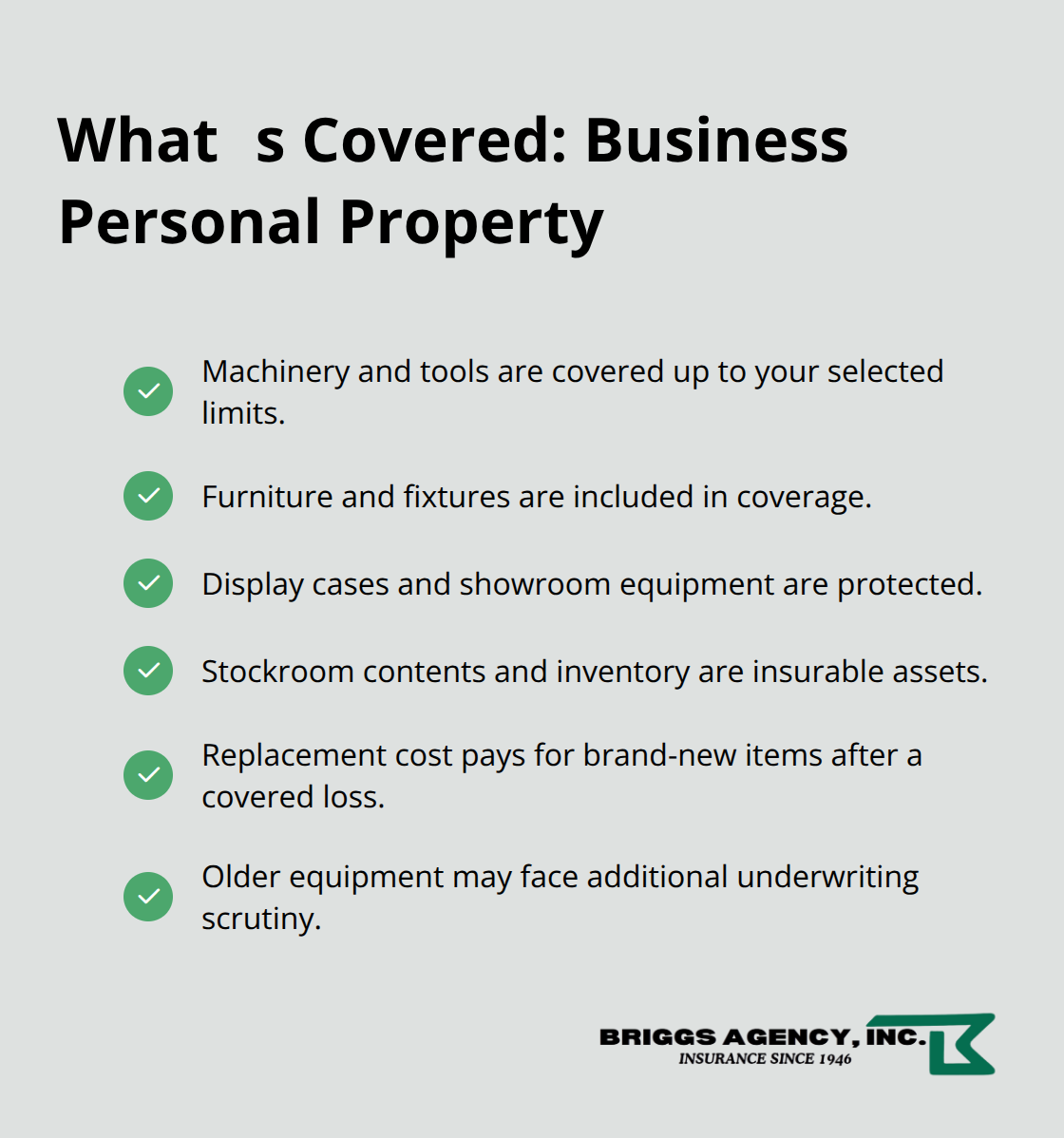
Your equipment and inventory represent real money sitting in your operation every single day. Commercial property insurance covers machinery, tools, furniture, display cases, stockroom contents, and other business personal property up to the limits you select. If a fire destroys your kitchen equipment or theft clears out your inventory overnight, replacement cost coverage pays for brand-new items to get you back in business-not depreciated values. This matters significantly because actual cash value policies, which some insurers offer at lower premiums, only reimburse what your equipment was worth after years of use, leaving you short when rebuilding. Most policies cover items under five years old without restriction, though older equipment may face scrutiny. The average deductible for commercial property in Indiana hovers around $1,000, so selecting a higher deductible can reduce your premium if cash flow allows you to absorb that out-of-pocket cost.
When Your Business Can’t Operate
Business interruption coverage, sometimes called business income protection, steps in when a covered loss forces you to temporarily close your doors. If a water main breaks and floods your storefront, this coverage replaces the income you would have earned during repairs plus reasonable extra expenses like temporary relocation costs or employee payroll you must maintain. Without this protection, you absorb every dollar of lost revenue while still facing rent and overhead. Indiana businesses in high-traffic retail, restaurants, and service industries face particular risk here-a three-week closure can wipe out monthly profits. Most policies cover business interruption for the time it takes to repair or rebuild, though you’ll want to verify the waiting period your policy imposes before coverage kicks in.
Building Your Complete Protection Strategy
The three core protections work together, but your specific operation may need additional layers. High-risk sectors in Indiana-construction sites, farms, and healthcare facilities-typically benefit from specialized endorsements that extend beyond standard coverage. Tools and equipment that move between job sites or sit at locations you don’t own often require inland marine coverage to stay protected. A Business Owner’s Policy (BOP) bundles building coverage, business personal property, and business income into one package, and many small businesses find this approach delivers both comprehensive protection and cost savings. Your industry, location, building age, and claims history all influence what you pay, so comparing quotes from multiple carriers reveals significant differences in pricing and available options.
What Puts Indiana Businesses at Risk
Storm and Wind Damage: Indiana’s Most Common Threat
Indiana’s geography creates specific property threats that generic national policies often miss. Storm and wind damage ranks as the most common property claim in our state, with hail and tornado activity hitting hard during spring and early summer months.
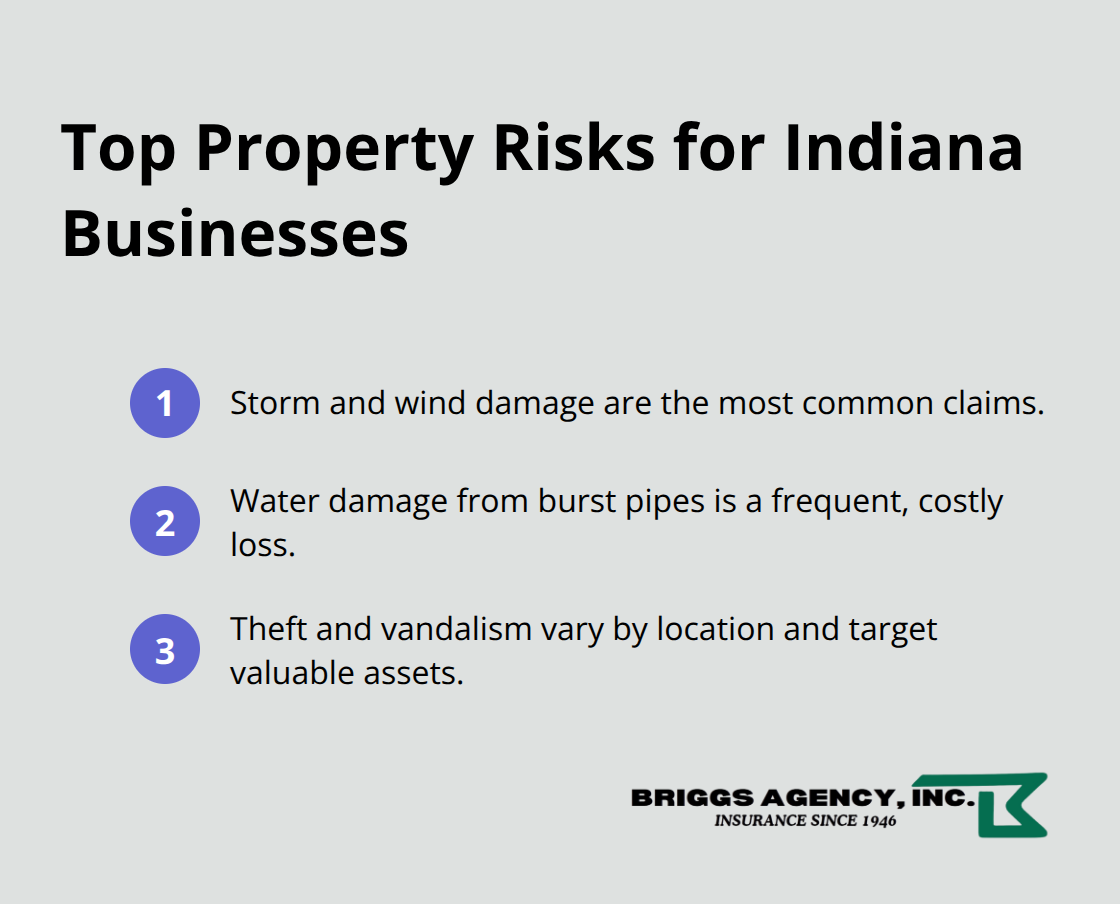
The National Weather Service data shows Indiana averages 22 tornadoes per year, and hail storms cause millions in dollars of damage to roofs, siding, and equipment each year. A single severe thunderstorm can destroy a metal roof or shatter storefront windows in minutes, leaving your operation exposed to further loss.
Water Damage from Aging Building Systems
Water damage from burst pipes ranks second among Indiana claims, particularly in older buildings where plumbing systems fail without warning. A pipe rupture in an unheated storage area or basement can saturate inventory and equipment before anyone notices, turning a $500 repair into a $50,000 loss. Your building’s age and condition directly influence claim likelihood. Older roofs, electrical systems, and HVAC units fail more often, triggering water damage and fire risks that insurers scrutinize closely when underwriting your policy. Insurers assess these factors carefully because aging infrastructure creates predictable loss patterns.
Theft and Vandalism Across Indiana Locations
Theft and vandalism plague Indiana businesses at rates that vary dramatically by location and industry. Urban areas like Indianapolis and Fort Wayne see higher rates of break-ins and smash-and-grab theft targeting electronics, tools, and merchandise. Rural operations face different risks-equipment theft from construction sites and farms happens frequently, especially when sites sit unattended overnight or during off-season months. Your location and the security measures you maintain both influence your premium and your actual loss exposure.
Liability Exposure Beyond Property Damage
Liability claims from customers or employees represent a separate but serious threat that commercial property insurance alone cannot handle. A customer slips on a wet floor and breaks their arm, then sues for medical bills and lost wages. An employee gets injured on the job and files a workers compensation claim that balloons beyond standard coverage limits. These situations demand general liability and workers compensation insurance working alongside your property protection. The Hartford reports that bundling property coverage with general liability through a Business Owner’s Policy costs small Indiana businesses approximately $141 per month on average, making comprehensive protection more affordable than carrying property coverage in isolation.
Industry-Specific Liability Risks
Your location and industry determine your actual liability exposure. High-traffic retail locations, restaurants with busy dining areas, and service businesses with clients visiting your premises face elevated slip-and-fall and injury risks. Construction sites present extreme liability exposure-equipment operation, working at heights, and machinery all create serious injury potential. Healthcare facilities and medical offices deal with patient liability claims at higher frequency than most industries. Understanding which liability scenarios pose genuine threats to your operation (rather than applying one-size-fits-all assumptions about your industry) helps you select the right coverage limits and endorsements. A local agent who understands Indiana’s business environment can identify these specific exposures and recommend protection that matches your actual operations.
How to Choose the Right Coverage for Your Business
Assess Your Property Value and Assets
Start by walking through your facility with a notepad or camera and document everything that would cost money to replace. Most Indiana business owners underestimate their total property value, then face claim denials or partial payouts when loss strikes. Calculate the replacement cost of your building structure separately from your equipment and inventory.
If you own the building, you need coverage that reflects current construction costs in your area, not what you paid for it years ago. If you lease, your landlord’s policy protects the building shell, but you must cover your own improvements, fixtures, and contents. Next, list every piece of equipment your operation depends on, including items you might overlook: the security system, HVAC equipment, kitchen appliances, computers, machinery, and tools.
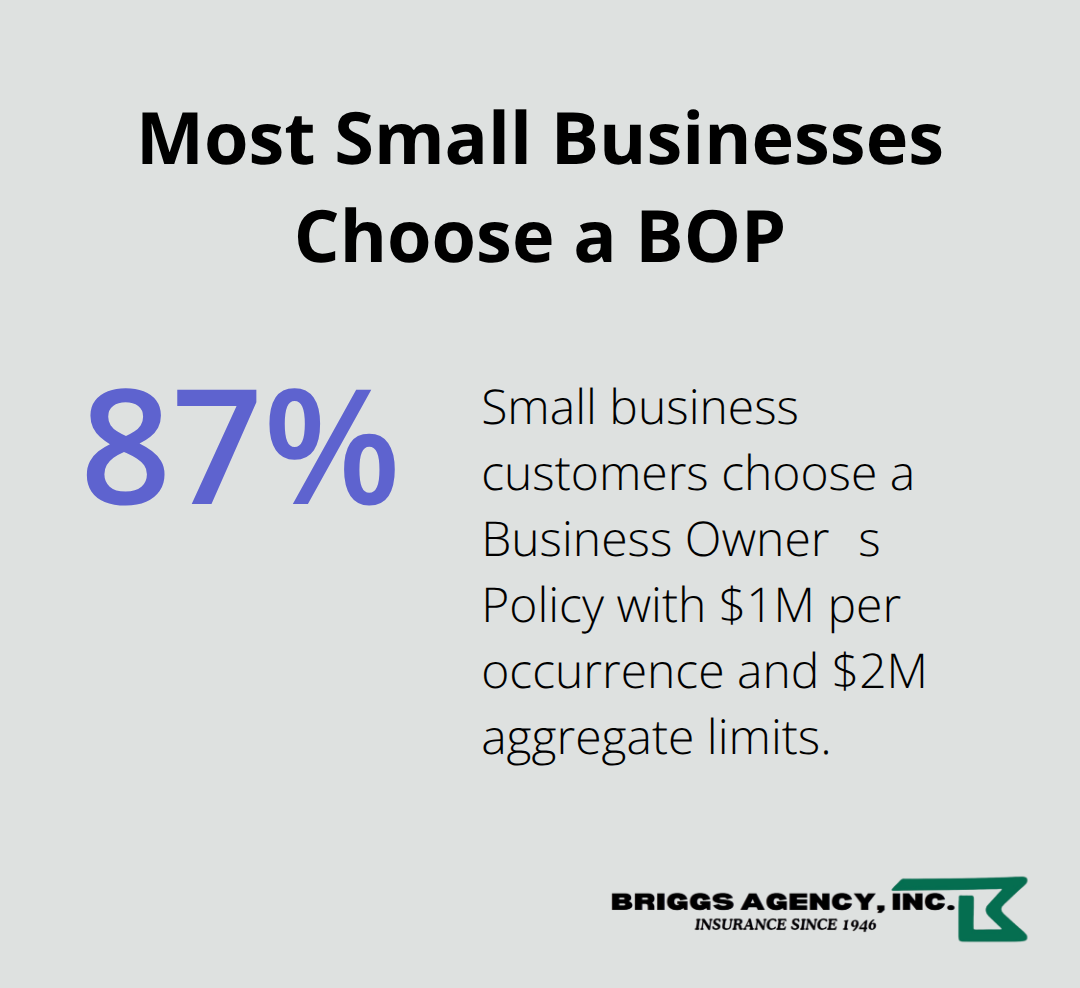
Inventory requires separate valuation because it fluctuates seasonally. A restaurant’s food stock differs vastly between summer and winter; a retail shop’s merchandise changes with seasons. Document peak inventory value, not average value, because that’s what you need to protect. Most Indiana businesses need between $250,000 and $2 million in business personal property coverage once they complete this exercise. The Hartford data shows that 87 percent of small business customers choose a Business Owner’s Policy with $1 million per occurrence and $2 million aggregate limits, which covers many operations adequately, but construction companies, manufacturers, and high-inventory retailers frequently need higher limits.
Evaluate Industry-Specific Risks
Your industry determines which risks demand specialized attention beyond standard coverage. A restaurant faces kitchen fire exposure that a software consulting firm never encounters, so your premium and endorsement needs diverge dramatically. Construction businesses absolutely require builder’s risk coverage during active projects to protect unfinished work, materials, and equipment from fire, weather, and theft.
Farms need coverage for equipment stored at multiple locations plus livestock exposure. Healthcare facilities must address patient liability and specialized equipment protection. Tools and equipment that travel between job sites or sit in storage at locations you don’t own require inland marine coverage, not standard property policies. The Hartford’s average small business customer pays about $141 per month for a BOP, but restaurants and gas stations typically pay 40-60 percent more due to kitchen fire and fuel explosion risks, while IT consulting firms pay substantially less.
Your location matters equally: an Indianapolis storefront in a high-crime area costs more to insure than an identical operation in a lower-crime suburb. Older buildings with outdated electrical, plumbing, or roofing systems face higher premiums because failure rates climb dramatically after systems reach 25-30 years old.
Work with a Local Agent to Customize Your Policy
A local agent who understands Indiana’s business environment identifies which endorsements actually protect your operation versus which ones represent unnecessary expense for your particular situation. At Briggs Agency, Inc., our experienced local agents compare options across multiple top-rated carriers and tailor policies to deliver competitive pricing and the right protection for your specific needs. We help Indiana business owners understand their actual exposure and match coverage limits to what you own and operate, not to generic industry assumptions.
Final Thoughts
Commercial property insurance protects the assets you’ve worked hard to build, but only when you understand what your policy actually covers and whether those protections match your real operation. The three core components-building structure, business personal property, and business interruption coverage-form the foundation of protection that Indiana businesses need. Storm damage, water loss, theft, and liability exposure create genuine financial threats across our state, and standard policies leave gaps that specialized endorsements fill.
A national online quote tool cannot account for Indiana’s tornado frequency, aging building stock in older commercial districts, or the specific liability exposure your operation faces. We at Briggs Agency, Inc. compare options across multiple top-rated carriers and tailor policies to deliver both competitive pricing and genuine protection. Our experienced local agents understand the difference between a restaurant’s kitchen fire exposure and a consulting firm’s liability profile, between a construction site’s builder’s risk needs and a retail operation’s inventory protection requirements.
Contact Briggs Agency, Inc. to discuss your property, assets, and actual business risks. We’ll help you build a protection strategy that covers what matters most without paying for unnecessary coverage. Commercial property insurance safeguards your business’s financial future when loss strikes.
The information provided in this blog is for general informational purposes only and does not constitute legal, financial, or insurance advice. Coverage options, terms, and availability may vary. Please consult with a licensed professional for advice specific to your situation.
Artificial intelligence may have been used to generate text and images in some blog articles.

