
Restaurant Insurance Guidance: Clear Steps to Smarter Protection
Running a restaurant means managing dozens of moving parts, and insurance is one area where a single oversight can cost you thousands. Most restaurant owners discover too late that standard business policies don’t cover the specific risks they face daily.
At Briggs Agency, Inc., we’ve helped countless restaurant owners find the right coverage. This restaurant insurance guidance walks you through the essential protections your business needs and how to choose a partner who actually understands your operation.
What Makes Restaurant Risks Different from Other Businesses
The Convergence of Liability, Property, and Employee Safety
Restaurants operate in an environment where liability, property damage, and employee injuries converge constantly. A slip on a wet floor in the dining room, a knife injury in the kitchen, a refrigerator failure that spoils inventory, or a customer’s foodborne illness claims can each cost thousands to defend or settle. The CDC reports that the average number of U.S. foodborne illnesses is 9.9 million annually, making food safety a serious liability exposure. Standard commercial policies treat restaurants like any other retail business, which means they miss the specific hazards that define food service operations. A general business policy might cover a slip-and-fall at a clothing store, but it won’t address the unique combination of kitchen equipment risks, food handling liability, and alcohol service exposure that restaurants face daily.
Why Generic Policies Leave You Exposed
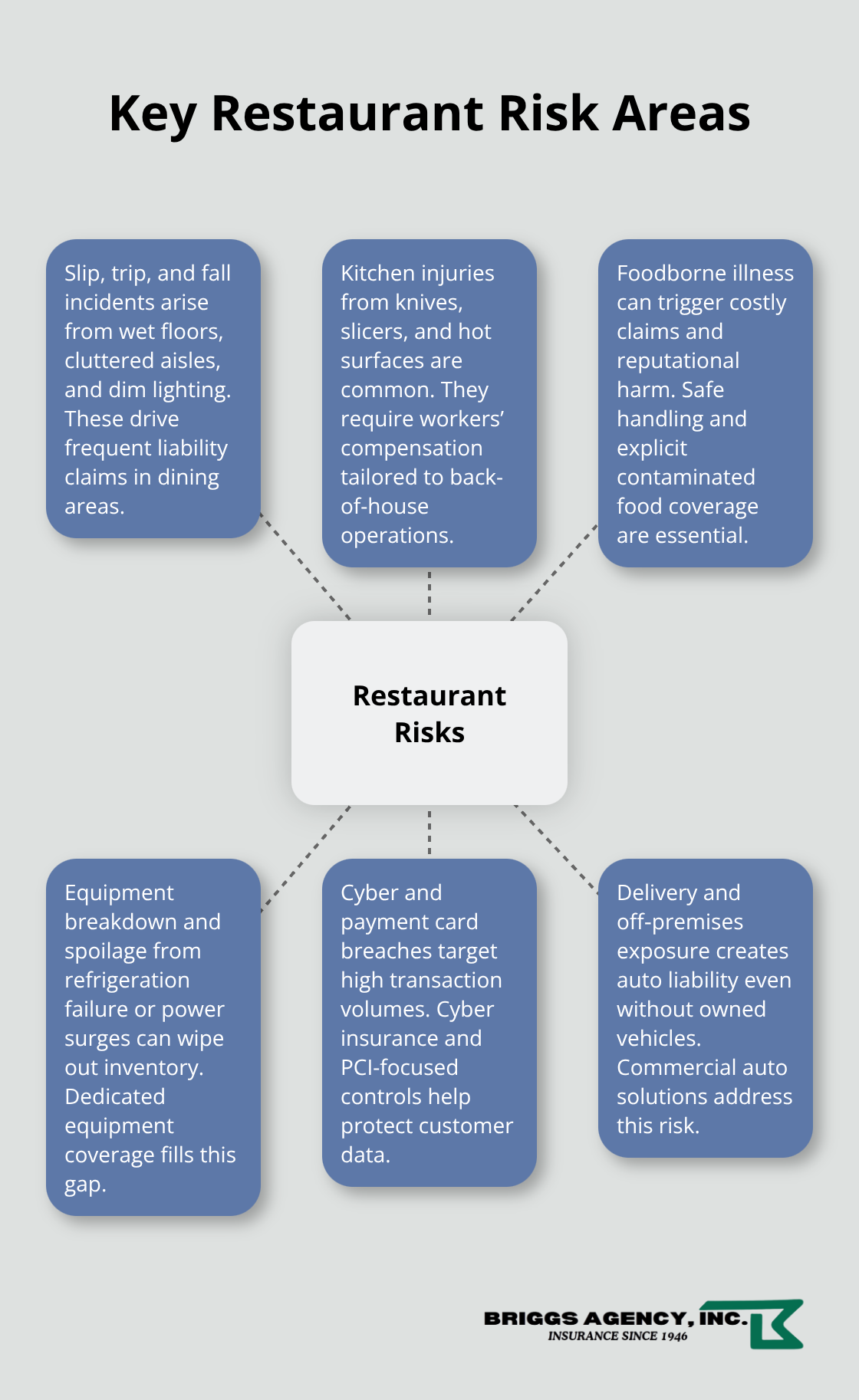
When we at Briggs Agency, Inc. review restaurant owners’ existing policies, we regularly find gaps that leave them exposed to tens of thousands in uninsured losses. Most restaurant claims span multiple coverage types that generic policies simply don’t bundle together. Front-of-house slip, trip, and fall incidents drive significant claims due to wet floors, cluttered aisles, and dim lighting-these account for more losses than most owners anticipate. Back-of-house injuries from knives, slicers, and hot surfaces are equally frequent and often more severe, requiring workers’ compensation coverage specifically tailored to kitchen environments.
Kitchen-Specific Hazards and Equipment Risks
Kitchen fires and smoke damage stem from grease buildup and unserviced hoods; the National Fire Protection Association requires hood and duct cleaning on schedules that most restaurants don’t follow, creating a documented risk gap. Foodborne illness claims require coverage that explicitly addresses contaminated food or water liability, which many standard policies exclude or limit severely. Equipment breakdown and spoilage from refrigeration failures, power surges, or outages can wipe out inventory overnight, yet general liability policies don’t cover this loss.
Digital and Off-Premises Exposures
Cyber and payment card breaches target restaurants with high transaction volumes; the Verizon Data Breach Investigations Report 2025 confirms that payment systems remain a top breach vector, making cyber insurance essential for operations that store customer data. Delivery and off-premises exposure exists even if you don’t own vehicles, since third-party drivers or employee deliveries trigger auto liability needs that personal auto policies won’t cover. Property damage from weather, water, and sewer backups requires specific endorsements that aren’t standard in basic commercial packages.
Building the Right Coverage Foundation
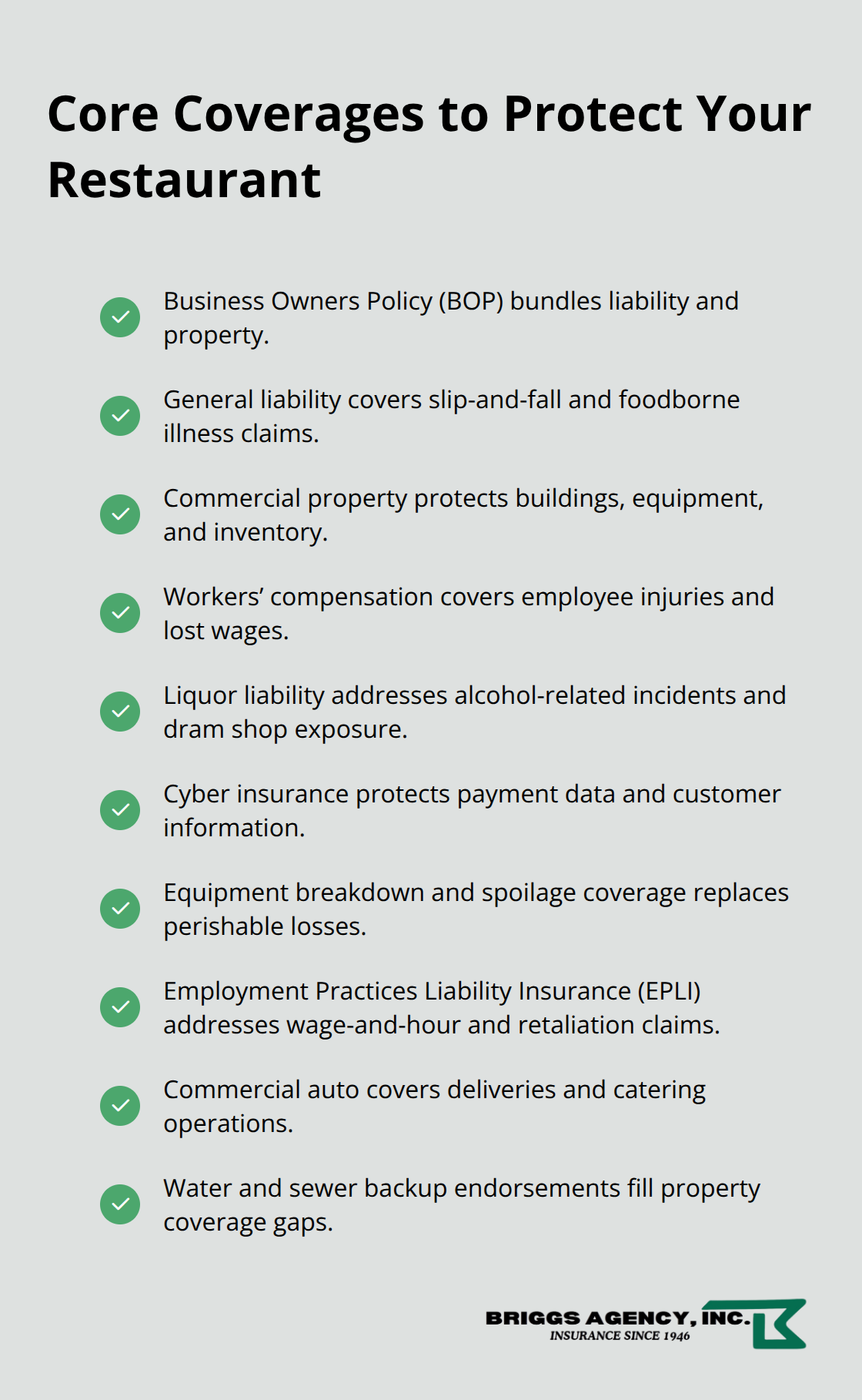
A Business Owners Policy bundles liability and property coverage and serves as the most cost-effective baseline for small to mid-sized restaurants. However, you must customize it with liquor liability, workers’ compensation, and cyber protection to address the full spectrum of food service risks. Understanding which coverages work together-and which gaps remain in standard packages-positions you to make informed decisions about your restaurant’s protection.
What Coverage Your Restaurant Actually Needs
Foundation Coverages: Liability and Property
General liability covers the slip-and-fall incidents and foodborne illness claims that define restaurant exposure, but it forms only the foundation. When a customer slips on a wet floor or claims food poisoning, general liability defends you and covers medical expenses and settlements up to your policy limit. However, general liability alone won’t protect your building, kitchen equipment, or inventory from fire, equipment failure, or weather damage. Property insurance fills that gap by covering your physical assets, including the structure itself, refrigeration units, cooking equipment, and perishable inventory. Restaurants lose $50,000 or more in spoiled inventory from a single refrigeration failure when owners assume general liability covered equipment breakdown-it doesn’t. A Business Owners Policy bundles general liability and property coverage at a lower cost than buying them separately, making it the practical starting point for most restaurants.
Property Coverage and Building Protection
If you own your building, property coverage becomes non-negotiable; if you rent, your landlord’s policy protects the structure, but your contents and equipment still need dedicated coverage. Property insurance protects both the physical structure and the equipment inside it, addressing losses that general liability explicitly excludes. This distinction matters enormously when a kitchen fire or water damage strikes-your general liability policy won’t cover the damage to your own building or equipment, leaving you exposed to tens of thousands in uninsured losses.
Workers’ Compensation and Employee Protection
Workers’ compensation is legally required in most states and covers medical expenses, lost wages, disability benefits, and rehabilitation costs when employees get injured. Kitchen injuries from knives, slicers, and hot surfaces happen frequently, and workers’ compensation protects both your staff and your business from devastating wage claims. Many states require coverage if you have even one employee, so verify your state’s threshold immediately-Missouri requires five or more employees, while New York requires coverage for any employees. Employment Practices Liability Insurance protects against wage-and-hour claims involving tips, overtime, and retaliation, which have increased significantly as the Department of Labor intensifies wage enforcement.
Alcohol Service and Specialized Liability
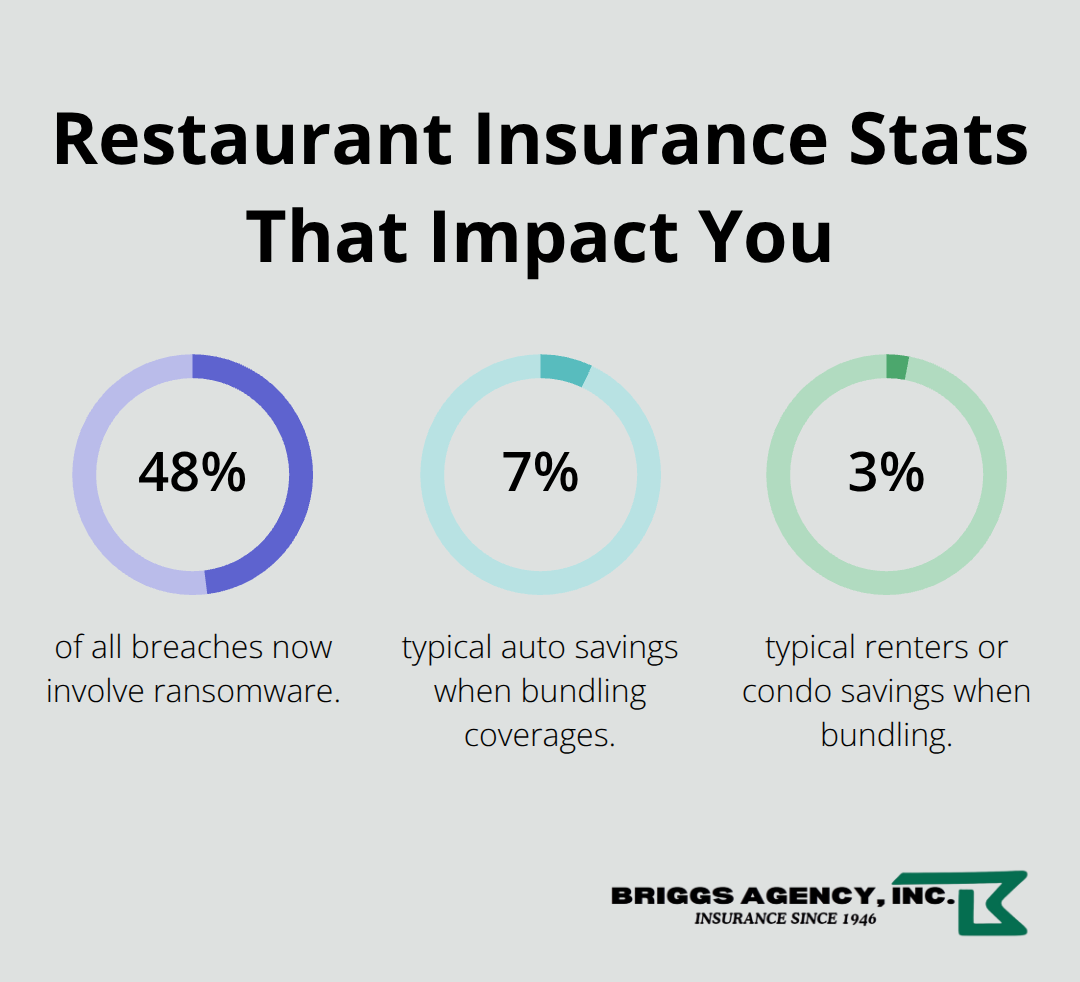
If you serve alcohol, liquor liability is non-negotiable because standard general liability explicitly excludes alcohol-related claims. Dram shop laws in most states hold establishments liable when intoxicated patrons injure themselves or others, and liquor liability covers these exposures that can reach six figures in a single incident. Server training programs like TIPS reduce your risk measurably and often qualify you for premium discounts. Cyber insurance protects customer payment data and personal information stored in your POS system, which restaurants with high card volumes absolutely need. 48% of all breaches now involve ransomware, and a single breach notification can cost $10,000 to $50,000 before settlement expenses.
Commercial Auto and Delivery Operations
Commercial auto coverage applies if you deliver food or operate catering services, since personal auto policies explicitly exclude business use and leave you uninsured and liable. These coverages work together to address the specific risks restaurants face, but coverage gaps remain if you don’t intentionally customize them. A standard BOP covers general liability and property, but it won’t address liquor exposure, cyber risk, or delivery vehicle liability unless you add them. Bundling coverages under one policy typically saves 7 percent on auto and 3 percent on renters or condo coverage in many states, making the combined approach more affordable than buying pieces separately. Your restaurant’s specific operation determines which coverages you actually need-a small deli has different exposures than a full-service restaurant with a bar and delivery service.
State requirements vary significantly, so you must verify which coverages your state mandates for licenses or contracts before assuming you’re protected. Getting coverage started online with a quote or through an agent takes less than an hour, and working with an independent agent who asks detailed questions about your specific operations ensures you don’t overpay for coverage you don’t need or underpay and discover gaps when it’s too late. The next step involves evaluating which insurers and agents truly understand restaurant operations and can guide you toward the right combination of protections for your specific business model.
Finding an Insurance Partner Who Understands Your Restaurant
What to Look for in an Insurance Agent
Choosing an insurance provider for your restaurant means finding someone who understands the specific operational complexities you face daily, not someone who treats your business like a retail store or office building. Many restaurant owners shop solely on price, then discover mid-claim that their policy has massive gaps because the agent never asked about their kitchen setup, delivery operations, or alcohol service model. The right partner asks detailed questions about your menu, your staffing structure, whether you handle cash tips or digital payments, if you own or rent your space, and whether you plan to add catering or delivery down the road. These details matter enormously because they determine which coverages you actually need and which ones you can skip without creating exposures.
Independent Agents vs. Captive Representatives
An independent agent represents multiple carriers and can compare options across different insurers, whereas captive agents work for one company and have limited flexibility to find the best fit for your specific situation. When you request quotes, insist that agents explain why they recommend certain coverage limits and what specific risks those limits address in your restaurant. A quote that simply lists coverage types without connecting them to your actual operations is a red flag that the agent hasn’t truly evaluated your business. An agent who understands restaurants can articulate common losses in food service operations and explain how their recommendations address your unique exposures.
Evaluating Quotes and Coverage Details
Request quotes from at least two or three providers, and when comparing them, examine the deductibles, coverage limits, and what each policy actually excludes-not just the premium. A cheaper policy with high deductibles and low limits often costs more in the long run when a claim hits and you discover you’re underinsured. Ask each agent directly how they handle claims and whether they offer risk-control resources like food safety training, equipment maintenance checklists, or slip-and-fall prevention guidance that can reduce your losses and qualify you for premium discounts. The best way to evaluate potential partners is to prepare for your insurance agent meeting by gathering information about restaurants they’ve insured in your area and what claims those restaurants faced.
Building an Ongoing Partnership
The conversation with your chosen agent should happen annually, not just at renewal, because your restaurant changes as you add menu items, staff, or services, and your insurance should evolve with those changes. An agent who understands your operation asks probing questions about your specific risks rather than applying a standard package to every restaurant client. At Briggs Agency, Inc., we represent multiple top-rated carriers, which allows our experienced local agents to compare options and tailor policies to deliver competitive pricing and the right protection for your restaurant’s specific needs. Your agent should explain coverage gaps clearly and help you understand which endorsements or additional policies fill those gaps without overpaying for protection you don’t need.
Final Thoughts
Restaurant insurance protection rests on three core principles: understanding your specific exposures, selecting coverages that work together, and updating your policies as your business evolves. The slip-and-fall in your dining room, the knife injury in your kitchen, the refrigeration failure that spoils inventory, and the foodborne illness claim from a customer represent real financial threats that generic business policies simply don’t address. A Business Owners Policy bundled with liquor liability, workers’ compensation, cyber coverage, and commercial auto protection creates a foundation that matches the risks you face daily.
Getting started with restaurant insurance guidance means scheduling a conversation with an agent who asks specific questions about your operation rather than applying a standard package to every restaurant client. Your agent should understand whether you own or rent your space, how you handle payments, if you serve alcohol, and whether you operate delivery services, because these details determine which coverages you genuinely need. Request quotes from multiple providers and compare the deductibles, coverage limits, and exclusions rather than focusing solely on price, since a cheaper policy with gaps often costs far more when a claim arrives.
Your restaurant changes as you add staff, expand your menu, or introduce new services like catering or delivery, and your insurance must evolve with those changes. At Briggs Agency, Inc., our experienced local agents represent multiple top-rated carriers, which means we compare options and tailor policies to deliver competitive pricing and the right protection for your restaurant’s specific needs. The investment in proper restaurant insurance protection today prevents the financial devastation that comes from discovering gaps when it’s too late.
The information provided in this blog is for general informational purposes only and does not constitute legal, financial, or insurance advice. Coverage options, terms, and availability may vary. Please consult with a licensed professional for advice specific to your situation.
Artificial intelligence may have been used to generate text and images in some blog articles.

