

Best Contractor Insurance Indiana: How to Choose the Right Partner
Running a contracting business in Indiana means protecting yourself from real financial risk. Without the right coverage, one accident or injury claim can threaten everything you’ve built.
We at Briggs Agency, Inc. help contractors find the best contractor insurance Indiana has to offer. This guide walks you through what coverage you actually need and how to pick a partner who understands your business.
What Coverage Does Indiana Actually Require for Contractors
Local Requirements Vary-But Client Demands Don’t
Indiana doesn’t impose a statewide contractor licensing mandate, which means requirements vary by city and county. However, this decentralized approach creates a real problem: many contractors assume they need less insurance than they actually do. That’s backwards. Even if your local jurisdiction doesn’t mandate specific coverage, your clients almost certainly will.
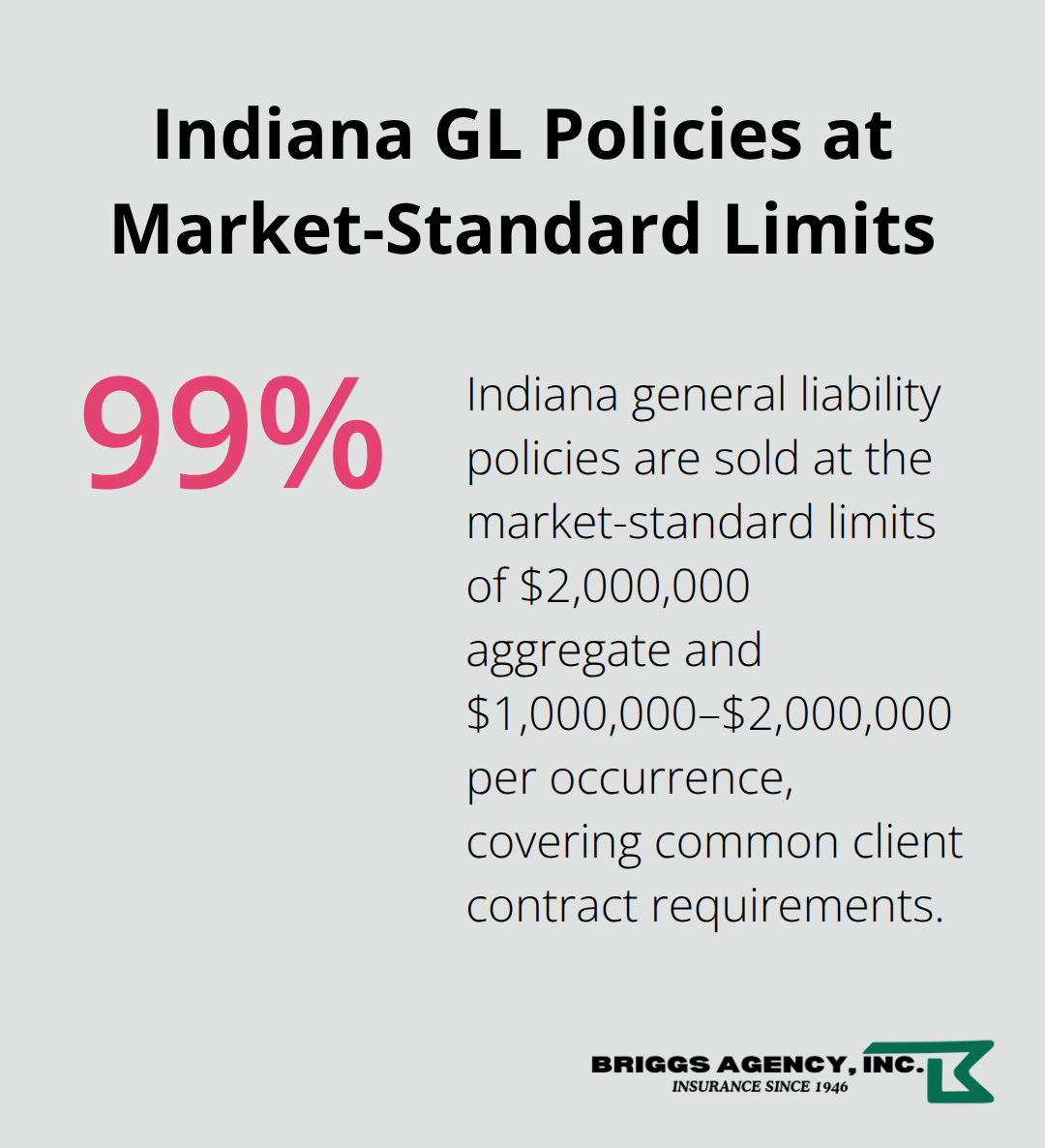
General liability insurance with limits of $2 million per occurrence and $4 million aggregate has become the market standard, and about 99% of Indiana general liability policies sold fall into this tier. If you bid on projects without this coverage, you won’t win the work.
Workers’ Compensation: Non-Negotiable for Employers
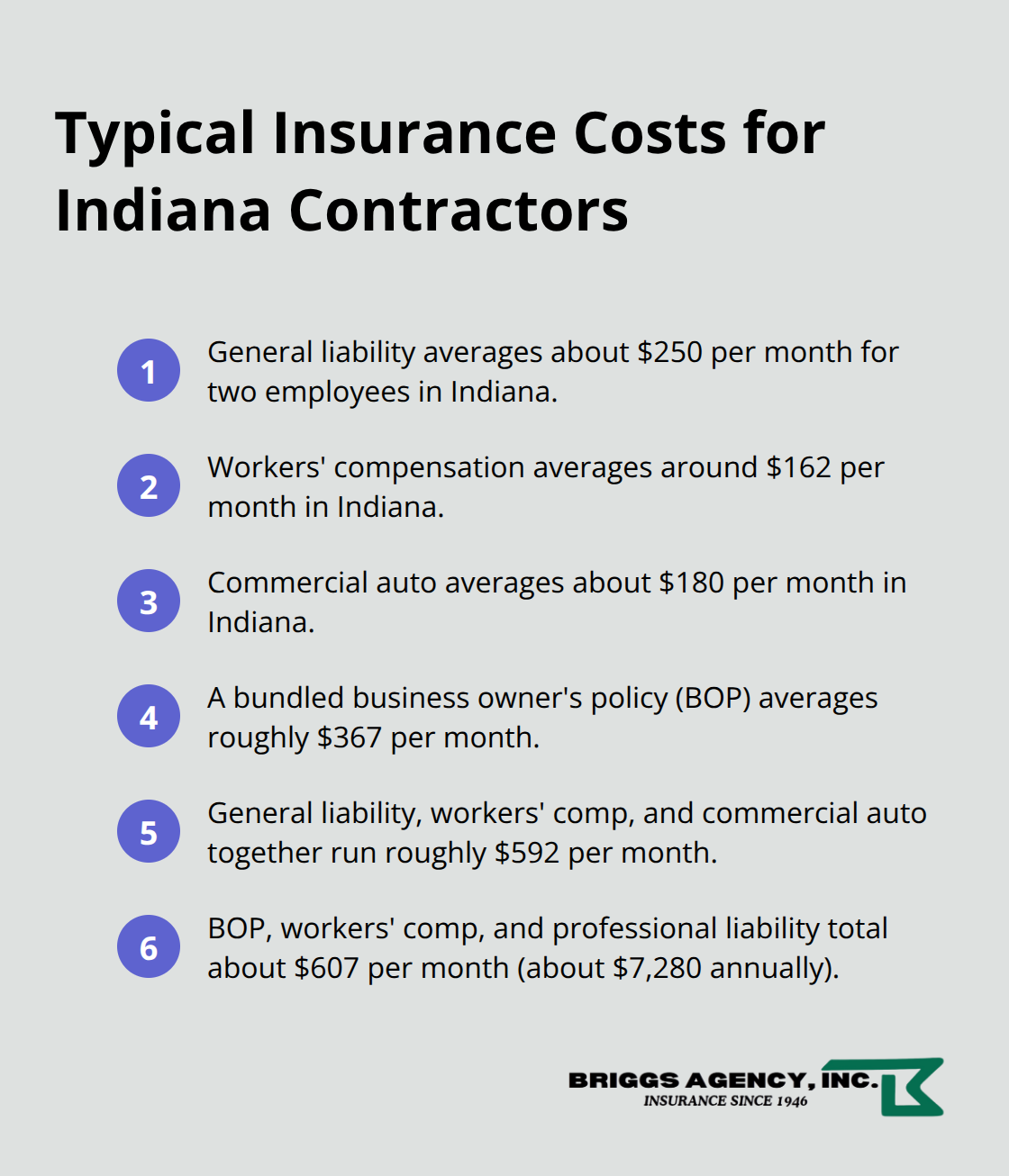
Indiana law requires workers’ compensation insurance if you have employees-there’s no way around it. A sole proprietor operating alone might technically avoid the requirement, but that’s genuinely risky. One injury could bankrupt you. Most contractors with employees should carry coverage at the standard $500,000 per occurrence level, though the policy’s overall protection extends beyond that single-incident limit. MoneyGeek data shows workers’ comp in Indiana averages around $162 per month, making it one of your most important monthly expenses.
Beyond the Basics: Specialized Coverage for Contractor Risks
Indiana contractors face specific risks that demand targeted coverage. Commercial auto insurance protects company vehicles and covers bodily injury, property damage, theft, and weather-related incidents-carriers typically recommend a combined single limit of at least $1,000,000.
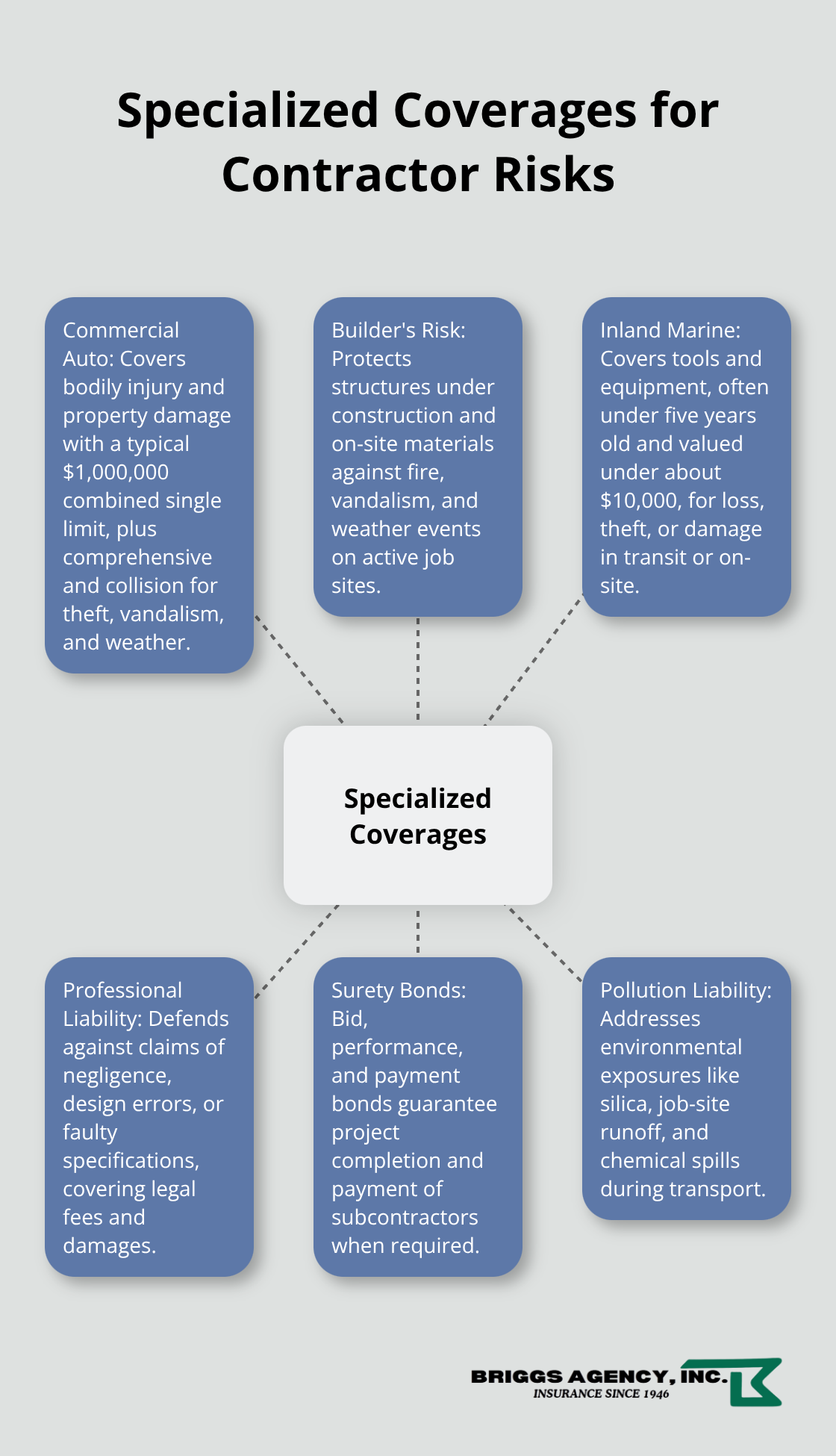
Builder’s risk insurance becomes essential on active job sites, covering structures in progress and on-site materials against fire, vandalism, and weather damage. If you transport tools regularly, inland marine insurance protects saws, nail guns, and equipment under five years old valued under roughly $10,000. Professional liability insurance shields you from claims alleging negligence or mistakes, covering legal fees and damages if a client sues over incorrect materials or faulty workmanship. Contractor surety bonds-including bid, performance, and payment bonds-may be required for certain projects and serve as a guarantee that you’ll complete work and pay subcontractors. Pollution liability coverage addresses environmental risks like silica exposure or chemical spills during transport.
What This Actually Costs
Most Indiana contractors bundle general liability with property coverage into a business owner’s policy, which costs roughly $367 per month and saves money compared to buying policies separately. The total for a typical small contractor profile combining a BOP, workers’ compensation, and professional liability runs approximately $607 monthly or about $7,280 annually.
These costs vary significantly based on your specific trade, years of experience, and claims history-but understanding what you’ll pay helps you budget properly and avoid coverage gaps that could prove far more expensive down the road.
The Three Core Coverages Indiana Contractors Can’t Afford to Skip
General Liability: Your Foundation Coverage
General liability forms the foundation of any contractor’s insurance strategy, and Indiana’s market standard of $1,000,000 per occurrence with $2,000,000 aggregate isn’t arbitrary. This coverage protects you when a client claims you caused bodily injury or property damage-scenarios that happen more often than contractors expect. MoneyGeek data shows Indiana contractors with two employees pay approximately $250 per month for general liability, slightly below the national average of $256 per month. The real decision isn’t whether to buy it; it’s whether to bundle it with property coverage into a business owner’s policy, which costs around $367 monthly and delivers roughly 19 to 28 percent savings compared to purchasing policies separately. Many contractors treat general liability as a checkbox item, but this coverage directly impacts your ability to win bids. Clients won’t sign contracts without proof of it, and the $250 monthly investment becomes non-negotiable when you realize one lawsuit could eliminate years of profit.
Workers’ Compensation and Commercial Auto: Protecting Your Team and Fleet
Workers’ compensation operates differently than other coverages because Indiana law mandates it once you hire your first employee. The standard coverage level of $500,000 per occurrence protects your employees’ medical costs and disability benefits if they’re injured on the job, and Indiana’s average monthly cost of $162 makes it significantly cheaper than most contractors anticipate. Apply for coverage before you bring anyone aboard rather than waiting until you’ve already hired someone. Commercial auto insurance must cover your company vehicles and typically requires a combined single limit of at least $1,000,000 for bodily injury and property damage, with comprehensive and collision coverage protecting against theft, vandalism, and weather events. At roughly $180 per month in Indiana, commercial auto becomes essential the moment you transport crews or equipment.
Tools, Equipment, and Specialized Protection
Inland marine insurance handles your tools and equipment separately, paying to repair or replace items like saws and nail guns if they’re lost, stolen, or damaged. This coverage typically applies to tools under five years old valued under approximately $10,000 and operates as all-risk rather than limited to specific hazards. When you combine general liability, workers’ compensation, and commercial auto, you’re looking at roughly $592 monthly before adding specialized coverages like builder’s risk for active job sites or professional liability for design-related work. The contractors who manage costs effectively don’t skip coverages; they shop quotes from multiple carriers and ask about contractor-specific package discounts that often reduce the total price. These three core policies create a solid foundation, but your specific trade and project types may demand additional layers of protection that we’ll explore next.
Who Should Handle Your Contractor Insurance
Avoid the Cheapest Quote Trap
Shopping for contractor insurance requires you to ignore the temptation to select the lowest price. The cheapest quote often signals an agent who doesn’t understand Indiana contractor risks or won’t advocate for you when claims happen. Instead, focus on finding a partner with genuine contractor experience, the ability to compare multiple carriers, and real knowledge of your local market. Start by requesting quotes from at least three providers and comparing them side by side, but don’t stop at price alone. Check whether each carrier specializes in contractor coverage and ask specifically about their experience with your trade. A roofing contractor’s risks differ significantly from a plumbing contractor’s, and an agent unfamiliar with your specialty won’t catch coverage gaps that could prove catastrophic.
Prepare Your Information and Verify Endorsements
When you request quotes, have your workforce details, annual revenue, and years of experience ready to speed the process. Verify that each quote includes the contractor-specific endorsements you need, such as additional insured status and waiver of subrogation. These endorsements matter more than most contractors realize because they directly impact whether clients will accept your insurance certificate.
Choose an Agent Who Understands Indiana’s Landscape
The agent you choose should understand Indiana’s decentralized licensing landscape and how it affects your insurance requirements across different jurisdictions. Ask whether they’ve worked with contractors in your specific county or city and whether they understand the local permit and bonding requirements that often accompany project contracts. A local agent representing multiple carriers can show you how bundling general liability with property coverage into a business owner’s policy saves roughly 19 to 28 percent compared to separate policies. They’ll also explain how raising your deductible from $2,500 to $10,000 can cut premiums by 23 to 32 percent while helping you understand the cash reserves you’ll need to cover that higher out-of-pocket cost.
Obtain Your Certificate Quickly and Plan for Growth
Request a certificate of insurance from your chosen provider and verify you can obtain it quickly once you’ve applied for quotes and paid for coverage, since clients typically demand proof before signing contracts. After you’ve selected your partner, commit to an annual policy review whenever you hire new employees or expand your services, because your coverage needs will shift as your business grows. An experienced local agent representing multiple top-rated carriers can tailor your coverage to match both Indiana requirements and your specific project demands.
Final Thoughts
Protecting your contracting business in Indiana requires three non-negotiable decisions: securing general liability coverage at the market standard of $1,000,000 per occurrence, carrying workers’ compensation if you have employees, and protecting your vehicles with commercial auto insurance. These three coverages form the foundation that keeps your business solvent when accidents happen. Depending on your specific trade, you’ll likely need builder’s risk for active job sites, inland marine for tools and equipment, and professional liability if your work involves design or specification decisions.
Finding the best contractor insurance Indiana offers requires more than comparing prices online-you need a partner who understands contractor-specific risks and knows how Indiana’s decentralized licensing landscape affects your coverage requirements across different jurisdictions. An experienced local agent representing multiple carriers will explain how raising your deductible cuts premiums by 23 to 32 percent, verify your endorsements match client contract demands, and help you obtain certificates of insurance quickly when you need them for bids. Bundling policies saves 19 to 28 percent compared to buying separately, and a knowledgeable agent will show you exactly where those savings appear.
We at Briggs Agency, Inc. represent multiple top-rated carriers and compare options to tailor policies that deliver competitive pricing and the right protection for your specific business. Contact us to request quotes from multiple carriers, discuss your coverage gaps, and schedule an annual policy review as your business grows. Your next step is simple: reach out today and let us show you how proper coverage protects what you’ve built.
The information provided in this blog is for general informational purposes only and does not constitute legal, financial, or insurance advice. Coverage options, terms, and availability may vary. Please consult with a licensed professional for advice specific to your situation.
Artificial intelligence may have been used to generate text and images in some blog articles.

