
Truck Insurance for Fleets: Streamlined Coverage for Carriers
Running a fleet means managing multiple risks at once. Truck insurance for fleets is designed to handle that complexity with streamlined coverage that protects your entire operation.
At Briggs Agency, Inc., we work with carriers who need practical solutions, not generic policies. This guide walks you through what fleet coverage actually includes, how to reduce costs, and how to find the right provider for your business.
What Fleet Coverage Actually Protects
Consolidating Multiple Vehicles Into One Policy
Fleet truck insurance consolidates multiple vehicles under one policy, which fundamentally changes how you manage risk and cost. Instead of maintaining separate policies for each truck, a fleet policy typically covers five or more vehicles with unified liability, physical damage, cargo, and uninsured motorist protections. The Federal Motor Carrier Safety Administration requires interstate carriers to maintain minimum liability coverage depending on freight type, and a consolidated fleet policy makes it far simpler to stay compliant across your entire operation. Consolidation eliminates duplicate administrative overhead-one renewal date, one billing cycle, one point of contact for claims-rather than juggling multiple insurers and renewal notices throughout the year.

This structure also allows you to add or remove vehicles and drivers without starting from scratch, which matters significantly when you scale operations or respond to seasonal demand fluctuations.
Customization and Cost Efficiency
The real advantage over individual truck policies lies in customization and cost efficiency. A fleet policy adjusts to your specific risk profile: the types of cargo you haul, the routes your drivers operate, their safety records, and your equipment mix. Telematics integration has become standard at leading carriers, allowing real-time monitoring of driver behavior and vehicle performance, which directly reduces premiums when data proves safe operation. Physical damage coverage protects against collision, theft, fire, and natural disasters, while motor truck cargo insurance guards freight during transit-critical for temperature-controlled loads where spoilage claims spike quickly.
Coverage Layers That Protect Your Operation
General liability covers non-vehicular incidents like loading injuries, and uninsured motorist protection safeguards you when other drivers lack adequate coverage. The FMCSA’s enforcement focus on electronic logging device compliance and cargo securement means your insurer must understand these regulatory trends, not just quote standard limits. Fleets that implement formal safety programs, maintain current driver qualifications, and enforce distracted driving policies consistently see premium reductions because underwriters recognize lower risk.
Finding Coverage That Matches Your Operation
Your insurer should structure coverage that matches your operation, protecting you where it matters most without unnecessary layers. The right provider understands your specific fleet composition, cargo types, and operational challenges-and that local expertise makes a real difference when claims arise or regulations shift.
How to Cut Fleet Insurance Costs Without Cutting Corners
Establish a Safety Program That Insurers Recognize
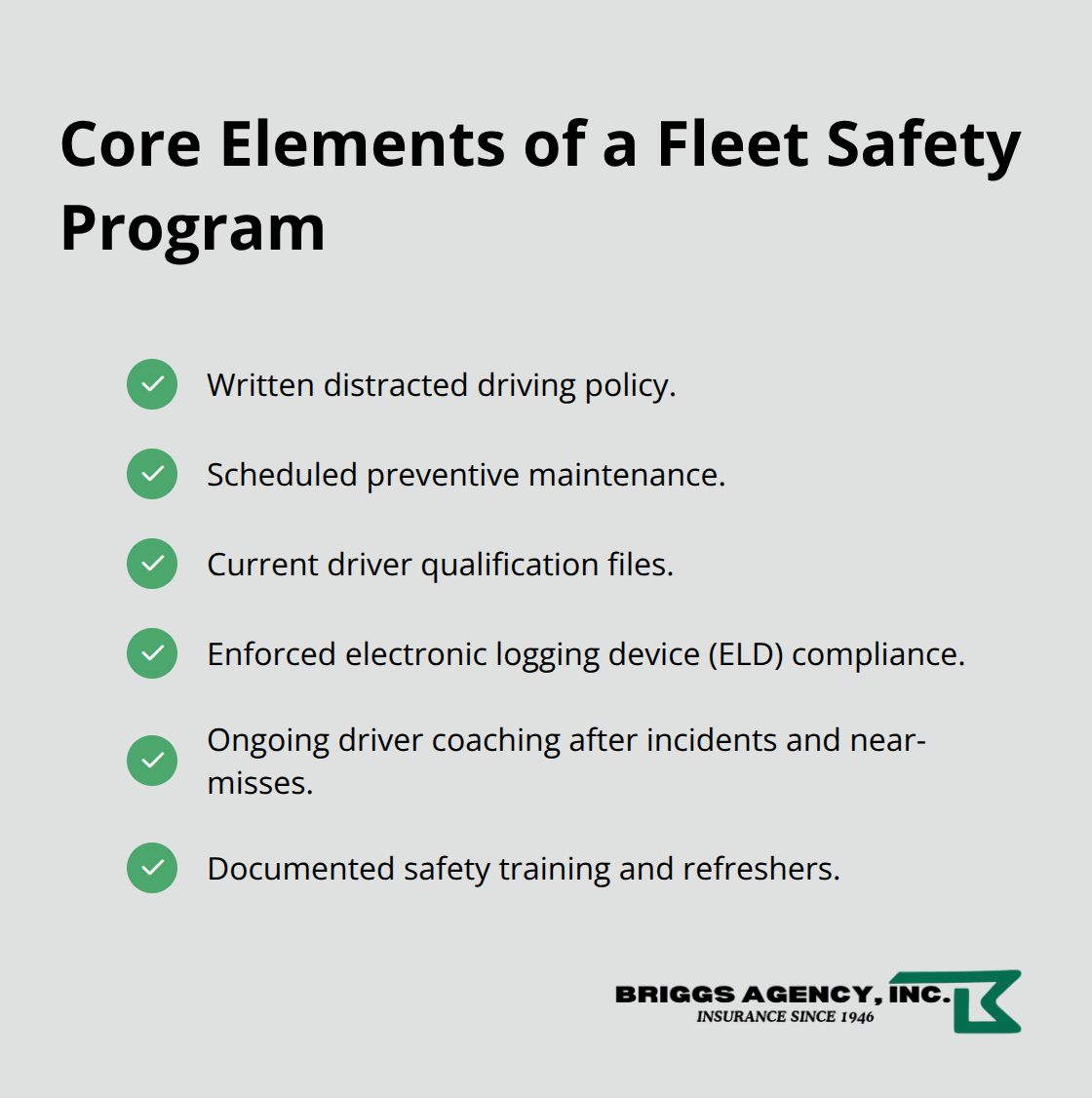
Reducing fleet insurance premiums doesn’t mean accepting weaker coverage. The most effective approach is demonstrating to your insurer that your operation runs safely and efficiently. A formal safety program is the fastest way to prove this. Carriers that establish written policies on distracted driving, require regular vehicle maintenance, and maintain current driver qualifications see measurable premium reductions. The Federal Motor Carrier Safety Administration’s focus on electronic logging device compliance means insurers now expect fleets to enforce these standards automatically.
Use Telematics Data to Lower Risk Perception
Telematics data has become the primary language insurers speak when evaluating risk. Real-time monitoring systems track harsh braking, speeding, and unsafe lane changes, giving underwriters concrete evidence of safe operation. When your data shows lower-risk driving patterns, insurers adjust premiums downward because you’ve eliminated guesswork. Dash cameras provide additional leverage by documenting driver behavior and reducing dispute costs when claims occur. Fleets using dash cams typically see claim costs drop because video evidence resolves liability questions faster and often prevents fraudulent claims entirely. These systems are no longer optional if you want competitive pricing.
Manage Claims Strategically to Protect Your Renewal Rate
Claims management strategy matters equally. Every incident that reaches your insurer increases your loss history and signals higher risk at renewal time. Preventing small claims from becoming large ones requires immediate vehicle maintenance, rapid repair turnarounds, and driver coaching after near-misses. A single preventable collision can raise your renewal premium by thousands of dollars across your entire fleet, so investing in preventive maintenance and driver training pays back quickly.
Leverage Regulatory Transparency to Your Advantage
The FMCSA’s Motus platform rollout is streamlining compliance filings, which means your insurer can access your safety record more easily. This shift toward data transparency rewards fleets that maintain clean records. Your insurer can now verify your compliance status directly, making documentation of safety practices even more valuable at renewal time.
Partner With an Agent Who Understands Your Specific Operation
Local agents who know your operation can identify which add-ons actually reduce your overall cost and which are unnecessary. They understand your specific cargo types, routes, and driver profiles in ways that national carriers cannot. The combination of documented safety practices, telematics integration, and a claims-conscious culture creates the conditions for sustained premium reductions year after year. With this foundation in place, the next step is selecting an insurer and agent who can translate these efforts into real savings.
Choosing the Right Fleet Insurer for Your Operation
Identify Carriers With Genuine Trucking Expertise
Selecting a fleet insurer requires looking past premium quotes and examining what actually happens when you file a claim or need coverage adjusted mid-term. Start by identifying carriers with genuine trucking expertise, not just commercial auto programs adapted for fleets. Insurers like Northland Insurance, which has served owner-operators and fleets since 1948, understand the operational realities you face-seasonal demand swings, regulatory compliance pressure, and the cost of downtime. When comparing carriers, ask specifically about their claims processing speed and whether they allow vehicle changes without rewriting your entire policy. A carrier that processes claims in days rather than weeks directly reduces your operational losses.
Evaluate Telematics Integration and Performance Discounts
Request information on their telematics integration options and whether they offer performance-based discounts tied to real driving data. Most competitive carriers now integrate with platforms that feed directly into your fleet management system, eliminating manual reporting. Verify their understanding of your specific cargo types-a carrier experienced with temperature-controlled reefer operations understands spoilage risk differently than one focused on dry van hauling. Ask whether they provide Certificates of Insurance quickly, since delays can cost you contracts. The Federal Motor Carrier Safety Administration’s minimum liability requirements vary depending on your entity type and operating structure, so confirm the carrier can structure limits that satisfy both federal requirements and your customer contracts without overinsuring unnecessarily.
Prepare Detailed Information for Accurate Quotes
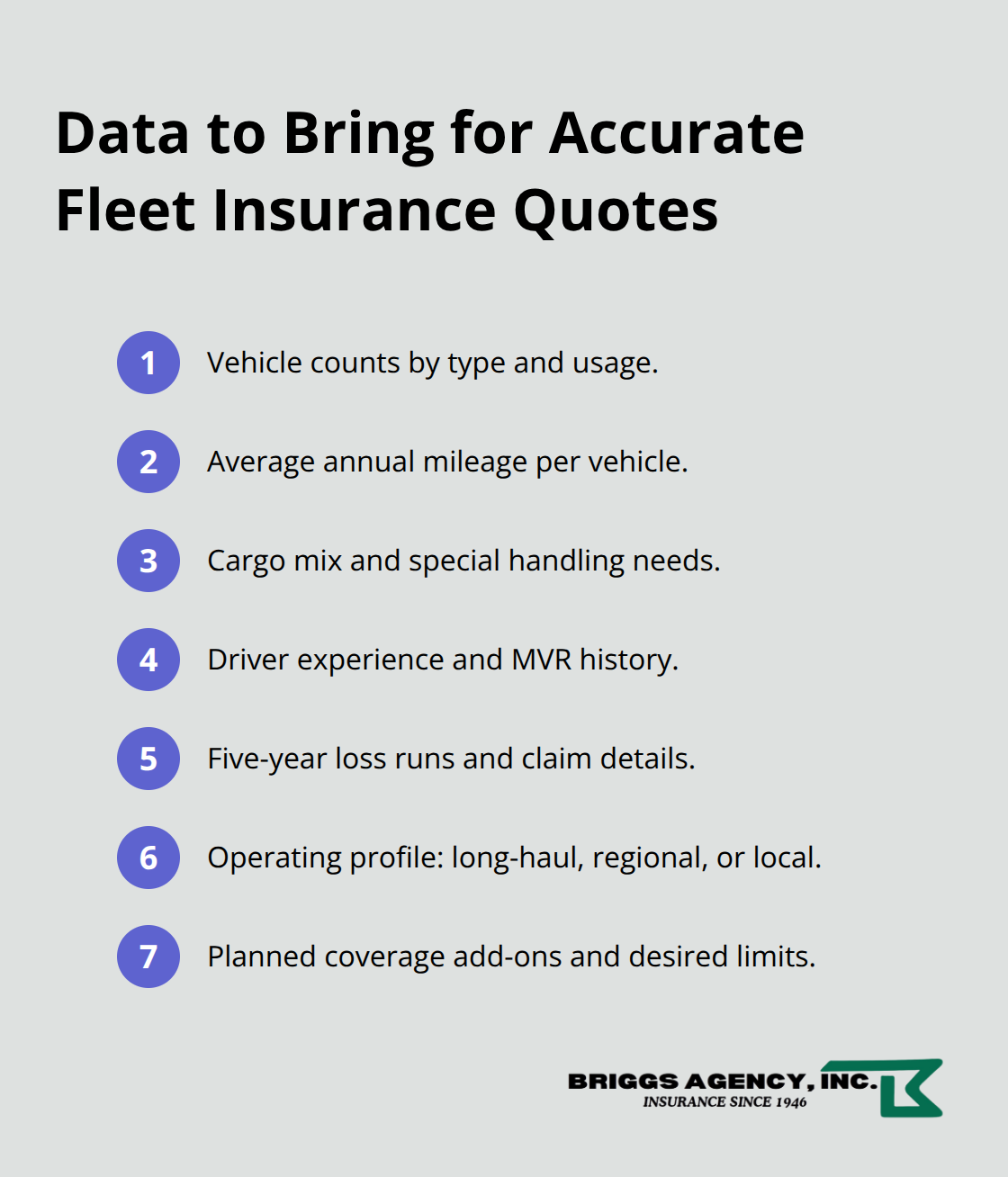
Local agents make a measurable difference because they understand your specific routes, driver profiles, and seasonal patterns in ways national carriers cannot replicate. When requesting quotes, come prepared with vehicle counts, average annual mileage, cargo mix, driver experience levels, and your loss history. Carriers price fleets differently based on whether you run long-haul interstate, regional, or local delivery operations, so specificity matters. Compare not just base premiums but also what add-ons cost-higher liability limits, cargo coverage enhancements, and uninsured motorist protection typically have separate pricing.
Assess Loss Control Resources and Policy Flexibility
Ask each carrier about their loss control resources and driver coaching programs, since these directly influence your renewal rates. A carrier offering formal safety program resources and telematics-backed coaching creates long-term savings you won’t see reflected in year-one quotes. Request sample policy language showing how they handle non-trucking liability coverage, since gaps between dispatch and personal use have caused costly disputes. Finally, check whether the insurer allows mid-term adjustments without penalty when you add vehicles or modify operations, since rigid policies force you to overpay or stay underinsured during growth periods.
Final Thoughts
Fleet truck insurance for carriers protects far more than vehicles-it safeguards your drivers when accidents happen, covers cargo losses that could otherwise devastate cash flow, and shields you from liability claims that threaten your operating authority. Consolidating coverage under a single fleet policy eliminates administrative chaos while telematics, formal safety programs, and clean claims records compound savings year after year. An insurer with genuine trucking expertise processes claims quickly, allows mid-term adjustments, and offers performance-based discounts that transform insurance from a compliance burden into a strategic asset.
The path forward requires gathering your fleet details-vehicle counts, cargo types, routes, and driver experience-then requesting quotes from carriers with proven trucking expertise. Work with an agent who understands your specific operation rather than applying generic solutions, since local knowledge identifies which add-ons actually reduce your overall cost. Fleets that invest in the right coverage and risk management practices recover faster from incidents, maintain better renewal rates, and operate with confidence that their protection matches their actual exposure.
At Briggs Agency, Inc., we’ve served businesses in Crown Point and beyond since 1946, and we understand what it takes to protect fleets that keep our community moving. Contact us today to discuss truck insurance for fleets tailored to your operation and receive competitive quotes from multiple carriers.
The information provided in this blog is for general informational purposes only and does not constitute legal, financial, or insurance advice. Coverage options, terms, and availability may vary. Please consult with a licensed professional for advice specific to your situation.
Artificial intelligence may have been used to generate text and images in some blog articles.

