
Crown Point Garage Insurance: Safeguard Your Shop and Vehicles
Running a garage in Crown Point means managing real risks every day-from customer vehicles on your lot to expensive tools and equipment inside your shop. Standard business insurance often leaves gaps that can cost you thousands if something goes wrong.
At Briggs Agency, Inc., we’ve helped local shop owners understand why Crown Point garage insurance tailored to their operations matters so much. This guide walks you through the coverage types you actually need and how to choose protection that fits your business.
Why Your Shop Faces Risks Standard Insurance Won’t Cover
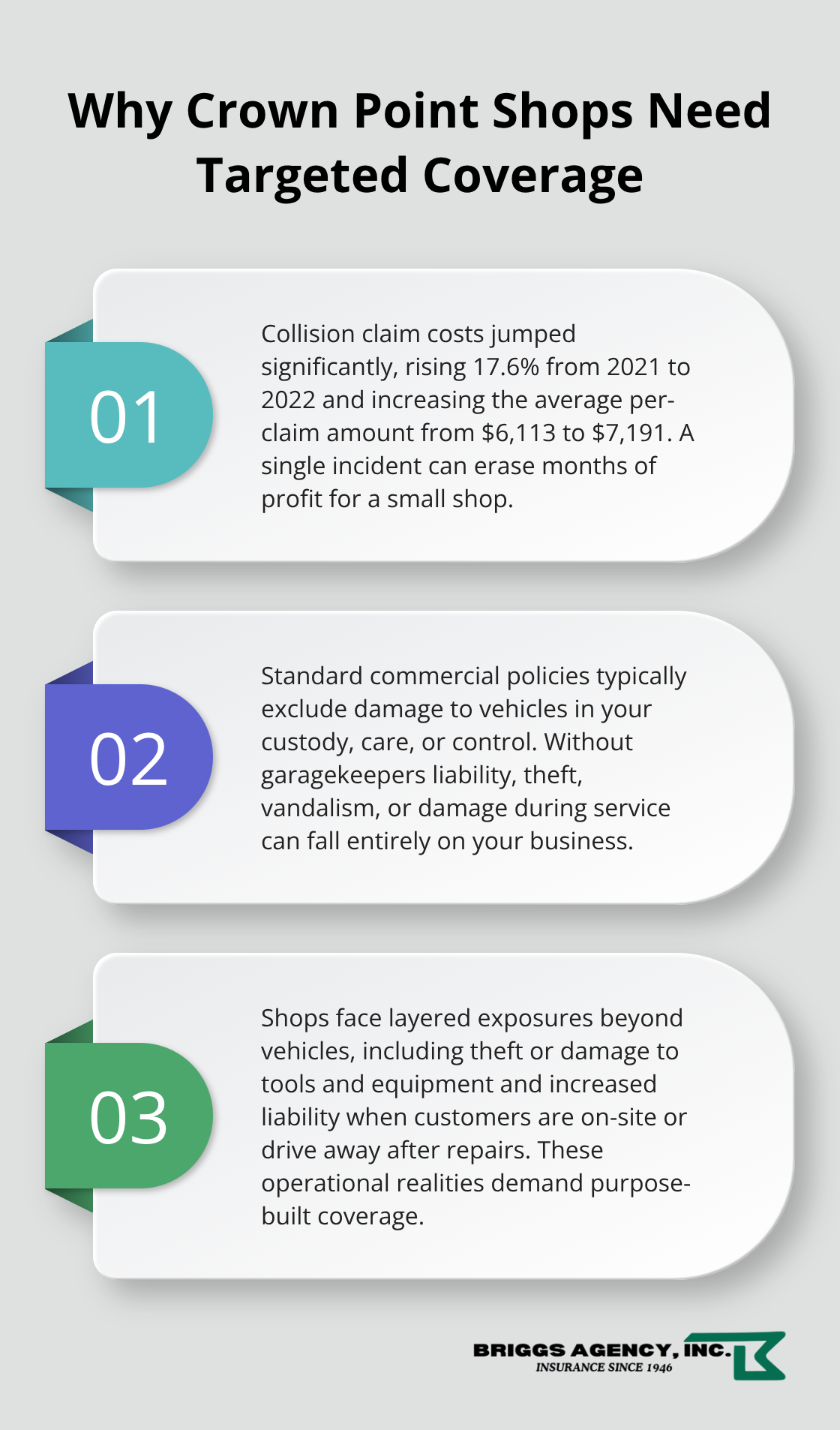
Garage operations in Crown Point carry exposures that generic business policies simply don’t address. A customer’s vehicle parked in your lot overnight gets stolen, or damage occurs during a routine oil change-your standard commercial policy likely excludes both scenarios entirely. The National Association of Insurance Commissioners reported that collision claim costs rose 17.6% from 2021 to 2022, jumping from $6,113 to $7,191 per claim, meaning a single incident can wipe out months of profit. Beyond vehicles, your shop inventory faces real threats too: tools worth thousands can disappear, equipment gets damaged during repairs, and liability exposure multiplies when customers step onto your property or drive away with incomplete work.
The gap between what you think you’re covered for and what you actually are
Most business owners assume their general liability policy protects them when a customer’s vehicle is damaged in their care. It doesn’t. Standard policies exclude vehicles in your custody because they’re considered property you control, not third-party damage. If a customer vehicle catches fire while parked at your shop, or gets hit by another vehicle in your lot, your general liability won’t pay a dime. Garagekeepers liability exists specifically to fill this gap-it covers damage to customer vehicles whether caused by theft, vandalism, collision, or shop error. Mechanics errors and omissions coverage protects against claims that arise from faulty repairs and cause injury or property damage after the vehicle leaves your shop. Without it, a botched brake job that causes an accident weeks later becomes your financial responsibility.
What makes Crown Point shops vulnerable
Your location and customer base shape your specific risks. Shops that handle high-value vehicles face elevated theft and vandalism exposure compared to basic maintenance operations. Shops that perform complex work like engine rebuilds or transmission service carry higher error liability than tire rotations. Seasonal patterns matter too-winter brings increased collision risk and weather-related damage, while summer storage of customer vehicles creates longer-term custody exposure. The commercial auto insurance market hardened significantly in 2026, with underwriters now prioritizing data-backed predictability over broad caution. This means carriers reward shops with solid safety records and stable operations, but penalize those with inconsistent practices or limited documentation. Understanding your exact exposures (vehicle types you handle, service complexity, storage duration, and employee turnover) lets you avoid overpaying for unnecessary coverage while preventing dangerous gaps.
How coverage options connect to your actual shop needs
The right garage insurance policy matches your specific operations, not a one-size-fits-all template. A shop that stores customer vehicles overnight needs different limits than one that completes same-day service. A facility that performs high-risk work like transmission rebuilds requires stronger mechanics errors and omissions protection than a basic tire shop. Your choice between direct primary and direct excess garagekeepers coverage affects both cost and how quickly claims get resolved-direct primary pays regardless of fault but costs more, while direct excess typically costs less but requires proof of fault. The coverage limits you select should reflect your average vehicle value, the number of vehicles on your lot at any time, and the complexity of work your team performs. Shops with high employee turnover or seasonal volume spikes face tighter underwriting scrutiny in today’s market, which means transparent documentation of your operations becomes essential to securing competitive rates.
Coverage Your Shop Actually Needs
Garagekeepers Liability: Your First Line of Defense
Garagekeepers liability stands apart as the single most important coverage gap to close. This policy covers damage to or theft of customer vehicles while they sit in your lot, park in your bay, or undergo service-situations your general liability flatly refuses to touch. The National Association of Insurance Commissioners reported that collision claim costs jumped 17.6% between 2021 and 2022, reaching $7,191 per claim on average. A single stolen vehicle or major damage incident during service can exceed annual profits for most Crown Point shops.
When you select garagekeepers coverage, you face a meaningful choice between direct primary and direct excess options. Direct primary pays claims regardless of fault, which accelerates resolution and strengthens customer trust, but carries higher premiums. Direct excess costs less upfront but requires you to prove fault before payment kicks in, which means customer disputes and slower claim processing. For shops handling high-value vehicles or those with tight cash flow, the faster claims resolution of direct primary often justifies the premium difference.
Your coverage limit should reflect the actual vehicle values you handle-a shop servicing luxury imports needs substantially higher limits than one focused on economy vehicles. Most Crown Point shops store between three and eight customer vehicles at any given time, so calculate your maximum exposure by multiplying your typical vehicle count by the average value of vehicles you service, then add 25% as a buffer.
General Liability and Property Protection
General liability and property protection form your second layer of defense. General liability covers injuries customers sustain on your property and damage to their belongings (tools they bring in, phones, glasses) that aren’t part of the vehicle itself.
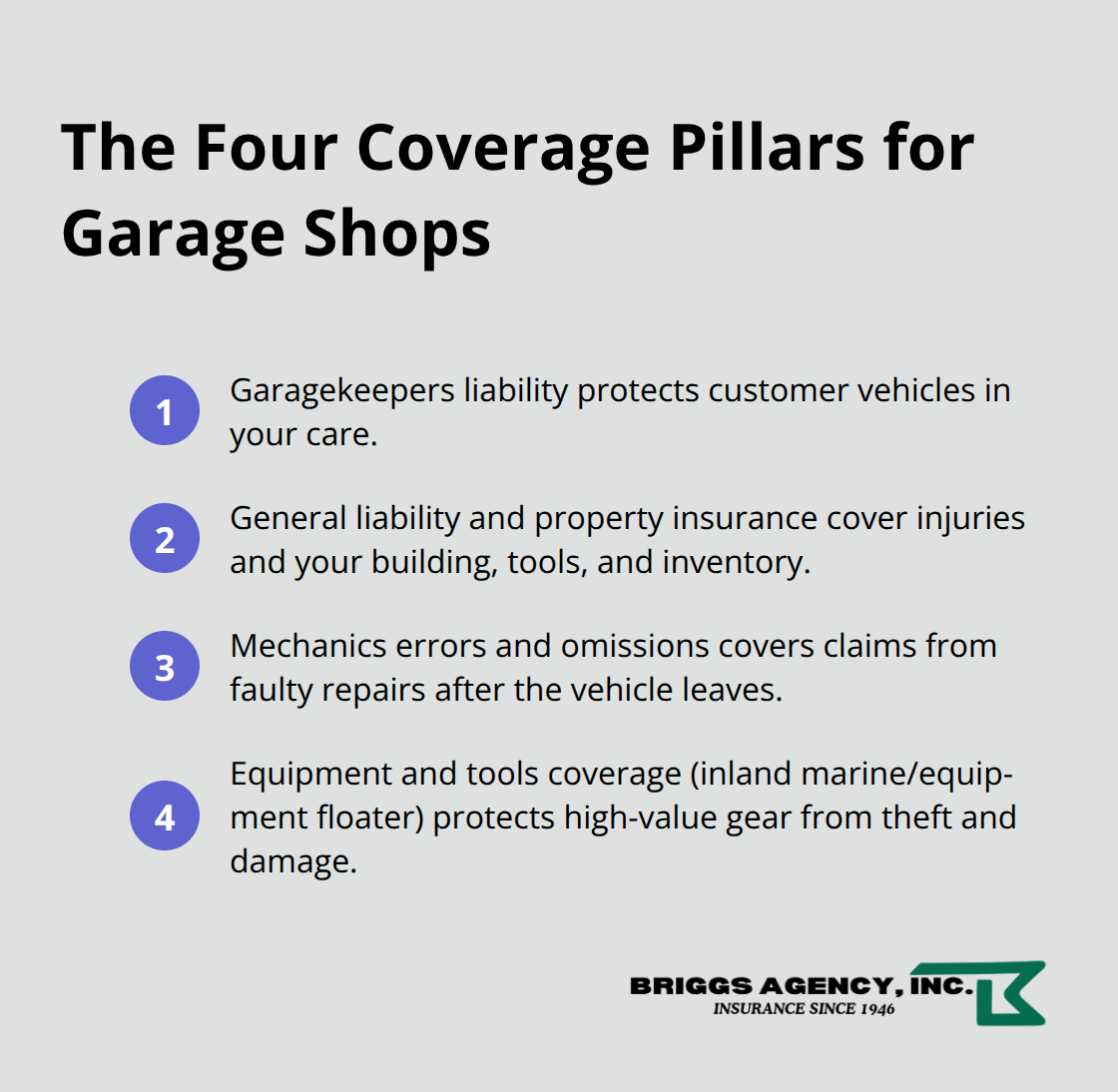
Property insurance protects your building, equipment, tools, and inventory from fire, theft, weather, and other perils.
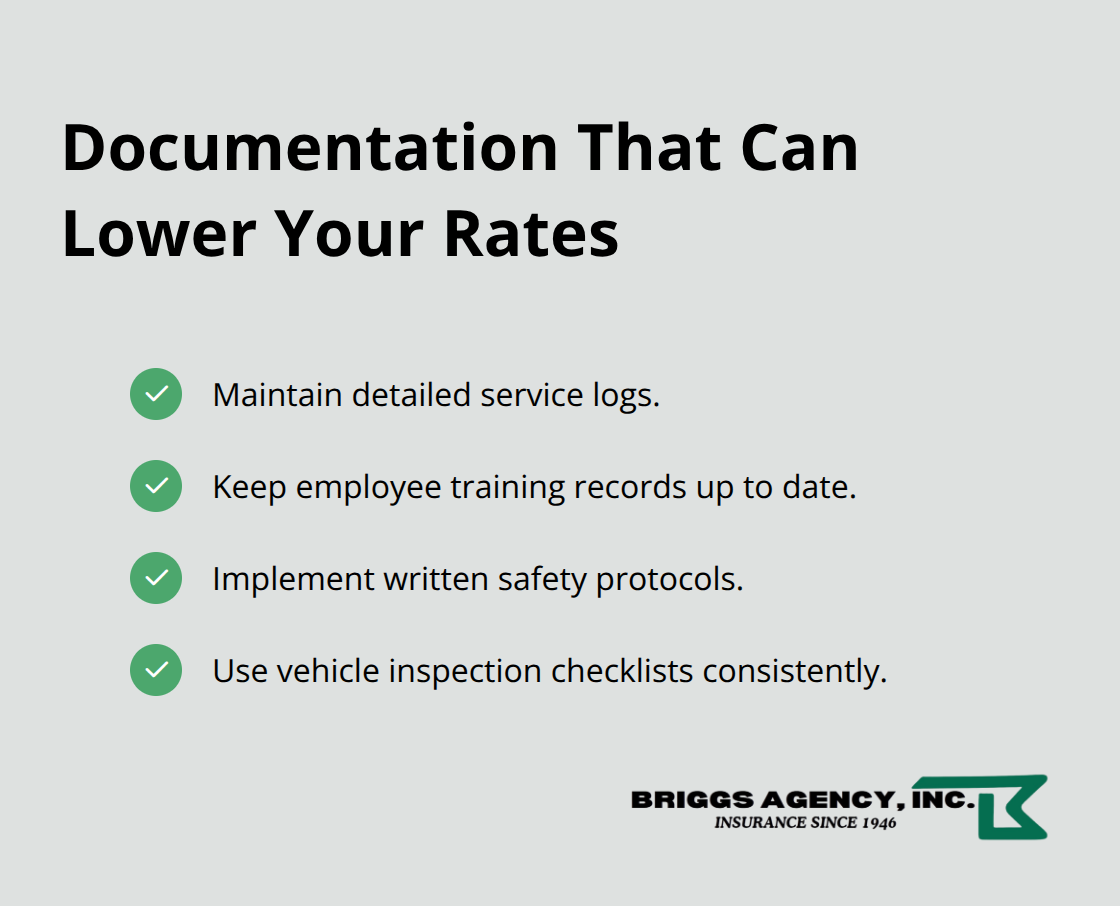
The commercial auto market in 2026 has tightened considerably, with underwriters now demanding documented safety practices and stable operations to offer competitive rates. Shops with high employee turnover, inconsistent maintenance records, or unclear service procedures face steeper premiums or coverage denials. This reality means your insurance strategy should include documenting your actual practices-service logs, employee training records, safety protocols, and vehicle inspection checklists all strengthen your underwriting profile and often reduce your rates.
Mechanics Errors and Omissions Coverage
Mechanics errors and omissions coverage deserves serious attention if your team performs complex work. This coverage handles claims that arise from faulty repairs-a brake job that fails weeks after the customer leaves, an electrical repair that causes an engine fire, or transmission work that results in safety hazards. These claims often surface months or years after service completion, meaning you face liability long after the work leaves your shop.
Tools, Equipment, and Inventory Protection
Tools and equipment deserve protection through inland marine or equipment floater coverage, which shields your specialized diagnostic equipment, lifts, compressors, and hand tools from theft and damage. A shop’s tool inventory easily reaches $50,000 to $150,000 depending on specialization, making this coverage economically essential rather than optional. Your specific equipment needs and the values you carry determine whether standard property coverage suffices or whether you need specialized equipment protection.
Understanding these four coverage pillars-garagekeepers liability, general liability and property protection, mechanics errors and omissions, and equipment coverage-positions you to make informed decisions about your shop’s protection. The next step involves assessing which of these coverages applies most directly to your operations and determining the appropriate limits for each.
How to Choose the Right Garage Insurance for Your Crown Point Business
Assess Your Actual Exposures
Start by mapping what sits in your shop and lot on any given day. Count the vehicles you typically store, note their average value, and identify which ones represent your highest-value exposures. A shop handling five luxury imports needs vastly different garagekeepers limits than one servicing ten economy vehicles. Next, categorize your service mix: shops performing complex work like engine rebuilds or transmission service face substantially higher mechanics errors and omissions exposure than those doing routine maintenance. Document your employee situation honestly-shops with high turnover or seasonal staffing patterns will face tighter underwriting scrutiny in today’s market, so expect carriers to ask for detailed safety records and training documentation. The 2026 commercial auto market rewards predictability with better rates, which means shops with stable crews, consistent service procedures, and documented safety practices pay less than those with chaotic operations.
Calculate your maximum financial exposure by identifying the worst-case scenario: a high-value customer vehicle stolen from your lot, combined with an employee injury claim, plus damage to your building and equipment. That total tells you the minimum coverage limits you actually need. Many Crown Point shop owners underestimate their tool and equipment value-a typical shop easily carries $75,000 to $125,000 in specialized diagnostic equipment, lifts, and hand tools, so verify this number before selecting your inland marine coverage limits.
Compare Quotes Across Multiple Carriers
Comparing actual quotes from multiple carriers matters far more than shopping based on reputation alone. Request quotes that isolate each coverage type so you understand what you’re paying for garagekeepers versus general liability versus mechanics errors and omissions. Direct primary garagekeepers coverage allows you to continue servicing your customers’ cars with confidence, knowing that you and your business are protected. Don’t let an agent push you toward the cheapest option without understanding what you’re sacrificing-the lowest premium often means higher deductibles, lower limits on critical coverages, or exclusions that leave dangerous gaps. Request quotes that reflect your documented operations: share your service logs, employee training records, safety protocols, and vehicle inspection procedures with carriers, as this documentation directly influences pricing and can lower your rates considerably.
Evaluate Carrier Practices and Claims Support
Ask each carrier explicitly about their stance on seasonal operations, employee turnover thresholds, and data-sharing requirements-some carriers reward shops willing to share telematics or equipment monitoring data with better pricing, while others ignore this information entirely. The final comparison should answer three specific questions: Which quote gives you the coverage limits matching your actual exposures? Which carrier offers the claims support your shop needs when incidents happen? Which option fits your annual budget without forcing you to skip essential protections like mechanics errors and omissions coverage?
Final Thoughts
Protecting your Crown Point garage means closing the gaps that standard business policies leave wide open. A stolen customer vehicle, a faulty repair claim that surfaces months later, or damage to your equipment inventory can derail your business if you lack the right coverage. Crown Point garage insurance tailored to your specific operations isn’t an expense-it’s the foundation that lets you serve customers confidently and build long-term success.
Your next step is straightforward: gather your shop’s details and request quotes that reflect your actual exposures. Document your vehicle count, service types, employee stability, and equipment values, then share this information with carriers so they understand your specific risk profile. The 2026 commercial auto market rewards shops with documented safety practices and predictable operations, which means your transparency directly influences the rates you’ll receive.
We at Briggs Agency, Inc. represent multiple top-rated carriers and compare options across the market to tailor policies that deliver competitive pricing alongside genuine protection. Our experienced local agents understand the specific risks garage operations face in our community, and we provide hands-on claims support when incidents occur. Contact us today to discuss your shop’s coverage needs and receive quotes that reflect your actual business.
The information provided in this blog is for general informational purposes only and does not constitute legal, financial, or insurance advice. Coverage options, terms, and availability may vary. Please consult with a licensed professional for advice specific to your situation.
Artificial intelligence may have been used to generate text and images in some blog articles.

