
Garage Repair Insurance: Keep Your Auto Shop Running
Running an auto shop means managing countless risks every single day. From customer injuries on your lot to expensive equipment damage, one accident can threaten your entire operation.
At Briggs Agency, Inc., we’ve helped shop owners across our community protect their businesses with garage repair insurance. This guide walks you through the coverage options that matter most and how to build a policy that actually fits your shop’s needs.
What Your Garage Repair Insurance Actually Covers
The Core Protections Your Shop Needs
Garage repair insurance isn’t a single product-it’s a collection of coverages that work together to protect against the specific risks that come with running an auto shop. The core of this protection centers on three areas: damage to customer vehicles in your care, liability claims from injuries or property damage, and loss of your own equipment and tools. Commercial General Liability covers bodily injury and property damage claims that arise from your shop’s operations, including a customer who trips on your lot or damage caused by your work.
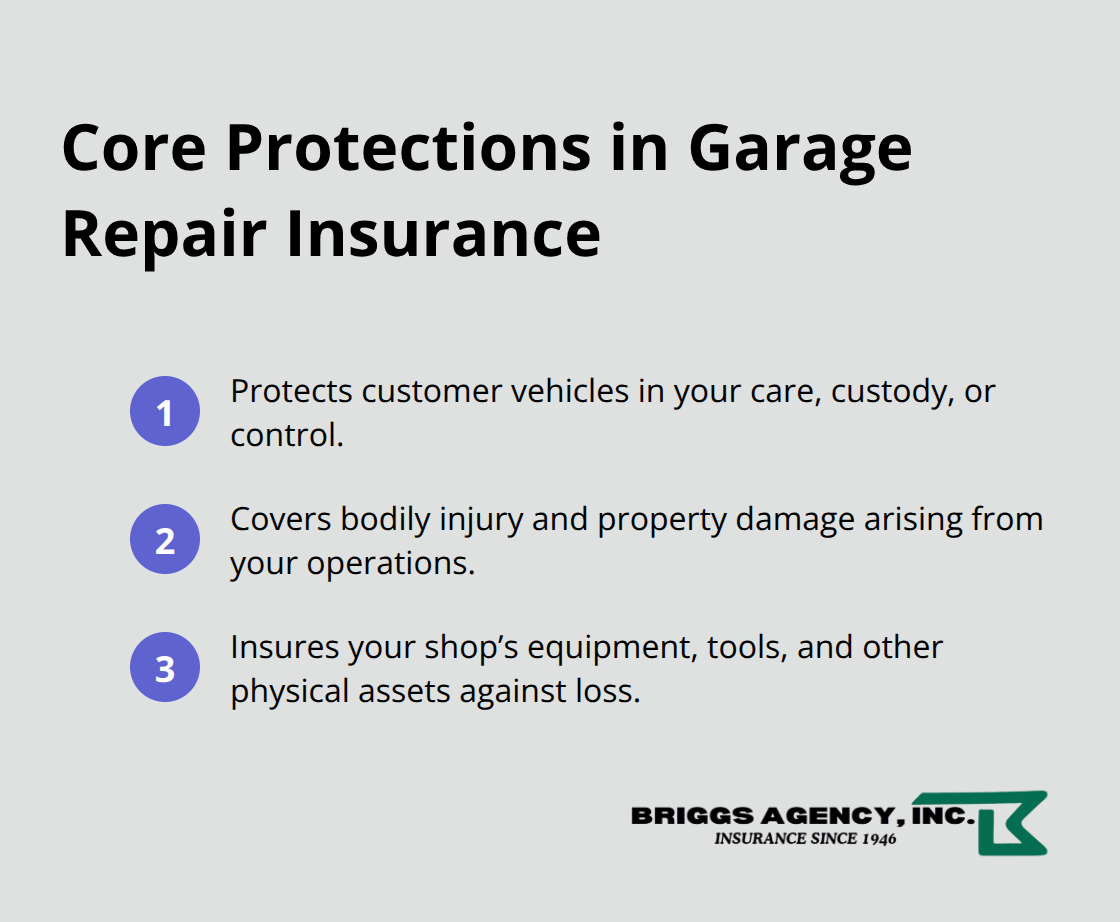
Garagekeepers liability covers customer vehicles stored on your premises from theft, fire, vandalism, or weather damage, as well as bodily injury, property damage, or accusations of slander or copyright infringement-but not from bad workmanship or warranty issues. If a windstorm damages three vehicles parked in your lot, garagekeepers coverage steps in to cover those losses.
Protecting Your Assets and Employees
Commercial Property Insurance protects the physical assets you own or lease: your building, diagnostic equipment, lifts, inventory, and furniture. Equipment Floater coverage extends that protection to tools and equipment as they move around your shop or travel to job sites, covering losses from theft, collision, or damage. Workers’ Compensation is legally required in most states and covers employee injuries or illnesses that occur on the job.
The Coverage Gaps Most Shops Miss
What many shop owners overlook are the gaps between these coverages. Garagekeepers liability explicitly excludes damage caused by faulty repair work or warranty issues-that’s where Professional Liability coverage comes in, protecting against claims when staff mistakes lead to customer vehicle damage or crash-related costs. Business Auto Insurance covers vehicles your shop owns or leases, while Hired and Non-Owned Auto coverage protects you when employees use their personal vehicles for business purposes. If you perform road testing on customer vehicles, this gap-filler is essential because standard personal auto policies exclude business use.
Hidden Exposures That Can Sink Your Business
Another commonly missed exposure is Business Interruption coverage, which replaces lost income if a fire or disaster forces your shop to close temporarily. A Midwest shop that experienced a major fire without this coverage lost approximately $50,000 in monthly revenue during the three-month rebuild period. Pollution Liability, often overlooked entirely, covers environmental cleanup costs when hazardous materials from your shop contaminate soil or groundwater-cleanup can range from $50,000 to $500,000, making this a serious financial exposure. Cyber Liability protects against data breaches and ransomware attacks; the Identity Theft Resource Center reports rising threats to small businesses, with typical small-shop coverage costing $800 to $2,500 annually for $1 million in protection.
Why Standard Business Policies Fall Short
The most critical mistake shop owners make is assuming standard business policies cover these exposures. They don’t. A standard commercial policy leaves you exposed the moment you take possession of a customer’s vehicle. Understanding which coverages address which risks sets the foundation for building a policy that actually protects your operation-and that’s where assessing your shop’s specific risks becomes the next essential step.
Why Your Shop Faces Real Financial Risk Without Proper Coverage
Liability Claims That Drain Your Operating Account
Auto shops face liability claims that can devastate finances faster than most owners realize. A customer slips on oil in your service bay and breaks their arm-that’s a premises liability claim your general business policy might not fully cover. A technician road-tests a customer’s vehicle and causes an accident-your standard commercial auto policy won’t cover it because the vehicle wasn’t yours. These scenarios happen regularly across the industry, and shops without proper garage repair insurance pay settlements directly from operating accounts.
Commercial General Liability covers bodily injury and property damage from your operations, but it has limits. If a customer sues for $500,000 after a serious injury and your policy maxes out at $1 million per occurrence, you absorb the difference. Garage liability is designed to cover claims of negligence associated with the daily operations of auto repair businesses-coverage that standard policies explicitly exclude. A single windstorm that damages five vehicles in your lot could cost $100,000 to $200,000 out of pocket without this protection.
The Repair Mistake That Becomes a Lawsuit
Professional Liability coverage addresses the gap most shop owners miss entirely: claims that arise from faulty repair work and cause customer vehicle damage or crash-related injuries. If a technician’s mistake during brake service leads to a customer accident, this coverage protects you against the resulting lawsuit and repair costs. Standard policies leave you exposed to these claims because they don’t recognize the specific liability that comes with performing repairs.
Equipment Loss Stops Your Operation Cold
Your equipment and tools represent significant capital investment, and losing them stops your entire operation immediately. Inland Marine coverage protects diagnostic equipment, lifts, and specialty tools from theft, fire, or damage as they move around your shop. A $50,000 diagnostic machine stolen from your lot becomes a business-ending loss without this protection. You can’t perform repairs without your core equipment, which means you can’t generate revenue.
The Three Exposures That Threaten Business Survival
Business Interruption coverage is where most shops make their biggest mistake. If a fire forces you to close for three months, this coverage replaces your lost revenue while you rebuild. A Midwest shop that lost its facility without this coverage lost approximately $50,000 monthly for three months-$150,000 in total income that evaporated. The shop had to take on emergency debt to survive.
Workers’ Compensation is legally required in most states and covers employee injuries on the job, but it also protects you from lawsuits when employees get hurt. Pollution Liability, often completely overlooked, covers environmental cleanup costs when hazardous materials from your shop contaminate soil or groundwater. Cleanup costs range from $50,000 to $500,000 depending on contamination severity, making this exposure serious enough to threaten business survival.
Cyber Threats to Your Customer Data
Cyber Liability has become essential as shops store customer data and payment information. The Identity Theft Resource Center reports rising cyber threats to small businesses, with typical coverage costing $800 to $2,500 annually for $1 million in protection. One ransomware attack that locks your shop’s computer systems can force closure for weeks and expose customer information to theft.
These gaps between standard policies and actual shop exposures create financial vulnerabilities that compound quickly. The next step involves assessing which of these risks apply most directly to your operation and determining the coverage limits that match your specific situation.
Building Your Coverage Around What Actually Matters
Assess Your Shop’s Actual Exposures
Start with a complete list of every service your shop performs and every vehicle type you handle. A shop that only does oil changes and tire rotations faces completely different exposures than one doing transmission rebuilds, body work, and road testing. Count the maximum number of vehicles on your premises at any given time, including customer drop-offs and vehicles waiting for service. This number directly determines your garagekeepers limit. If you typically have 20 vehicles on site and the average customer vehicle is worth $28,000, you need at least a $600,000 garagekeepers limit with some cushion built in. Many shops set limits based on what sounds reasonable rather than actual exposure-a critical mistake that costs money when claims arrive.
Calculate Garagekeepers Limits Based on Real Numbers
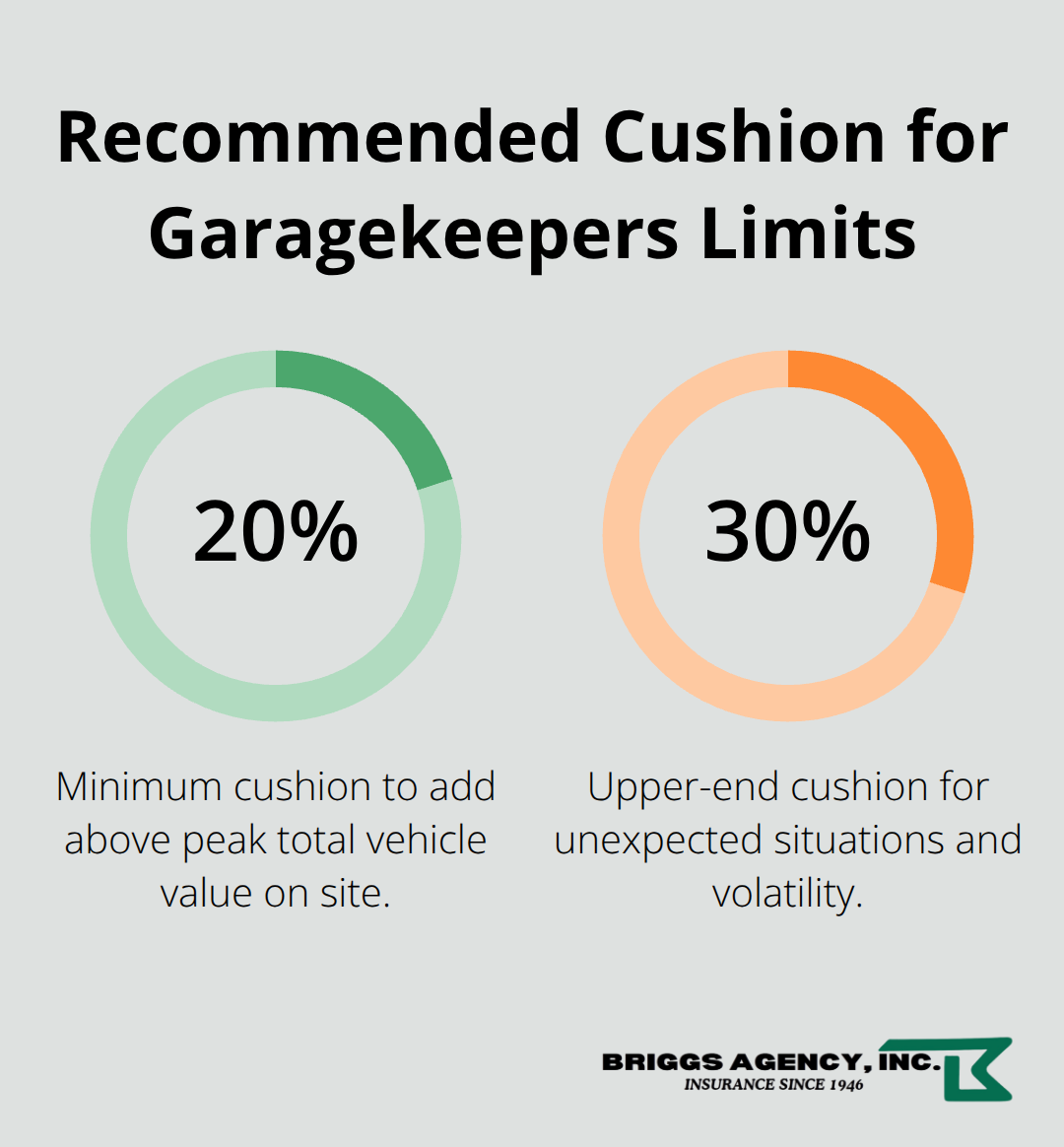
A real Midwest shop with a $250,000 garagekeepers limit faced over $300,000 in settlements after a single windstorm damaged five vehicles. The shop paid the difference from operating funds, a painful lesson in underestimating exposure. Your garagekeepers limit should reflect the total value of vehicles you hold at peak capacity, plus a 20 to 30 percent cushion for unexpected situations. This approach protects you from absorbing losses that exceed your policy limits.
Identify Road Testing and Employee Vehicle Risks
Evaluate whether technicians drive customer vehicles for diagnostics or test drives. Standard commercial auto policies specifically exclude this activity, leaving you exposed to liability claims. Hired and Non-Owned Auto coverage fills this gap at roughly $300 to $800 annually and protects you when employees use personal vehicles for business purposes. This coverage becomes essential if your operation includes road testing or diagnostic driving.
Address Environmental and Data Vulnerabilities
Assess your facility for environmental risk. If you change oil, handle coolant, or work with petroleum products, Pollution Liability becomes essential. Cleanup costs range from $50,000 to $500,000 depending on soil contamination, making this a serious financial exposure most shops completely ignore. Document your annual revenue to determine Business Interruption coverage limits-the standard recommendation is 12 to 18 months of operating expenses, which protects you if a fire or disaster forces temporary closure. A three-month shutdown without this coverage can drain $150,000 or more from a typical shop’s cash reserves.
Protect Customer Information and Digital Assets
Evaluate your data handling practices. If you store customer information digitally, Cyber Liability coverage at $1 million typically costs $800 to $2,500 annually and covers breach notification, credit monitoring, and regulatory fines that small businesses increasingly face. These aren’t theoretical risks; they’re exposures that happen to real shops regularly, and proper coverage protects both your operation and your customers’ trust.
Final Thoughts
Garage repair insurance protects your shop against the specific risks that standard business policies ignore. The coverage gaps throughout this guide represent real financial exposures that can force closure or drain your operating account in a single incident. A windstorm, equipment theft, employee injury, or customer lawsuit becomes manageable with proper protection in place and devastating without it.
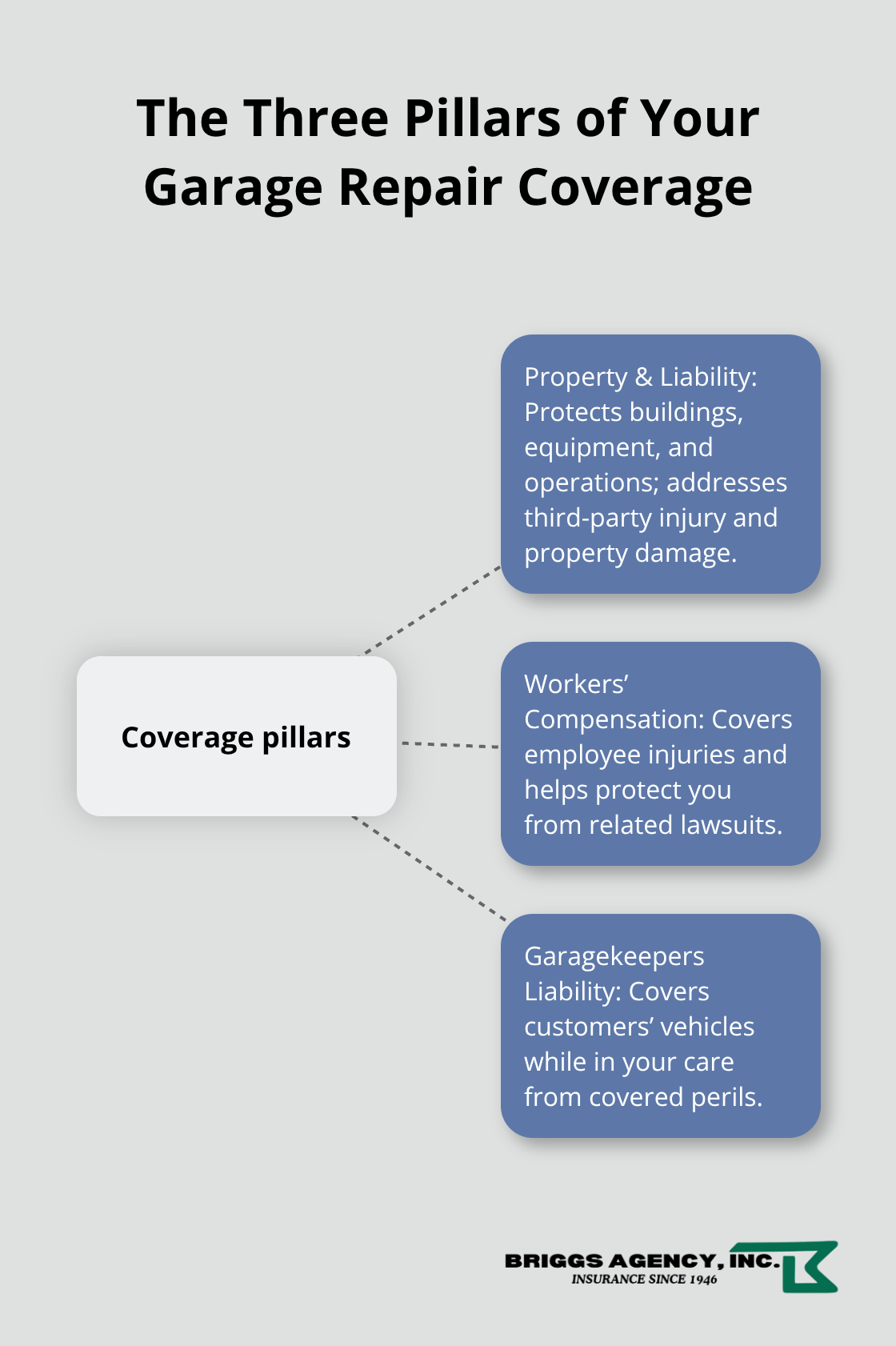
Your coverage should rest on three pillars: protecting your physical assets and operations through property and liability coverage, protecting your employees through workers’ compensation, and protecting your customers’ vehicles through garagekeepers liability. Beyond these essentials, your policy needs to address the exposures specific to your operation, whether that’s road testing, environmental risk, or cyber threats. The limits you choose should reflect your actual exposure, not industry averages or what sounds reasonable.
We at Briggs Agency, Inc. have helped shop owners across our community build policies that actually fit their operations. Contact us at https://briggsagency.com to discuss your coverage gaps and get a quote tailored to your specific risks. Your shop’s financial protection depends on taking action today.
The information provided in this blog is for general informational purposes only and does not constitute legal, financial, or insurance advice. Coverage options, terms, and availability may vary. Please consult with a licensed professional for advice specific to your situation.
Artificial intelligence may have been used to generate text and images in some blog articles.

