

Property Insurance for Businesses: A Practical Risk Reduction Plan
Your business assets represent years of investment and hard work. Property insurance for businesses protects that investment from fires, theft, weather damage, and other threats that could derail operations.
At Briggs Agency, Inc., we help business owners understand what coverage actually matters for their situation. This guide walks you through building a protection strategy tailored to your specific needs.
What Your Business Property Insurance Actually Covers
Standard commercial property insurance protects the physical assets that keep your business running. Your building structure, equipment, inventory, and tools all receive coverage under a basic policy, which means damage from fire, theft, wind, and lightning gets reimbursed at either replacement cost or actual cash value depending on your policy terms. The Hartford reports helping over 1.5 million small business owners secure this protection, and for good reason-most businesses underestimate how much they’d lose if a single fire or break-in happened tomorrow.
Understanding Building and Asset Coverage
When you own or lease your building, the structure itself receives coverage. When you rent, your landlord’s policy covers the building, but your equipment, displays, and inventory inside remain your responsibility. That distinction matters because renters often skip coverage thinking the landlord’s policy protects everything. It doesn’t. You need your own policy to cover what you own.
Equipment Breakdown Insurance
Equipment breakdown insurance deserves serious consideration if your business depends on machinery, HVAC systems, or specialized tools. A power surge or internal failure can cost thousands to repair or replace, and standard property coverage doesn’t always cover these losses. If you operate a restaurant, a broken refrigerator or oven creates immediate lost income on top of replacement costs. If you run a manufacturing operation, a failed compressor or production line shutdown hits harder. Adding equipment breakdown coverage fills this gap.
Business Interruption Coverage
Business interruption insurance allows businesses to pay fixed expenses while the property is closed for repairs. This coverage reimburses your lost income and ongoing operating expenses when a covered event forces you to close temporarily. If a fire shuts you down for three weeks, this coverage pays your payroll, rent, utilities, and other fixed costs while you’re unable to operate. Most business owners focus on replacing the damaged property but forget they still owe employees and landlords during recovery. The combination of property coverage plus business interruption coverage protects both your assets and your cash flow when disaster strikes.
Understanding what your policy covers is only half the battle. The risks your business actually faces-and how to prepare for them-shape which coverages matter most for your operation.
Common Property Risks Businesses Face
Fire and weather-related damage create the most significant threats to business property. U.S. fire departments respond to roughly 470,500 structure fires annually, with substantial property loss and business interruption. A single fire destroys equipment, inventory, and building structure in minutes-damage that replacement cost coverage reimburses, but only if you carry adequate limits. Beyond fire, severe weather compounds the problem. High winds tear off roofs and shatter windows. Heavy rain causes flooding in basements where you store inventory or equipment. Hail damages vehicles and HVAC units. These events happen regularly in Indiana, and businesses often discover their coverage falls short after the loss occurs. That’s why reviewing your property limits annually matters-your inventory and equipment values change as your business grows, but many owners lock in a policy and forget to adjust it.
Theft and Vandalism Hit Harder Than Expected
Theft and vandalism strike harder than most business owners expect, especially for retail locations and businesses in accessible areas. The FBI’s Uniform Crime Reporting Program shows property crime remains persistent across communities, with burglary and theft losses reaching billions annually. A single break-in costs money for stolen goods, damaged doors or windows, inventory loss, and business interruption while you clean up and repair. Vandalism adds another layer-spray paint, broken glass, and damaged signage create immediate costs plus potential safety hazards.
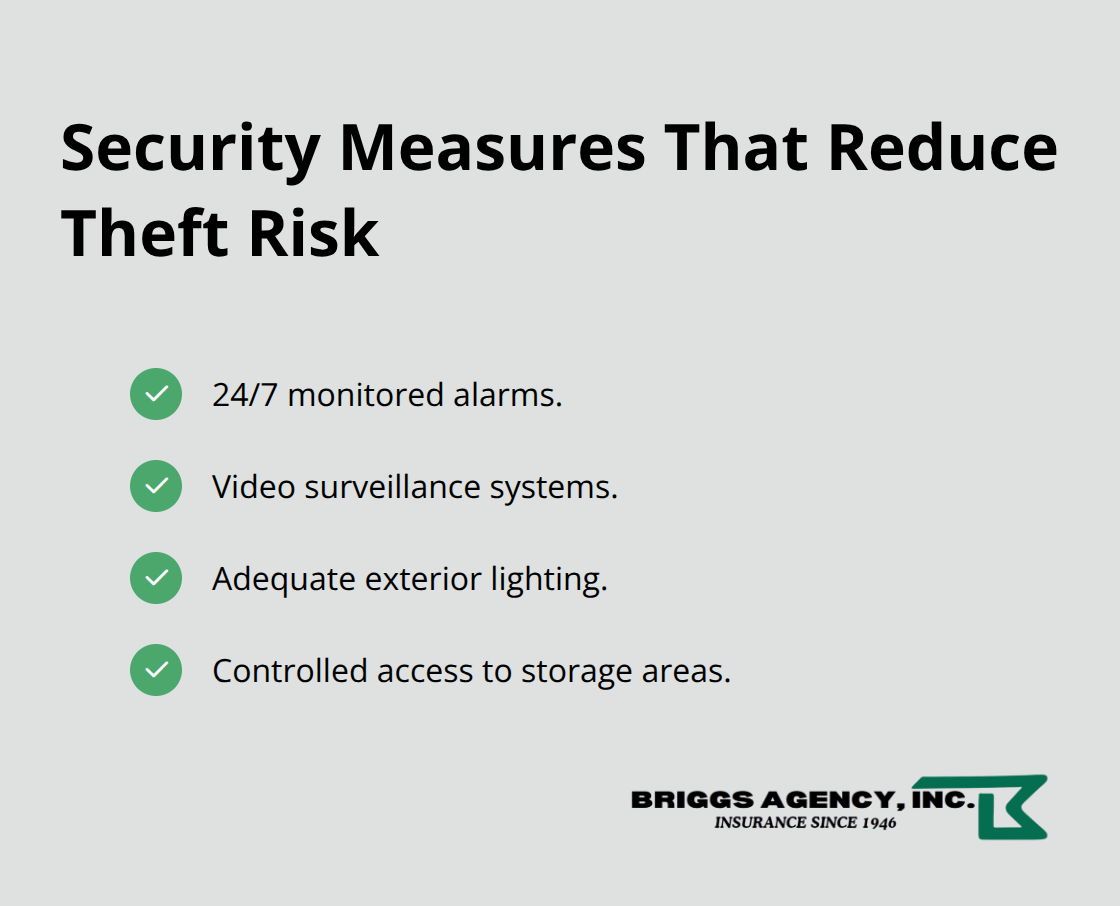
Security measures reduce this risk substantially. 24/7 monitored alarms, video surveillance systems, adequate exterior lighting, and controlled access to storage areas deter criminals and provide evidence if theft occurs. These controls also lower your insurance premiums because insurers recognize that documented security measures reduce claim frequency.
Water Damage Comes From Multiple Sources
Water damage presents a different challenge because it originates from several sources. Burst pipes during winter, foundation cracks allowing groundwater in, roof leaks, or backed-up sewers all cause water intrusion that damages flooring, drywall, equipment, and inventory. Standard property policies cover sudden, accidental water damage like a burst pipe, but they exclude damage from flooding caused by heavy rain or rising water tables.
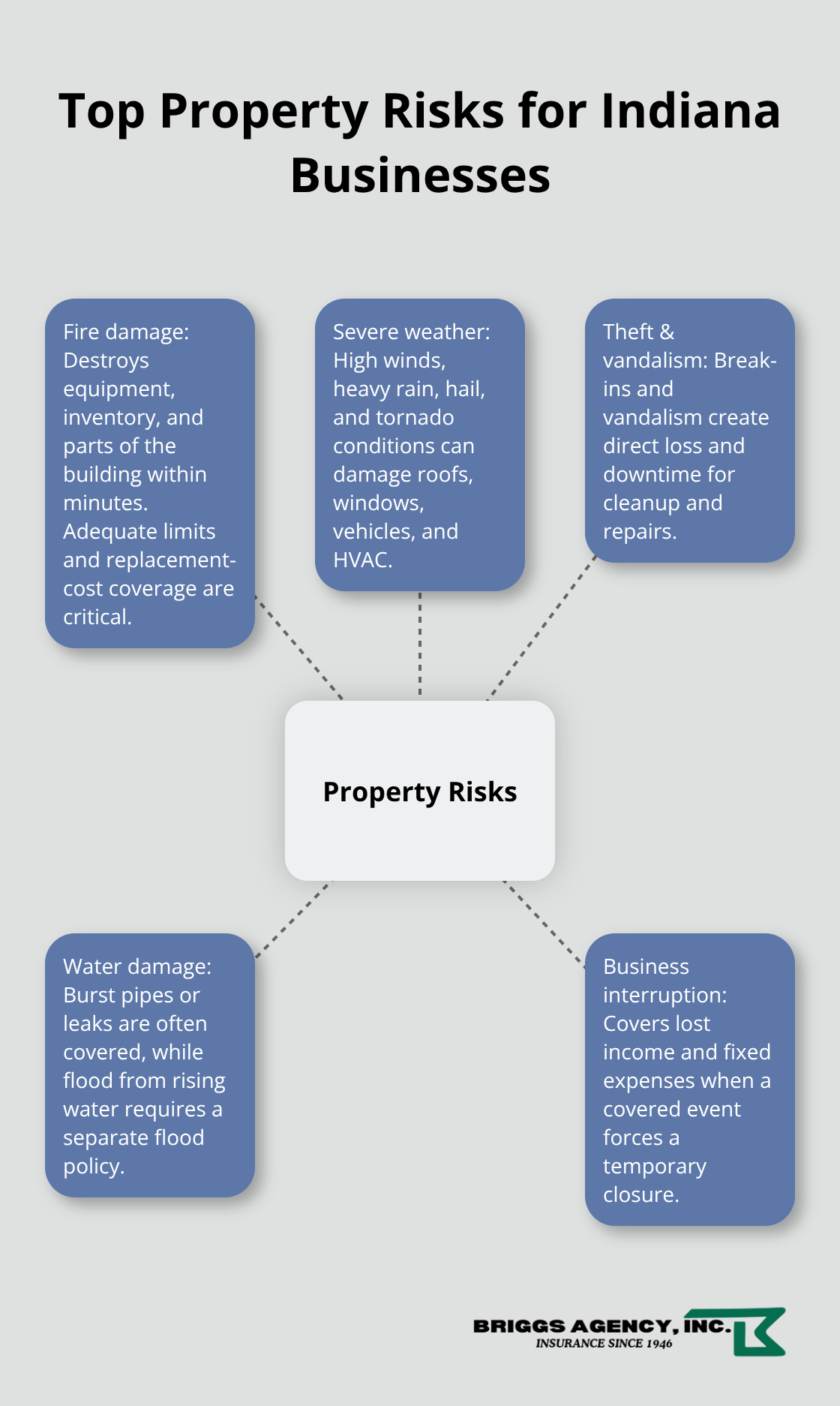
That’s why commercial flood insurance through the National Flood Insurance Program exists as a separate purchase-it covers the water damage that standard policies don’t. If your business operates in a flood-prone area or sits in a basement or ground-floor space, flood insurance isn’t optional; it’s essential protection that prevents catastrophic loss.
Understanding these risks shapes which coverages matter most for your operation. The next step involves assessing your specific assets and vulnerabilities to build a protection strategy that actually fits your business.
How to Build a Property Insurance Strategy That Fits Your Business
Map Your Assets and Replacement Costs
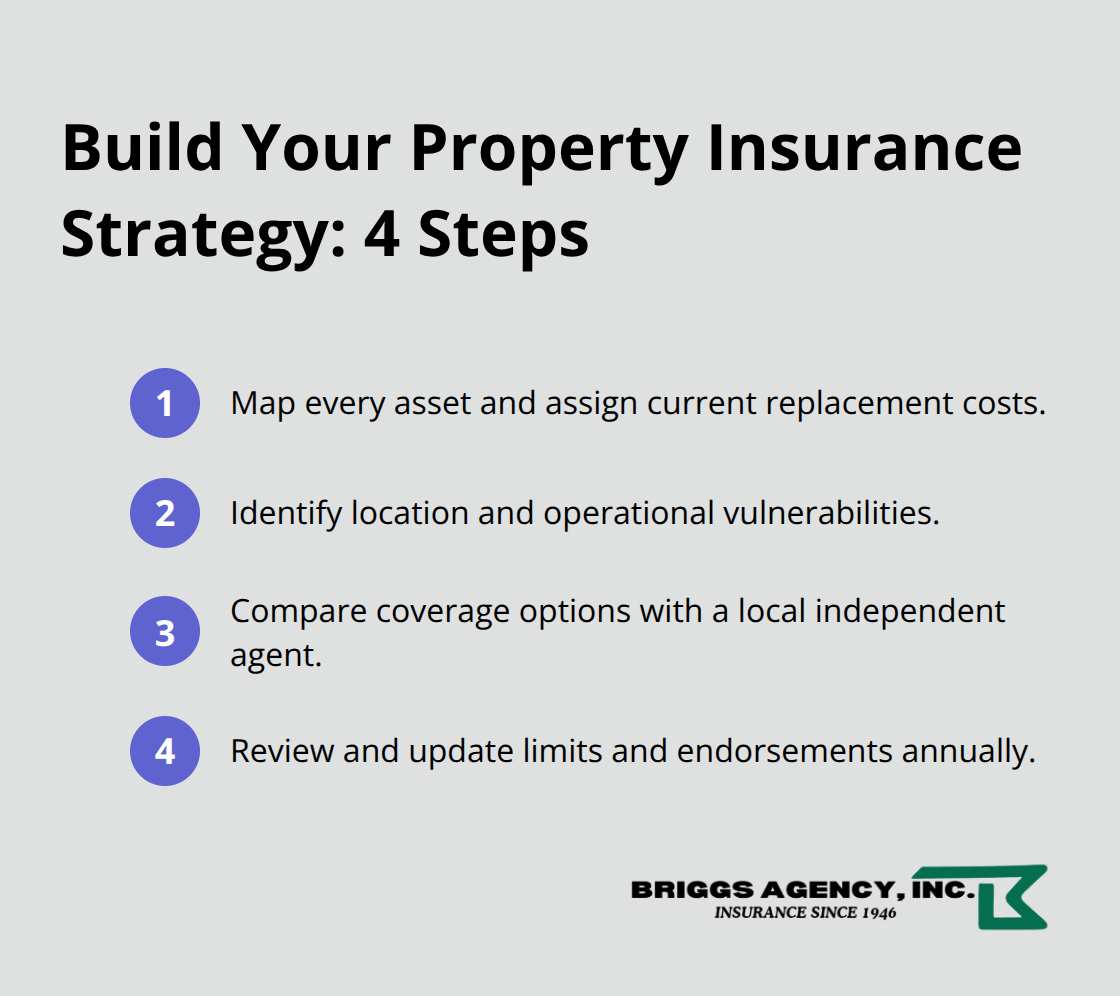
Start by walking through your building and listing every asset your business owns or depends on. Document the structure itself, all equipment needed for daily operations, inventory sitting on shelves or in storage, furniture, computers, and specialized tools specific to your industry. Assign a realistic replacement cost to each category, not the depreciated value you see on your balance sheet. A five-year-old HVAC unit costs $8,000 to replace today, not the $3,000 book value your accountant shows.
Most business owners underestimate replacement costs by 30 to 40 percent, which means they carry inadequate coverage limits and face out-of-pocket losses after a claim. Once you know your asset values, identify which losses would hurt most. A manufacturing business might lose $50,000 per day in revenue if production equipment fails, while a retail shop loses $5,000 daily in sales if a fire closes the storefront. That gap determines whether business interruption coverage is essential or secondary.
Identify Your Specific Vulnerabilities
Assess your specific vulnerabilities next. Does your location sit in a flood-prone area? Does your building contain aging electrical systems that increase fire risk? Does your neighborhood experience break-ins based on local crime data? These factors shape which additional coverages matter most and which risk controls lower your premiums.
Security measures reduce theft risk substantially. 24/7 monitored alarms, video surveillance systems, adequate exterior lighting, and controlled access to storage areas deter criminals and provide evidence if theft occurs. Insurers recognize that documented security measures reduce claim frequency, which translates to lower premiums for your business.
Work with a Local Agent to Compare Coverage Options
A local insurance agent who understands your industry provides value that online quotes cannot match. They know which carriers offer the best rates for restaurants versus manufacturing operations versus retail shops, and they understand regional risks specific to Indiana weather patterns and local property values. When comparing options, look beyond premium price alone. One carrier might offer equipment breakdown coverage for $400 annually while another charges $800, but the first carrier might have a $5,000 deductible while the second has $1,000. Calculate the true cost by considering what you’d actually pay out-of-pocket during a claim.
A Business Owner’s Policy bundles property, liability, and business income coverage into one package, which costs less than purchasing coverages separately and eliminates gaps between policies. If your business has specialized risks, endorsements add targeted protection without overpaying for unnecessary coverage.
Review and Update Your Policy Regularly
Review your policy annually when your business changes, not just when renewal notices arrive. If you purchased new equipment, expanded to a second location, or increased inventory values, your coverage limits need adjustment. Many business owners lock in a policy and forget it exists until a loss occurs, then discover their limits haven’t kept pace with growth. Set a calendar reminder each year to contact your agent and review whether your coverage still matches your actual assets and operational needs.
Final Thoughts
Property insurance for businesses protects what you’ve built, but only when coverage matches your actual assets and risks. The strategy we’ve outlined-mapping your assets, identifying vulnerabilities, comparing options with a knowledgeable agent, and reviewing annually-prevents the costly gaps that catch most business owners off guard. You now understand what standard policies cover, which additional endorsements fill specific needs, and how security measures and maintenance practices lower your premiums over time.
Professional guidance matters because insurance isn’t one-size-fits-all. A restaurant faces different risks than a manufacturing operation or retail shop, and your coverage should reflect those differences. We at Briggs Agency, Inc. serve Indiana businesses by representing multiple top-rated carriers and tailoring policies to your specific situation. Our local agents understand regional weather patterns, property values in Crown Point and surrounding areas, and which carriers offer competitive rates for your industry.
Start by scheduling a conversation with a local agent who can review your current coverage and identify gaps. Bring your asset list and recent financial statements so they understand your business operations and replacement costs. Ask about equipment breakdown coverage if you depend on machinery, business interruption protection if a shutdown would strain cash flow, and security discounts if you’ve invested in alarms or surveillance.
The information provided in this blog is for general informational purposes only and does not constitute legal, financial, or insurance advice. Coverage options, terms, and availability may vary. Please consult with a licensed professional for advice specific to your situation.
Artificial intelligence may have been used to generate text and images in some blog articles.

