
Contractor Liability Insurance: Guarding Your Projects and Profits
One accident on your job site can cost thousands in medical bills, legal fees, and settlements. Contractor liability insurance protects your business from these financial disasters.
At Briggs Agency, Inc., we’ve helped countless contractors understand why this coverage isn’t optional-it’s essential for survival. Whether you’re a solo operator or managing a larger team, the right policy keeps your projects and profits safe.
What Contractor Liability Insurance Actually Protects
Bodily Injury Coverage Shields You from Medical and Legal Claims
Contractor liability insurance covers three distinct areas of financial exposure that can sink your business if left unprotected. First, it pays for bodily injury claims when someone gets hurt because of your work. If a client’s employee trips over your equipment and breaks a leg, or a passerby is struck by debris from your job site, this coverage handles their medical bills, lost wages, and legal settlements. A single serious injury claim can easily exceed $100,000 in medical costs alone, not counting legal defense.
Property Damage Liability Protects Against Costly Accidents
Second, the policy covers property damage liability, which protects you when your work damages someone else’s property. You might puncture a water line while excavating, damage a neighbor’s fence, or break an HVAC unit during installation-this coverage pays for repairs or replacement. Without this protection, you absorb the full cost of repairs, which can range from thousands to tens of thousands of dollars depending on the damage.
Legal Defense Costs Keep You Protected in Court
Third, it covers your legal defense costs, meaning the insurance company pays for attorneys and court expenses even while your claim is being investigated. Many contractors assume they’ll never need this, then face substantial legal fees before a case is even settled. Most general liability policies include all three protections under one standard policy with limits of $1,000,000 per occurrence and $2,000,000 products and completed operations aggregate, though larger projects often demand higher limits.
Why Clients Require This Coverage Before Work Starts
Most commercial contracts now require proof of liability insurance before work begins. Clients want a Certificate of Insurance naming them as an additional insured, which means they’re also protected under your policy. Without this documentation, you won’t land legitimate commercial jobs. On residential projects, homeowners increasingly ask for proof of coverage because their own homeowner’s policies explicitly exclude damage caused by contractor work. If you cause damage and can’t prove you’re insured, the homeowner’s only recourse is to sue you personally, putting your home, vehicles, and bank account at risk.
Completed Operations Coverage Extends Protection After Project Completion
Completed operations coverage, included in most contractor policies, extends protection for up to one year after project completion-critical because defects or injuries can surface weeks or months later. For high-risk trades like roofing or excavation, this tail coverage is absolutely essential. This extended window of protection is why understanding your specific coverage limits matters so much when you assess your business needs.
Why Contractors Need Liability Insurance
A Single Accident Can Wipe Out Your Profits
Liability lawsuits destroy contractor finances in ways most business owners never anticipate until it’s too late. A single claim for bodily injury or property damage can exceed $500,000 in legal defense costs and settlements combined, and without insurance, that bill falls directly on you. Construction industry data shows that contractors without adequate liability coverage face significant out-of-pocket losses per major incident, according to the Construction Industry Institute. That money comes straight from your profits, your equipment fund, or forces you to liquidate assets or close the business entirely.
The financial math is straightforward: a $1,500 annual premium for solid liability protection costs far less than absorbing a $200,000 property damage claim or a $300,000 settlement for a serious injury. One accident on your job site can cost thousands in medical bills, legal fees, and settlements-liability insurance protects your business from these financial disasters.
Clients and Lenders Won’t Work Without Proof of Coverage
Your clients won’t work with you without proof of coverage, and lenders won’t finance projects if you lack it. Most commercial contracts now require you to name the client as an additional insured on your policy before any work starts, and many residential homeowners demand a Certificate of Insurance showing active coverage. If you can’t provide documentation, you don’t get the job-it’s that straightforward.
Commercial property owners and general contractors treat liability insurance as a non-negotiable requirement. They protect themselves by ensuring your policy covers their interests, which means you must have the right coverage in place before you show up on site.
Liability Insurance Protects Your Personal Assets and Reputation
Beyond client requirements, liability insurance protects your personal assets and business reputation. A lawsuit without insurance protection can force you into personal bankruptcy, threaten your home equity, and damage your standing in your local construction community. Contractors with solid liability coverage build trust faster, win more bids, and operate with the confidence that a single accident won’t end their business.
Your reputation in the construction industry depends on demonstrating that you operate professionally and responsibly. Proof of adequate coverage signals to clients, lenders, and other contractors that you take risk seriously and protect everyone involved in your projects.
The Right Coverage Positions You for Growth
Contractors with proper liability protection can pursue larger projects, bid on commercial work, and attract better clients who value professionalism. Without this foundation, you remain limited to smaller residential jobs where clients may not require proof of coverage-but those opportunities pay less and offer less stability. The contractors who build sustainable, profitable operations understand that liability insurance isn’t an expense; it’s an investment in business growth and security.
Understanding what coverage you actually need and how much protection fits your specific work is the next step toward building that foundation.
How to Choose the Right Coverage for Your Business
Assess Your Trade and Risk Profile
Your trade classification determines your base insurance rate and risk profile. According to the National Association of Insurance Commissioners, electricians typically pay $750 to $2,500 annually for standard coverage, framers pay $1,500 to $3,000, and roofers pay $3,000 to $6,000 or more due to higher injury and property damage frequency. Excavation and civil contractors fall into the $2,500 to $5,000 range. These figures reflect real underwriting data, not estimates.
A painter handling residential interior work might operate safely with $1,000,000 per occurrence and $2,000,000 products and completed operations aggregate, while a framing contractor or general contractor tackling commercial projects needs substantially higher protection. The difference matters because underinsured contractors face personal liability when claims exceed their coverage limits. If you carry $1,000,000 coverage and a claim settles at $1,500,000, you personally owe the difference.
Match Coverage Limits to Project Size and Client Demands
Project size and client requirements should drive your coverage decisions. A homeowner renovation might require only basic $1M/$2M limits, but commercial general contractors increasingly demand $2,000,000 per occurrence and $5,000,000 aggregate from subcontractors. Some large commercial projects specify $5,000,000 umbrella coverage on top of underlying limits, which means you need $6,000,000 per occurrence and $7,000,000 products and completed operations protection. Refusing to meet these requirements simply means losing the job.
Higher coverage limits increase premiums, but they’re mandatory for business growth. Contractors who stay limited to small residential work because they refuse adequate coverage sabotage their own profitability and scalability. The investment in proper limits pays back immediately through access to better-paying commercial projects and client confidence.
Factor in Location and Deductible Strategy
Your location multiplies your base rate significantly. High-litigation states like New York push premiums to $3,500 to $6,500 for the same $1M/$2M coverage, while tort-reform states like Ohio and Texas range from $700 to $1,800. This isn’t arbitrary pricing; it reflects actual claims history and legal environment in each state.
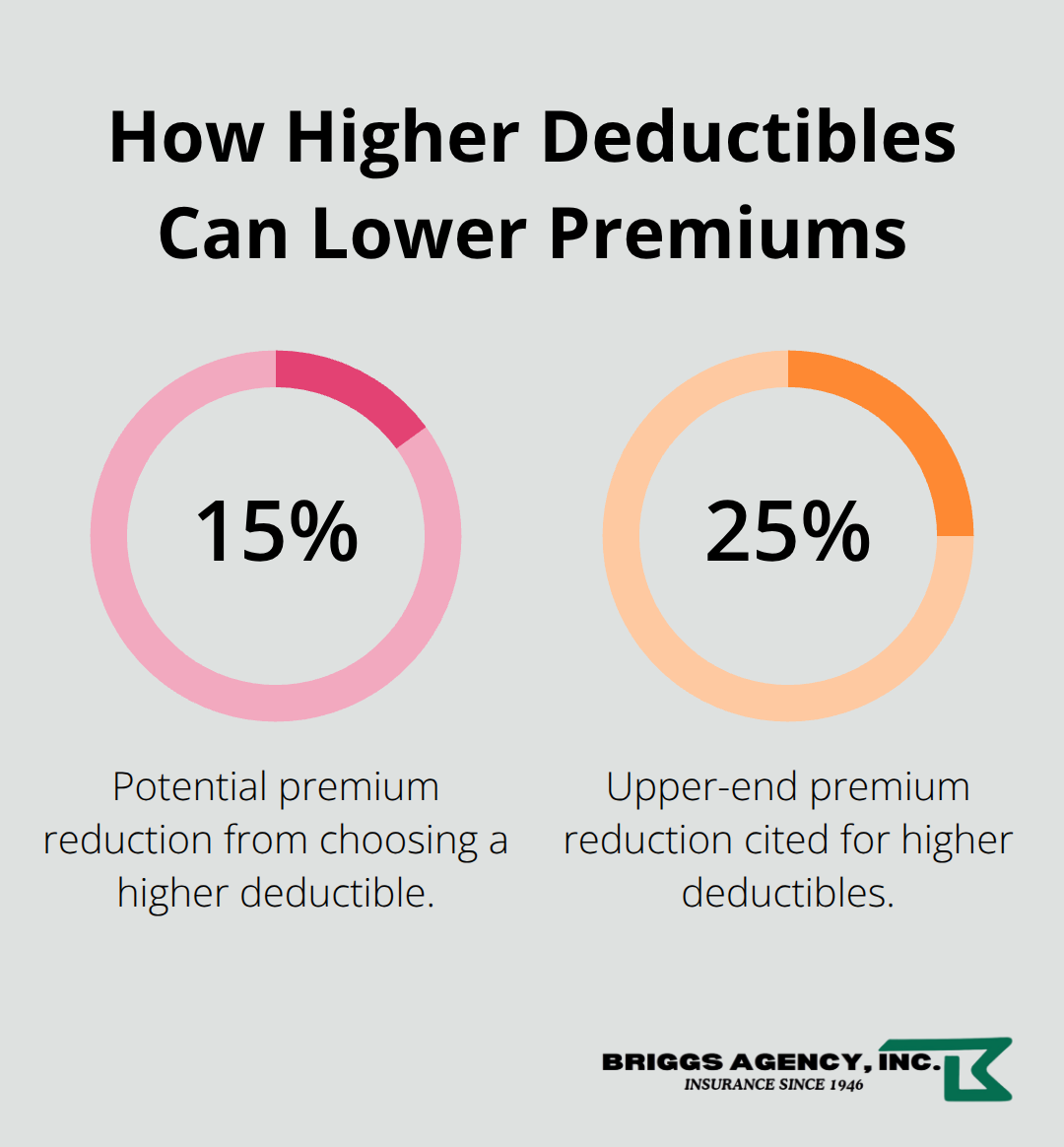
Your deductible choice directly trades premium savings for out-of-pocket risk. A $500 deductible costs more upfront but limits your exposure per claim, while a $2,500 or $5,000 deductible reduces your annual premium by 15 to 25 percent but increases what you pay when a claim occurs. Most contractors try $1,000 deductibles as the practical middle ground.
Get a Customized Quote and Track Subcontractor Coverage
Get a customized quote based on your actual gross receipts, payroll, and subcontracted costs rather than guessing at coverage levels. Insurers calculate final premiums after a year-end audit that reviews your actual business activity, so starting with an accurate quote prevents audit penalties later. Uninsured or underreported subcontractors trigger audit reclassifications that can spike your final bill by 200 percent.
A strict no-Certificate-of-Insurance, no-payment policy prevents this expensive mistake. Digital COI tracking systems with real-time alerts cost little but eliminate the scramble to verify coverage before work starts. These systems help you maintain compliance and demonstrate mature risk-transfer processes to underwriters, which can improve your rates over time.
Final Thoughts
Contractor liability insurance forms the foundation that separates contractors who build sustainable businesses from those who operate on borrowed time. The coverage protects your finances when accidents happen, satisfies client and lender requirements, and shields your personal assets from catastrophic loss. Without it, a single incident destroys years of hard work and profitability.
Your trade classification, project size, location, and client demands determine what coverage you actually need (a painter’s requirements differ significantly from a roofer’s, and commercial work demands higher limits than residential projects). Matching your policy to your specific risk exposure prevents both underinsurance and overpaying for unnecessary protection. Getting a customized quote based on your actual gross receipts and payroll ensures you start with accurate pricing and avoid audit penalties later.
Contact Briggs Agency, Inc. to discuss your contractor liability insurance needs and find the right protection for your business. As a family-owned independent agency serving Crown Point, Indiana, we represent multiple top-rated carriers and compare options to deliver competitive pricing tailored to your trade, project scope, and growth plans. Our experienced local agents handle the complexity so you can focus on running your business safely and profitably.
The information provided in this blog is for general informational purposes only and does not constitute legal, financial, or insurance advice. Coverage options, terms, and availability may vary. Please consult with a licensed professional for advice specific to your situation.
Artificial intelligence may have been used to generate text and images in some blog articles.

