

Office Property Insurance: A Practical Guide for Small Businesses
Your office property insurance protects one of your biggest business assets-your physical space and everything in it. Yet many small business owners overlook coverage gaps until disaster strikes.
At Briggs Agency, Inc., we’ve helped countless local businesses understand what they actually need to protect themselves. This guide walks you through the essentials so you can make informed decisions about your coverage.
What Your Office Property Insurance Actually Protects
Your office property policy covers three distinct layers of protection, and understanding each one matters because gaps here lead to real financial pain. The first layer is your building structure itself-the walls, roof, flooring, electrical systems, plumbing, and HVAC equipment. If a fire damages your office or a storm tears through the roof, this coverage pays for repairs or replacement. According to Insureon data, building age and condition heavily influence what you’ll pay; offices in masonry, concrete, or steel structures cost significantly less to insure than those built with wood or vinyl.
Contents and Equipment Inside Your Office
The second layer protects your contents and equipment inside: computers, furniture, inventory, filing cabinets, printers, and other business assets. This coverage also extends to items just outside your office, like exterior signage and landscaping. Most small businesses carry around $1 million per occurrence and $2 million aggregate in a Business Owner’s Policy that bundles property and general liability together, according to Insureon’s analysis of customer data. You’ll choose between replacement value coverage, which pays what it costs to replace damaged items at today’s prices, or actual cash value coverage, which accounts for depreciation. Replacement value costs more but protects you better; actual cash value is cheaper but leaves you with less recovery after a loss.
Business Interruption Coverage Keeps Cash Flowing When Doors Close
Business interruption coverage replaces lost income when a covered event forces you to shut down. The coverage allows businesses to pay fixed expenses, including costs incurred while operating at an offsite location, while the property is closed for repairs. Many small business owners skip this, which is a mistake-weather-related shutdowns affect significant portions of businesses in certain sectors, and fire claims cause rapid, substantial damage that can halt operations for weeks or months.
Additional Endorsements for Your Specific Risks
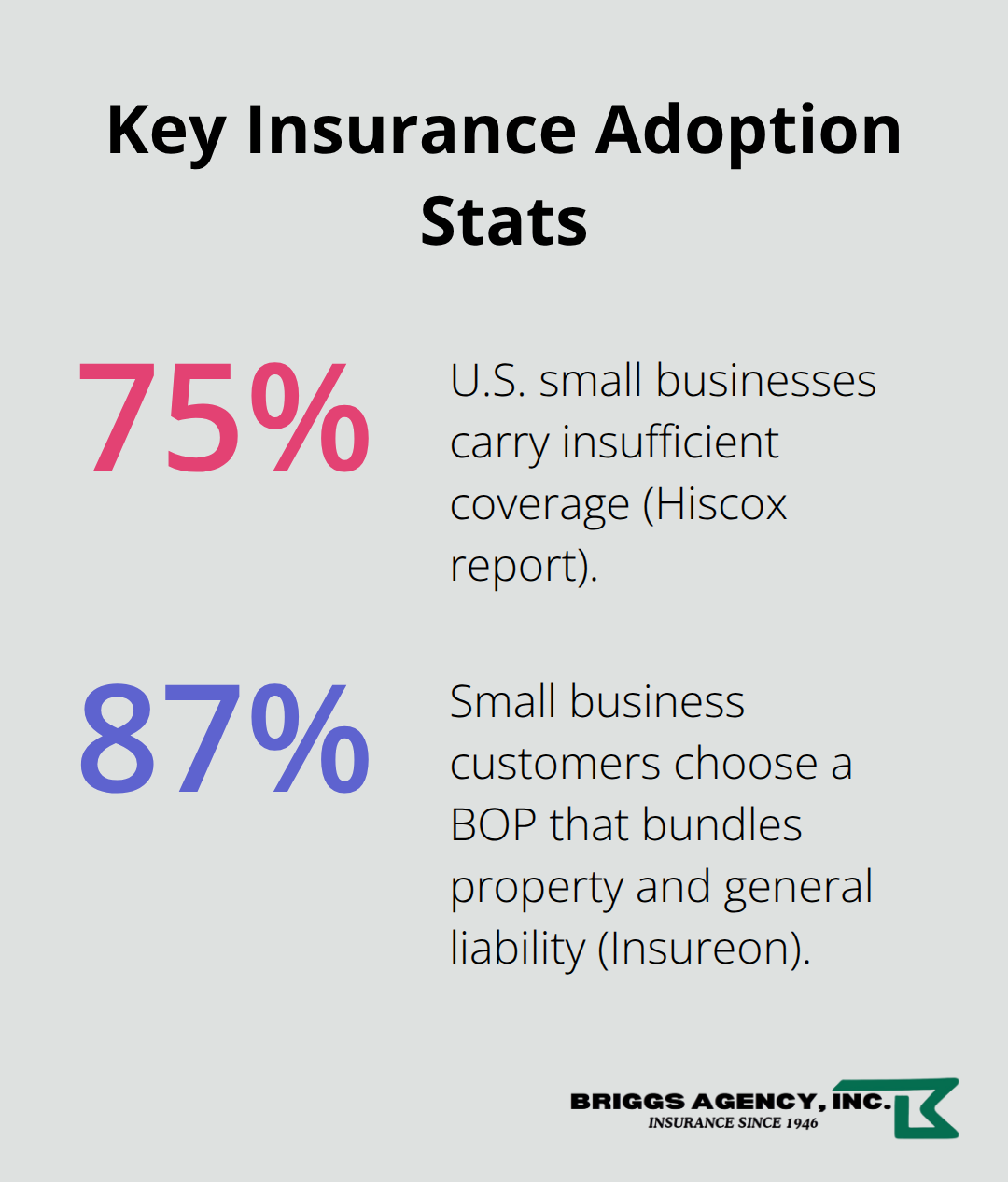
You can add endorsements for specific risks your location faces: earthquake coverage in seismic zones, flood insurance in areas prone to water damage, and equipment breakdown coverage for critical systems. Standard property policies exclude earthquakes, floods, and volcanoes unless you purchase separate endorsements, so verify what your regional risks are and whether your policy addresses them. The Hiscox Underinsurance in Small Business Report found that 75 percent of U.S. small businesses carry insufficient coverage, leaving themselves exposed when claims actually happen.
Getting Accurate Quotes and Valuations
When obtaining a quote, have exact values ready for your building, contents, and inventory to get accurate pricing; inflated valuations waste money while undervalued assets leave you short after a loss. These details form the foundation for determining whether your coverage truly matches your exposure-a step that separates adequate protection from costly gaps when you actually file a claim.
Why Your Business Needs Office Property Insurance
Fire, theft, and weather damage destroy businesses faster than most owners expect. According to Insureon data, four most common commercial insurance claims for small offices are burglary and theft, fire, weather damage, and on-premises customer injuries. A single fire shuts you down for weeks or months; weather-related damage forces temporary closures that drain cash reserves; theft of computers or inventory creates immediate operational gaps. Without property coverage, you absorb these costs entirely from cash flow or savings-most small businesses cannot sustain this hit. The financial reality is stark: replacing your office equipment, inventory, or building structure out of pocket often means choosing between recovery and closure.
Property Insurance Transfers Risk to Your Carrier
Property insurance transfers this risk to a carrier, letting you rebuild instead of filing for bankruptcy. Your lease or lender almost certainly requires it anyway. Most commercial landlords mandate that tenants carry property coverage on their improvements and contents, and commercial lenders require it as a condition of any business loan. Skipping coverage violates your lease or loan agreement and exposes you to legal liability if something happens.
Business Interruption Coverage Protects Your Cash Flow
Beyond contractual obligations, property insurance protects cash flow during the recovery period. Business interruption coverage, often bundled into a Business Owner’s Policy, replaces lost income while your office remains closed for repairs. Insureon found that 87 percent of small business customers choose a BOP with typical limits around one million per occurrence and two million aggregate, combining property and general liability into one streamlined policy.
This matters because operational downtime costs money whether the building is damaged or not: you still owe rent, payroll, and utilities while earning zero revenue. A covered loss without business interruption coverage means you absorb all fixed expenses with no income, creating a financial crisis that property damage alone did not cause.
The Real Cost of Operating Without Coverage
You would not operate without electricity or running water, and property coverage functions the same way: it is infrastructure that allows your business to survive disruption. The decision to carry office property insurance is not about fear or worst-case thinking-it is about basic financial management. When you face a loss, the coverage you selected determines whether you recover quickly or struggle for months. Understanding what you actually need to protect (your building, contents, and income stream) sets the stage for choosing the right policy limits and endorsements.
How to Size Up What You Actually Need to Protect
Start with a physical inventory of your office space and assets-not a rough estimate. Measure your square footage, photograph your equipment, and list everything from computers to furniture to inventory. This matters because undervaluation leaves you short after a loss, while overvaluation wastes premium dollars monthly.
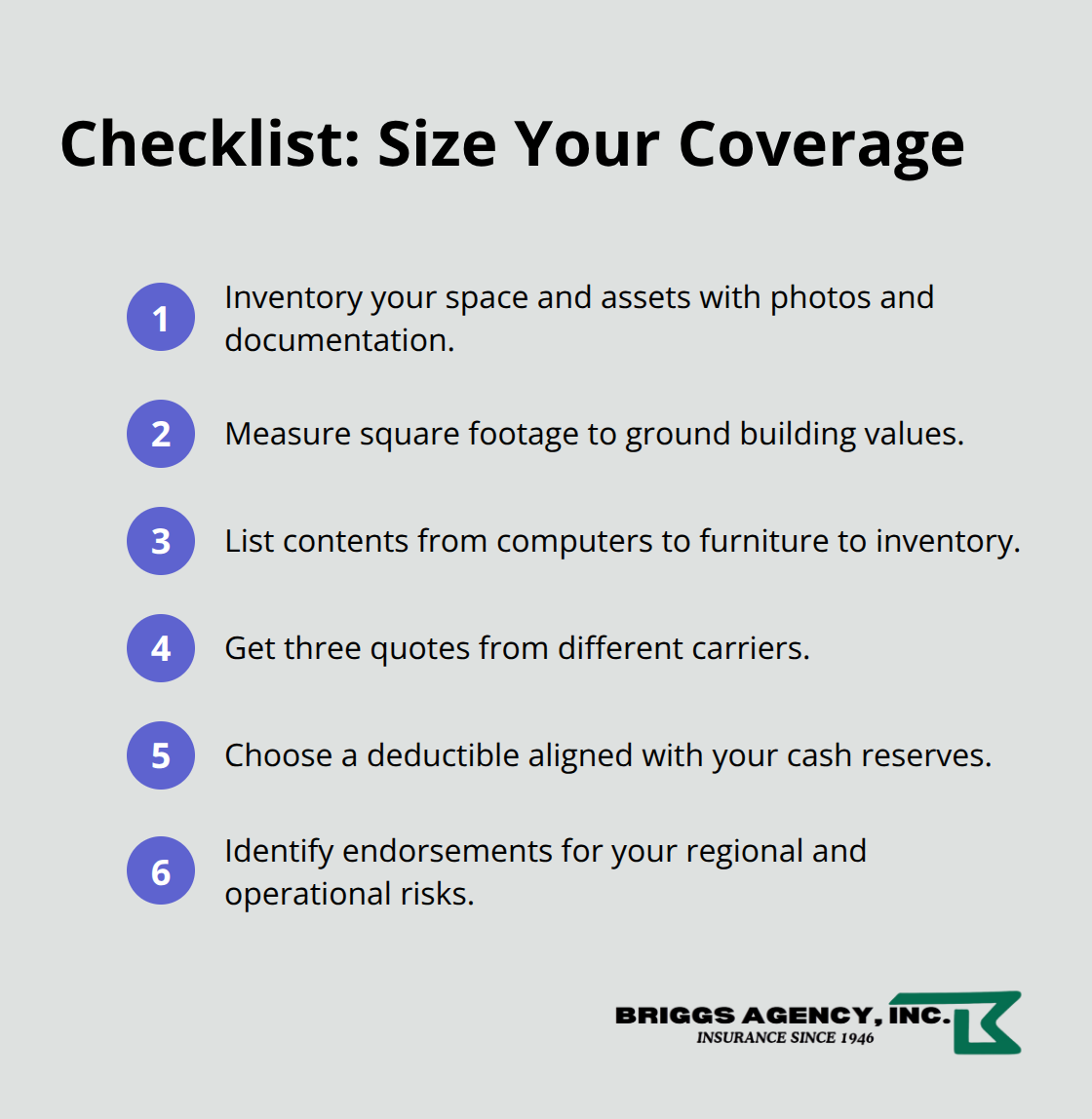
Your building value should reflect replacement cost at current market rates in your area, not what you paid years ago. Contents and equipment need individual attention: a desktop computer might cost $1,200 to replace today, but you only get actual cash value (depreciated) unless you specifically choose replacement value coverage. Most small offices underestimate their contents value by 20 to 40 percent, discovering the gap only when filing a claim.
Get Accurate Quotes Based on Real Numbers
Once you have solid numbers, get three quotes from different carriers, because premiums range from under $350 annually to over $15,000 depending on location, construction, and risk profile. A masonry or steel-frame building in a low-crime area with sprinklers and fire alarms costs far less than a wood-frame office in a high-risk zone. The variation reflects real differences in loss exposure, not arbitrary pricing.
Location and Construction Drive Your Actual Cost
Your building’s location and construction type matter more than most owners realize. Geographic variation is dramatic: small business property insurance costs roughly $38 per month in Washington state but $208 per month in New York-a five-fold difference driven by regional disaster risk, crime rates, and local building codes. Your building materials directly affect premiums: masonry, concrete, and steel structures are significantly cheaper to insure than wood or vinyl construction because they resist fire and weather damage better. The age and condition of major systems (roof, electrical, plumbing, HVAC) influence pricing substantially; a recently updated roof or modern electrical panel lowers your rate, while deferred maintenance triggers higher costs or outright exclusions. Distance to the nearest fire station and fire hydrant also factor in: properties within one mile of fire protection pay less than rural locations.
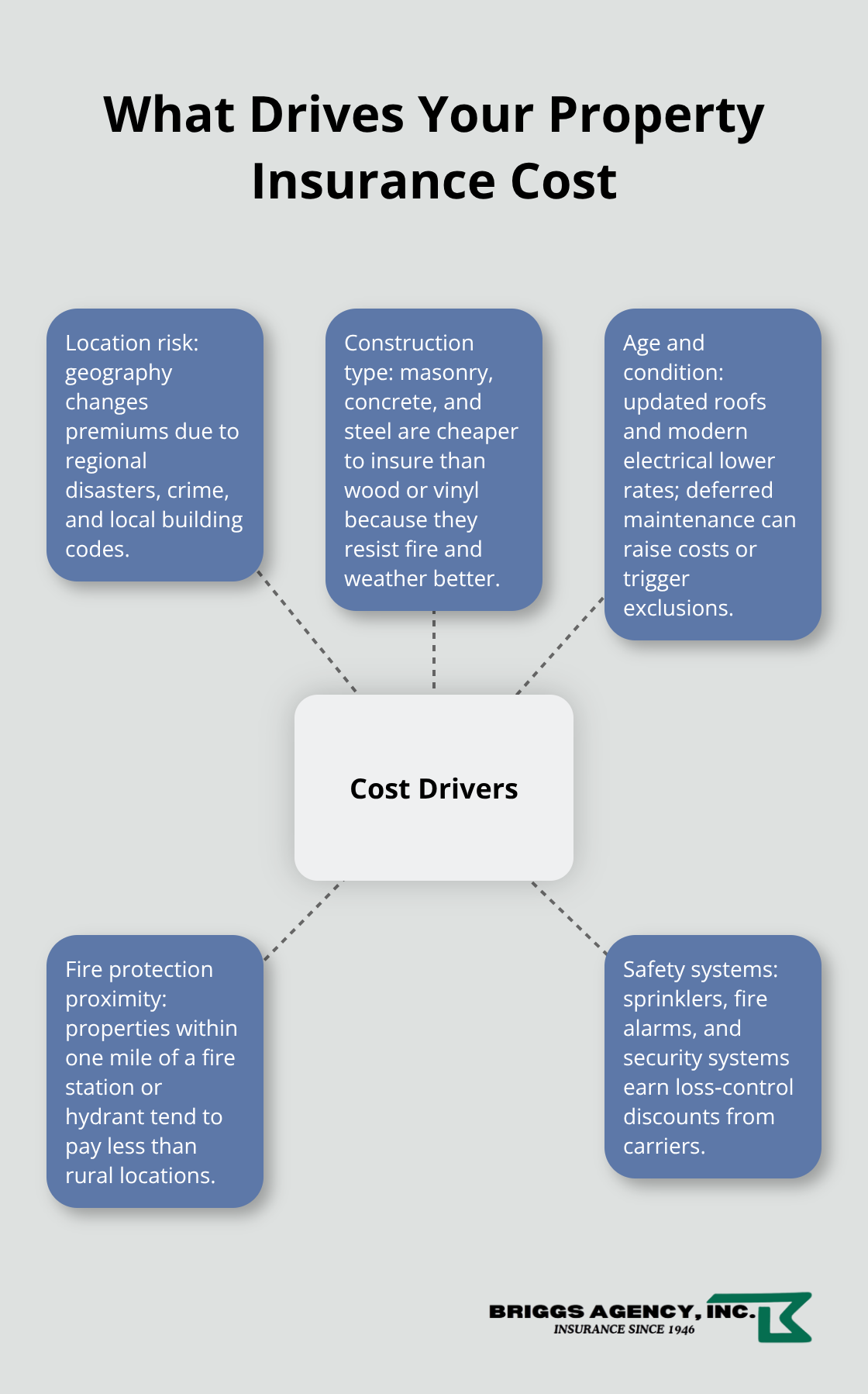
If your office has sprinklers, fire alarms, or security systems, these reduce premiums through loss-control discounts that carriers actively reward. Document these features before shopping for quotes-they directly lower what you pay.
Choose Your Deductible Based on Cash Reserves
Your agent helps you choose between higher deductibles (which lower monthly premiums but raise out-of-pocket costs per claim) and lower deductibles based on your cash reserves and risk tolerance. The average deductible among small business customers is $1,000, but the right choice depends on your specific situation. If you maintain three months of operating expenses in reserves, a $2,500 deductible might make sense and save you money monthly. If cash flow is tight, a lower deductible protects you better despite higher premiums.
Identify Endorsements That Match Your Actual Risks
An experienced agent identifies endorsements you actually need-earthquake coverage in seismic zones, flood insurance near waterways, inland marine coverage if equipment travels off-site-rather than selling you protections for risks that do not apply to your business. They verify that your policy meets any lease requirements or lender obligations, preventing violations that could void coverage or trigger lease termination. This guidance upfront prevents costly mistakes and ensures your coverage truly matches your exposure.
Final Thoughts
Office property insurance protects your business from financial devastation when fire, theft, weather, or other covered events strike. The three layers of protection-your building structure, contents and equipment, and business interruption coverage-work together to keep your operation running through disruption. Without this coverage, you absorb replacement costs entirely from cash flow, which most small businesses cannot sustain.
The practical steps are straightforward: inventory your space and assets accurately, obtain quotes from multiple carriers based on real numbers, and select deductibles and endorsements that match your actual risk profile. Geographic location and building construction drive your costs more than anything else, so understanding these factors helps you anticipate what you’ll pay. Your cash reserves and risk tolerance determine whether a $1,000 deductible works for your situation or whether you need lower protection.
An experienced agent identifies which endorsements you actually need-earthquake coverage in seismic zones, flood insurance near waterways, inland marine protection for equipment that travels-rather than selling unnecessary add-ons. They verify your office property insurance meets lease requirements and lender obligations, preventing violations that could void protection when you need it most. Contact Briggs Agency, Inc. to discuss your coverage needs and receive a quote that reflects your specific situation.
The information provided in this blog is for general informational purposes only and does not constitute legal, financial, or insurance advice. Coverage options, terms, and availability may vary. Please consult with a licensed professional for advice specific to your situation.
Artificial intelligence may have been used to generate text and images in some blog articles.

