

Small Contractor Insurance Plans: Affordable, Flexible Coverage
Running a contracting business means managing countless moving parts, and insurance shouldn’t be one of the headaches. Small contractor insurance plans give you the protection you need without draining your budget.
At Briggs Agency, Inc., we’ve helped contractors across the region find coverage that actually fits their operations. The right insurance protects your business, your team, and your assets when something goes wrong.
The Coverage Every Contractor Must Have
Why General Liability Protects Your Business
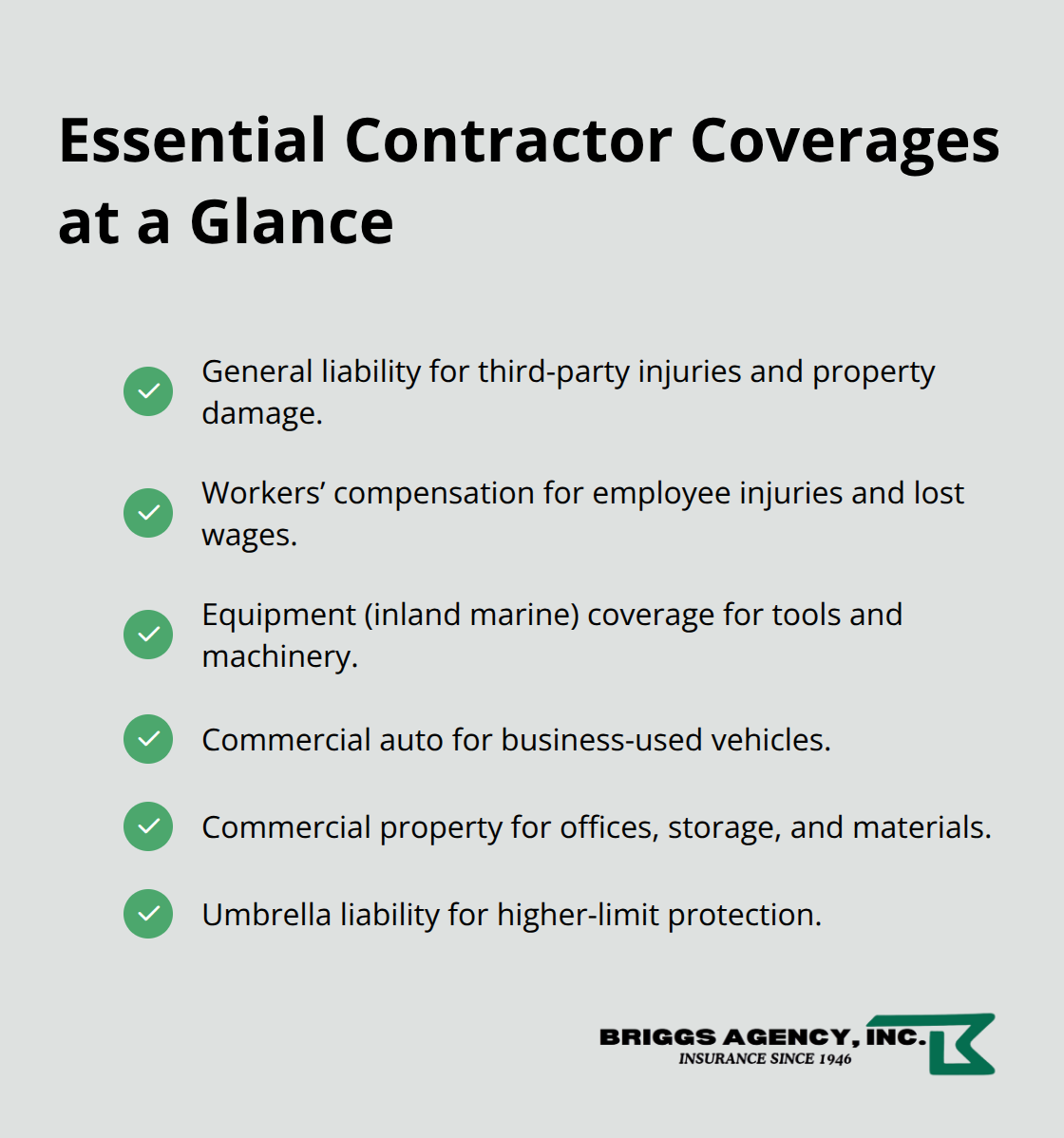
General liability coverage protects you from claims when someone gets injured or their property gets damaged because of your work. Construction sites are inherently risky environments, and one accident can cost tens of thousands in medical bills, legal fees, and court judgments. Most states require you to carry general liability to get licensed, and clients routinely ask for proof of coverage before hiring you. The coverage includes bodily injury, property damage, and personal injury claims, with the insurer handling defense costs and settlements. Without it, you remain personally liable for everything, which means your personal assets face direct risk.
Workers’ Compensation: A Legal Requirement
Workers’ compensation is equally non-negotiable if you have employees. Every state except Texas requires contractors to carry workers’ comp, and the penalties for operating without it are severe-fines, license suspension, and personal liability if an employee gets hurt. Workers’ comp covers medical expenses and lost wages, protecting both your team and your business from financial devastation. According to OSHA data, falls account for roughly one-third of construction fatalities, which underscores why this protection matters beyond compliance.
Equipment and Tools Need Their Own Coverage
When you manage crews on multiple job sites, you also need tools and equipment coverage. Most general liability policies exclude your own tools and equipment, leaving you vulnerable if something gets stolen from a job site or damaged during transport. Adding inland marine or equipment protection to your policy covers repair or replacement costs for gear under your care, which is especially important if you run high-value equipment across different locations.
Additional Coverages That Round Out Your Protection
Beyond these core coverages, commercial auto insurance is essential if you own any vehicles used for business. Personal auto policies won’t cover company vehicles, leaving you exposed to liability and property damage claims. Many contractors also benefit from commercial property coverage to protect their office space, storage facilities, and materials on-site. As your business grows, you might need umbrella coverage for additional liability protection beyond your general liability limits.
Finding the Right Mix for Your Operation
The key is assessing your actual risk exposure based on the types of jobs you take, where you work, and how many employees you have. Quotes vary significantly depending on these factors, so getting multiple quotes from different carriers gives you a realistic picture of what protection costs. Your specific job sites and risk factors determine which coverages matter most for your operation.
The Core Coverage Your Contracting Business Actually Needs
General Liability: Your Foundation
General liability forms your foundation, but it represents only one piece of your protection strategy. This coverage protects you when a client or bystander gets hurt on your job site or when your work damages someone else’s property. The policy pays for medical bills, legal defense, and court judgments-expenses that can easily exceed $50,000 on a single claim. However, this coverage has a critical gap: it does not protect your own tools, equipment, or materials.
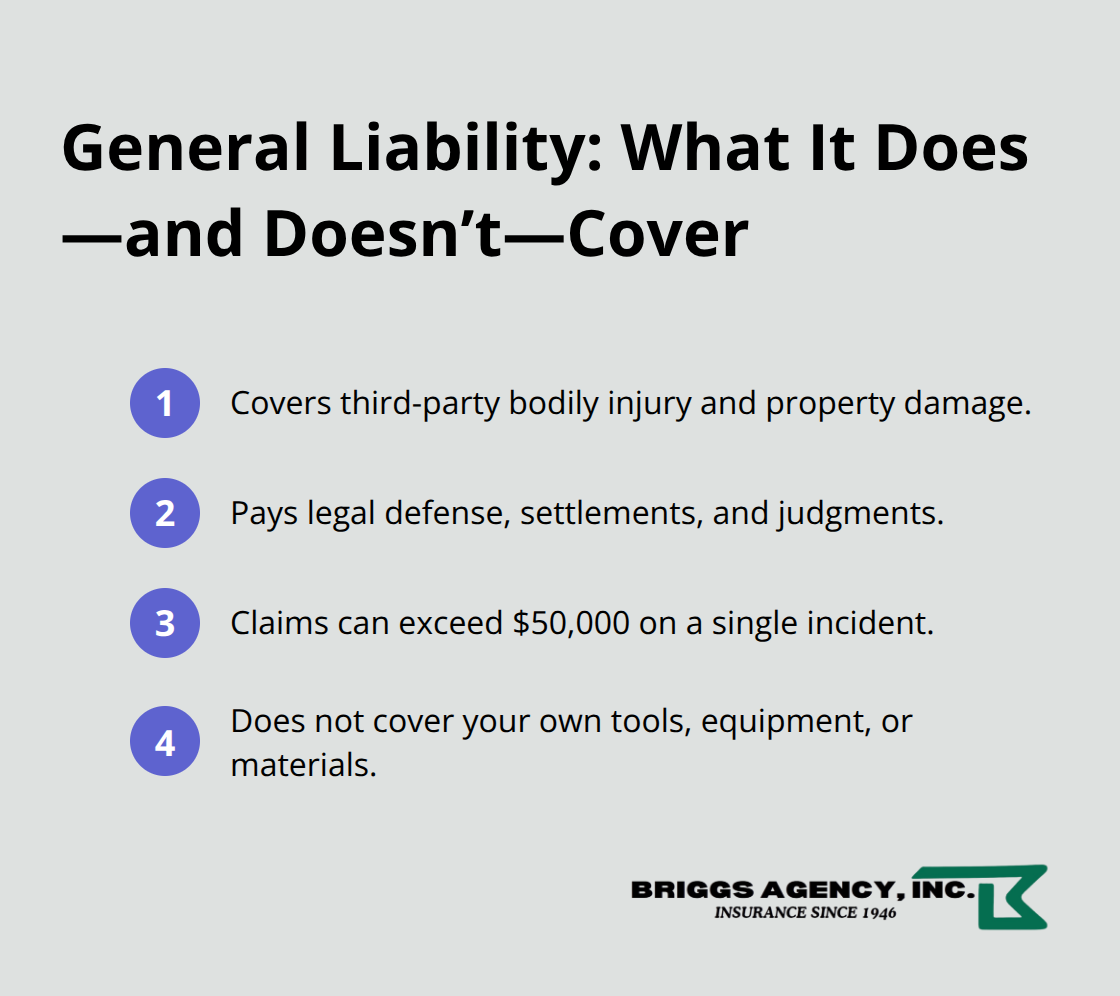
If someone steals your power tools from a job site or your equipment gets damaged during transport, general liability will not cover the loss.
Equipment Protection Fills the Gap
Inland marine coverage or equipment protection fills this gap effectively. This coverage covers tools and equipment that a contractor uses to complete a project, which matters especially if you work across multiple locations. The cost to add equipment coverage typically runs $30 to $50 monthly depending on your equipment inventory, making it one of the most affordable add-ons available. This protection proves invaluable when you manage crews on multiple job sites and move tools regularly between locations.
Workers’ Compensation: Mandatory and Essential
Workers’ compensation is mandatory in 49 states if you have employees, and it represents the second non-negotiable piece of your coverage. This coverage pays medical expenses and replaces lost wages when an employee gets injured on the job, protecting both your team and your business from financial ruin. According to OSHA data, falls account for roughly one-third of construction fatalities, which shows why this protection matters beyond legal compliance. Operating without workers’ comp carries steep penalties including fines, license suspension, and personal liability if an employee sues.
Commercial Auto and Property Coverage
Commercial auto insurance becomes essential once you own vehicles used for business purposes, since personal auto policies explicitly exclude commercial use. If you drive a company truck to job sites or use a van to transport crew, commercial auto coverage protects you from liability and property damage claims that would otherwise come out of your pocket. Many contractors overlook this coverage until they have an accident, at which point their personal policy denies the claim. Property coverage for your office, storage facilities, and on-site materials rounds out your protection, particularly if you maintain inventory or store equipment at a fixed location.
Choosing Coverage That Matches Your Operation
The coverage that matters depends entirely on your operation’s size, the types of jobs you take, and whether you have employees on payroll. Getting multiple quotes from different carriers gives you a realistic picture of what protection costs and helps you identify which coverages align with your actual risk exposure. Your specific job sites and risk factors determine which add-ons make sense for your business, which is why working with an agent who understands contractor operations helps you avoid paying for coverage you don’t need while ensuring you don’t skip protection you do.
How to Choose the Right Coverage for Your Contracting Business
Assess Your Specific Job Sites and Risk Factors
Start by mapping out your actual job site exposure exactly. Are you doing residential remodeling, commercial construction, or a mix of both? Do you work primarily in one county or across multiple regions? How many employees are on your payroll, and do you use company vehicles daily? The answers to these questions directly determine which coverages you actually need and which ones you can skip.
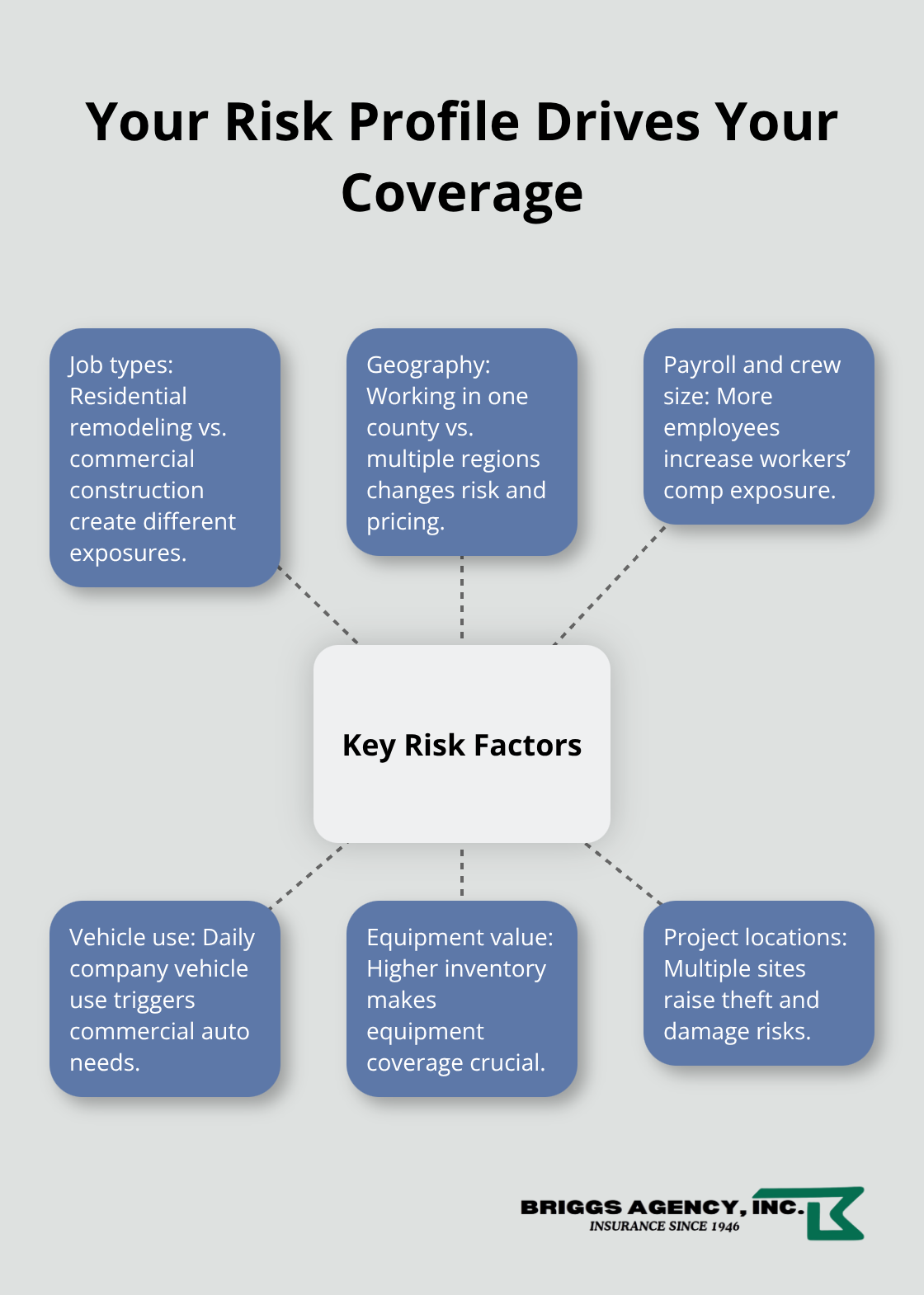
A solo electrician working on residential jobs in one area faces entirely different risks than a general contractor managing multiple crews across three counties. Insurance companies price based on exposure, so vague coverage choices cost you money. Spend time documenting your typical projects, the number of people on your team, equipment inventory value, and vehicle usage. This information becomes your baseline for requesting accurate quotes.
When you call carriers or work with an agent, having these specifics ready means you get quotes that reflect your real operation, not a generic contractor profile. Your job site locations, project types, and crew size all influence what protection you actually need.
Compare Quotes from Multiple Carriers
Rates vary dramatically between carriers for identical coverage. One company might charge $1,200 annually for general liability while another charges a different amount for the same limits and protection. The difference often reflects how each carrier evaluates your specific risk profile and claims history.
Request quotes from at least three different carriers using the exact same coverage limits and deductibles so you can make true comparisons. When you receive quotes, look beyond the premium price and examine what each policy actually covers, what exclusions exist, and what add-ons cost. Some carriers bundle equipment coverage into their base rates while others charge separately.
Workers’ compensation rates are determined based on several variables, including your industry, classifications, total payroll, and claims history. Comparing quotes shows you which carrier offers the best rate for your specific employee roles. This comparison approach takes more time upfront but saves you money over the life of your policies and prevents coverage gaps that could cost thousands.
Work with a Local Agent Who Understands Contractor Needs
A local agent who understands how contractors operate in your region matters more than most people realize. An agent knows which carriers are easiest to work with when you need to add a certificate of insurance quickly, which companies handle claims efficiently, and which ones have experience with the specific types of work you do. They also understand local licensing requirements and can verify that your coverage aligns with what your state requires.
An agent familiar with contractor operations knows that you might need temporary coverage for a short-term job or that you might need to adjust your employee count seasonally. They can set up your policy to handle these changes without forcing you through lengthy underwriting each time. A good agent also catches gaps in coverage that contractors commonly overlook (like the fact that your general liability doesn’t cover your own equipment or that commercial auto coverage doesn’t apply to personal vehicles even when you use them for work occasionally).
At Briggs Agency, Inc., we represent multiple top-rated carriers, which means we can pull quotes from several companies simultaneously and show you where you get the best value for your protection. Our experienced local agents understand the contractor operations in our community and help you avoid paying for coverage you don’t need while protecting against gaps that could cost thousands.
Final Thoughts
Small contractor insurance plans work best when they match your actual operation, not some generic contractor profile. The coverage you need depends on your job sites, your team size, and the types of projects you take on. General liability forms your foundation, workers’ compensation protects your employees and your business, and equipment coverage fills gaps that most contractors overlook until something goes wrong.
Getting multiple quotes from different carriers reveals where you find real value, since rates vary significantly between companies for identical coverage. The cheapest option isn’t always the best protection, especially when a single claim can cost tens of thousands in medical bills, legal fees, and court judgments. Comparing quotes takes time upfront but saves money over the life of your policies.
We at Briggs Agency, Inc. help contractors across Indiana find affordable coverage that actually protects their business and assets. Our experienced local agents understand contractor operations and help you avoid paying for coverage you don’t need while protecting against gaps that could cost thousands. Contact Briggs Agency, Inc. today to discuss your contractor insurance needs and get quotes that reflect your real operation.
The information provided in this blog is for general informational purposes only and does not constitute legal, financial, or insurance advice. Coverage options, terms, and availability may vary. Please consult with a licensed professional for advice specific to your situation.
Artificial intelligence may have been used to generate text and images in some blog articles.

