
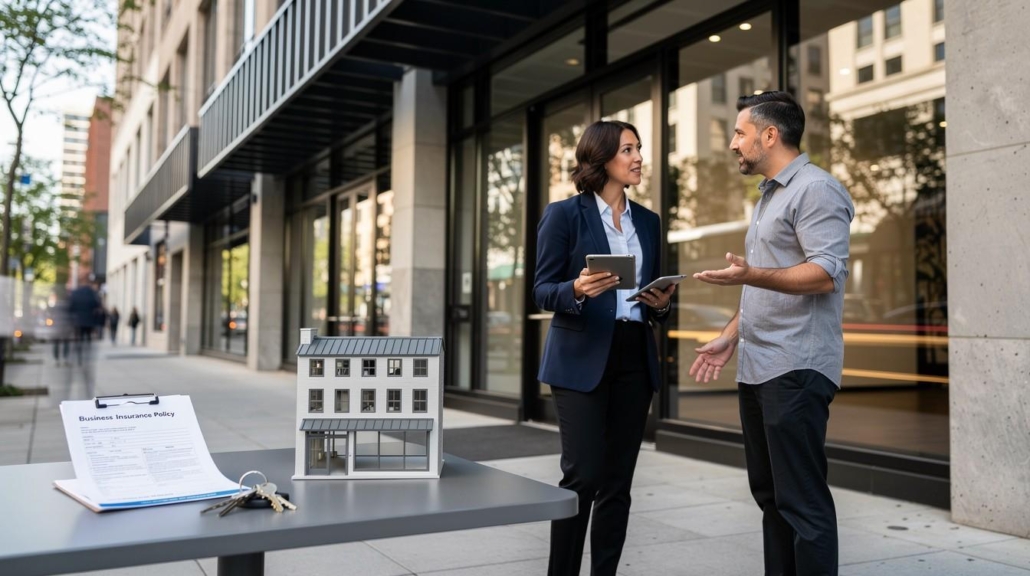
Commercial Property Coverage: Comprehensive Protection for Your Business
Your business assets represent years of investment and hard work. Yet many business owners discover gaps in their commercial property coverage only after a loss occurs.
At Briggs Agency, Inc., we help local businesses understand what’s actually protected and where vulnerabilities exist. This guide walks you through the essentials of commercial property coverage and how to build a policy that matches your real needs.
What Commercial Property Coverage Actually Protects
Building Structure and Physical Assets
Your building’s structure, equipment inside it, and inventory all face different risks-and a solid commercial property policy addresses each one differently. The building itself typically receives protection against damage from fire, wind, hail, and theft, though the exact perils depend on your policy type. Most standard policies cover the roof, walls, floors, and permanent fixtures, but temporary structures and land itself are usually excluded. If you own your building, this protection matters tremendously; if you lease, your landlord’s policy covers the structure while you need coverage for your own improvements and interior build-outs.
Commercial property claims represent a significant portion of all commercial insurance claims filed, making this coverage one of the most frequently used protections businesses carry.
Business Equipment and Inventory
Business equipment and inventory represent the working assets that generate revenue, and they require separate attention within your policy. Machinery, computers, furniture, tools, and raw materials all fall into this category, and replacement costs can spiral quickly if you underestimate values. A manufacturing facility with $500,000 in equipment might face a $200,000 gap if the policy limit was set five years ago and never adjusted.
Business Interruption Protection
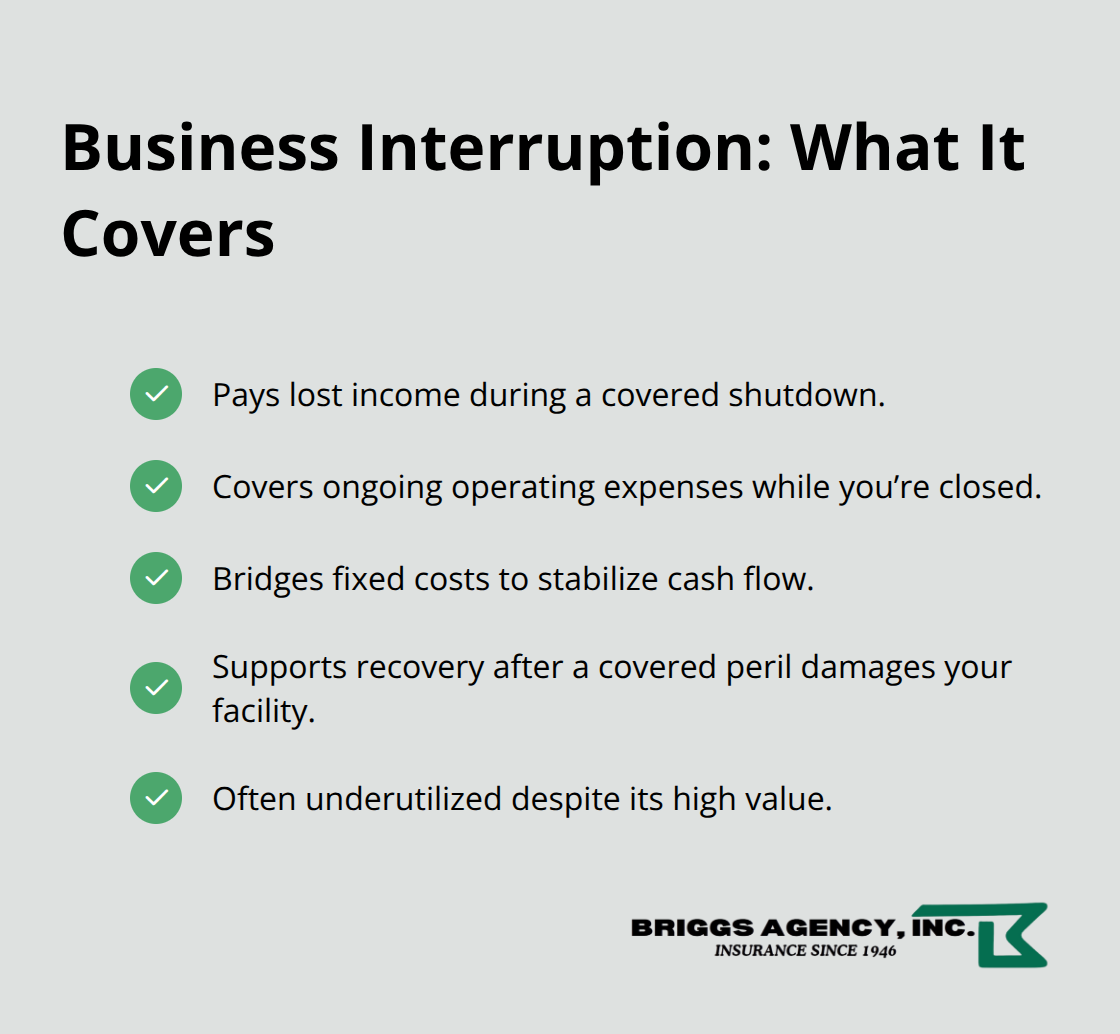
Many policies include coverage for business interruption, which pays lost income and operating expenses if a covered peril forces you to temporarily close-this protection is often underutilized despite being one of the most valuable components. If a fire damages your facility and you’re closed for two months, business interruption coverage bridges the gap between your fixed costs and zero revenue, potentially saving your operation from financial collapse.
Keeping Coverage Current
Equipment ages, businesses expand, and inventory levels fluctuate seasonally in ways that most policies don’t automatically track. A physical asset inventory conducted annually allows you to adjust coverage limits accordingly and catch gaps before they cost you money. These adjustments take time, but they prevent the costly surprises that emerge when a loss occurs and you discover your protection falls short of your actual replacement needs.
Common Gaps in Commercial Property Policies
Underinsurance Leaves Businesses Exposed
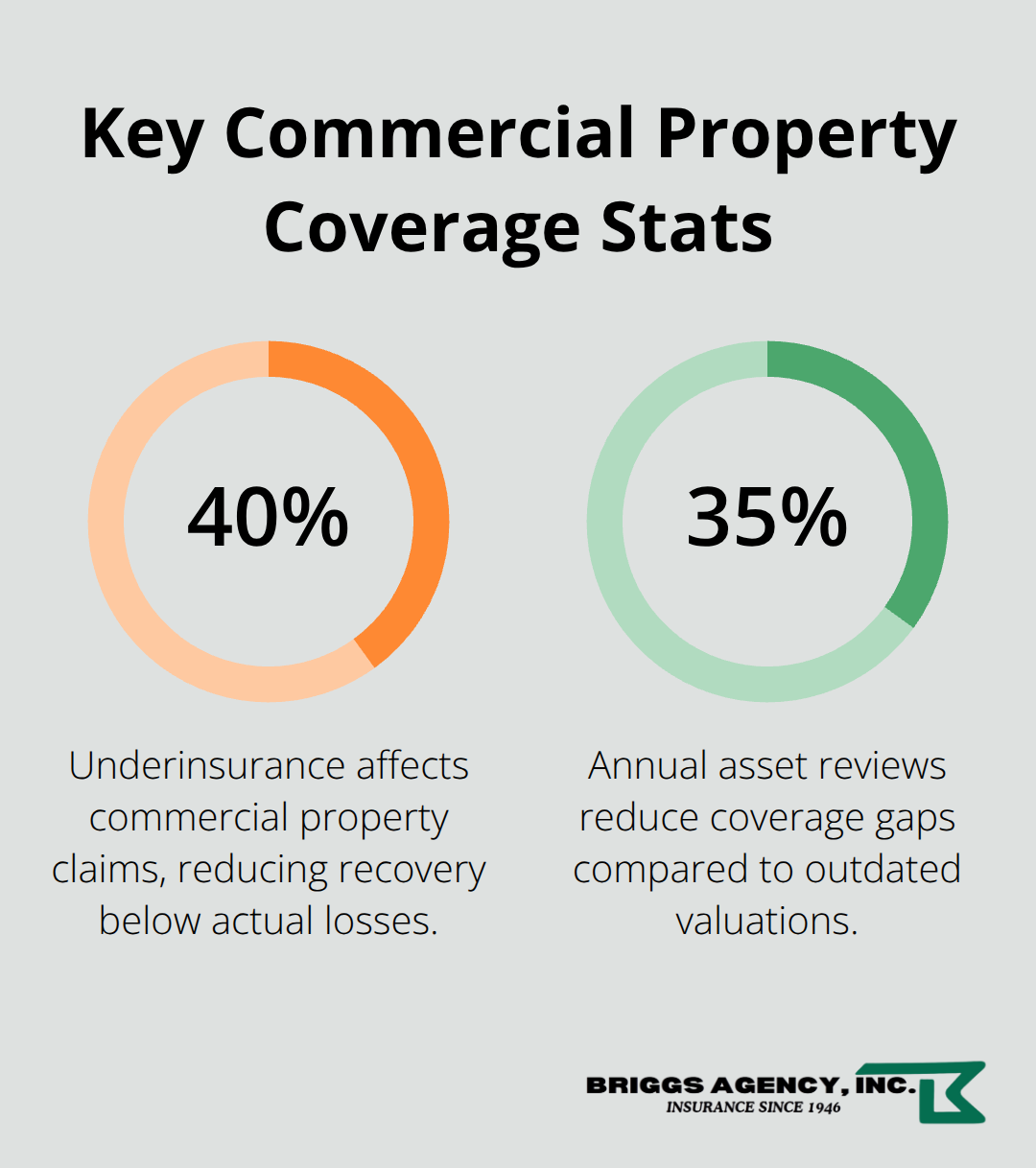
Most business owners assume their commercial property policy covers everything on their premises. The reality differs significantly. Policy limits set years ago fail to keep pace with replacement costs that climb steadily. Equipment purchased five years ago for $50,000 might cost $75,000 to replace today, yet the policy limit remains unchanged. Underinsurance affects roughly 40 percent of commercial property claims, meaning businesses recover far less than their actual losses.
Seasonal inventory fluctuations compound this problem further. A retail business holds three times more stock during November and December than in February, but the policy limit stays static year-round. Manufacturing facilities with specialized equipment, restaurants with walk-in coolers, and contractors storing materials off-site face similar mismatches between what they own and what their policies protect.
Standard Exclusions Block Critical Protection
Exclusions create another layer of vulnerability that catches business owners off guard. Standard commercial property policies typically exclude damage from earthquakes, floods, wear and tear, and mechanical breakdown-yet these events devastate operations just as readily as fire or wind. A business in an area prone to sinkholes, subsidence, or water damage discovers these exclusions matter tremendously when the loss occurs.
Specialized Operations Need Extra Coverage
Specialized operations face even steeper challenges. A veterinary clinic with expensive diagnostic equipment, a pharmaceutical distributor with temperature-controlled storage requirements, or a manufacturing facility with custom machinery often needs endorsements or riders to the base policy that aren’t included automatically. These additions carry extra cost, but skipping them creates catastrophic gaps.
Taking Action Before Loss Strikes
Conduct a physical inventory of all business assets and document replacement costs in today’s dollars. Identify any specialized equipment or operations that fall outside standard coverage. Review your policy annually-not just when renewal notices arrive. This approach prevents the expensive discovery that protection was inadequate when you needed it most. Understanding what your policy actually excludes positions you to address gaps before they become financial disasters.
How to Choose the Right Commercial Property Coverage
Start with a Complete Asset Inventory
A complete asset inventory conducted in the current year forms the foundation for accurate coverage limits. Walk through your facility with a camera or notebook and document every piece of equipment, machinery, inventory, and fixture that would need replacement if destroyed. For a manufacturing operation, this means listing CNC machines, hydraulic presses, and specialized tools with current replacement costs from vendors. For a retail business, photograph shelving, point-of-sale systems, and seasonal inventory at its peak level. For a contractor, document tools stored on-site and off-site, along with vehicle-mounted equipment.
This inventory becomes your baseline for setting accurate coverage limits. According to the National Association of Insurance Commissioners, businesses that conduct annual asset reviews reduce coverage gaps by approximately 35 percent compared to those relying on outdated valuations. Once you have this list with replacement costs, compare it directly to your current policy limits. If your equipment list totals $400,000 but your policy limit is $250,000, you’ve identified a $150,000 gap that needs addressing before loss occurs.
Match Coverage to Your Specific Risk Profile
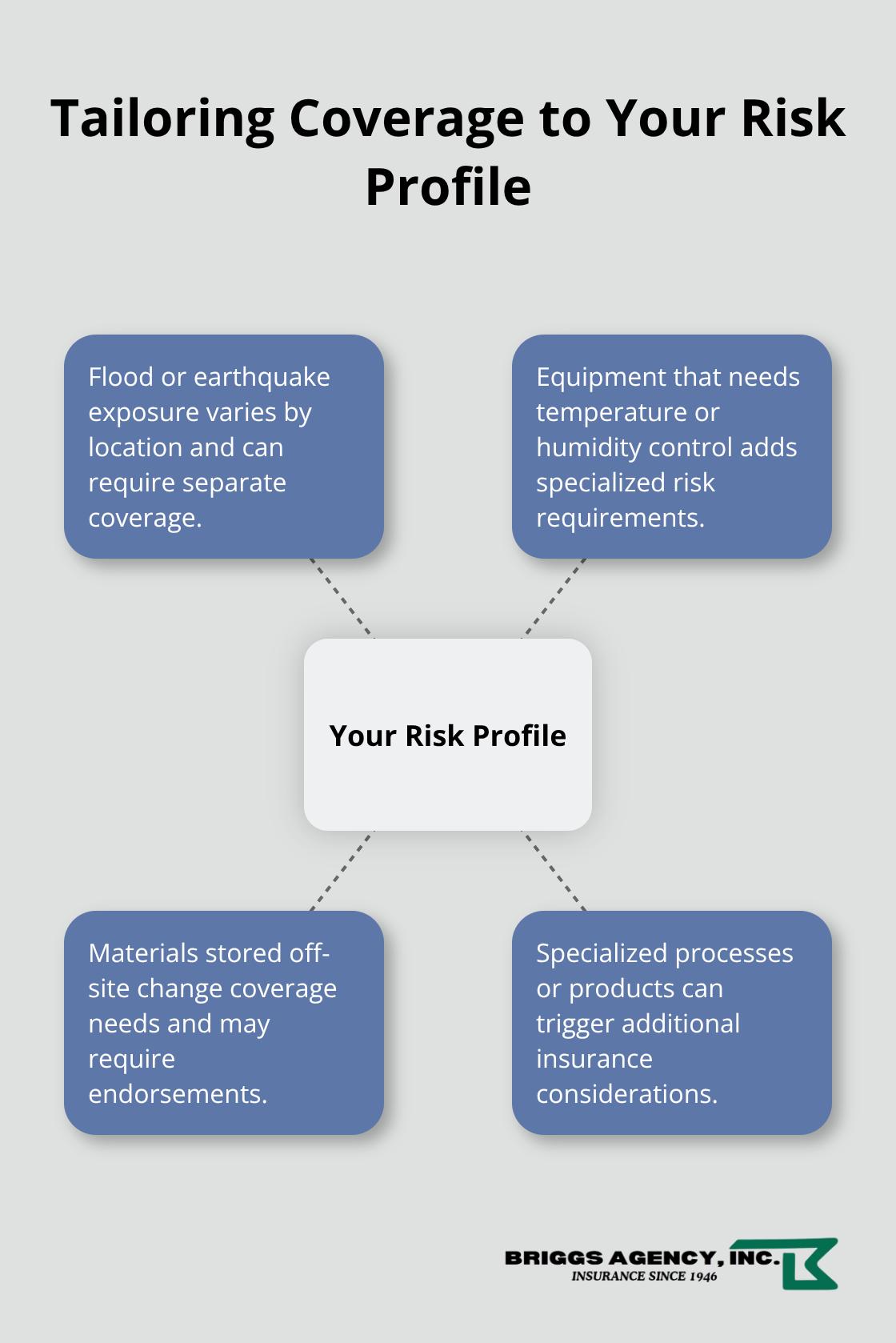
Your industry and specific operations determine which standard exclusions become actual vulnerabilities. A restaurant in a flood-prone area needs different protection than one on higher ground. A medical office with expensive diagnostic imaging equipment faces different risks than a general dental practice. A manufacturing facility producing electronics near water requires different coverage than a woodworking shop.
This means reviewing your specific location for flood or earthquake risk, identifying any equipment requiring temperature or humidity control, documenting any materials stored off-site, and flagging any processes or products that carry specialized insurance needs. Coverage that matches your actual business exposures rather than assumptions about what you might need delivers better protection and more accurate pricing.
Compare Coverage Options Side by Side
Request quotes from multiple carriers on identical coverage specifications, not on what each insurer recommends. This forces apples-to-apples comparison and prevents premium shopping that overlooks coverage differences. Pay particular attention to replacement cost versus actual cash value provisions. Replacement cost coverage reimburses the full expense to replace damaged property, while actual cash value deducts depreciation (for a business with equipment purchased five years ago, replacement cost coverage delivers dramatically better protection and rarely costs more than 10 to 15 percent additional premium according to industry data).
Work with a Local Agent to Evaluate Your Options
An experienced local agent compares multiple carriers and helps you match coverage directly to operational reality rather than generic templates. This approach identifies gaps that standard templates miss and positions your business for adequate protection when loss occurs.
Final Thoughts
Pull your current commercial property policy and compare the coverage limits to what you actually own in equipment, inventory, and building improvements. If you haven’t conducted a recent asset inventory, walk through your facility this month and list everything that would need replacement if damaged, noting replacement costs in today’s dollars rather than what you paid years ago. This single action catches most coverage gaps before they become financial problems.
Schedule a conversation with an agent who represents multiple carriers and understands your specific industry and location. Generic coverage templates miss the details that matter for your operation, and a local agent compares options across carriers, identifies exclusions that actually affect your business, and helps you build commercial property coverage that delivers real protection rather than false confidence. We at Briggs Agency, Inc. have served Crown Point and surrounding Indiana businesses since 1946, representing multiple top-rated carriers to compare options and tailor policies to your actual needs and budget.
Contact us to review your current protection and identify any gaps before the next loss occurs. The time you invest now prevents expensive discoveries later.
The information provided in this blog is for general informational purposes only and does not constitute legal, financial, or insurance advice. Coverage options, terms, and availability may vary. Please consult with a licensed professional for advice specific to your situation.
Artificial intelligence may have been used to generate text and images in some blog articles.

