

Contractor Insurance Crown Point: Local Coverage for Builders
Running a construction business in Crown Point means facing real risks that standard business insurance won’t cover. From job site injuries to equipment damage, contractors need protection built specifically for their work.
At Briggs Agency, Inc., we help local builders find contractor insurance in Crown Point that actually matches what they do. This guide walks you through what coverage matters most and how to choose the right policy for your operation.
What Contractor Insurance Actually Covers
Contractor insurance protects your business from three categories of risk that hit construction operations hardest. General liability coverage handles bodily injury claims when someone gets hurt on your job site-a worker steps on a nail, a homeowner trips over your equipment, or a passerby gets struck by falling debris. Property damage coverage pays for damage your work causes to a client’s home or existing structures, plus it covers your own equipment, tools, and materials on job sites.
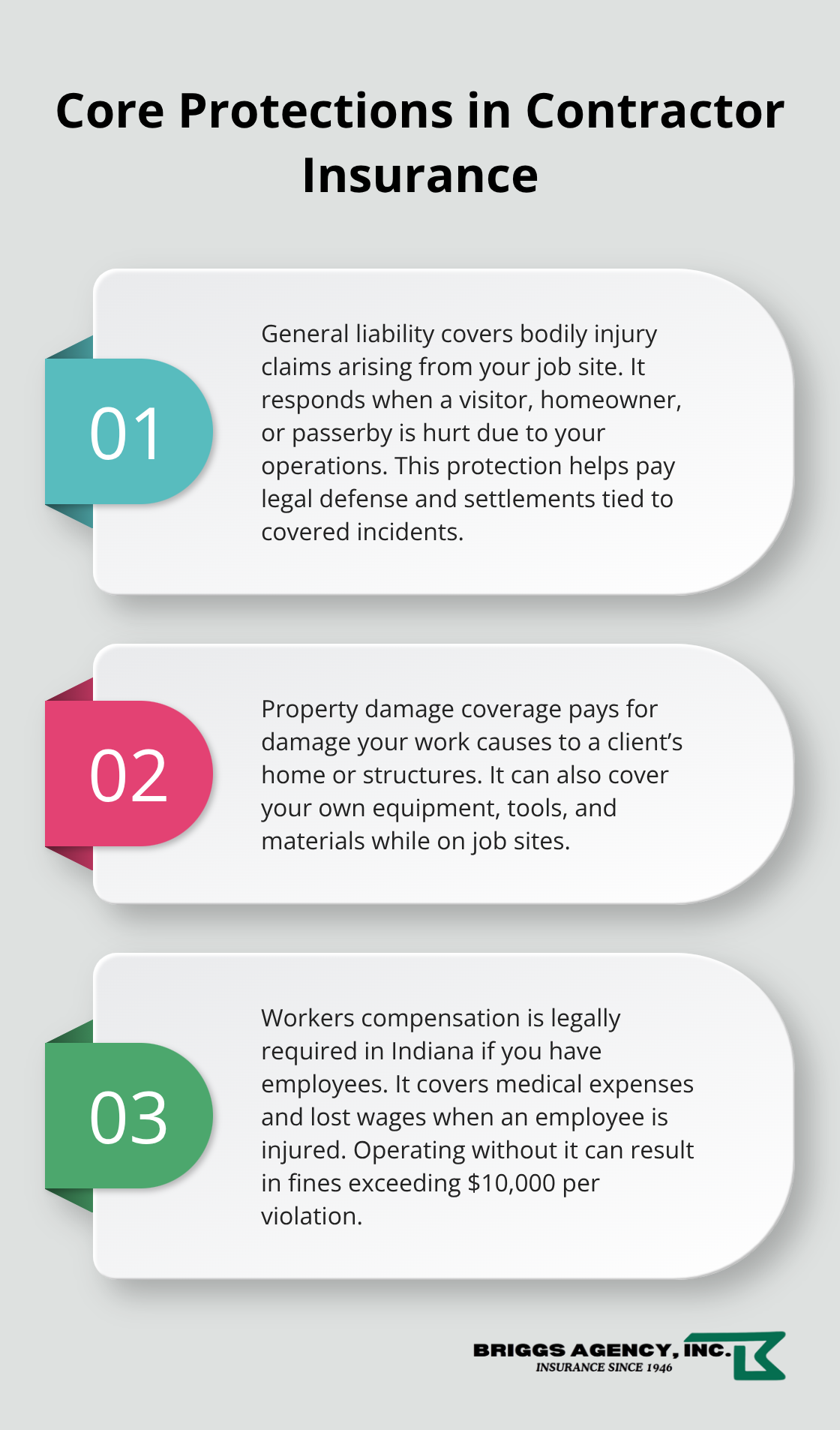
Workers compensation is legally required in Indiana if you have employees, and it covers medical expenses and lost wages when an employee gets injured-Indiana’s Department of Labor enforces this mandate strictly, and operating without it can result in fines exceeding $10,000 per violation.
Why Underinsurance Costs More Than Coverage
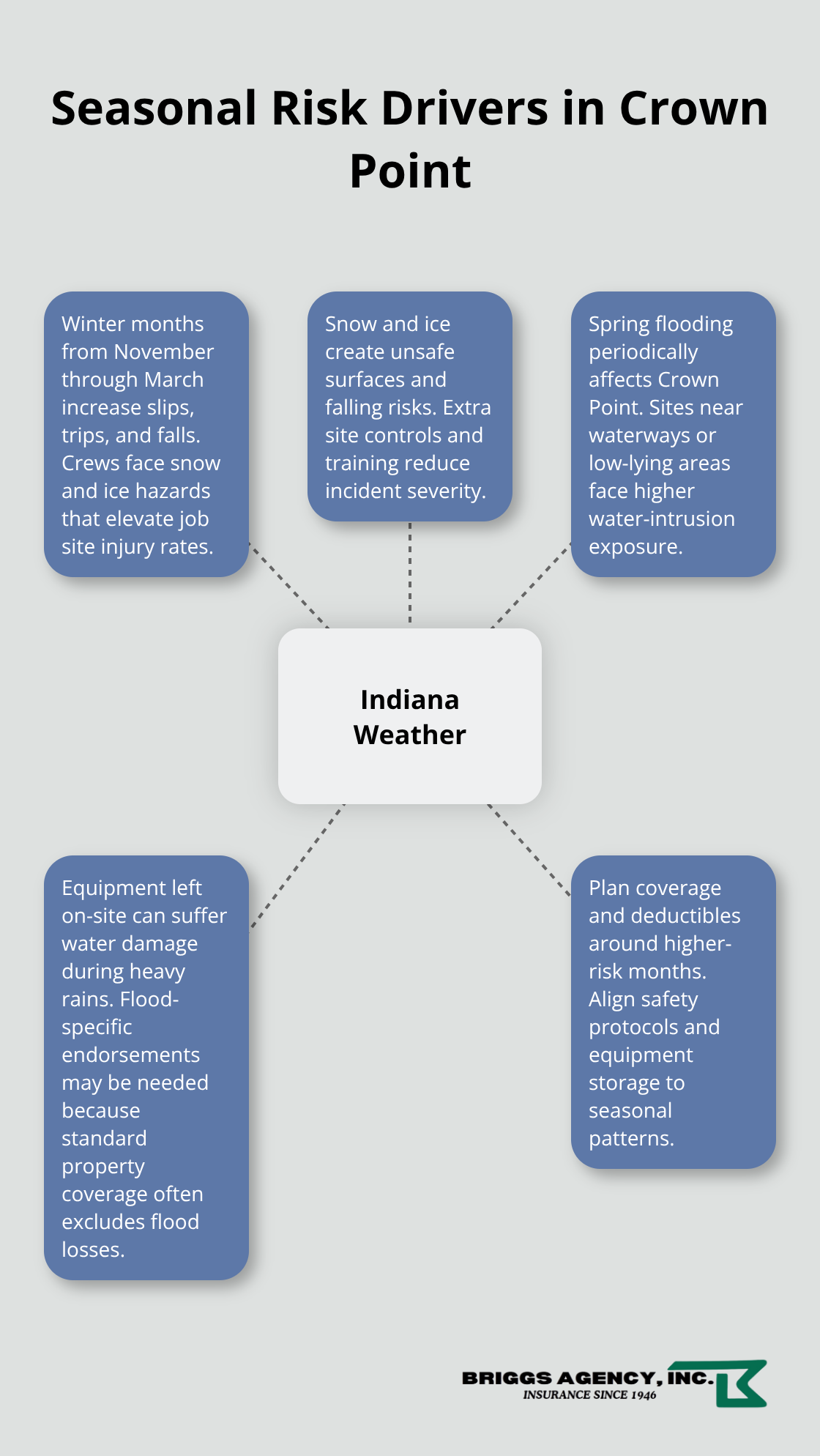
Many Crown Point contractors assume they can skip coverage or carry minimal limits to save money, but this strategy backfires fast. A single serious injury on a residential job can trigger lawsuits exceeding $100,000, especially if negligence gets alleged. Equipment theft and job site vandalism happen regularly in the region, and contractors without property damage coverage absorb these losses entirely out of pocket. Workers compensation claims spike during winter months when slips and falls increase on icy surfaces-Indiana contractors should expect higher claims frequency from November through March. Without adequate coverage, you personally face liability, potential bankruptcy, and loss of your business license when an accident occurs.
Setting Coverage Limits That Match Your Work
Standard contractor policies typically offer general liability limits of $1 million per occurrence and $2 million aggregate, which provides reasonable protection for most residential and light commercial work. Larger projects, commercial construction, and specialized trades require higher limits-$2 million or $5 million per occurrence-because the potential damage exposure increases dramatically. Property coverage should match your actual tool and equipment inventory value, not an arbitrary number; you need to document what you own and what it costs to replace. Workers compensation limits in Indiana are determined by your payroll and classification code, so your premium scales directly with how many people you employ and what work they perform.
Moving Forward with the Right Policy
The coverage limits you select today directly impact what protection you have when something goes wrong on a job site. Understanding these three core protections sets the foundation for choosing a policy that actually fits your operation, not just a generic contractor package that leaves gaps in your protection.
Why Crown Point Contractors Face Unique Insurance Demands
Local Building Codes Shape Your Coverage Needs
Crown Point enforces Indiana’s statewide building code plus local amendments that directly affect your liability exposure and what coverage you actually need. The city requires permits for most construction work, and inspectors verify compliance at multiple project stages. If your work fails inspection and requires costly corrections, general liability won’t cover those expenses, but a comprehensive contractor policy with project management coverage can protect you from these financial hits.
Indiana Weather Creates Predictable Risk Patterns
Indiana’s winter weather hits hard from November through March, with snow and ice causing job site accidents. Spring flooding affects Crown Point periodically, and equipment left on-site during heavy rains can suffer water damage that standard property coverage excludes unless you add flood-specific endorsements. These seasonal patterns mean your insurance strategy must account for months when accident risk and property damage exposure increase substantially.
Subcontractor Liability Extends Beyond Their Insurance
Subcontractors working on your projects create another layer of liability that catches many Crown Point contractors unprepared. When you hire electrical, plumbing, or framing subcontractors, you remain liable for their actions on your job sites even if they carry their own insurance-your general liability policy extends coverage to their work performed under your direction. Indiana law requires you to verify that subcontractors carry workers compensation insurance before they start work, and you face potential fines and liability if an uninsured subcontractor gets injured on your site.
Client Requirements Drive Your Policy Decisions
Clients increasingly demand proof of insurance before allowing work to begin, and many residential homeowners require minimum coverage limits of $1 million general liability as a condition of the contract. These contractual obligations mean you cannot simply purchase whatever policy costs the least-you must match specific coverage requirements that clients write into their agreements. Your policy structure directly determines whether you can legally accept jobs and whether you satisfy the protection standards that property owners expect from professional contractors.
Understanding these local demands sets the stage for selecting a policy that actually protects your operation. The next step involves assessing your specific business risks so you can match coverage limits and deductibles to what your Crown Point construction work truly requires.
How to Choose the Right Contractor Insurance Policy
Assess Your Specific Business Risks
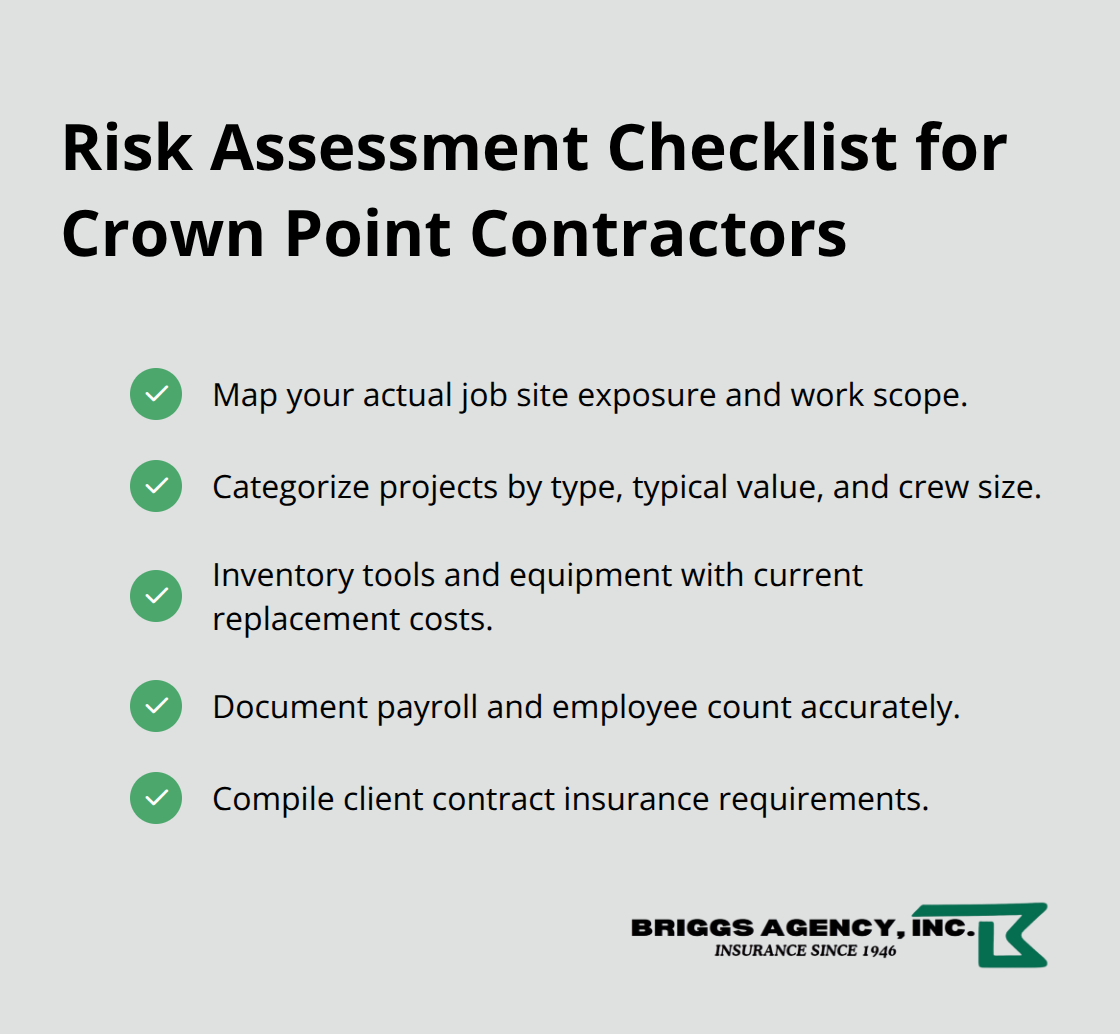
Selecting contractor insurance requires honest assessment of your operation’s specific exposure, not just purchasing whatever your competitor carries or what an online quote suggests. Start by mapping your actual job site exposure and documenting your work scope: residential remodeling creates different liability risks than commercial framing, and specialty trades like roofing or electrical work demand higher limits than general carpentry. Crown Point contractors should categorize their projects by type, typical project value, and number of workers on site, then cross-reference these factors against policy options. A $50,000 kitchen remodel requires different coverage than a $500,000 commercial build-out, and your policy limits must reflect the scale of work you regularly undertake.
Calculate your actual equipment and tool inventory value by listing everything you own and its replacement cost-many contractors dramatically underestimate this number and then face coverage gaps when theft or damage occurs. Document your annual payroll and employee count because workers compensation premiums scale directly with these figures, and misreporting either one creates audit problems later. Review every client contract you’ve signed in the past year and identify the minimum insurance requirements they demanded; these contractual obligations are non-negotiable and must be reflected in your policy selection.
Compare Coverage Limits and Deductibles
Comparing policies means looking beyond premium price to evaluate what gaps exist between different coverage options and what your actual risk profile demands. A $1 million general liability limit sounds standard, but if you regularly work on higher-value properties or commercial projects, that limit may be insufficient-Indiana contractors working on commercial construction should carry $2 million or higher per occurrence because lawsuit settlements in that sector run substantially higher. Deductibles directly impact your out-of-pocket costs when claims occur; a $2,500 deductible saves premium money monthly but costs you $2,500 on every claim, while a $500 deductible costs more upfront but protects your cash flow when accidents happen.
Equipment coverage deductibles deserve special attention because tool theft happens frequently in Crown Point, and a high deductible makes small claims not worth filing. Review your claims history from the past three years-if you’ve filed multiple property damage claims, a lower deductible makes financial sense despite higher premiums. Conversely, if you’ve gone years without claims, accepting a higher deductible reduces your annual costs substantially.
Identify Policy Exclusions and Required Endorsements
Policy exclusions matter more than most contractors realize; standard policies exclude flood damage, so if your job sites flood seasonally, you need explicit flood coverage added. Subcontractor liability coverage should be automatic in your policy, not an add-on, because excluding this protection exposes you to significant risk given how much work Crown Point contractors outsource to specialized trades. Verify that your policy covers the specific trades and project types you handle regularly, since some carriers restrict coverage for certain work classifications or geographic areas.
Final Thoughts
Contractor insurance in Crown Point protects your business from the specific risks that construction work creates, and getting this protection right determines whether an accident becomes a manageable claim or a financial catastrophe. The coverage you carry today directly impacts your ability to operate legally, satisfy client requirements, and keep your business solvent when something goes wrong on a job site. We at Briggs Agency, Inc. have helped Crown Point contractors navigate these decisions since 1946 by understanding the actual work you do and the real risks you face.
Our agents represent multiple top-rated carriers, which means we compare options across different companies rather than pushing you toward one generic policy. This approach lets us find coverage that matches your specific operation, your project types, and your budget constraints without leaving gaps in your protection. Contact Briggs Agency, Inc. today and bring your client contracts, your equipment inventory, your payroll information, and your project history so we can evaluate what coverage limits and deductibles actually fit your situation.
Adequate contractor insurance means having peace of mind that your business stays protected when accidents happen, not if they happen. The investment in proper coverage costs far less than absorbing a major claim out of pocket or losing your business license because you operated without required protection.
The information provided in this blog is for general informational purposes only and does not constitute legal, financial, or insurance advice. Coverage options, terms, and availability may vary. Please consult with a licensed professional for advice specific to your situation.
Artificial intelligence may have been used to generate text and images in some blog articles.

