
Understanding Comprehensive vs. Collision Coverage
Understanding the difference between comprehensive and collision coverage is an important part of making informed decisions about your auto insurance.
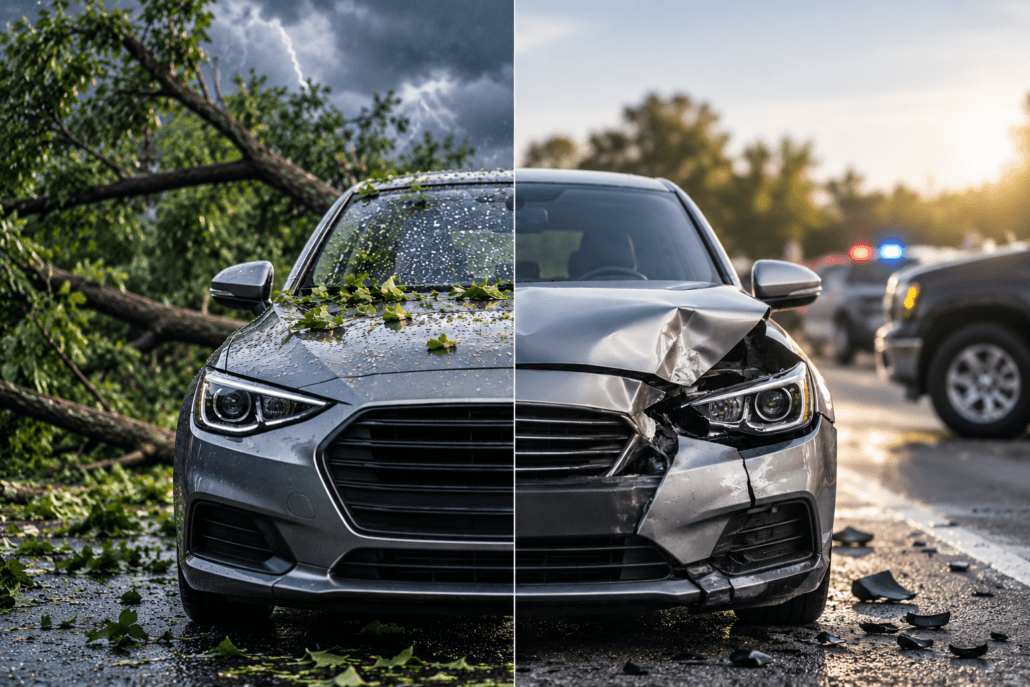
Although both coverages can help pay for damage to your vehicle, they apply in different situations. Collision coverage generally helps with damage caused by an accident involving another vehicle or object, while comprehensive coverage typically applies to non-collision events such as theft, vandalism, severe weather, falling objects, and animal-related damage. Knowing how each type of coverage works can help you better understand your policy and choose protection that fits your needs.
Collision Coverage
Collision coverage helps pay for damage to your vehicle if it is involved in an accident with another vehicle or object, regardless of who is at fault. This can include accidents involving another car, a guardrail, fence, tree, light pole, or other stationary object. It may also apply in certain single-vehicle accidents, such as if your vehicle rolls over or you lose control and hit something.
This coverage is especially important because liability insurance generally does not pay for damage to your own vehicle when you are responsible for an accident. With collision coverage, your policy may help cover the cost of repairing or replacing your vehicle after a covered accident, subject to your deductible and the terms of your policy.
For example, if you accidentally back into a pole and damage your bumper, collision coverage may help pay for the repairs after your deductible is applied. If the damage is severe and your vehicle is considered a total loss, collision coverage may help pay the vehicle’s actual cash value, depending on your policy.
While collision coverage is not typically required by state law, lenders and leasing companies may require it if your vehicle is financed or leased. Even when it is optional, it can provide valuable financial protection by helping reduce the out-of-pocket costs that can come with an unexpected accident.
Comprehensive Coverage
Comprehensive coverage helps pay for damage to your vehicle caused by events that are generally unrelated to a collision. This can include theft, vandalism, fire, hail, windstorms, flooding, falling objects, broken glass, and damage caused by animals.
For example, if a tree branch falls on your parked vehicle during a storm or your car is damaged by hail, comprehensive coverage may help pay for repairs after your deductible is applied. It may also help if your vehicle is stolen or damaged during an attempted theft.
Unlike collision coverage, comprehensive coverage is designed to protect against many unexpected events that are outside of your control. This makes it especially valuable for drivers who want added protection from weather-related damage, theft, and other non-collision losses.
Comprehensive coverage is not usually required by state law, but lenders and leasing companies may require it if your vehicle is financed or leased. Even when it is optional, it can provide added peace of mind by helping reduce the financial impact of damage that could otherwise lead to costly repairs or replacement.
What They Both Don’t Cover
Comprehensive and collision coverage protect your vehicle, but they do not cover every expense associated with an accident.
Depending on the situation, separate coverage may be needed for:
- Injuries you cause to another person
- Damage you cause to another person’s property
- Your own medical expenses
- Injuries caused by an uninsured or underinsured driver
- Rental vehicles while your car is being repaired
- Roadside assistance
- Normal wear and tear or mechanical breakdowns
That is why it is important to look at your auto policy as a whole instead of focusing on just one type of coverage.
Conclusion
Understanding the difference between comprehensive and collision coverage can make it easier to choose the right protection for your vehicle. Collision coverage is designed to help with damage caused by accidents involving another vehicle or object, while comprehensive coverage helps protect against non-collision events such as theft, vandalism, severe weather, and animal-related damage.
Having the right combination of coverage can help reduce unexpected out-of-pocket costs and give you greater confidence on the road. Because every driver, vehicle, and policy is different, it is important to review your coverage regularly and make sure it still fits your needs.
You can experience the benefits of being a part of a full-service Independent Insurance Agency today! Simply contact Briggs Agency, Inc. if you are interested in an insurance review at 219-769-4840 or visit our website at www.BriggsAgency.com. We look forward to hearing from you!
Blog Post written by: Alex Condes

