
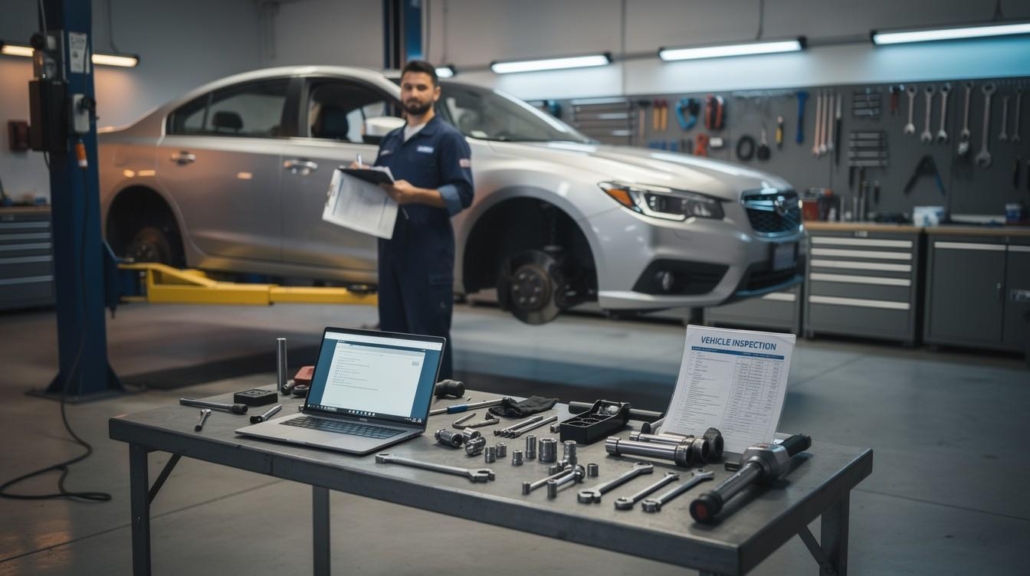
Garage Liability Policy: Essential Coverage for Garages
Running a garage means managing risk every single day. Your customers trust you with their vehicles, your employees work in a demanding environment, and accidents happen-sometimes with serious financial consequences.
A garage liability policy protects your business from the claims that can shut you down. We at Briggs Agency, Inc. help garage owners understand exactly what coverage they need and why it matters.
What Garage Liability Actually Covers
Garage liability insurance is a specialized commercial policy that protects your business when someone gets hurt or property gets damaged because of your automotive services. Unlike general liability, which covers slip-and-fall accidents in your waiting room, garage liability specifically addresses claims tied to vehicle repair work, maintenance, and storage. This policy covers bodily injuries to customers or bystanders, damage to vehicles in your care, and liability for accidents your employees cause while servicing cars. The coverage applies whether you run an independent shop, a dealership service department, or a fleet maintenance operation. Auto repair shops operate in high-risk environments where customer vehicles represent substantial financial exposure and where employee injuries occur regularly.
Why General Liability Falls Short
General liability policies were designed for retail stores and offices, not for businesses that work on vehicles. A general liability policy typically excludes damage that occurs during repairs, excludes customer vehicles in your possession, and provides minimal coverage for garagekeepers liability claims. When a customer’s transmission fails days after you service it, or when a vehicle catches fire in your shop, general liability won’t respond. Garage liability fills these specific gaps with products and completed operations coverage that protects you after work leaves your facility, and with garagekeepers coverage that protects customer vehicles while they’re on your premises. The cost difference is minimal-garage liability typically runs higher than basic general liability for automotive businesses-but the protection difference is enormous.
What Makes Garage Liability Different
Garage liability policies address the unique exposures that standard commercial policies ignore. They protect you against claims that arise from your core business activities (vehicle repairs, maintenance, and service work). Products and completed operations coverage extends protection beyond your shop walls, covering issues that surface after customers take their vehicles home. Garagekeepers liability specifically protects you when customer vehicles suffer damage, theft, or loss while parked on your premises-a scenario that general liability explicitly excludes. This combination of coverages means you’re protected whether the claim stems from work you performed, a vehicle in your care, or an employee’s actions on the job.
The Real Cost of Being Underinsured
Shop owners who rely on general liability alone face serious financial exposure. A single major claim-whether from a customer injury, a vehicle damaged during service, or an employee accident-can exceed your policy limits and threaten your business. The gap between what general liability covers and what garage liability covers is where most automotive claims fall. We at Briggs Agency, Inc. work with shop owners to identify these gaps and build policies that actually match the risks you face every day. The investment in proper garage liability coverage is far smaller than the cost of a single uninsured claim.
What Your Garage Liability Policy Actually Covers
Bodily Injury and Property Damage Protection
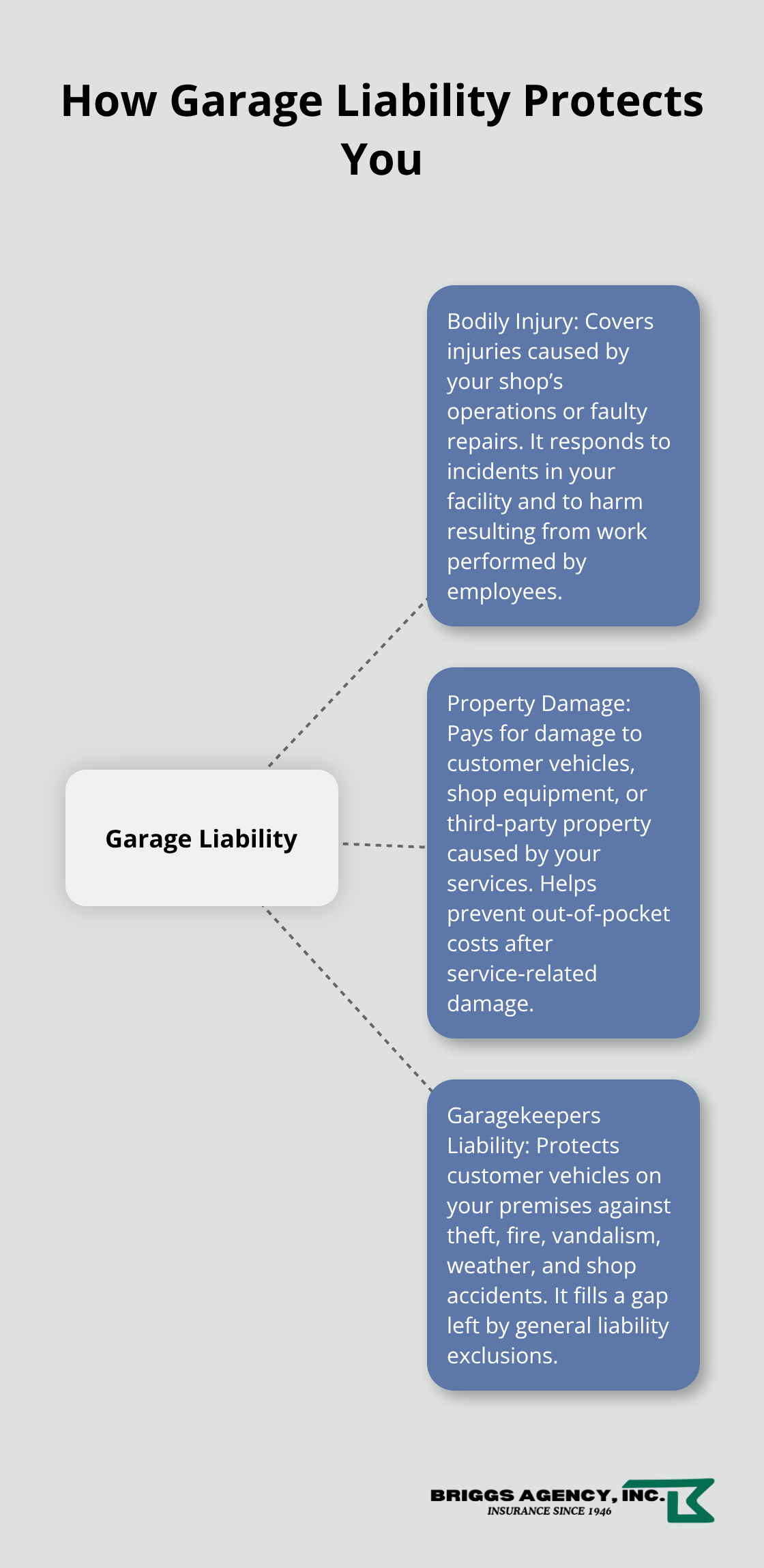
Garage liability policies protect you against three distinct categories of claims that general liability won’t touch. Bodily injury coverage responds when a customer, employee, or bystander gets hurt because of your repair work or operations. This includes injuries sustained in your shop, injuries caused by faulty repairs that surface later, and injuries your employees cause while performing their duties. Property damage coverage handles damage to customer vehicles, shop equipment, or third-party property that results from your services. Automotive repair shops face liability exposure from bodily injury claims, making this coverage essential for protecting your bottom line.
Products and Completed Operations Coverage
Products and completed operations coverage extends your protection beyond your shop walls, covering issues that emerge after customers drive their vehicles home. If a transmission you service fails a week later and causes an accident, or if a repair creates a safety hazard that injures someone down the road, this coverage responds. This extension matters because many automotive failures don’t surface immediately-some take weeks or months to manifest as problems. Without this protection, you face liability for work that left your facility months earlier, exposing your business to claims you might not anticipate.
Garagekeepers Liability: Protecting Customer Vehicles
Garagekeepers liability specifically protects customer vehicles while they sit on your premises, covering theft, vandalism, fire, weather damage, and accidents that occur while the vehicle remains in your care. This coverage is non-negotiable if you store customer vehicles overnight or for extended service periods. A single incident involving a customer’s vehicle-whether a fire in your shop that destroys a parked BMW or theft of a high-value truck-can cost tens of thousands of dollars without garagekeepers protection.
Most shop owners assume their general liability covers customer vehicles on the premises, but it explicitly doesn’t. If a customer’s vehicle catches fire in your shop due to faulty wiring you installed, general liability will deny the claim. Garagekeepers liability covers the vehicle’s full value up to your policy limit, protecting you from catastrophic losses. Coverage limits matter significantly here-you should evaluate your typical customer vehicle values and set garagekeepers limits accordingly. Many shops carry $100,000 to $500,000 in garagekeepers coverage depending on the vehicles they service and how long they store them. If you service luxury vehicles or work on high-end restorations, higher limits become necessary.
Why These Three Coverages Work Together
The three-part combination of bodily injury, property damage, and garagekeepers coverage creates a comprehensive safety net that actually matches the real exposures your business faces every day. Each component addresses a different risk-injuries to people, damage to property, and loss of customer vehicles-that general liability policies explicitly exclude. This layered approach means you’re protected whether the claim stems from work you performed, a vehicle in your care, or an employee’s actions on the job. Understanding what each piece covers helps you recognize the gaps that leave your business vulnerable, which is exactly what we need to address when evaluating your specific coverage needs.
Common Claims and Real-World Scenarios
Accidents During Vehicle Repairs and Service
Garage liability claims follow predictable patterns, and understanding them helps you recognize exactly where your business faces exposure. The most common claims arise when repair work goes wrong in ways that injure people or damage property. A technician installs new brakes incorrectly, and the vehicle’s brakes fail on the highway, causing an accident that injures the driver and passenger. A shop forgets to reconnect a battery properly during service, and an electrical fire starts in the customer’s vehicle while parked at their home. These scenarios happen regularly in automotive shops across the country, and they represent the exact situations garage liability coverage addresses.
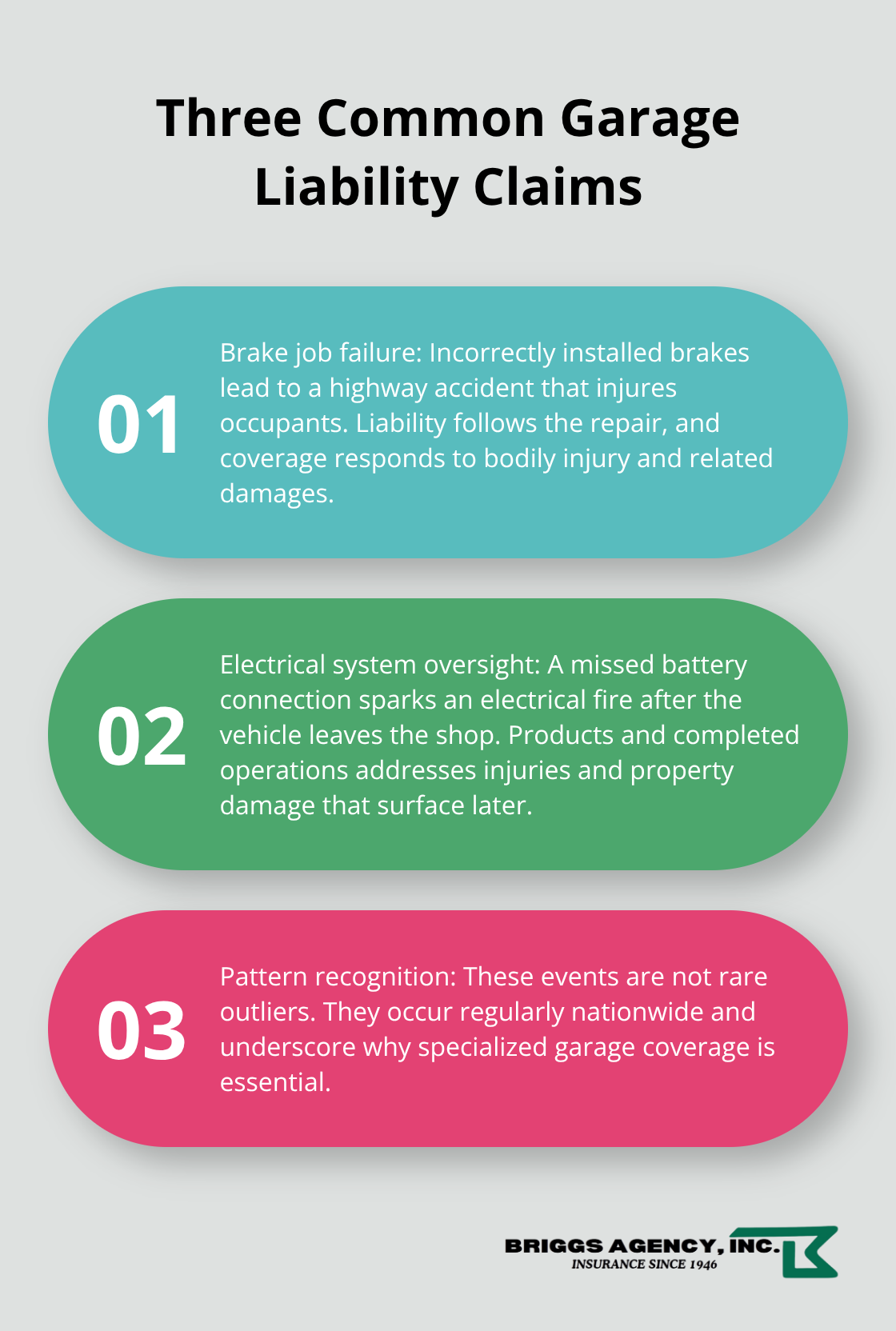
Property damage claims spike when shops damage customer vehicles during routine service. A technician drops a transmission on a classic car during removal, or a shop’s compressed air system malfunctions and launches a tool through a windshield. Vehicle damage claims during service rank among the top liability exposures for automotive businesses. Without garagekeepers liability, a single incident involving a high-value vehicle can cost $50,000 to $150,000 in uninsured losses.
Employee Injuries and Third-Party Liability
Employee injuries represent another major claim category that garage liability covers but general liability often excludes. A technician gets pinned under a vehicle when a lift fails, or an employee suffers chemical burns from improper handling of solvents and degreasing products. These injuries trigger workers compensation claims, but they also create third-party liability exposure if the employee can prove negligence in shop operations or equipment maintenance. Garage liability policies respond to these employee injury scenarios when they stem from your business operations, protecting you from lawsuits that workers compensation alone won’t cover.
Customer Vehicle Damage While in Your Care
Customer vehicle theft and vandalism claims represent a significant exposure that many shop owners underestimate. A vehicle sits in your shop overnight waiting for parts or scheduled service the next morning, and thieves steal it or vandals damage it extensively. A customer vehicle catches fire in your facility due to faulty wiring or flammable materials stored improperly. These garagekeepers liability claims cost shops anywhere from $5,000 for minor vandalism to $75,000 or more for theft of high-value vehicles.
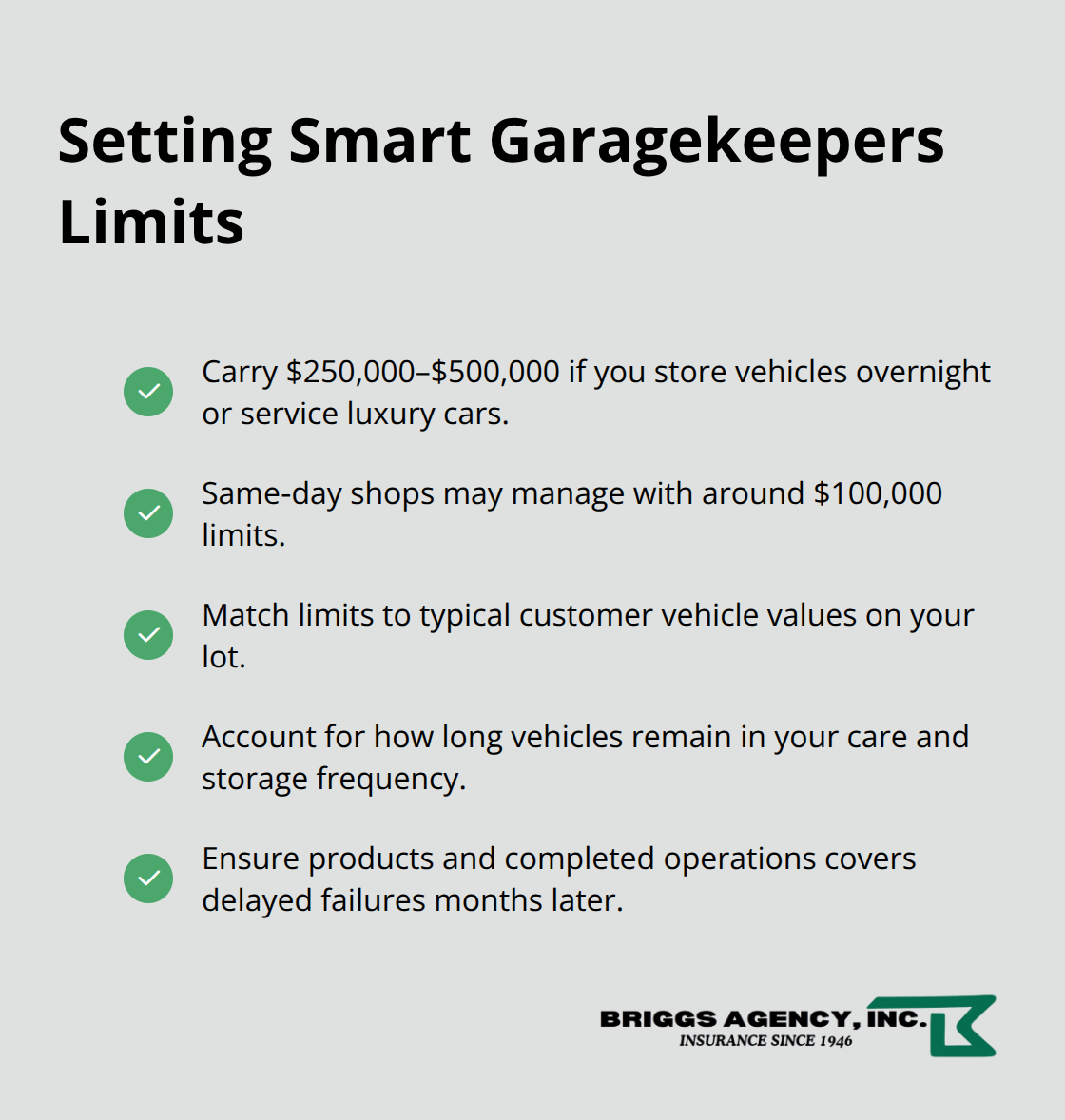
A shop that services luxury vehicles or stores customer cars overnight should carry $250,000 to $500,000 in garagekeepers coverage, while a shop that completes most work same-day might adequately manage with $100,000 limits. The timing of claims matters significantly-products and completed operations coverage protects you from failures that surface weeks or even months after the customer leaves your facility.
Post-Service Failures and Delayed Claims
A transmission you rebuilt works fine initially but fails 30,000 miles later when the customer is driving on the highway. A wheel alignment you performed causes premature tire wear that leads to a blowout and accident three months after service. These delayed-discovery claims would fall outside your coverage period without products and completed operations protection, leaving you liable for work performed long ago. Shop owners often don’t realize these post-service claims fall on them personally when general liability excludes them, which is why garage liability’s extended coverage period matters so much for your financial protection.
Final Thoughts
Garage liability insurance protects your shop when claims happen-and they will happen. Technicians damage customer vehicles during service, repairs fail weeks after customers drive home, and vehicles catch fire or get stolen while parked on your premises. General liability policies won’t cover any of these situations, leaving you personally responsible for losses that can reach tens of thousands of dollars. A garage liability policy closes these gaps with bodily injury protection, property damage coverage, and garagekeepers liability that actually match the risks you face every day.
Your coverage needs depend on what vehicles you service and how long they stay on your premises. A shop that completes most work same-day faces different exposure than one storing customer vehicles overnight, and luxury vehicle services require higher garagekeepers limits than standard repair work. Your products and completed operations coverage should extend far enough to protect you from delayed-discovery claims that surface months after service. We at Briggs Agency, Inc. work with garage owners to assess these specific exposures and build policies that provide real protection without overpaying for coverage you don’t need.
Review your current insurance with someone who understands automotive business risks. If you’re relying on general liability alone, you have significant gaps, and if you carry garage liability but haven’t reviewed limits in several years, your coverage may no longer match your current operations. Contact Briggs Agency, Inc. to discuss your garage liability policy and make sure you’re protected.
The information provided in this blog is for general informational purposes only and does not constitute legal, financial, or insurance advice. Coverage options, terms, and availability may vary. Please consult with a licensed professional for advice specific to your situation.
Artificial intelligence may have been used to generate text and images in some blog articles.

