

Term life insurance Indiana: A Clear Path to Affordable Coverage
Term life insurance in Indiana doesn’t have to be complicated or expensive. Many families overlook this straightforward protection because they assume it’s out of reach financially.
At Briggs Agency, Inc., we’ve helped countless Indiana residents find affordable coverage that actually fits their budget and protects what matters most. This guide walks you through exactly what you need to know to make the right choice.
What Term Life Insurance Actually Is
The Simple Structure Behind Term Coverage
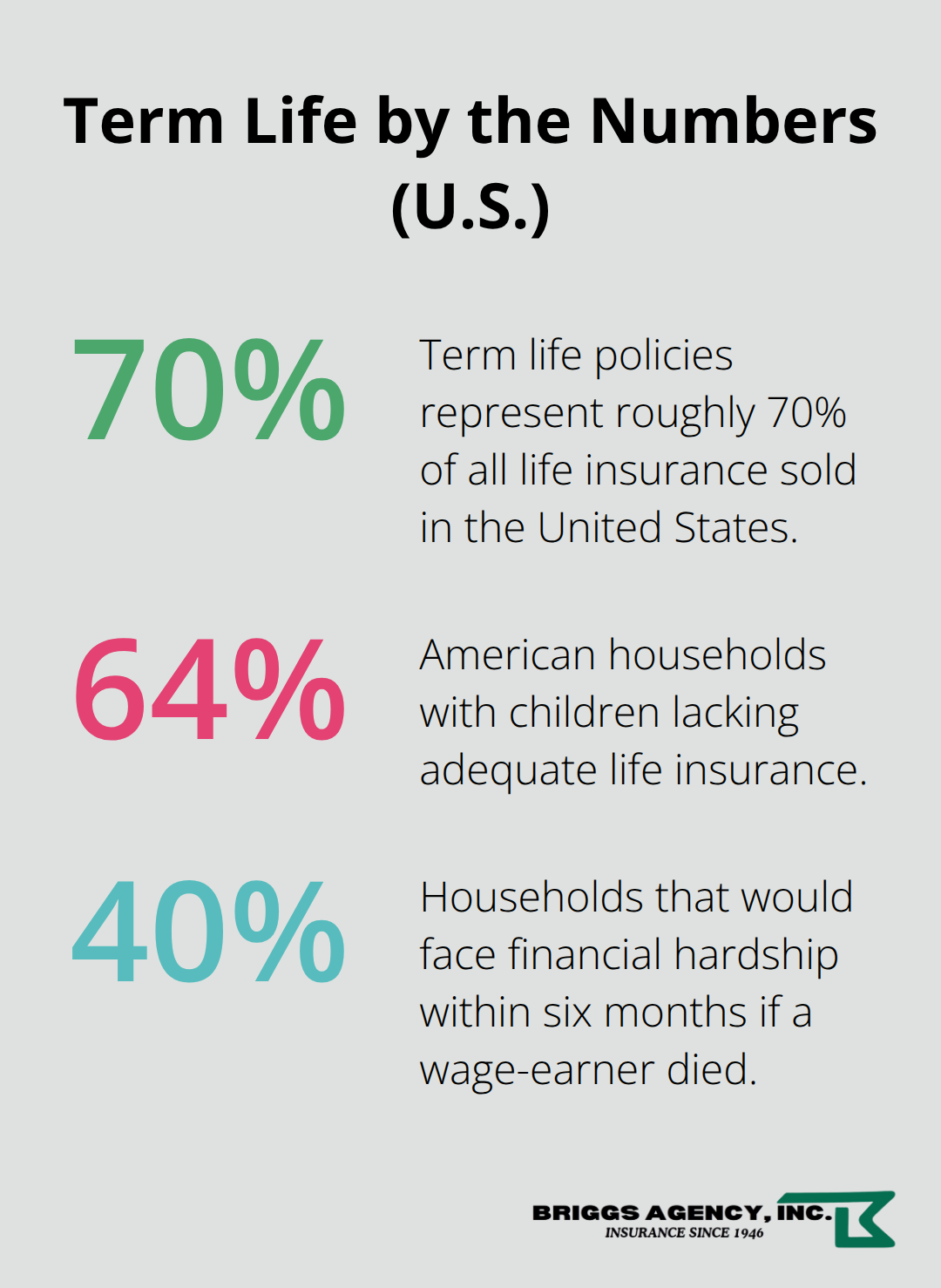
Term life insurance is straightforward: you pay a monthly or annual premium for a set period, and if you pass away during that term, your beneficiaries receive a death benefit. No cash value, no investment component, no complexity. According to the National Association of Insurance Commissioners, term life policies account for roughly 70% of all life insurance sold in the United States because people understand them and can afford them.
A 30-year-old Indiana resident in good health can secure a 20-year term policy with a $500,000 death benefit for approximately $25 to $35 per month. This affordability makes term insurance accessible to families who might otherwise skip coverage entirely.
How Term Length Shapes Your Premium
The term length you select directly impacts your premium-a 10-year term costs significantly less than a 30-year term because the insurance company faces lower risk over a shorter window. This choice matters more than most people realize.
Younger families with young children often choose 20 or 30-year terms to provide protection until kids finish college and establish themselves. Parents with teenagers might opt for a 10 or 15-year term since their income replacement needs are shorter. If you earn $60,000 annually and have a mortgage, car payments, and credit card debt totaling $150,000, your family needs coverage to replace your income for roughly 15 years and cover that debt immediately. A 20-year term policy with a $500,000 death benefit accomplishes both goals affordably.
Term Life vs. Permanent Insurance: The Real Cost Difference
Permanent life insurance, which includes whole life and universal life policies, offers lifetime coverage and builds cash value over time. However, permanent policies cost five to ten times more than term insurance for the same death benefit. A 30-year-old paying $30 monthly for a 20-year term policy would pay $250 to $300 monthly for equivalent permanent coverage.
Indiana families are better served by term insurance during their working years when income replacement is the priority. You can invest the premium difference into retirement accounts, college savings, or other goals with better returns than the cash value component of permanent policies typically generates.
When Permanent Insurance Actually Makes Sense
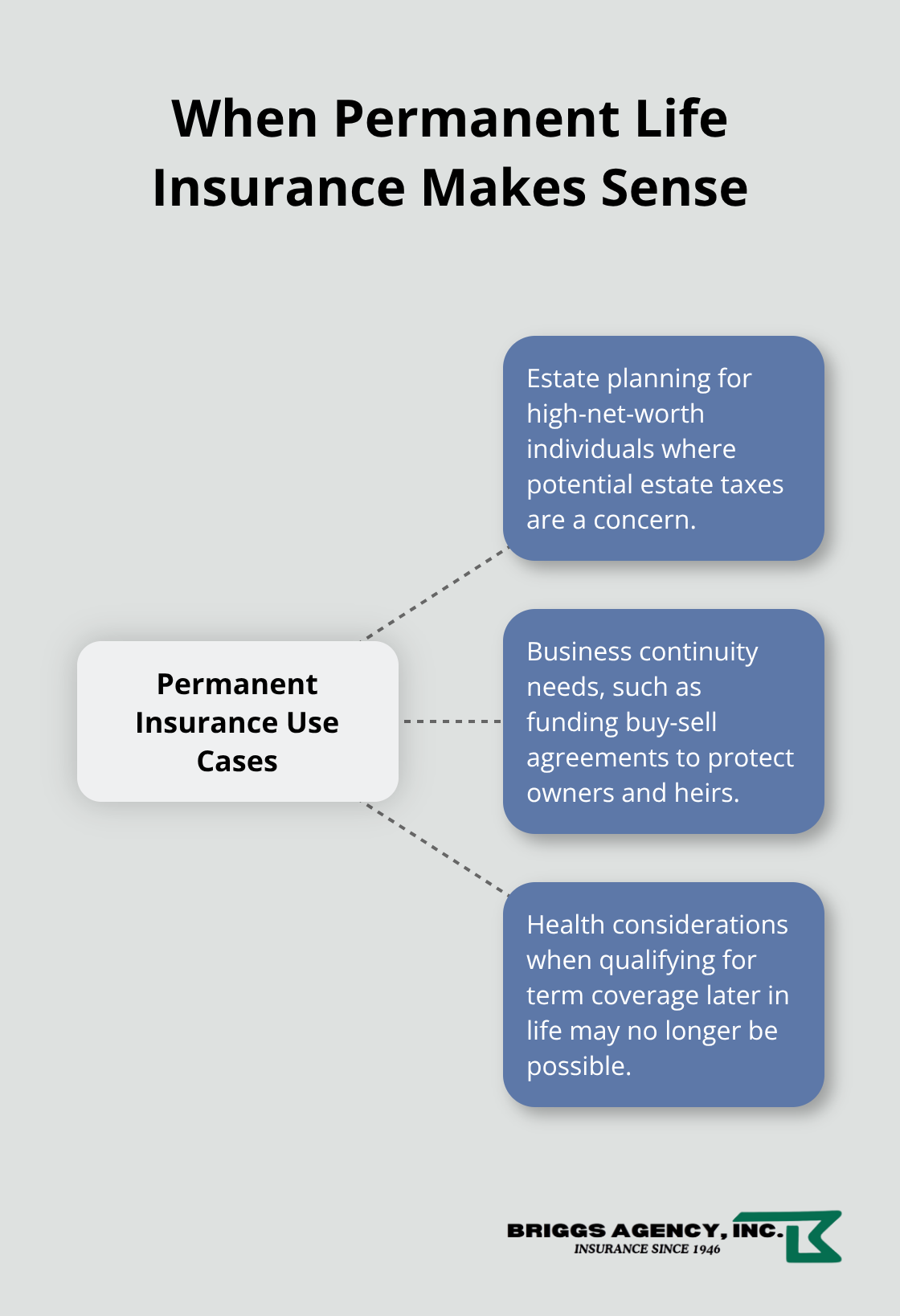
Permanent insurance serves specific situations: high-net-worth individuals managing estate taxes, business owners funding buy-sell agreements, or people with health conditions who can no longer qualify for term coverage later in life. For most Indiana residents with dependents and financial obligations, term life insurance provides the protection you actually need at a price that fits your budget.
The real question isn’t whether term or permanent insurance is better-it’s which one matches your current financial situation and goals. Understanding your coverage needs and term length requirements helps you move forward with confidence.
Why Term Life Insurance Makes Sense for Indiana Residents
Affordability Meets Your Family’s Real Needs
Term life insurance aligns perfectly with how Indiana families actually live and work. You have a mortgage, a car payment, student loans, and kids who depend on your income. Your financial obligations aren’t permanent-they shrink over time as you pay down debt and your children become independent. Term insurance matches this reality. A 20 or 30-year term covers you during your peak earning years when your family would struggle most if something happened to you.
The Council of Institutional Investors reports that 64% of American households with children lack adequate life insurance, yet most families earning between $50,000 and $100,000 annually can afford term coverage for under $40 monthly. That gap exists largely because people overestimate the cost. An Indiana resident earning $65,000 per year with two children and a $200,000 mortgage can secure a 25-year term policy with $500,000 in coverage for roughly $30 to $40 per month. This premium covers income replacement if you pass away, funeral costs, and helps your family maintain their home and lifestyle while they adjust.
Permanent insurance costs five to ten times more for the same death benefit-typically $200 to $300 monthly. For working families, term insurance becomes the obvious choice.
Flexibility That Matches Your Life Stage
Flexibility separates term insurance from every other coverage option available to you. Your needs change-your kids grow up, you pay off your mortgage, you advance in your career. Term policies let you adjust your coverage amount and length to match where you are financially right now rather than locking you into lifetime commitments that may not serve your actual situation.
If you’re 35 with young children and substantial debt, a 30-year term makes sense. If you’re 45 and your kids are in college with only five years until you want to retire, a 10-year term covers your remaining working years without paying for protection you don’t need. Research shows that 4 in 10 households would experience financial hardship within six months if a wage-earner died, which is why families turn to term insurance to protect their loved ones. Term insurance delivers exactly what families want: straightforward protection at a price that fits your budget today.
Moving Forward With Confidence
Calculating your actual coverage needs based on your specific income, debts, and family situation (rather than purchasing more insurance than you require) sets the foundation for the right policy. Understanding how much protection you actually need and which term length matches your timeline helps you make a decision that protects your family without overspending.
How to Pick the Right Coverage Amount and Term
Calculate Your Actual Coverage Need
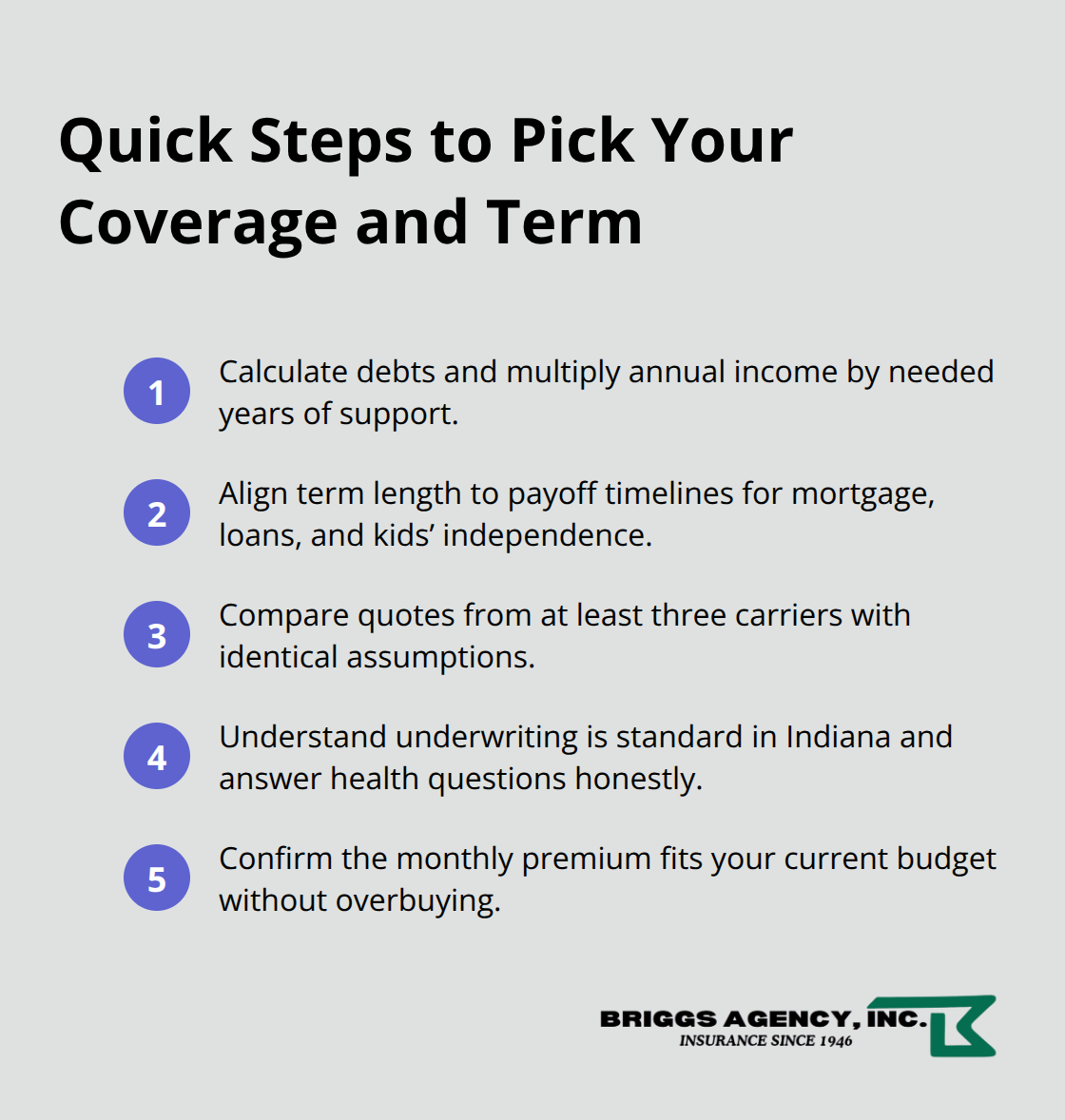
Calculating your actual coverage need is the most important step most Indiana families skip. Insurance companies want you to guess high, and online calculators often suggest amounts that exceed what your family actually needs. Start with a concrete number: add your outstanding debts (mortgage, car loans, credit cards, student loans) and multiply your annual income by the number of years your family would need that income to maintain their lifestyle. A household earning $70,000 annually with $180,000 in debt and kids who’ll need support for 20 more years needs roughly $1.4 million in coverage ($70,000 × 20 years = $1.4 million).
That calculation gives you a real target instead of a guess.
Match Your Term Length to Your Timeline
The term length should match when your obligations actually end. If your mortgage will be paid off in 22 years, a 25-year term provides a slight cushion without overpaying for decades of unnecessary protection. Indiana residents typically choose 20 or 30-year terms because they align with working years and major debt payoff timelines. Shorter 10 or 15-year terms work if you’re older or your financial obligations shrink quickly.
The cost difference matters significantly. A 30-year-old in good health pays roughly $25 monthly for a 20-year, $500,000 policy but only $18 monthly for a 15-year term with the same benefit. That $84 annual difference compounds over time, so selecting the right term length prevents overpaying for coverage you won’t need.
Understand Indiana’s Regulations and Underwriting
Indiana doesn’t impose unique restrictions on term life insurance that differ from federal regulations, which means carriers operating here follow standard underwriting guidelines across all states. What matters is getting quotes from multiple carriers because rates vary significantly-one company might charge $28 monthly for your situation while another charges $42 for identical coverage.
Most carriers require a health questionnaire and some request medical records if you apply for coverage above $500,000 or have health conditions. Answer honestly on applications because misrepresenting your health gives insurers grounds to deny claims later.
Compare Quotes From Multiple Carriers
Indiana residents should request quotes from at least three carriers and compare apples to apples-same death benefit, same term length, same health rating. Premium differences of $10 to $15 monthly add up to $1,200 to $1,800 over a 10-year period, making the comparison process worth your time. Online quote tools give ballpark figures but don’t account for your complete health picture, so working with an agent who knows your situation delivers more accurate pricing and helps you understand why one carrier quotes lower than another.
Final Thoughts
Term life insurance in Indiana provides straightforward, affordable protection during the years your family needs it most. A 30-year-old in good health can protect their family for $25 to $40 monthly, and that protection covers income replacement, debt payoff, and funeral costs when it matters most. The next step is requesting quotes from multiple carriers to see what coverage costs for your specific situation.
Premium differences between companies can reach $10 to $15 monthly for identical policies, so comparing options saves you real money over your term length. Have your financial information ready when you request quotes: your income, outstanding debts, dependents, and the timeline when your obligations will decrease (this helps carriers provide accurate pricing and helps you select the right death benefit amount). Local expertise matters when you make this decision, and we at Briggs Agency, Inc. represent multiple top-rated carriers, which means we compare options across companies rather than pushing one policy.
Contact Briggs Agency, Inc. to discuss your term life insurance Indiana coverage needs with an agent who knows your community. Our job is helping you find coverage that actually protects your family at a price that fits your budget. We’ve served Indiana families and businesses since 1946, and our agents understand the specific financial situations your area faces.
The information provided in this blog is for general informational purposes only and does not constitute legal, financial, or insurance advice. Coverage options, terms, and availability may vary. Please consult with a licensed professional for advice specific to your situation.
Artificial intelligence may have been used to generate text and images in some blog articles.

