
Why Commercial Contractor Insurance Matters for Local Builders
Running a construction business means managing countless moving parts, and one critical piece often gets overlooked: commercial contractor insurance. Without proper coverage, a single accident or equipment loss can drain your finances and threaten everything you’ve built.
At Briggs Agency, Inc., we’ve seen too many local builders operate without adequate protection. The right policy isn’t just a safety net-it’s a business essential that keeps your operations running smoothly when unexpected events happen.
What Your Contractor Insurance Actually Protects
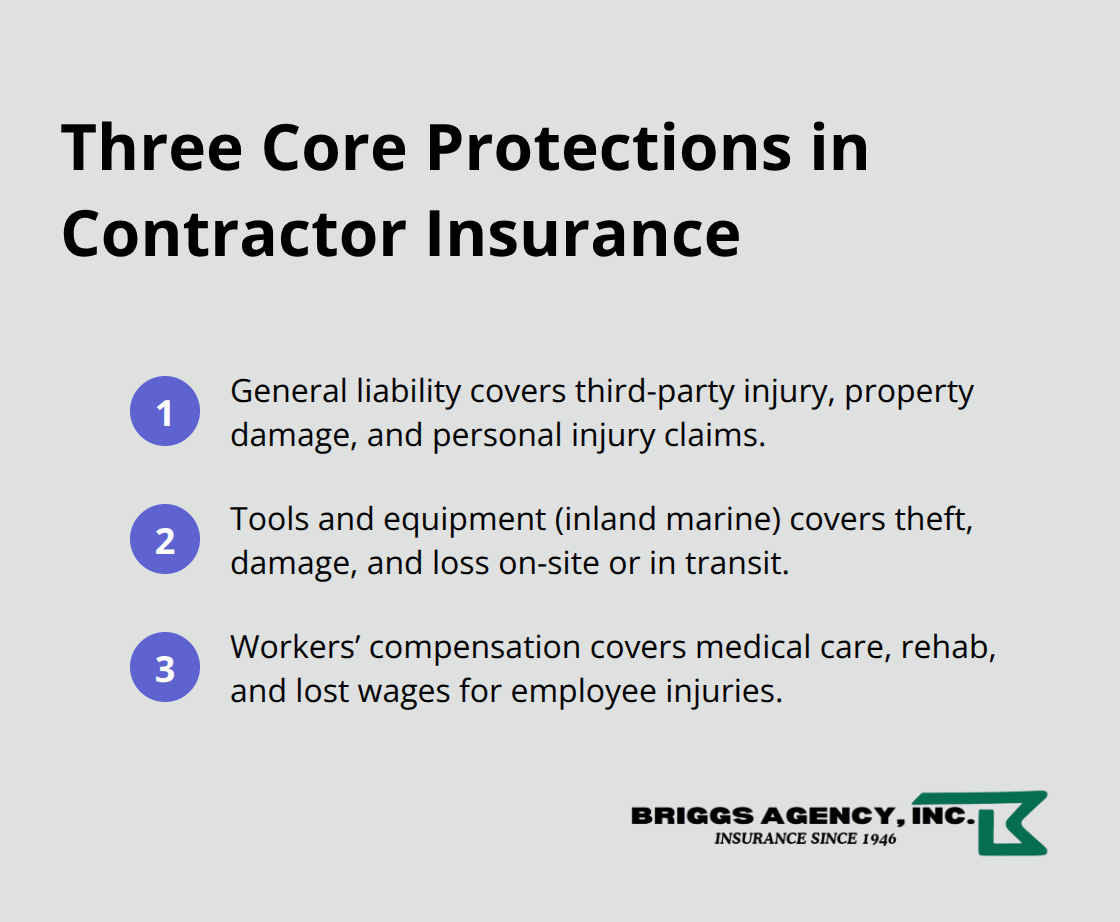
Commercial contractor insurance covers three distinct areas that directly impact your bottom line, and understanding what each one does prevents expensive gaps in your protection. General liability insurance protects you when third parties claim bodily injury, property damage, or personal injury arising from your work-incidents like accidentally damaging a client’s kitchen cabinet or someone getting injured on your job site. General liability coverage costs between $750 and $2,500 annually for a standard $1M/$2M policy for small-to-mid-sized contractors. This coverage shields you from paying out of pocket when someone sues over injuries or damage connected to your operations, and many clients now require proof of this coverage before they’ll hire you.
Tools and Equipment Coverage Keeps Projects Moving
Tools and equipment insurance protects the expensive gear that keeps your projects moving forward, covering theft, damage, and loss whether your equipment sits at a job site or travels between locations. A single theft of a power tool collection or a damaged compressor can stall work for days and cost thousands to replace, which is why this coverage matters more than most builders realize. Inland marine insurance specifically covers contractor tools, mobile equipment, and even leased or borrowed gear, paying either replacement cost or actual cash value depending on your policy. This protection ensures that unexpected equipment loss doesn’t force you to halt operations or absorb replacement costs that eat into your profit margins.
Workers’ Compensation: Legal Protection and Employee Care
Workers’ compensation insurance is legally required in most states and covers medical costs, rehabilitation, and lost wages when your employees get injured on the job. California requires workers’ compensation coverage for licensed contractors even if you have no employees, which means solo operators cannot skip this protection. This coverage shields your business from lawsuits while ensuring injured workers receive proper care, keeping your operation compliant with state law and protecting your ability to keep working. When an injury happens on site, workers’ compensation handles the financial burden so you can focus on recovery and getting back to your projects-which is exactly what your next step should address.
Real Risks Contractors Face Without Proper Coverage
Property Damage Claims Drain Your Finances Fast
A single property damage claim costs $15,000 to $50,000 or more, depending on what gets damaged and how extensive the repairs are. Without general liability coverage, you write that check yourself-directly from your business account. Contractors lose months of profit recovering from one incident where they accidentally damaged a client’s flooring or broke a window. The Hartford reports that construction businesses pay roughly $113 per month for general liability coverage, which works out to about $1,351 annually. That small premium protects against a major claim, especially when clients now routinely require proof of $1 million in coverage before they sign a contract. Many builders think they can skip this protection on smaller jobs, but property damage doesn’t care about project size-a mistake on a kitchen remodel costs just as much to fix whether the job is worth $5,000 or $50,000.
On-Site Injuries Create a Financial and Legal Trap
Injury claims on job sites catch unprepared contractors off guard with staggering costs. Medical bills alone for a serious on-site injury exceed $20,000 to $100,000 depending on severity, and without workers’ compensation coverage, you face both the medical costs and potential lawsuits from the injured person. Legal defense costs compound the problem quickly-even a claim that gets dismissed still requires attorney fees that drain cash flow faster than most builders anticipate. Contractors operating without proper coverage also risk losing their license, facing fines from state labor departments, and getting sued personally, which means creditors can come after your personal assets and savings. Beyond the immediate financial hit, a serious incident creates operational chaos: your crew stops working while investigating the injury, clients get nervous about your safety practices, and your reputation takes damage that affects future bids.
Equipment Theft and Damage Stop Projects Cold
Equipment theft or damage presents a risk that most contractors underestimate until it happens. A stolen trailer full of tools or a damaged compressor doesn’t just cost money to replace-it stops your projects cold. You lose productivity, miss deadlines, and potentially face penalty clauses in your contracts. Some contractors respond by renting replacement equipment at premium rates, which eats into profit margins and compounds the original loss. Business interruption from these events creates a domino effect: delayed projects lead to unhappy clients, which leads to fewer referrals and harder bids to win.
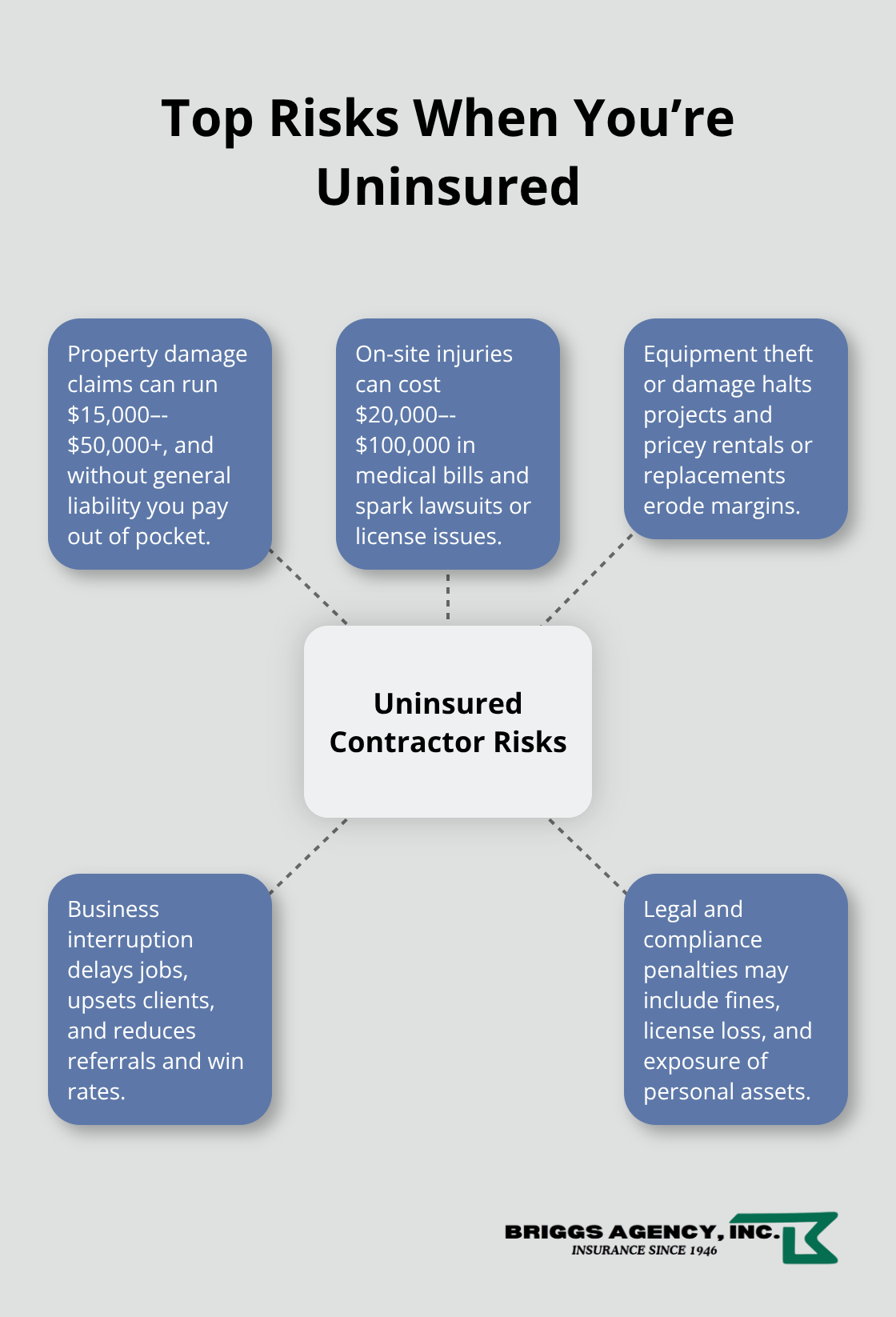
These three exposure areas-property damage, employee injuries, and equipment loss-show why comprehensive coverage matters so much. Understanding how to select the right policy for your specific work is the next step toward protecting your business from these preventable financial disasters.
How to Choose the Right Contractor Insurance Policy
Start by mapping your actual job site exposure and which risks show up most often in your specific trade. A framing contractor faces different exposures than a plumber or electrician, and your policy needs to reflect those differences or you’ll pay for coverage you don’t need while leaving gaps in areas where you do. The Hartford reports that factors like business type, experience level, number of employees, location, coverage limits, deductibles, and claims history all shape your premium and available options. Get specific about your projects: Do you work mostly residential remodels or commercial builds? Do you rent equipment or own it? Do you work at heights or in confined spaces? Do you handle hazardous materials?
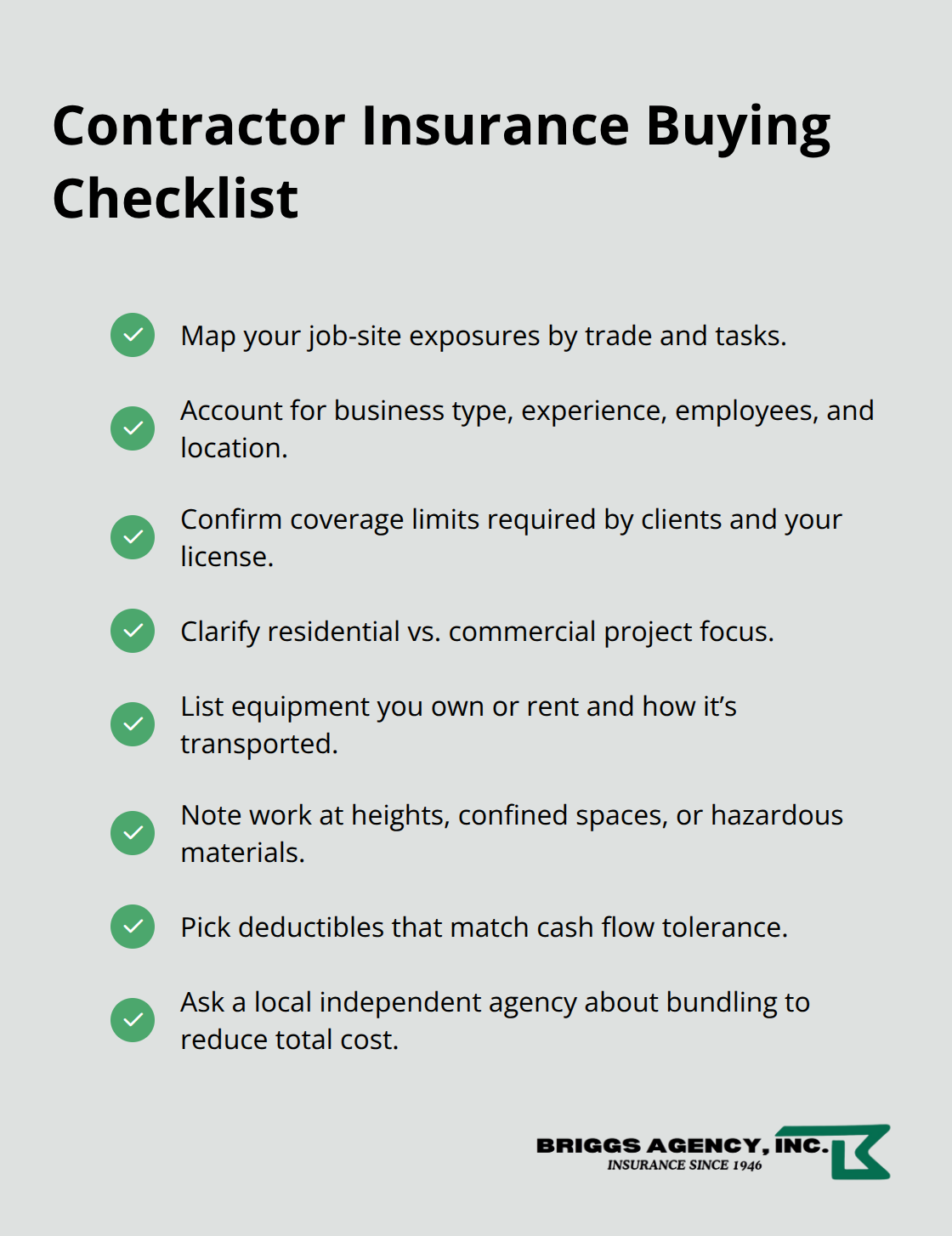
Each answer points toward different coverage needs. A solo carpenter doing kitchen remodels needs different protection than a five-person framing crew working on new construction. Once you understand your actual exposures, you can stop overpaying for irrelevant coverage and ensure you’re protected where it matters most.
Coverage Limits Matter More Than You Think
Most contractors default to the standard $1 million general liability limit because it’s common, but that doesn’t mean it’s right for your work. Before you settle on any limit, check what your clients require contractually and what your state mandates for your license type. Many clients now demand $2 million in aggregate coverage, which costs more but becomes non-negotiable when you’re bidding larger projects. The real mistake happens when contractors choose limits based on premium cost alone instead of actual exposure. A single serious injury claim or major property damage incident can exceed standard limits quickly, and then you’re personally liable for the overage. Compare what different carriers charge for moving from $1 million to $2 million coverage-the price difference often surprises contractors who assumed it would cost substantially more. Deductibles work the same way: a higher deductible lowers your monthly premium but means you pay more out of pocket when a claim happens. Most contractors find a $1,000 or $2,500 deductible strikes the right balance between affordable premiums and manageable out-of-pocket exposure, but your specific cash flow situation should drive that decision.
Local Agents Bring Market Knowledge to Your Coverage Decisions
An independent agency that knows your community understands the specific risks contractors face in your area-whether that’s seasonal weather patterns, local building code requirements, or common claim types in your region. When you call a national carrier’s 1-800 number, you get generic quotes based on limited information. When you work with a local agent, they ask detailed questions about your actual operations, your safety practices, your claims history, and your growth plans over the next few years. That conversation reveals coverage gaps you might not have considered and uncovers bundling opportunities that lower your total cost. Many contractors save significantly when they combine general liability, tools and equipment, and commercial auto coverage under one agency relationship. A local independent agency represents multiple carriers instead of locking you into one company’s options and pricing. This access to multiple top-rated carriers means your agent can compare options and tailor policies to deliver competitive pricing and the right protection for your specific work. A local agent also handles the administrative burden when claims happen-they advocate for you with the carrier, help navigate the process, and ensure you get paid fairly. After a property damage claim or injury incident, that relationship matters more than the premium you saved shopping online.
Final Thoughts
Commercial contractor insurance protects your business from the real financial threats that stop contractors cold. A single accident, equipment loss, or injury claim forces you to choose between paying claims out of pocket or risking your business license and personal assets-that’s not a choice any builder should face. The coverage you’ve read about in this post addresses these threats directly and keeps your operation running when unexpected events happen.
Your next step starts with honest conversations about your actual work. What types of projects do you handle most often, how many employees work for you, and what equipment do you own or rent? These details shape which coverages matter most and help you avoid paying for protection you don’t need while staying covered where it counts. Moving from a $1 million to $2 million liability limit often costs less than contractors expect, and that extra protection becomes essential when clients demand higher limits before signing contracts.
A local independent agency that represents multiple carriers delivers the best path forward for your commercial contractor insurance needs. We at Briggs Agency, Inc. have served Crown Point and surrounding communities since 1946, helping contractors and business owners reduce risk and protect what they’ve built. Contact Briggs Agency, Inc. today to discuss your contractor insurance needs and get a quote that reflects your actual exposure.
The information provided in this blog is for general informational purposes only and does not constitute legal, financial, or insurance advice. Coverage options, terms, and availability may vary. Please consult with a licensed professional for advice specific to your situation.
Artificial intelligence may have been used to generate text and images in some blog articles.

