
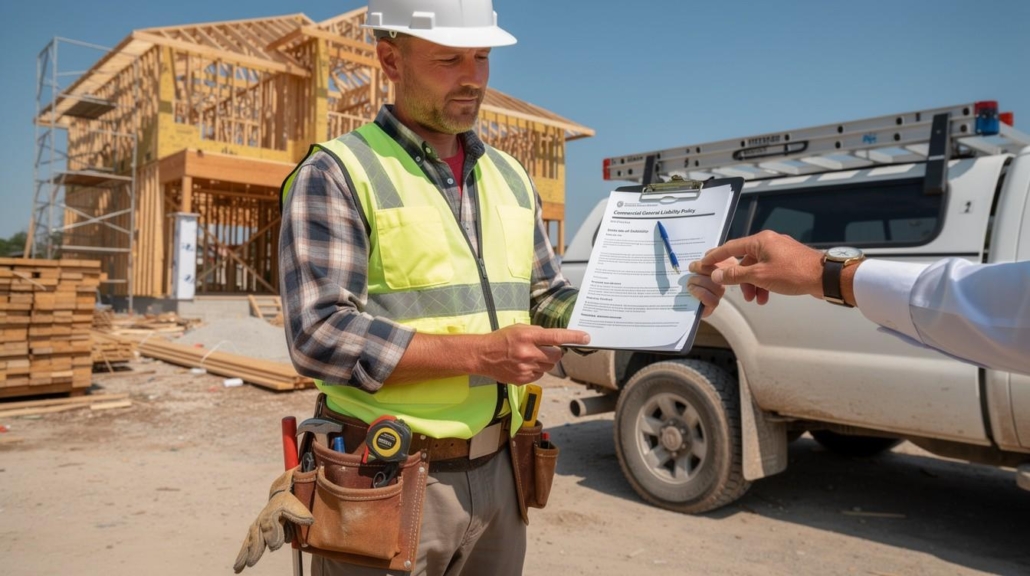
Crown Point Contractor Insurance: Local Builders Deserve Strong Coverage
Running a contracting business in Crown Point means managing more than just schedules and crews-you’re also responsible for protecting your operation from real financial risk. At Briggs Agency, Inc., we work with local builders who understand that standard policies often leave dangerous gaps in coverage.
The right Crown Point contractor insurance isn’t one-size-fits-all. Your specific trade, equipment, and job sites demand a policy built around your actual needs, not generic templates.
The Three Coverages That Actually Protect Your Bottom Line
General Liability Forms Your Foundation
General liability sits at the foundation of any contractor operation, and Indiana law doesn’t require it-but your clients and municipalities do. The Hartford reports that general liability averages around $113 per month for contractors, though this varies significantly based on your trade and claims history. A single property damage claim on a job site can easily exceed $50,000 once investigation and defense costs pile up, which is why you should carry at least $1 million per occurrence for residential work in Crown Point. Commercial projects typically demand $2 million or higher, and if you handle demolition, excavation, or work on historic properties with asbestos or lead paint exposure, your limits should reflect that elevated risk.
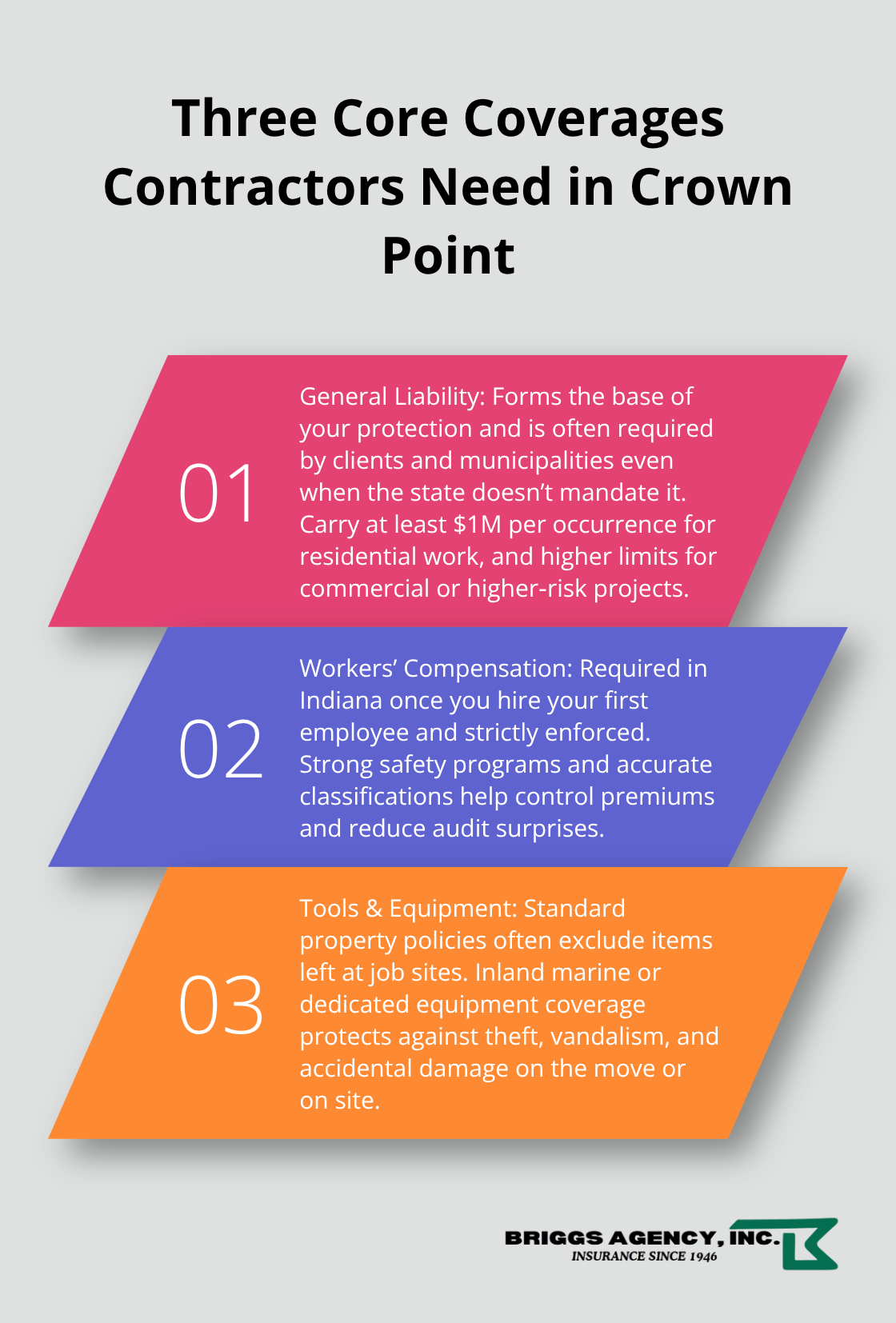
Two property damage claims within three years can spike your next quote by 20 to 35 percent, making loss prevention and accurate reporting essential to keep premiums manageable.
Workers’ Compensation Is Mandatory, Not Optional
Indiana requires workers’ compensation the moment you hire your first employee, with penalties reaching $10,000 per violation if you skip it. A five-person carpentry crew typically pays between $35,000 and $55,000 annually depending on classification and safety record, which sounds steep until you realize that a single serious injury claim costs multiples of that amount. The Indiana Department of Labor enforces this strictly, and misclassifying crew members to lower premiums triggers audits that result in back payments plus higher rates going forward.
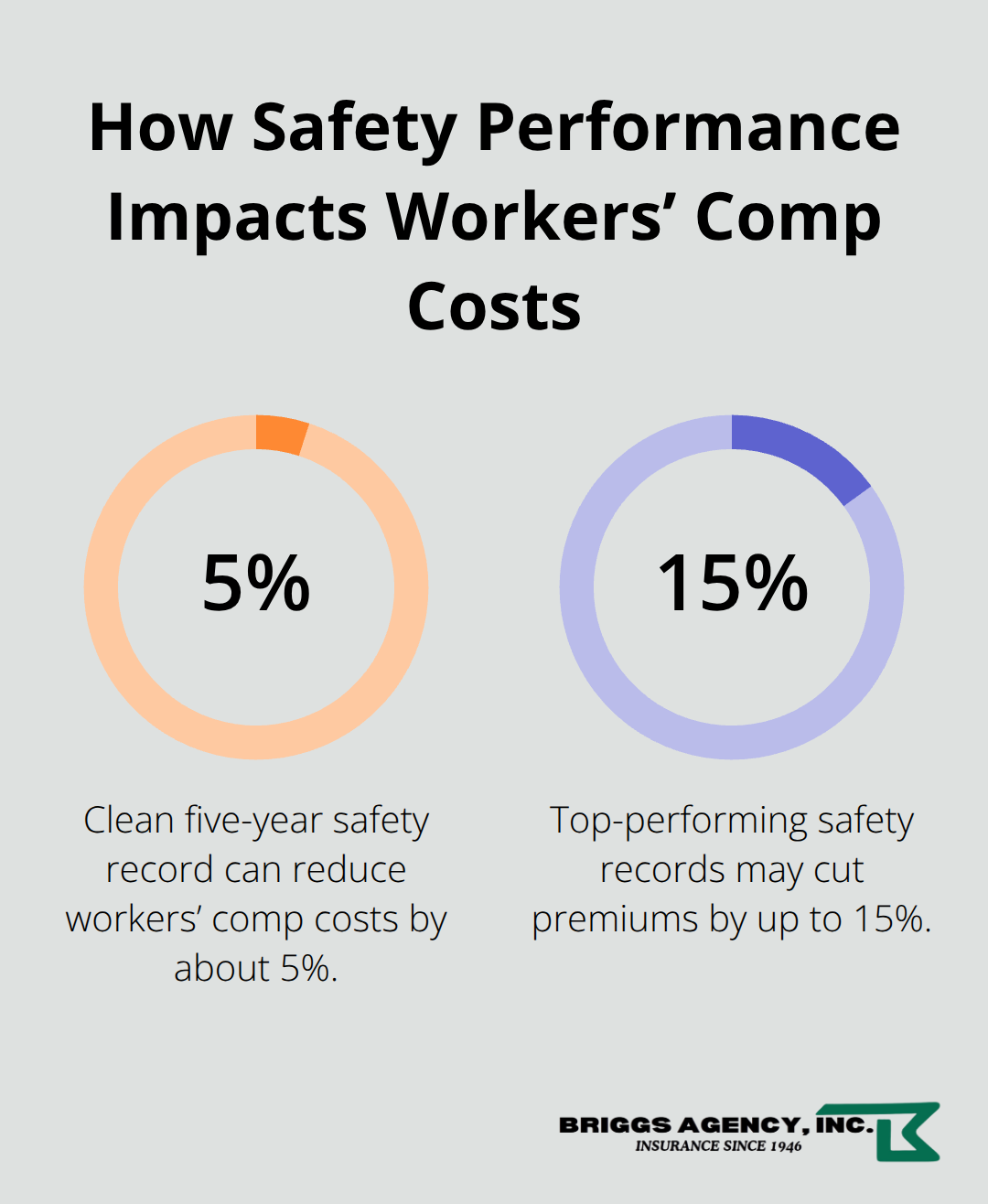
Your experience modification rate, or EMR, shows how many workers’ comp claims a construction company has compared to others doing similar work; a clean five-year safety record can push your EMR below 1.0, cutting costs by 5 to 15 percent. Contractors who document their safety programs and maintain incident-free years qualify for meaningful discounts that offset the cost of proper coverage.
Tools and Equipment Demand Dedicated Protection
Standard property policies exclude tools left at job sites, which creates a critical gap for Crown Point contractors. Tools and equipment theft costs Indiana contractors between $2,500 and $8,000 per incident, and theft rates in Indianapolis and Gary run about 18 percent higher than the national average, according to the National Equipment Register. Inland marine coverage or dedicated tools and equipment policies typically cost 3 to 5 percent of your equipment value annually and cover theft, vandalism, and accidental damage. You should maintain a detailed inventory with serial numbers and photos of every major tool and piece of equipment; this cuts claim processing time significantly after a loss and proves ownership when theft occurs. If you transport equipment regularly, make sure your commercial auto policy includes hired and non-owned auto coverage, since standard auto policies often exclude contractor vehicles and trailers.
Coverage Gaps Extend Beyond the Basics
Most contractors focus on these three pillars and miss the exposures that actually drain cash when claims happen. Your liability limits may sound adequate until a third-party claim from a neighbor or property owner lands on your desk, and suddenly you face defense costs of $10,000 to $25,000 before fault is even determined. Bodily injury claims on a construction site can exceed $100,000 and may reach into the millions, especially with larger crews or higher-risk work. Historic property renovation adds another layer of complexity; asbestos, lead paint, and mold exposure require specialized pollution liability coverage that standard policies simply don’t touch. The gap between what you think you’re covered for and what actually protects your business is where most contractors stumble-and where the real financial damage happens.
Where Contractors Underestimate Their Real Liability Exposure
The Gap Between What You Think You’re Covered For and What Actually Protects You
Most Crown Point contractors carry general liability limits that look reasonable on paper but crumble when an actual claim hits. You might think $1 million in coverage feels safe for residential work, but many contractors underestimate the actual dollar exposure when homeowner and client lawsuits average $150,000 to $400,000 per claim. Investigation costs, legal defense, and the time your crew sits idle while claims process add up fast. The real problem surfaces when multiple claims stack up; two property damage incidents in three years can push your next premium up 20 to 35 percent, which means your “affordable” policy becomes expensive quickly. If you’re doing commercial projects or any work involving demolition, excavation, or historic properties with asbestos and lead paint, your $1 million limit isn’t just tight-it’s inadequate. Commercial clients routinely require $2 million per occurrence and $2 million aggregate, and many won’t let you on site without proof. If you’re currently operating at the minimum and a single bodily injury claim exceeds your limit, you personally cover the gap, which can devastate your business and personal assets.
Why Umbrella Policies Protect More Than You Realize
Umbrella policies sit unused in most contractor portfolios, which is a costly mistake given how fast construction claims spiral. A $1 million or $2 million umbrella policy costs roughly $300 to $600 annually and sits above your general liability, workers’ compensation, and commercial auto policies to catch claims that exceed those underlying limits. Third-party claims from neighbors, property owners, or other contractors require separate exposure analysis; defense costs alone can hit $10,000 to $25,000 before anyone determines fault.
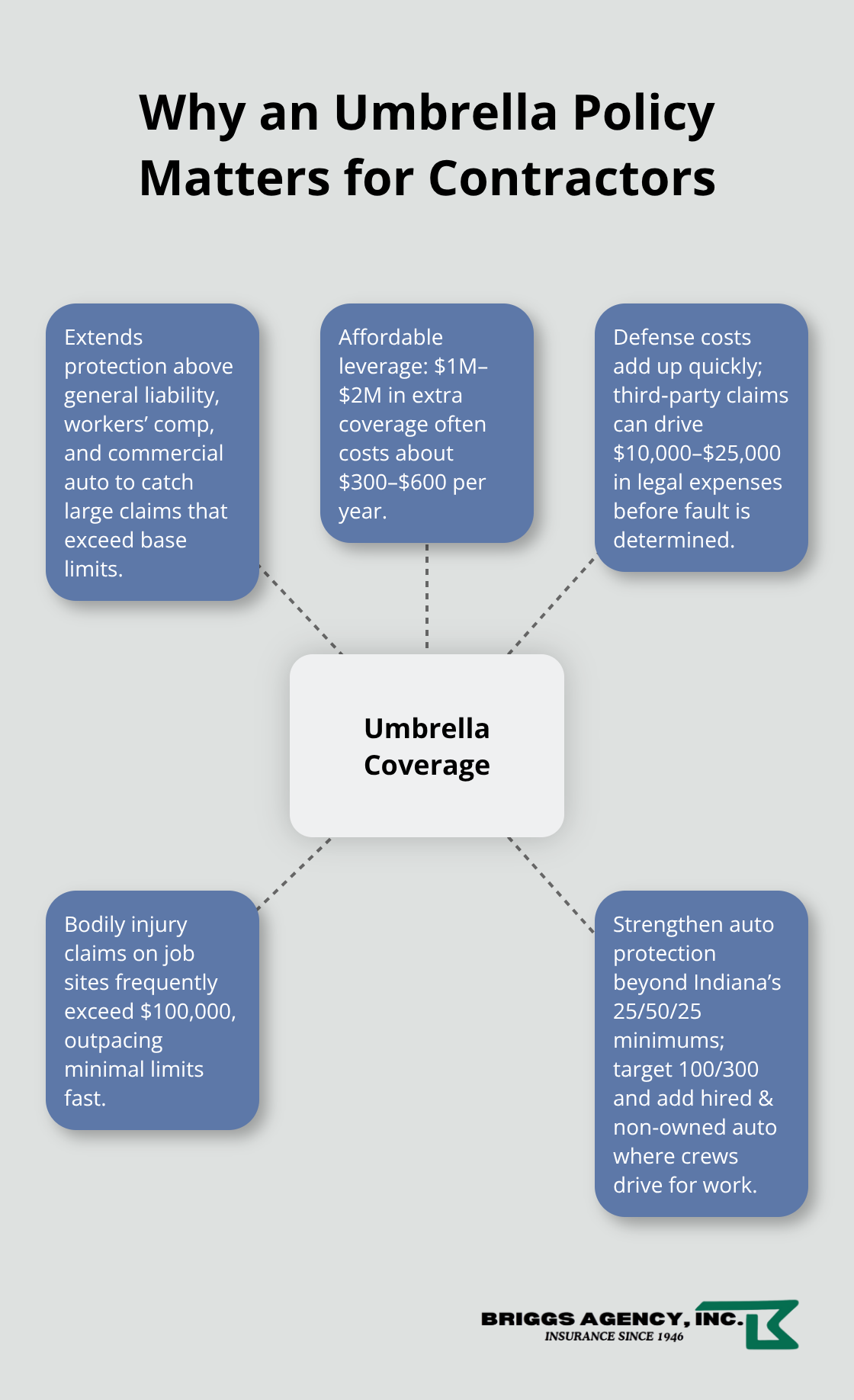
Bodily injury claims on a construction site routinely exceed $100,000, and your commercial auto coverage tends to be weak. Indiana’s minimums of 25/50/25 are dangerously low, and most contractors carrying only those limits face serious exposure if an employee causes a serious accident while driving for work. Try for at least $100,000 per person and $300,000 per accident, and add hired and non-owned auto coverage if your crew operates any vehicles for business.
The Hidden Exposures in Your Vehicle and Equipment Coverage
Vehicles and trailers parked at job sites often sit uninsured for theft and vandalism because standard commercial auto policies exclude stationary equipment and tools left overnight. Inland marine coverage fills this gap and protects mobile equipment, trailers, and tools in transit or stored on site from theft, vandalism, and accidental damage. When you’re shopping quotes, press each carrier to confirm exactly what’s excluded from your auto and property coverage; most contractors discover gaps only after a loss, which is far too late. Understanding these exposures now positions you to build coverage that matches your actual job sites and equipment, rather than discovering shortfalls when a claim arrives.
Why Local Insurance Expertise Changes Your Bottom Line
Crown Point contractors operate in a specific regulatory environment that generic online quotes completely miss. Indiana has no statewide general contractor licensing board, which means local municipalities set their own requirements, and Crown Point’s rules differ from Fort Wayne’s or Evansville’s. Crown Point projects may require specific coverage limits, surety bonds, or additional insured endorsements that a national carrier’s template policy doesn’t accommodate. When you work with a local agent who understands Lake County building codes and Crown Point’s particular claim patterns, you avoid the costly mistakes of over-insuring unnecessary exposures or under-insuring the real risks you face.
Local Agents Know What National Carriers Miss
An agent familiar with your area knows which carriers consistently pay claims quickly, which ones audit aggressively on payroll classifications, and which ones offer meaningful discounts for documented safety programs. Shopping multiple carriers matters enormously; identical coverage can vary by 30 to 50 percent in price across different insurers. A contractor paying $500 per month with one carrier might find the same protection for $250 with another, simply because that carrier has fewer claims in Crown Point or offers a discount for your specific trade classification.
Trade-Specific Coverage Protects Your Real Exposures
Your trade demands customized coverage that mass-market policies ignore. A carpentry crew faces different exposures than an excavation operation or a plumbing contractor doing historic property renovations. If you handle demolition or work on older Crown Point homes with potential asbestos or lead paint, standard general liability doesn’t cover pollution liability, and your premium should reflect that specialized risk. A local agent compares quotes from carriers that actually compete for contractor business in Crown Point rather than those charging premium rates for out-of-area risk.
Coverage That Grows With Your Business
When your operation expands-you hire more crew, purchase expensive equipment, or win larger commercial projects-a local agent adjusts your policy proactively rather than leaving gaps you discover after a claim. The difference between proper planning and the right insurance and a generic quote often amounts to hundreds of dollars annually, plus better claims service and fewer coverage disputes when something goes wrong. An independent agency representing multiple top-rated carriers walks contractors through the specifics of their actual job sites, crew size, equipment values, and project types to build a policy that protects what matters without padding unnecessary limits.
Final Thoughts
The foundation of a protected contracting business starts with understanding what you face on every job site. General liability, workers’ compensation, and tools and equipment coverage form the core, but the gaps between what you think you’re covered for and what actually protects your business create real financial damage. A single claim can exceed your limits, a theft can wipe out equipment you didn’t insure separately, or a regulatory requirement you missed can shut down a project before it starts.
Your next step is straightforward: pull your current policies and compare them against the exposures we’ve outlined. Do your liability limits match your project types? Are your vehicles and trailers actually covered for theft and vandalism? Does your workers’ compensation classification match your crew’s actual duties? If you’re uncertain about any of these, that uncertainty itself signals a red flag worth addressing now rather than after a claim.
We at Briggs Agency, Inc. represent multiple top-rated carriers, which means we can compare options and tailor Crown Point contractor insurance to your actual operation rather than forcing you into a template. A free quote takes minutes, and the difference between what you’re paying now and what proper coverage actually costs often surprises contractors in the best way possible. Contact us at 219-769-4840 or visit Briggs Agency to start building the protection your contracting business deserves.
The information provided in this blog is for general informational purposes only and does not constitute legal, financial, or insurance advice. Coverage options, terms, and availability may vary. Please consult with a licensed professional for advice specific to your situation.
Artificial intelligence may have been used to generate text and images in some blog articles.

