
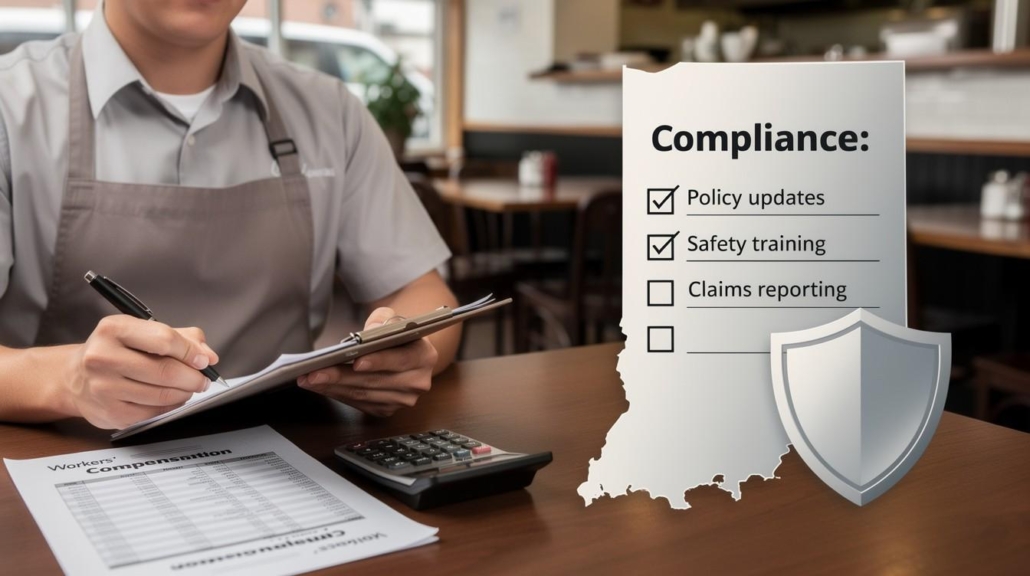
Restaurant Workers Compensation Indiana: Compliance and Best Practices
Running a restaurant in Indiana means navigating workers compensation requirements that protect your team and your business. At Briggs Agency, Inc., we’ve helped countless restaurant owners understand their obligations and avoid costly mistakes.
Workplace injuries happen fast in kitchens and dining rooms, but the right preparation and compliance practices can make all the difference. This guide covers what Indiana requires, common injuries you’ll encounter, and practical steps to keep your staff safer.
What Indiana Actually Requires for Restaurant Workers Compensation
Coverage Is Non-Negotiable
Indiana mandates workers compensation coverage for any restaurant with employees-no exceptions, no minimum payroll threshold. If you have even one person on staff, you need coverage. The Indiana Department of Labor enforces this requirement strictly, and violations carry real consequences. Operating without coverage exposes you to fines, criminal liability, and personal asset seizure if an employee gets injured. Restaurants that lapse on coverage face penalties exceeding $10,000, which is why compliance matters from day one.
Classification Codes and Premium Calculation
Your classification code determines much of your premium. The National Council on Compensation Insurance assigns code 9082 to most full-service restaurants, but your actual code depends on the specific work your employees perform. Misclassifying a line cook as a dishwasher can result in underpaying for months, then facing a substantial bill at renewal when the audit catches the error.
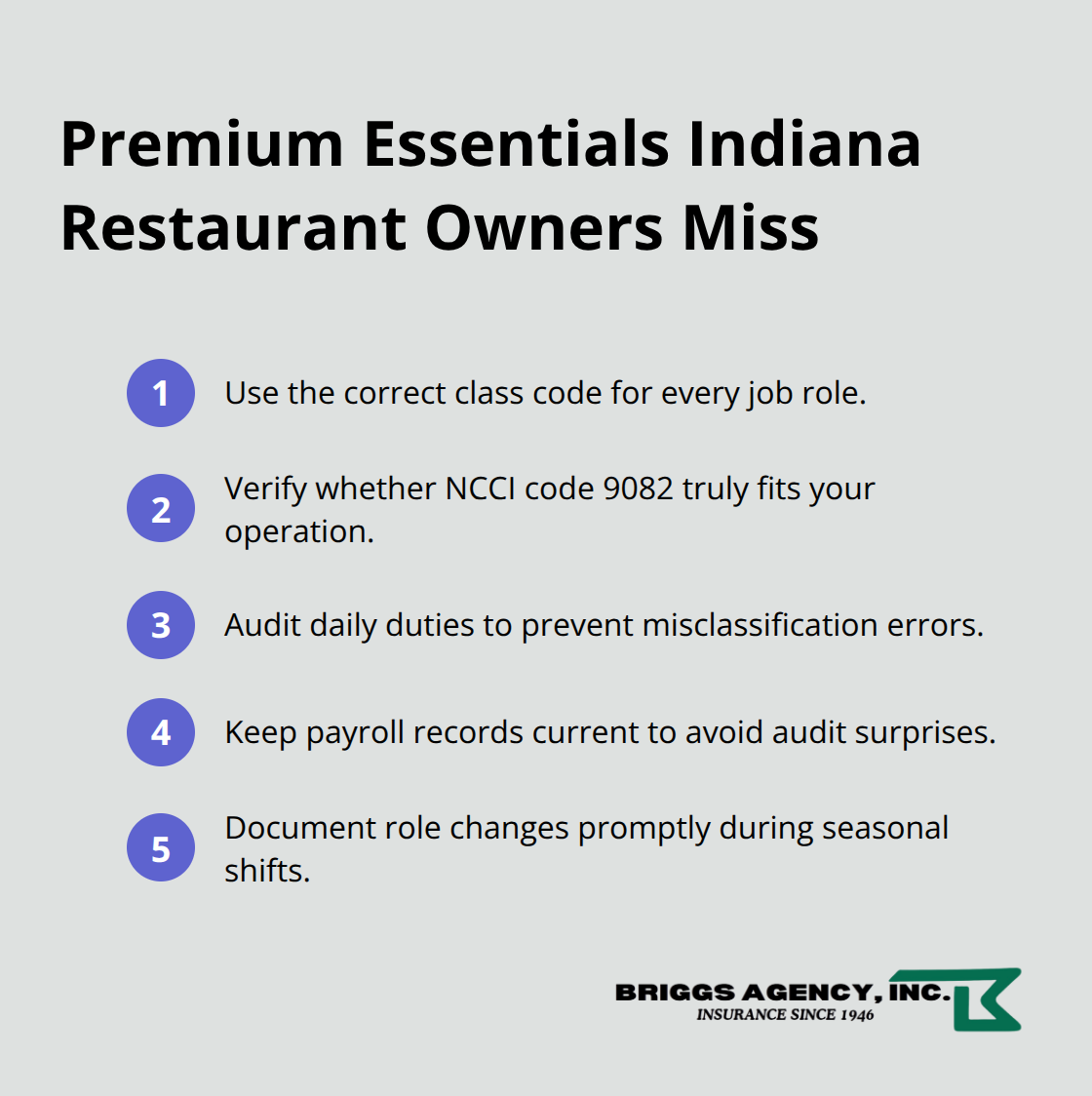
Indiana restaurants typically pay between $2 and $6 per $100 of payroll, though rates vary significantly based on your experience modification rating. Your experience modification rating reflects your actual losses compared to expected losses for your business size and type. If you’re new to the industry, you may start with little or no rating, but claims accumulate quickly in restaurants where slip-and-fall and cut injuries are common.
Payroll Accuracy and Family Members
One detail that many owners miss: you must include family members working in the restaurant in your payroll calculations. Failing to cover a spouse or adult child who works shifts can leave them without benefits if injured and may trigger state fines.
Accurate payroll budgeting for the year ahead prevents costly surprises. Underreporting payroll leads to an end-of-year audit bill that catches many owners off guard, while overreporting ties up cash unnecessarily.
Regional Risk Factors
Indiana’s location along the Ohio River and seasonal hiring patterns create additional risk factors that push premiums higher than national averages, particularly during summer months when new seasonal staff join your team with minimal experience. Understanding these local pressures helps you anticipate costs and plan your budget accordingly. The specific injuries that plague Indiana restaurants-and how to prevent them-shape both your claims history and your long-term premium trajectory.
What Restaurant Injuries Actually Cost Your Business
The True Price of Common Kitchen and Dining Room Injuries
Cuts, burns, and slip-and-fall incidents dominate Indiana restaurant injury claims, and the financial impact extends far beyond the initial medical bill. AmTrust data on restaurant injury costs and frequency shows that slips, trips, and falls consistently rank as the costliest injuries. Burns in kitchens typically run $3,000 to $8,000 per incident depending on severity and depth, while cuts requiring stitches average $1,800.
These numbers explain why injury frequency matters more to your premium than severity: multiple small claims raise your experience modification rating faster than one large claim, which means your costs compound year after year if you don’t address the root causes.
Hidden Costs from Repetitive Strain
Repetitive strain injuries from standing, lifting, and gripping appear regularly in restaurant claims but often go unreported because employees treat minor pain as part of the job. Wrist strains, shoulder injuries, and lower back problems from improper lifting technique add up quietly, then surface when someone finally seeks medical care and files a claim that sticks with your record.
Indiana’s 83 million visitors in 2024 who spent $16.9 billion on dining mean higher foot traffic in your restaurant, which directly increases slip-and-fall exposure during peak service hours when floors get wet and staff move faster.
How Workers Compensation Covers These Costs
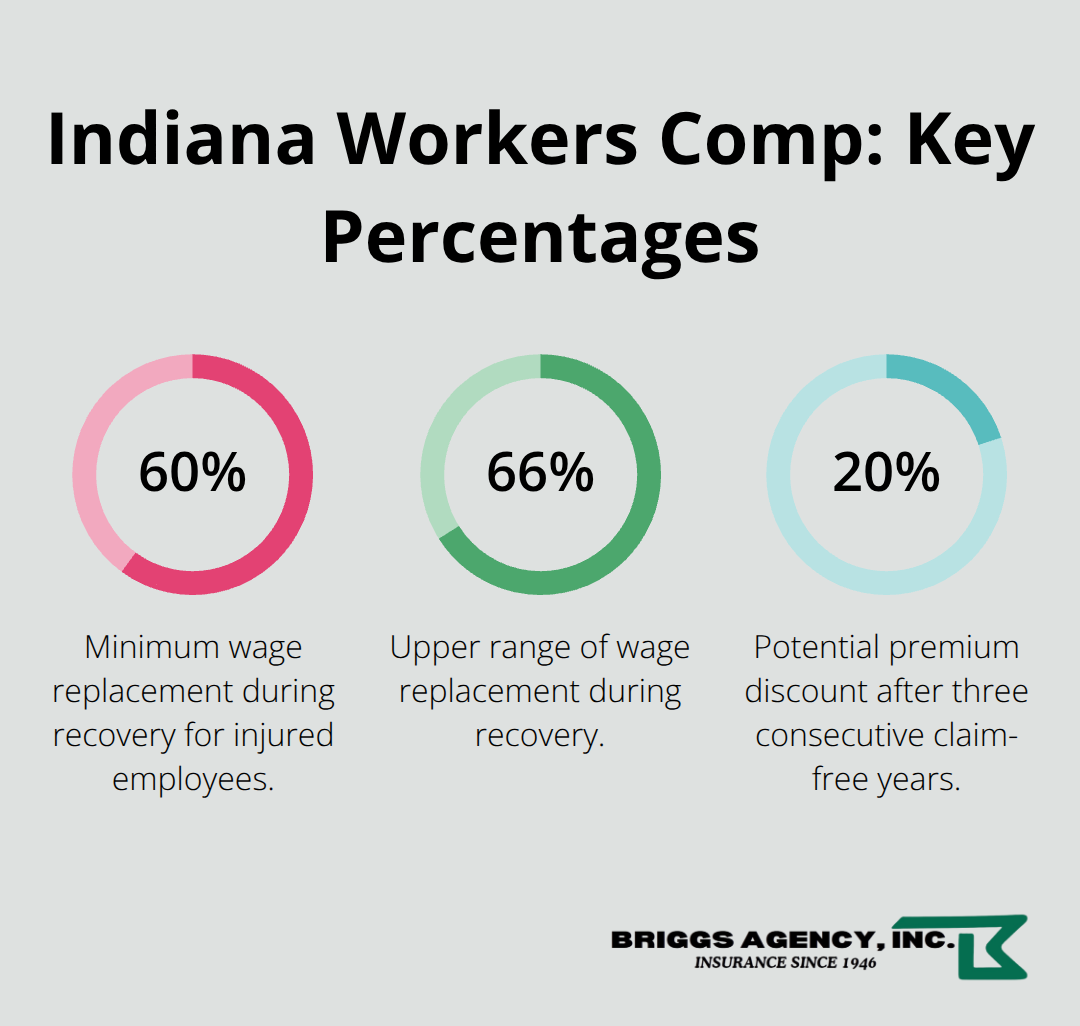
Workers compensation covers medical expenses, surgical care, hospitalization, prescription medications, and rehabilitation for all these injuries, plus it replaces 60 to 66 percent of lost wages while the employee recovers. This wage replacement continues for the entire recovery period, which for serious injuries can stretch months or longer. Your premium reflects the actual cost of these claims, so reducing injuries directly reduces what you pay at renewal.
Prevention Strategies That Lower Your Premiums
A restaurant that stays claim-free for three consecutive years qualifies for premium discounts up to 20 percent, which means a $5,000 annual policy might drop to $4,000. The key to accessing those discounts is prevention: heated entry mats at doors eliminate moisture that causes slips during winter and humid months, documented spill-cleanup procedures ensure staff respond consistently to hazards, and lifting training teaches proper technique that prevents back injuries.
Near-miss reporting systems catch hazards before someone gets hurt, which keeps your claims history clean and your premiums manageable. These prevention measures work because they target the specific injuries that plague Indiana restaurants most frequently. Understanding which injuries pose the biggest risk in your operation allows you to target prevention where it matters most and build the safety culture that protects both your team and your bottom line.
How to Stop Injuries Before They Happen
Train New Staff on Real Hazards, Not Generic Safety
Preventing injuries in your restaurant requires moving beyond generic safety posters and implementing systems that actually work. Formal safety training during onboarding is non-negotiable, but the content matters more than the checkbox. New hires need specific instruction on slip prevention, proper lifting mechanics, and how to use equipment safely-not a 15-minute video they forget by their second shift.
Training should cover the exact hazards in your operation: if your kitchen has a fryer station, teach oil burn prevention and proper protective equipment; if your dining room has tile floors, explain spill response procedures and why non-slip footwear is mandatory. Seasonal staff in summer require extra attention because new employees drive injury frequency higher when they lack experience. Conduct refresher training quarterly rather than annually, and make it brief and focused on recent near-misses or claims your restaurant has experienced.
Maintain Equipment and Work Stations Consistently
Equipment maintenance prevents breakdowns that create unsafe conditions. A failing walk-in cooler forces staff to jury-rig storage solutions, a worn oven door becomes a burn hazard, a loose floor mat becomes a trip hazard. Schedule equipment inspections monthly and document them; when something breaks, repair it immediately rather than working around it. This approach reduces downtime and keeps your experience modification rating stable.
Create a near-miss reporting system that treats hazards discovered before injury as wins, not failures. If a server notices a loose railing before someone falls, that’s a report worth celebrating because it prevents a claim that would raise your premiums.
Respond to Injuries Promptly and Strategically
Incident response matters as much as prevention because how you handle an injury affects both your employee’s recovery and your claims history. Report injuries to your carrier promptly-even minor treat-and-release incidents count toward your frequency, so delaying a report doesn’t help your premium. Implement a return-to-work program that brings injured employees back on modified duty as soon as medical clearance allows; light-duty tasks keep your employee engaged and reduce the wage replacement costs your carrier pays.
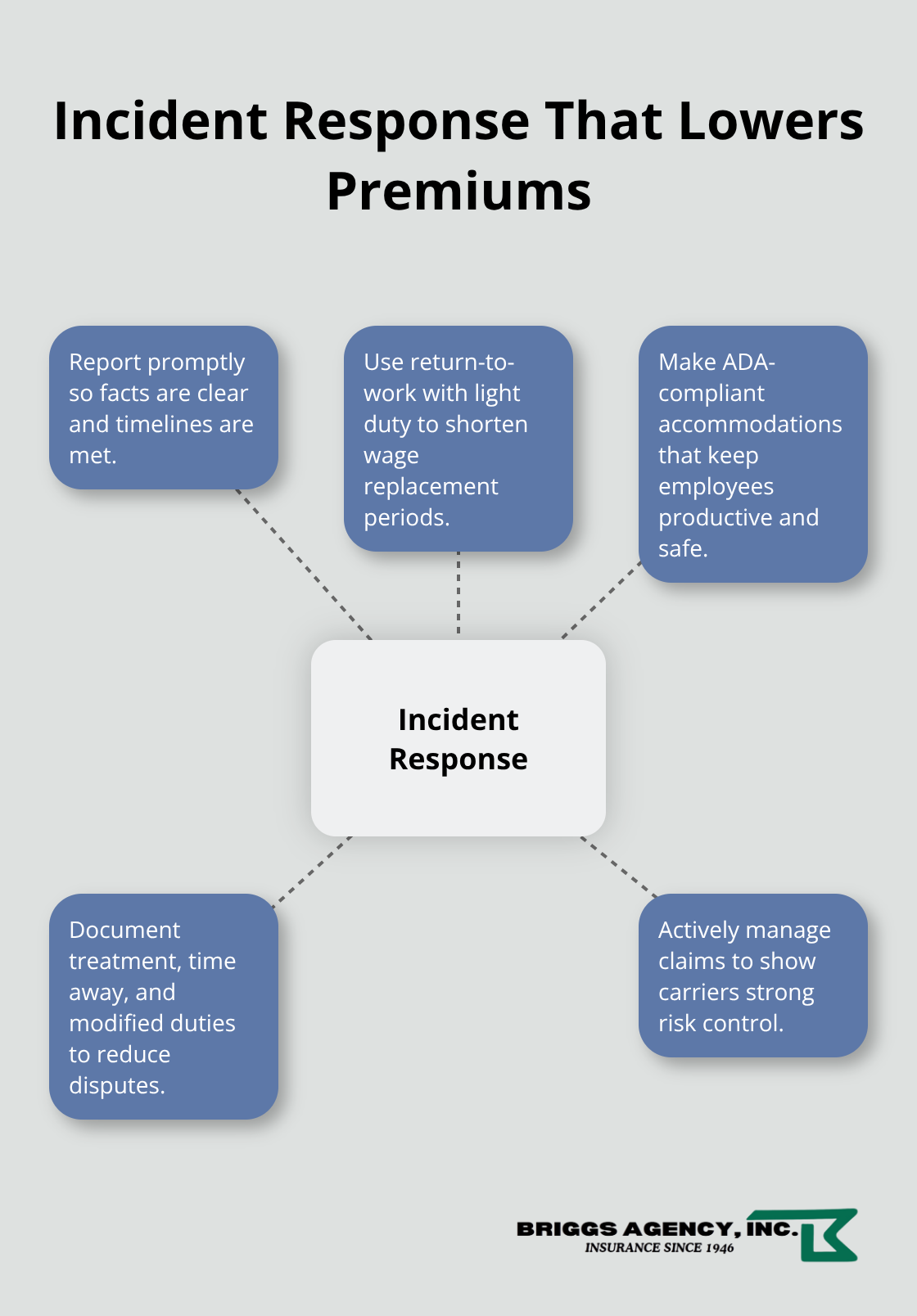
Indiana employers must follow ADA guidelines when making accommodations, but reasonable modifications like moving an injured line cook to prep work temporarily or assigning a server with a sprained ankle to host duties protect both the employee and your premium. Document everything: the injury description, medical treatment received, time away from work, and the modified duties assigned. This documentation demonstrates that you take safety seriously and helps your carrier understand your risk management practices when they review your account at renewal.
A restaurant that reports promptly, manages claims actively, and brings employees back to work efficiently shows carriers that you’re serious about risk management, which translates directly to lower renewal quotes and access to those 20 percent discounts available after three claim-free years.
Final Thoughts
Restaurant workers compensation in Indiana protects your team and your business, but compliance alone won’t control costs or keep your operation running smoothly. The real value comes from treating safety as a business priority, not just a regulatory checkbox. Your experience modification rating compounds over time based on claim frequency, and prevention strategies directly reduce both injuries and premiums-a restaurant that stays claim-free for three years can access discounts up to 20 percent, which means the investment in safety training, equipment maintenance, and incident response systems pays for itself many times over.
Proactive risk management demonstrates to your carrier that you take safety seriously, which influences renewal pricing and your access to competitive rates. When you report injuries promptly, implement return-to-work programs, and document your safety practices, you build a claims history that reflects your commitment to protecting your employees. This approach also reduces turnover because employees feel safer and more valued when you invest in their wellbeing.
We at Briggs Agency, Inc. understand the unique risks Indiana restaurants face, from seasonal hiring spikes to regional weather patterns that affect property exposure. Our local agents can review your current coverage, explain how your premiums are calculated, and identify gaps that leave you exposed. Contact us today to discuss how we can help you build a restaurant workers compensation Indiana strategy that fits your operation and budget.
The information provided in this blog is for general informational purposes only and does not constitute legal, financial, or insurance advice. Coverage options, terms, and availability may vary. Please consult with a licensed professional for advice specific to your situation.
Artificial intelligence may have been used to generate text and images in some blog articles.

