
Restaurant Loss Prevention: Reducing Risk In Food Service
Running a restaurant means juggling dozens of moving parts every single day. From food safety to employee management, the risks are real and costly if left unaddressed.
At Briggs Agency, Inc., we’ve seen firsthand how restaurant loss prevention directly impacts your bottom line. This guide walks you through the most common threats your business faces and the practical strategies that actually work.
What Puts Your Restaurant at Financial Risk
Foodborne Illness Outbreaks and Contamination
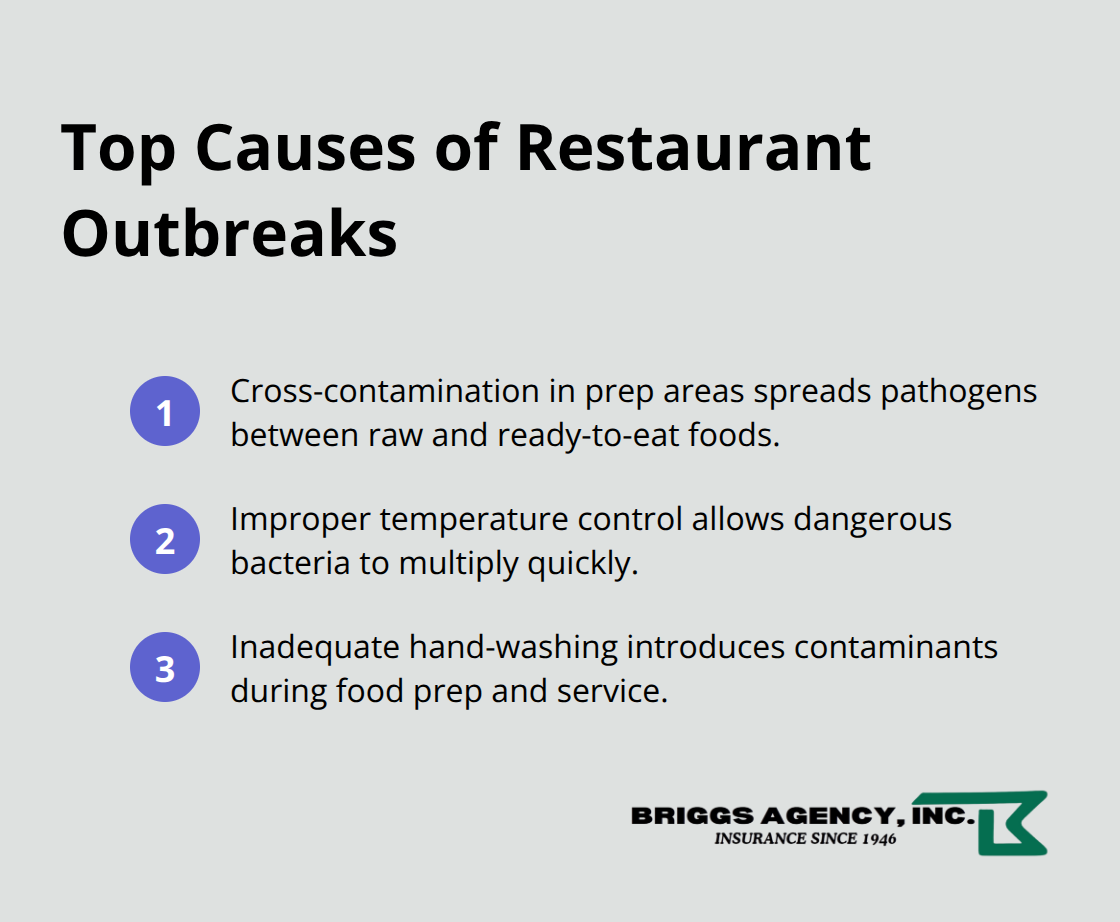
Foodborne illness outbreaks represent the most visible threat to restaurants, but the financial damage extends far beyond headlines. The CDC reports that foodborne illness costs the U.S. food industry approximately $15.5 billion annually in medical expenses and lost productivity. A single outbreak shuts down operations for weeks, destroys your reputation, and triggers lawsuits that drain resources for years. Cross-contamination in prep areas, improper temperature control, and inadequate hand-washing practices cause most outbreaks. Your staff needs hands-on training specific to your menu and equipment, not generic food safety videos watched once during onboarding.
Temperature logs demand daily checks, not weekly ones. Walk-in coolers fail without warning, and a thermometer on the wall won’t catch the problem until spoilage occurs. You need active monitoring systems that alert you to temperature fluctuations before food spoils.
Workplace Injuries and Safety Hazards
Workplace injuries cost restaurants an average of 42,000 dollars per incident when accounting for medical bills, workers’ compensation claims, and lost productivity, according to the National Safety Council. Slip-and-fall accidents dominate this category because kitchens are inherently wet and fast-paced environments where staff rush. Proper footwear requirements and non-slip flooring in high-traffic zones are non-negotiable, not nice-to-haves. Burns, cuts, and repetitive strain injuries follow close behind, often from inadequate training on equipment operation and ergonomics. Staff who understand proper lifting techniques and equipment safety reduce injury rates significantly.
Theft and Inventory Shrinkage
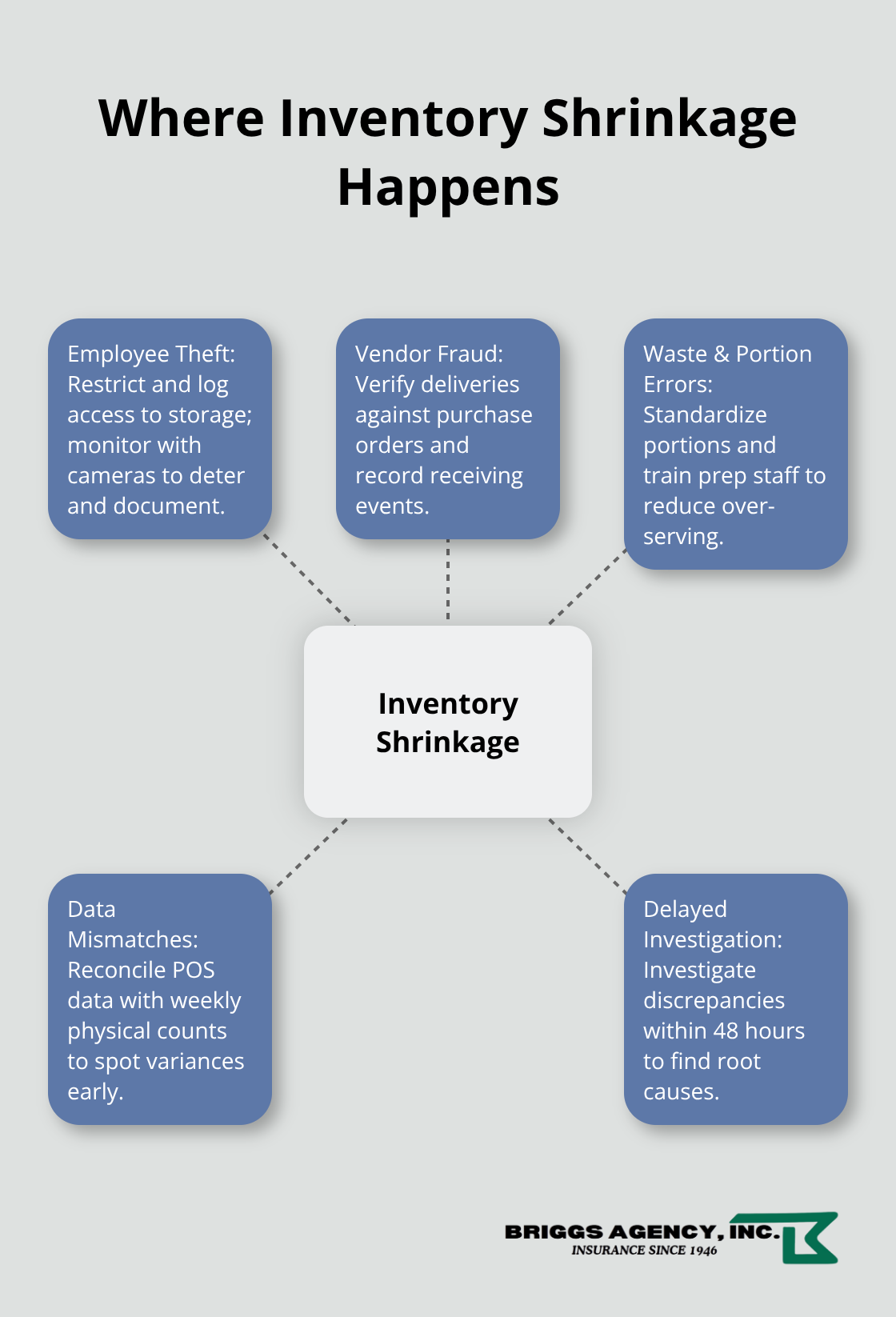
Theft and inventory shrinkage drain 2 to 4 percent of annual revenue for most restaurants, per the National Restaurant Association. This includes employee theft, vendor fraud, and simple waste from poor portion control. Without detailed inventory tracking against actual sales, you won’t know whether missing stock reflects theft, waste, or accounting errors. Point-of-sale data should match physical counts weekly, and discrepancies demand immediate investigation, not annual audits. Identifying where your money actually goes sets the foundation for the loss prevention strategies that follow.
Loss Prevention Strategies That Work
Food Safety Training Tied to Your Operation
Food safety training works only when staff understand why temperature control matters to their paycheck and the restaurant’s survival, not because a poster says so. Implement a kitchen-specific training program tied directly to your menu and equipment, with quarterly refresher sessions that cover actual incidents from your operation. Staff who handle raw proteins need different knowledge than those working the fryer station.
Temperature monitoring should happen twice daily with written logs, and any reading below 41 degrees Fahrenheit or above 45 degrees Fahrenheit triggers immediate investigation and corrective action. A wireless temperature monitoring system that sends alerts to your phone works better than relying on wall thermometers checked during closing shift when energy runs low. Cross-contamination prevention requires color-coded cutting boards for different food types and separate hand-washing stations near prep areas, not a single sink shared with dishwashing. This costs under 500 dollars to implement but prevents outbreaks that cost tens of thousands.
Hazard Management and Workplace Safety
Workplace safety demands a written hazard management plan specific to your restaurant, not generic restaurant industry standards. Walk your kitchen with your safety-conscious staff member and identify every slip hazard, sharp edge, and burn risk, then document controls for each one. Non-slip flooring in high-traffic zones costs 2 to 8 dollars per square foot and prevents the slip-and-fall injuries that dominate restaurant claims.
Proper footwear policies stating no canvas shoes or sandals keep this control in place. Staff training on equipment operation and proper lifting techniques reduces injury rates significantly. These investments pay for themselves through lower workers’ compensation premiums and reduced downtime from injuries.
Inventory Controls and Theft Prevention
For theft and shrinkage, your point-of-sale system should generate daily inventory reports showing what sold versus what you recorded, with weekly physical counts of high-value items like spirits, seafood, and steaks. Staff access to storage areas must be restricted and logged, with cameras monitoring receiving and storage zones where most internal theft occurs. When discrepancies appear, investigate within 48 hours to identify whether the problem stems from waste, portion control errors, or employee theft, then address the root cause rather than assuming the worst about your team.
Implementing these strategies creates the foundation for sustainable loss prevention. The next section explores how technology amplifies these efforts and provides real-time visibility into your restaurant’s operations.
Technology and Tools for Restaurant Loss Prevention
Point-of-Sale Systems and Real-Time Data
Point-of-sale systems generate the data you need to catch problems before they become expensive. A modern POS tracks every item sold, when it sold, and which employee rang it up, then compares that against your physical inventory counts. When your system shows 40 steaks sold but physical count reveals only 35 steaks missing from inventory, you’ve identified a 5-steak discrepancy that demands investigation within 48 hours.
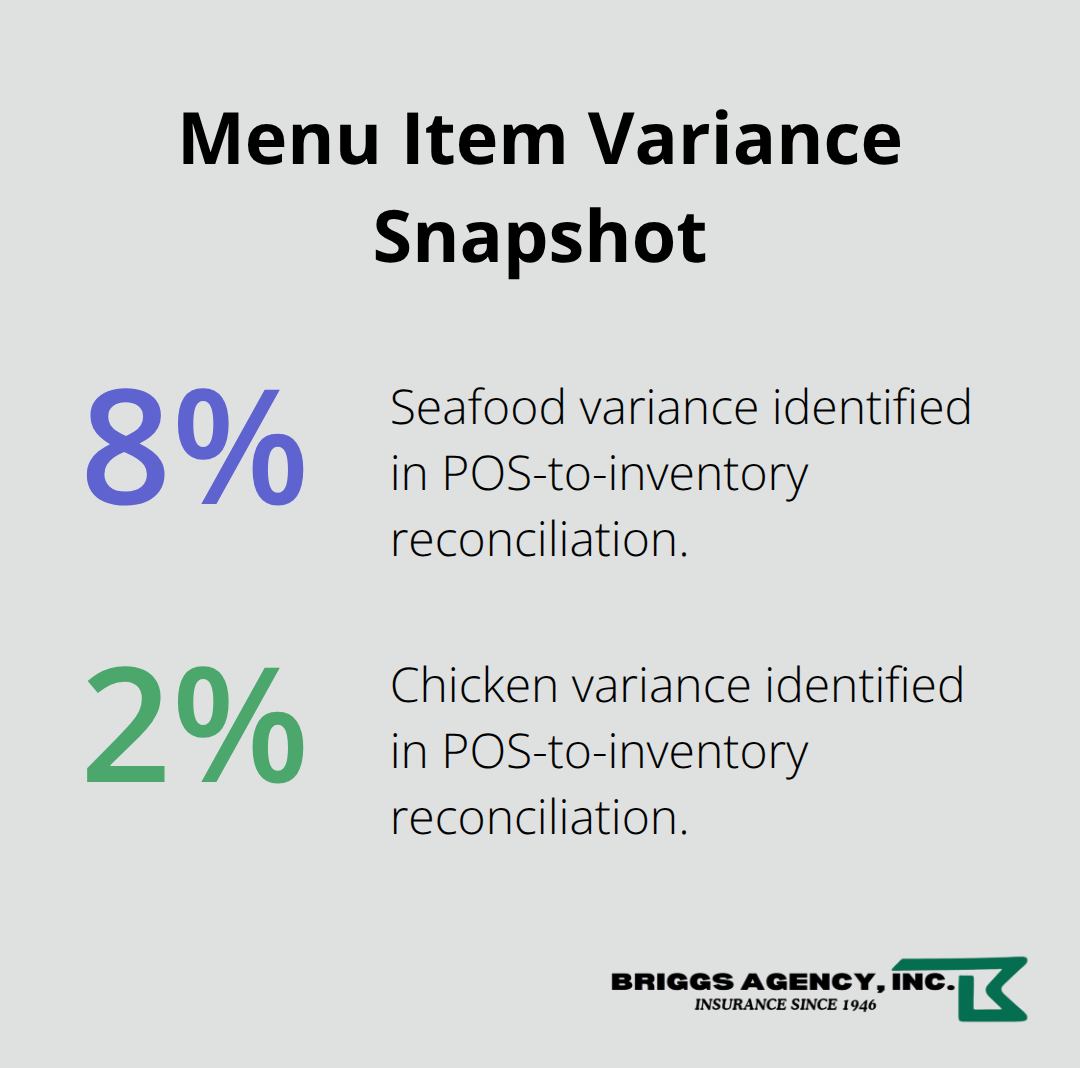
Systems like Toast and Square provide daily reconciliation reports showing variance percentages, and restaurants using daily reconciliation catch shrinkage faster than those relying on monthly audits. The data also reveals which menu items have the highest variance rates, pointing you toward specific training gaps or theft patterns. If your seafood consistently shows 8 percent variance while chicken shows 2 percent, your prep team needs targeted training on portion control for that category, not blanket accusations of theft.
Security Cameras and Strategic Monitoring
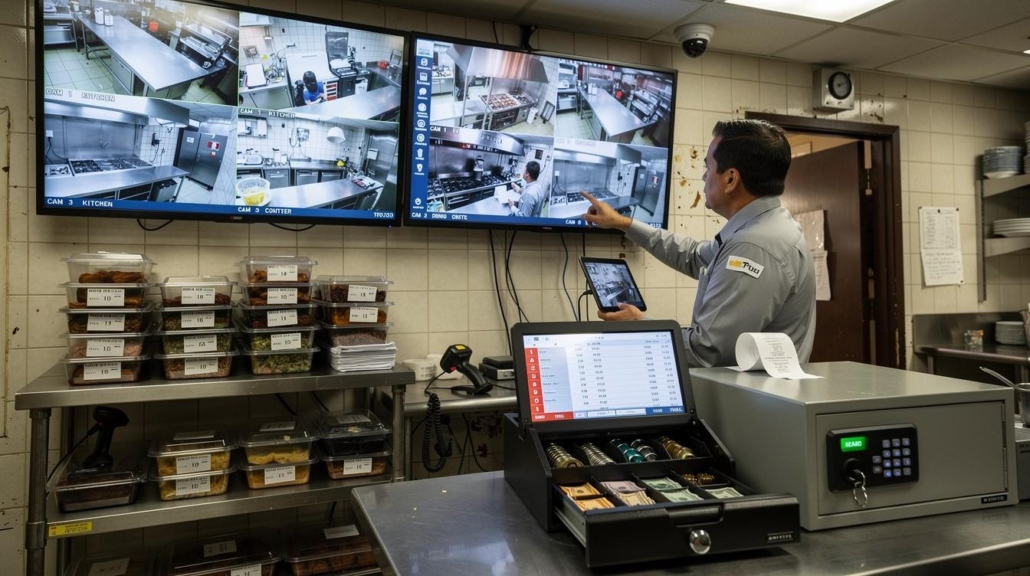
Security camera systems work best when positioned strategically rather than everywhere. Install cameras in receiving areas where vendor fraud happens, storage zones where employee theft concentrates, and cash handling stations where money disappears. High-resolution cameras recording at 30 frames per second cost between 400 and 800 dollars per unit installed, but they deter theft more effectively than any policy because staff know their actions are documented.
Cloud-based systems store footage for 30 to 90 days depending on your storage plan, and many allow remote viewing from your phone so you can monitor operations during days off. The visibility alone shifts staff behavior toward accountability without requiring constant oversight.
Employee Scheduling Software and Labor Cost Control
Employee scheduling software prevents losses by eliminating overstaffing during slow periods and reducing the scheduling errors that create overtime payouts. Systems like Deputy and ZipSchedule integrate with payroll to show labor cost as a percentage of sales in real time, revealing which shifts drain profitability. When you see that Tuesday lunch consistently runs at 32 percent labor cost while your target is 28 percent, you adjust staffing levels immediately rather than discovering the problem during monthly accounting reviews.
These tools also log who worked which shift and when, creating accountability that reduces time theft and scheduling manipulation. The combination of precise POS data, strategic camera placement, and integrated scheduling creates visibility across your operation, transforming loss prevention from reactive damage control into proactive cost management.
Final Thoughts
Restaurant loss prevention works best when you treat it as an ongoing system rather than a one-time fix. A single foodborne illness outbreak costs tens of thousands in medical claims and legal fees, one serious workplace injury raises your workers’ compensation premiums for years, and inventory shrinkage of 2 to 4 percent annually represents thousands of dollars walking out the door undetected. Start by conducting a risk assessment specific to your restaurant-walk your kitchen with your management team, review your POS data for shrinkage patterns, and identify which areas demand immediate attention.
Implement one major control at a time rather than overhauling everything simultaneously, and you’ll see measurable results within weeks. Temperature monitoring systems, non-slip flooring, and daily inventory reconciliation each address specific threats to your bottom line. Your insurance coverage forms the final layer of protection for risks you can’t prevent entirely (even the best loss prevention systems can’t eliminate every possibility).
We at Briggs Agency, Inc. specialize in restaurant insurance and understand the specific exposures your business faces. Our local agents work with you to identify coverage gaps and ensure your policies match your actual risk profile, not generic industry standards. Reach out to discuss how comprehensive coverage complements your restaurant loss prevention efforts and protects what you’ve built.
The information provided in this blog is for general informational purposes only and does not constitute legal, financial, or insurance advice. Coverage options, terms, and availability may vary. Please consult with a licensed professional for advice specific to your situation.
Artificial intelligence may have been used to generate text and images in some blog articles.

