

Restaurant Insurance Quotes: Compare Top Rates Now
Running a restaurant means managing countless moving parts, and one of the most overlooked is proper insurance coverage. Without the right protection, a single incident-a customer injury, equipment failure, or property damage-can threaten your entire business.
At Briggs Agency, Inc., we help restaurant owners find restaurant insurance quotes that actually match their needs. Getting accurate quotes and comparing your options is the first step toward real peace of mind.
Why Your Restaurant Needs Real Insurance Protection
Real Risks That Threaten Your Business
A customer slips on a wet floor and breaks their arm. Your walk-in cooler fails overnight and spoils thousands of dollars in inventory. A kitchen fire damages the building structure. These aren’t hypothetical scenarios-they happen regularly in restaurants across the country. Without proper insurance, that single incident becomes an existential threat to your business.
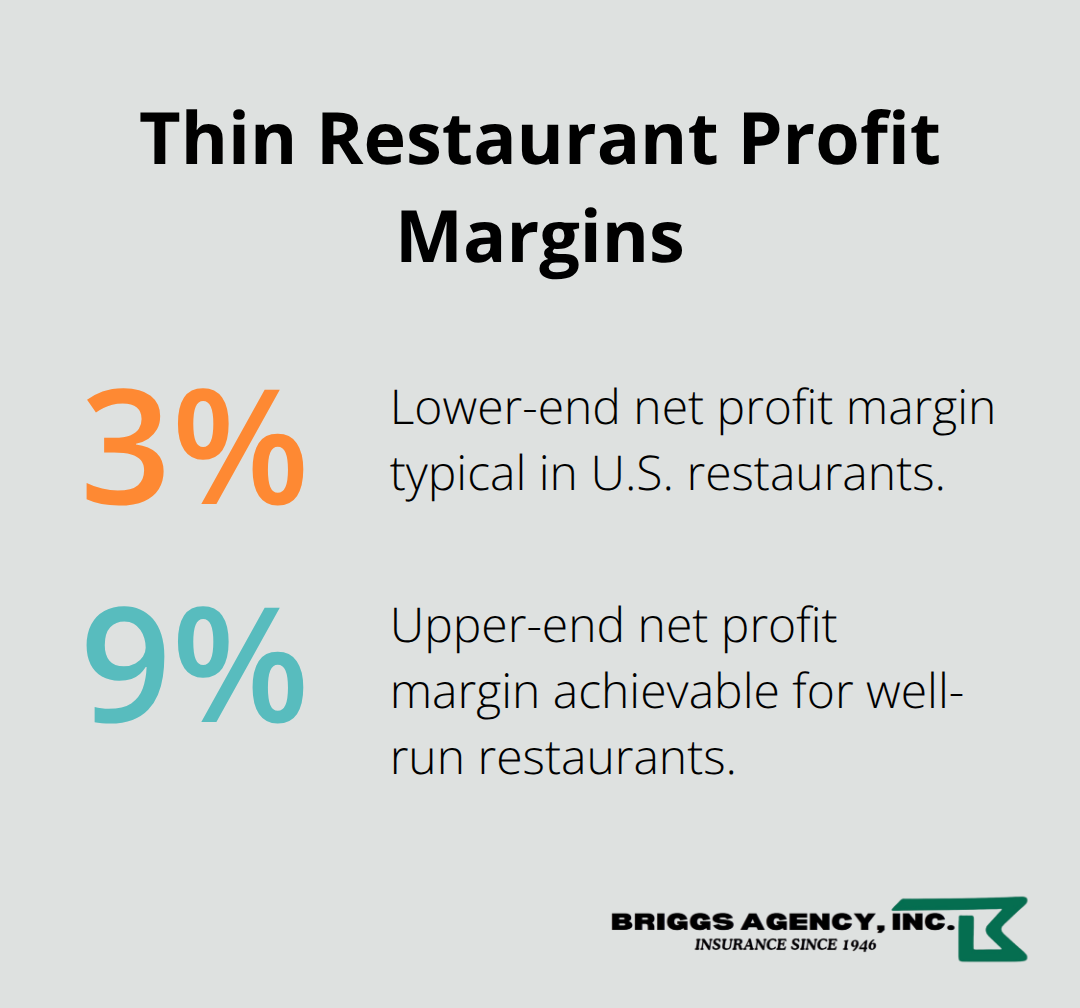
The restaurant industry operates on thin margins, typically ranging from 3% to 9% net profit, which means most owners lack the cash reserves to absorb major losses. A liability claim from a customer injury can easily exceed $100,000 when medical expenses and legal fees combine. Property damage claims average $50,000 to $200,000 depending on the extent of the loss. Insurance isn’t optional-it’s the difference between recovery and closure.
Legal Requirements You Can’t Ignore
State and local regulations make insurance mandatory, not optional. Every state requires workers compensation insurance if you employ staff, and many jurisdictions mandate general liability coverage before you can obtain a business license. Indiana, where we operate, requires workers compensation for any business with employees.
Beyond legal requirements, lenders and landlords won’t finance or lease to restaurants without proof of adequate coverage. Your lease agreement almost certainly includes an insurance requirement clause that specifies minimum coverage amounts and names the landlord as an additional insured. Failing to maintain required coverage can result in fines ranging from $500 to $5,000 per violation, lease termination, or loss of your operating license.
Protecting Your Personal Assets
Operating without proper insurance exposes your personal assets-your home, savings, and future earnings-to liability judgments. Courts regularly award damages that far exceed business assets, meaning creditors can pursue personal property. A single lawsuit can wipe out decades of personal wealth (and your ability to rebuild).
Getting accurate quotes from multiple carriers and understanding exactly what each policy covers protects both your business legally and your personal finances practically. The next step involves identifying which specific coverage types your restaurant actually needs.
The Coverage Your Restaurant Actually Needs
General Liability: Your First Line of Defense
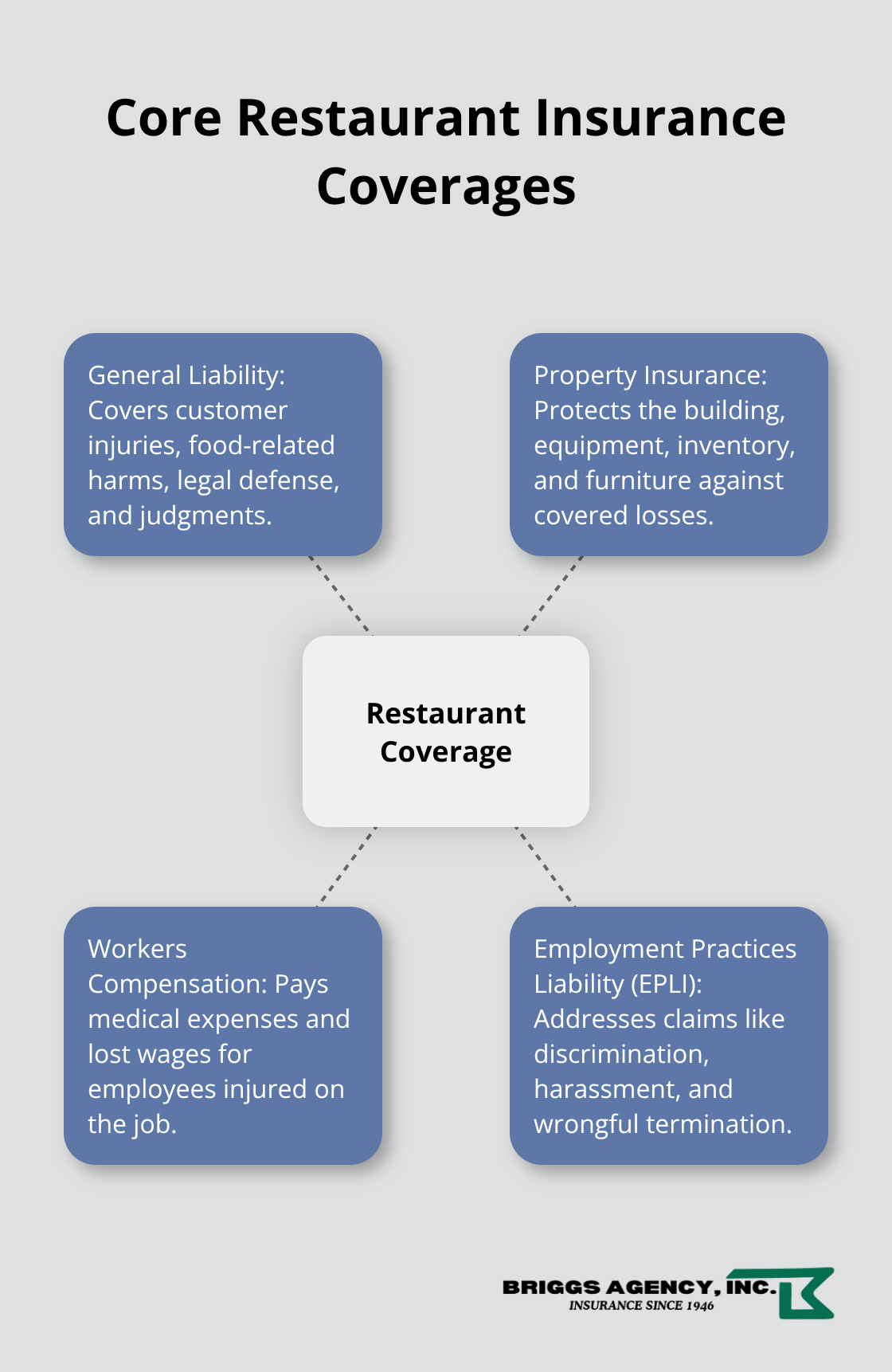
General liability coverage protects your restaurant when a customer gets injured on your premises or claims your food caused them harm. This covers medical expenses, legal defense costs, and court judgments-not just the occasional slip-and-fall. According to the National Restaurant Association, foodborne illness claims and customer injury lawsuits represent the second-largest expense category for restaurants after labor costs.
Most restaurants need minimum coverage of $1 million per occurrence and $2 million aggregate, though higher-volume establishments should consider $2 million per occurrence. Your lease agreement almost certainly requires you to name the landlord as an additional insured on this policy, which means the coverage extends to protect them as well.
Property Insurance: Protecting Your Physical Assets
Property insurance covers your building, equipment, inventory, and furniture-the physical assets that generate revenue. A kitchen fire, roof collapse, or equipment failure can cost $75,000 to $300,000 depending on your restaurant size and equipment age. Standard property policies don’t cover everything, so you need to specify high-value items like commercial ovens, refrigeration units, and POS systems.
Spoilage coverage is critical for restaurants with significant inventory; it reimburses you when equipment failure causes food loss. Many restaurant owners underestimate their property values during the quote process and end up underinsured-document every piece of equipment and its replacement cost when gathering information for quotes.
Workers Compensation: A Legal Requirement with Real Impact
Workers compensation insurance is legally mandatory in Indiana for any restaurant with employees, and it covers medical expenses and lost wages when an employee gets injured on the job. Restaurant workers face higher injury rates than most industries; restaurants experience higher injury rates than the national average.
A serious kitchen burn or slip injury can cost $40,000 to $150,000 in medical bills and legal liability. Without proper coverage, these expenses fall directly on your business.
Employment Practices Liability: Protecting Against Workplace Claims
Employment practices liability insurance protects against claims of discrimination, wrongful termination, or harassment-issues that arise more frequently in high-turnover restaurant environments. This coverage addresses the reality of managing diverse teams and the legal exposure that comes with employment decisions.
When you request quotes, bundle these coverages together, as carriers often provide discounts when you stack multiple policies. The key to accurate quotes is providing detailed information about your payroll, number of employees, job duties, and safety procedures to each carrier you contact. This information directly affects your premium rates and determines whether you receive adequate coverage limits for your specific operation.
How to Get Accurate Restaurant Insurance Quotes
Compile Your Restaurant’s Operational Details
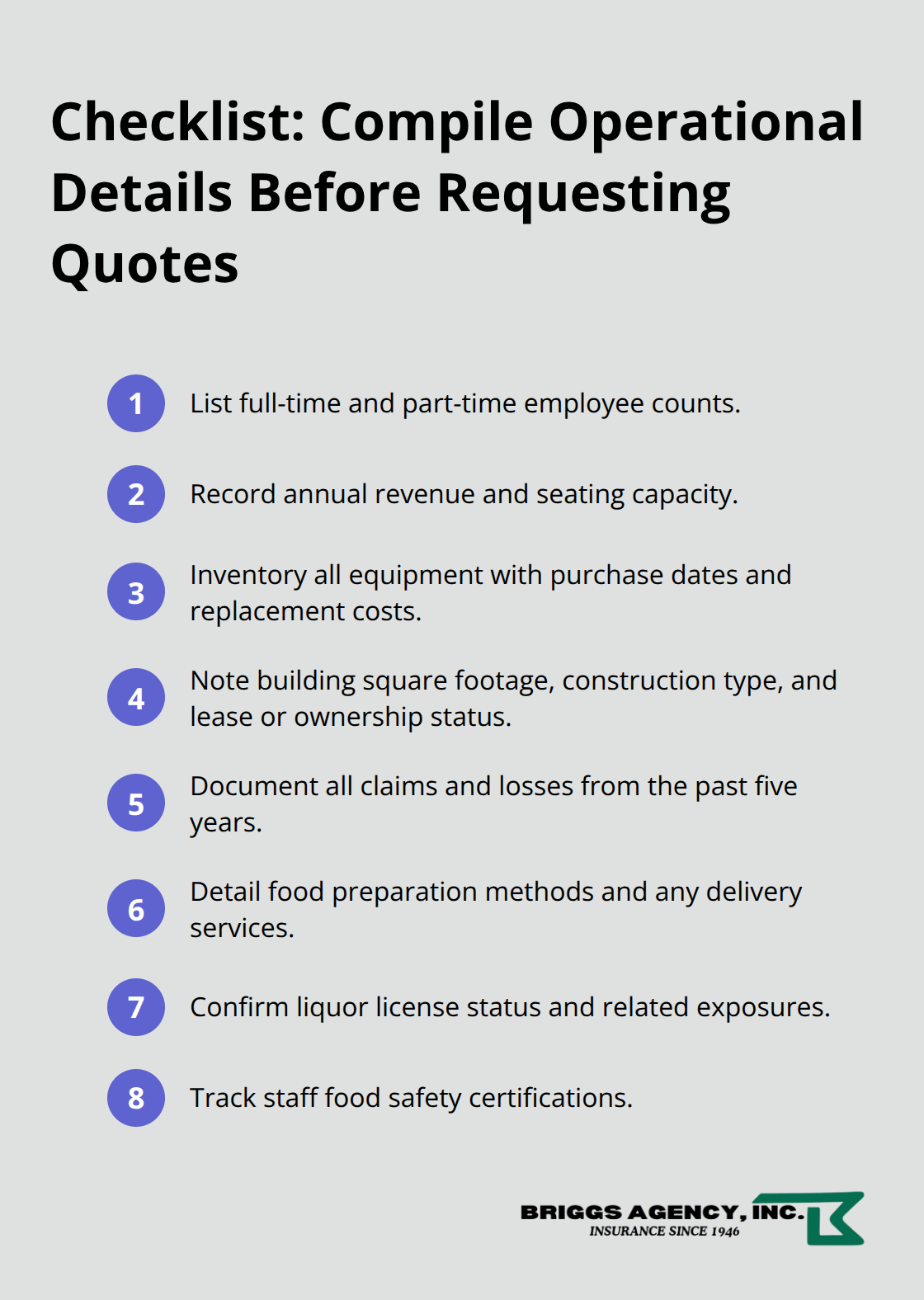
Requesting quotes without proper preparation wastes everyone’s time and produces inaccurate pricing. Insurance carriers base their rates on specific operational details, and incomplete information forces them to estimate-which means your quotes won’t reflect your actual risk profile. Start by documenting your restaurant’s exact staffing numbers, including full-time and part-time employees, since payroll directly affects workers compensation premiums. Record your annual revenue and seating capacity, as these metrics determine your liability exposure. List every piece of equipment in your kitchen with purchase dates and replacement costs-commercial ovens, refrigeration units, grills, and POS systems all factor into property insurance calculations. Note your building’s square footage, construction type, and whether you own or lease the space. Document any prior claims or losses from the past five years, including minor incidents, since carriers pull this history during underwriting. Include details about your food preparation methods, whether you have a liquor license, if you offer delivery services, and what food safety certifications your staff maintains. This level of detail takes time to compile, but it eliminates the frustration of receiving quotes that don’t match your actual situation.
Request Identical Coverage Across All Carriers
Many restaurant owners contact three to five carriers simultaneously and compare quotes side-by-side, but this approach fails if you’re not comparing identical coverage. A $500 monthly premium looks attractive until you realize it includes a $10,000 deductible and only $500,000 in general liability coverage-far below your actual needs. Request quotes that specify the same coverage limits across all carriers so you’re genuinely comparing apples to apples. Ask each carrier to explain what their policy excludes, since standard restaurant policies often exclude liquor liability, spoilage coverage, or high-value equipment without additional riders.
Verify Coverage Classifications and Rates
When you receive quotes, verify that each one includes workers compensation at the rate your state calculates for restaurants. A quote that seems significantly lower than others usually contains coverage gaps or higher deductibles that create financial risk when claims occur. Reputable agents will be transparent about pricing and won’t oversell unnecessary coverage. Review the deductibles carefully; a $2,500 deductible saves on premiums but means you pay that amount out-of-pocket before coverage kicks in, so choose a level your business can actually absorb during a loss.
Compare at Least Three Carriers
Try requesting quotes from at least three carriers, then ask each one to explain how their rates compare to competitors. This approach reveals which carriers offer competitive pricing for your specific operation and which ones price above market. Carriers that represent multiple top-rated insurers (rather than just one) can often deliver more competitive options tailored to your restaurant’s unique risk profile.
Final Thoughts
Your restaurant’s protection depends on three essential coverage types that work together to shield both your business and personal finances. General liability handles customer injuries and food-related claims, property insurance protects your building and equipment, and workers compensation covers your staff-employment practices liability rounds out your protection by addressing workplace disputes that arise in high-turnover environments. A single incident without proper coverage can force closure, so these policies represent the difference between recovery and financial devastation.
Accurate restaurant insurance quotes require you to document your staffing numbers, equipment inventory, annual revenue, and prior claims before contacting carriers. Request identical coverage limits across multiple carriers so you compare real options rather than chasing the lowest premium that might leave you underinsured, and verify that each quote includes the specific coverage types your operation needs. Deductibles matter significantly-choose a level your business can absorb during a loss rather than selecting the lowest premium available.
We at Briggs Agency, Inc. have helped restaurant owners across Indiana find competitive restaurant insurance quotes since 1946, and our independent agency represents multiple top-rated carriers to match your unique risk profile. Our local agents understand the specific challenges restaurants face and deliver both competitive pricing and the right protection for your business. Contact Briggs Agency, Inc. to request quotes and receive the hands-on guidance that transforms insurance from an overwhelming task into a straightforward decision.
The information provided in this blog is for general informational purposes only and does not constitute legal, financial, or insurance advice. Coverage options, terms, and availability may vary. Please consult with a licensed professional for advice specific to your situation.
Artificial intelligence may have been used to generate text and images in some blog articles.

