

Restaurant Insurance Costs: Balancing Premiums And Protection
Restaurant insurance costs often feel like a puzzle with no clear answer. You want solid protection without overpaying, but understanding what actually drives your premiums is half the battle.
At Briggs Agency, Inc., we’ve helped countless restaurant owners find that balance. This guide walks you through the real factors affecting your rates and practical ways to lower them without sacrificing coverage.
What Pushes Restaurant Insurance Rates Up
Location and Local Risk Factors
Your location matters more than most restaurant owners realize. Restaurants in high-crime areas or flood-prone zones pay significantly higher premiums than those in safer neighborhoods. Urban locations typically cost 20-40% more than suburban counterparts, according to insurance industry data. If your restaurant sits in a building with outdated electrical systems or poor fire suppression equipment, insurers will flag that immediately and adjust your rates accordingly. Local risk factors extend beyond crime-they include weather patterns, proximity to water sources, and even the density of other restaurants nearby, which affects competition for claims data in your area.
Kitchen Operations and Cuisine Type
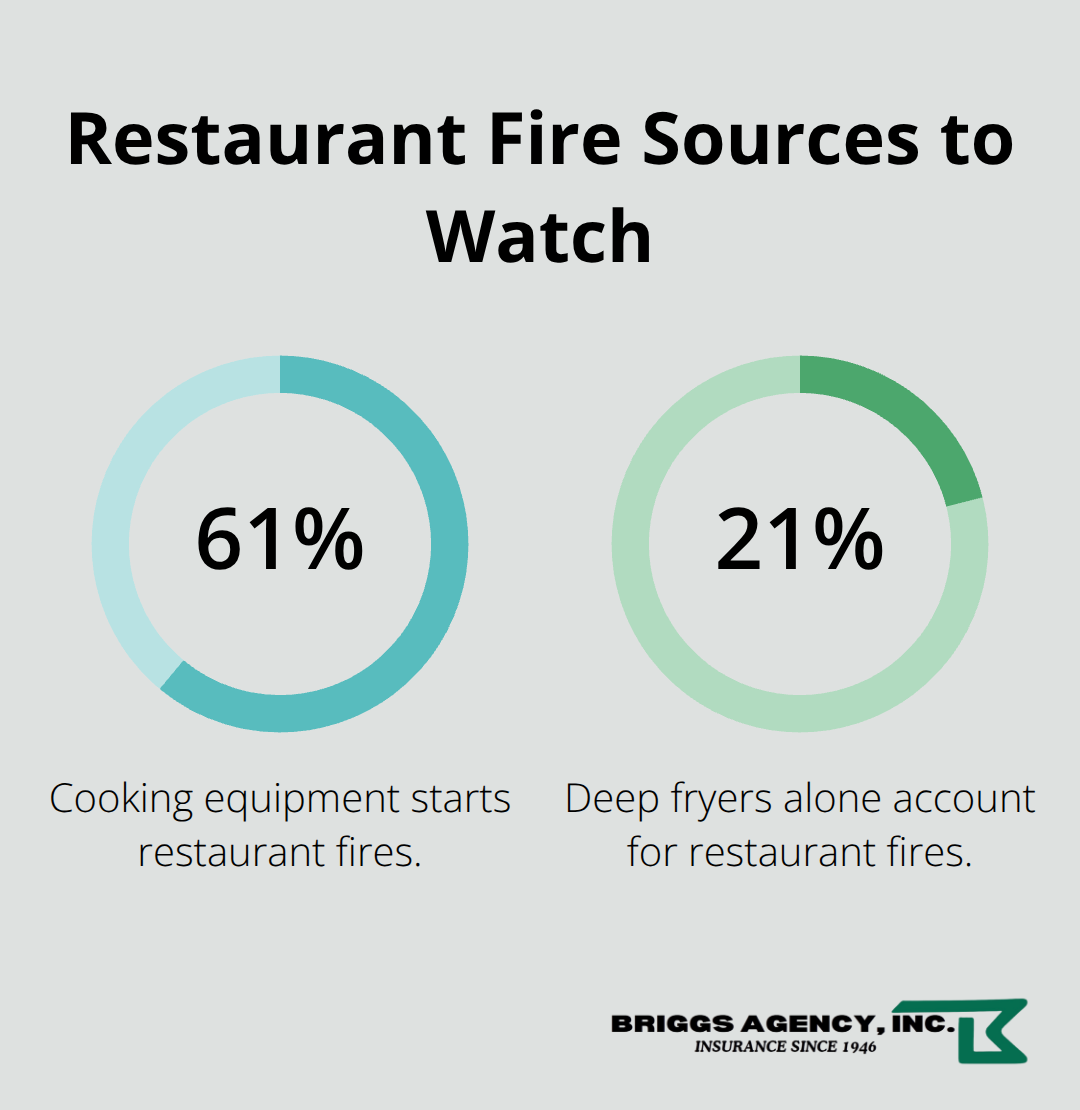
Your kitchen operations and cuisine type directly influence what you’ll pay. A steakhouse with high-volume grilling operations faces different hazards than a pasta restaurant, and insurers price accordingly. Cooking equipment starts 61% of restaurant fires, with deep fryers alone accounting for 21%. Restaurants with wok stations, open flames, or extensive deep-frying operations pay more because the risk is measurably higher.
Employee Count and Payroll Size
Your employee count and total payroll size affect workers compensation costs, which typically represent 25-35% of overall restaurant insurance expenses. A 20-person operation with $400,000 in annual payroll will have substantially different rates than a 50-person restaurant with $1.2 million in payroll. This variable scales directly with your staffing decisions and wage structure.
Claims History and Building Condition
Your claims history carries enormous weight in rate calculations. One serious incident can increase premiums by 50% or more for three to five years. Insurers view restaurants with clean records as lower risk, rewarding them with better rates. Building age and safety features round out the equation-a restaurant in a recently renovated space with modern fire detection systems, updated electrical work, and current building code compliance will qualify for better rates than one in an older structure with deferred maintenance.
These five factors work together to create your baseline premium. Understanding each one helps you identify where you have actual control over costs, which is exactly what we’ll address next.
How to Actually Cut Your Restaurant Insurance Costs
Prove Your Restaurant Is Safer Than Average
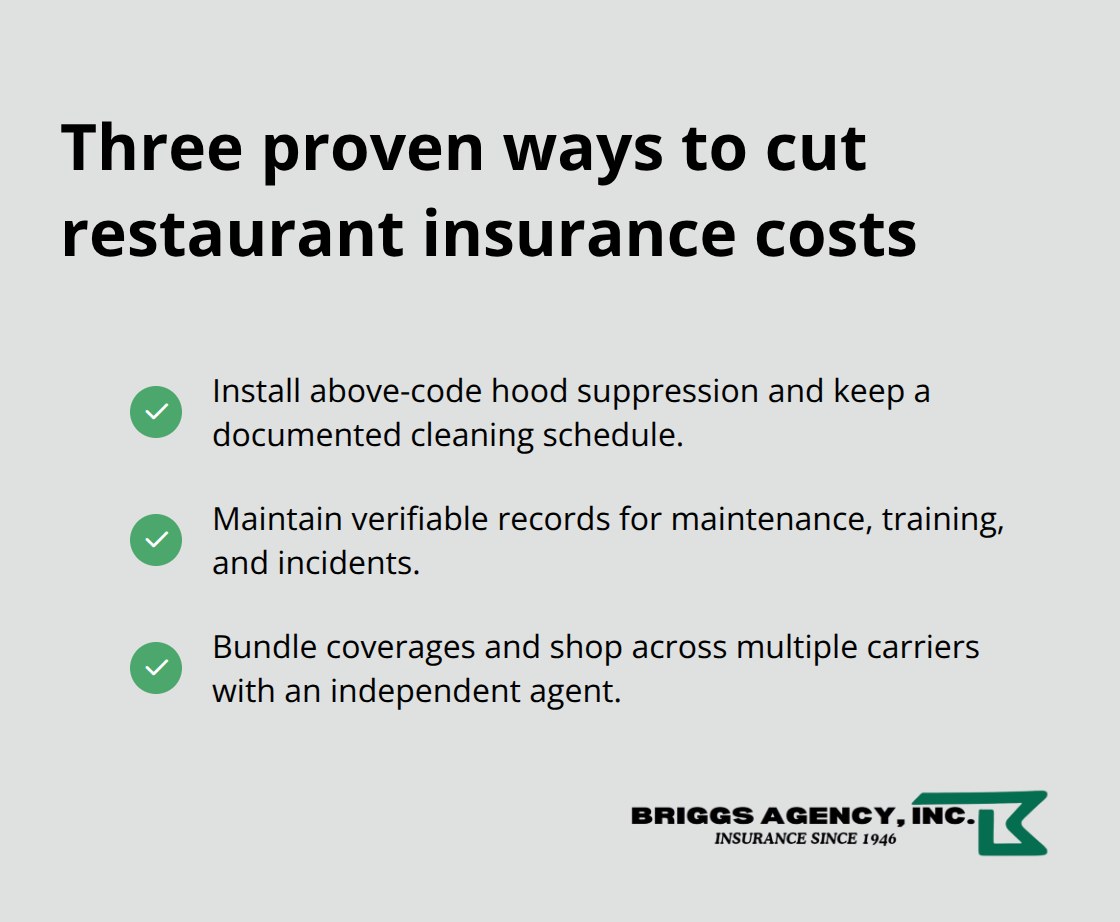
Insurers reward restaurants that implement specific, measurable safety improvements rather than simply meeting minimum code requirements. Install hood suppression systems that exceed code requirements, establish a documented cleaning schedule for cooking equipment, and require staff to complete food safety certifications like ServSafe. These aren’t just nice-to-haves-restaurants with documented safety programs see premium reductions of 10-15% compared to those without them. Your insurance agent needs to see written procedures for temperature control, chemical storage, and emergency response, not just hear that you care about safety.
Document Everything Insurers Care About
Documentation matters more than most owners realize because insurers make rate decisions based on what they can verify. Maintain detailed records of equipment maintenance, staff training completion dates, and any safety incidents with how you resolved them. When an insurer reviews your file, they’re looking for evidence that you take risk seriously. This documentation also protects you if you ever need to file a claim-clear records of what happened and when speed up the process significantly.
Bundle Your Coverages Strategically
Most restaurant owners carry general liability, workers compensation, and property insurance separately, but bundling these with a single carrier typically saves 15-25% compared to the total of separate policies. The savings come from reduced administrative costs that carriers pass along to you. Work with an independent agent who represents multiple carriers rather than being locked into one company’s rates. An agent working with ten different insurers can find carriers that specialize in restaurants and price accordingly-some carriers actively compete for restaurant business while others avoid it entirely, which means your rate depends heavily on who’s quoting you.
Invest in Employee Training Programs
Well-trained staff create fewer claims, and insurers recognize this when renewing your policy. Restaurants that invest in quarterly safety training and proper equipment operation instruction experience fewer workers compensation claims. Your team’s competence directly affects your bottom line through lower premiums and reduced incident frequency. This training investment pays for itself through rate reductions alone, before you factor in the operational benefits of having a safer, more skilled workforce.
These concrete actions address the three areas where restaurant owners actually control their costs: proving safety, documenting risk management, and shopping aggressively across carriers. But even owners who execute all three perfectly often miss significant coverage gaps that leave them exposed to unexpected expenses.
What Coverage Gaps Actually Cost Restaurant Owners
Liquor Liability Protection
Most restaurant owners assume their general liability policy covers alcohol-related incidents. It doesn’t. If a customer becomes intoxicated at your bar and causes an accident outside your restaurant, or if someone gets ill from alcohol you served, your standard general liability won’t cover it. A single liquor liability claim can run $50,000 to $500,000 depending on severity. The cost of liquor liability coverage varies based on several factors including location, type of establishment, coverage limits, and insurance providers. Many owners think bundling their policies means comprehensive protection, then face shock when their insurer denies a claim.
Workers Compensation Requirements
Workers compensation requirements vary by state, but most states require coverage once you hit a specific employee threshold-typically three to five employees depending on your location. Indiana requires coverage for restaurants with three or more employees.
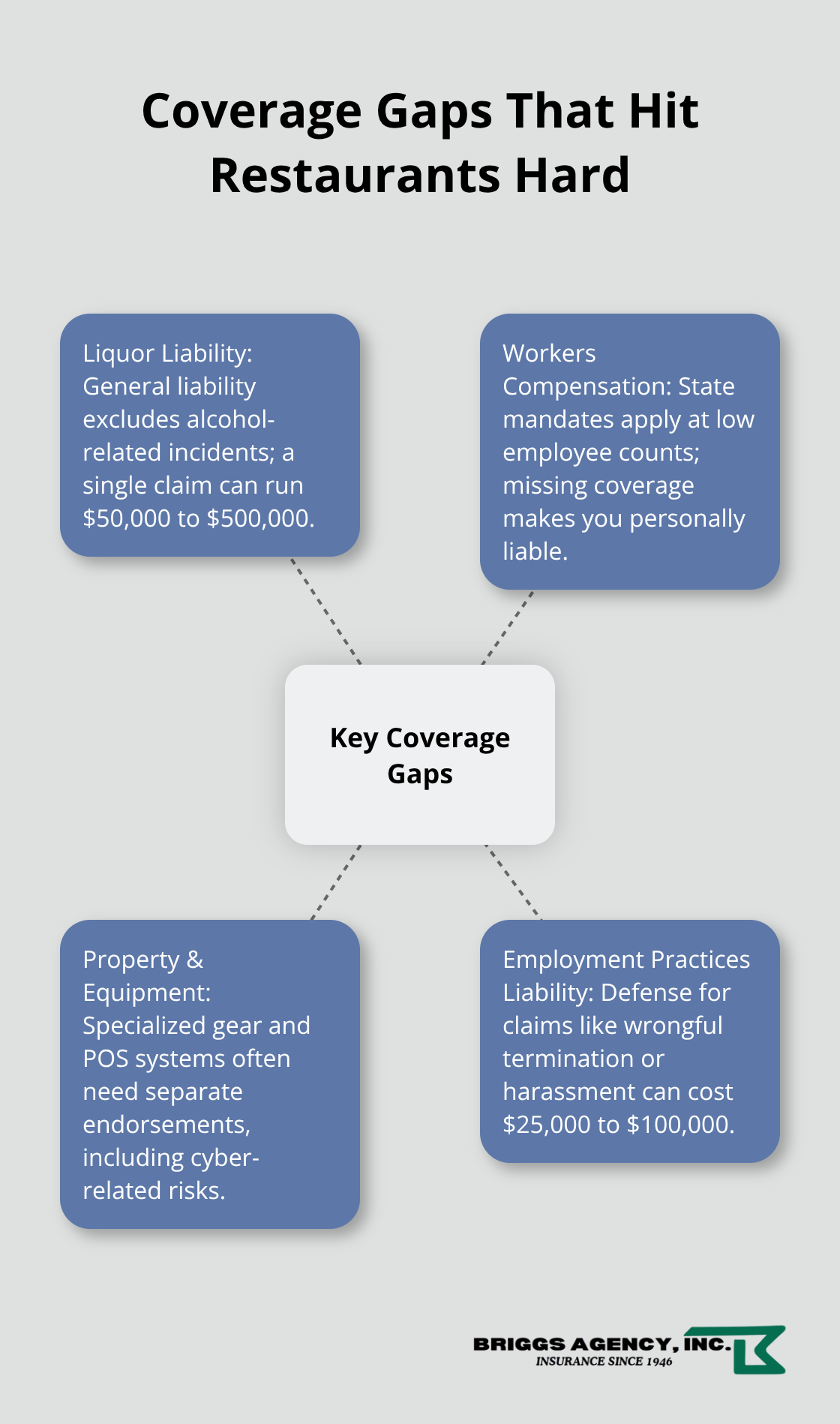
Many owners either skip this entirely or underestimate their payroll when calculating premiums, which leaves them either uninsured or underinsured. If an employee gets injured and you lack proper coverage, you become personally liable for medical bills and lost wages. This exposure can bankrupt a small restaurant operation.
Commercial Property and Equipment Coverage
Your building’s property insurance covers the structure, but it often excludes or limits coverage for specialized restaurant equipment like commercial refrigeration, ovens, and grills. If a fire destroys your $40,000 walk-in cooler, you’ll need specific equipment coverage to recover that cost. Point-of-sale systems have become critical infrastructure for modern restaurants, yet most owners don’t realize that standard property policies exclude cyber-related damage to these systems. A ransomware attack targeting your POS system can shut down operations for days while you rebuild, creating both direct costs and lost revenue.
Employment Practices Liability
Employment practices liability covers legal costs if an employee sues for wrongful termination, discrimination, or harassment. A single employment lawsuit can cost $25,000 to $100,000 in legal defense alone, regardless of whether you actually did anything wrong. Most restaurant owners never consider this coverage because they think employment lawsuits only happen to large corporations, but restaurants face employment claims regularly due to the high-turnover nature of the industry and the number of younger workers involved. The financial exposure here rivals your liquor liability risk, yet it receives far less attention from owners.
Final Thoughts
The gap between what you pay for restaurant insurance costs and what you actually need to pay shouldn’t exist. Most owners overpay because they haven’t shopped across multiple carriers or they’ve accepted coverage gaps that create real financial exposure. The restaurants paying the lowest premiums aren’t cutting corners on protection-they’re simply strategic about where they spend money and where they don’t.
Finding the right balance means addressing three things at once. First, prove to insurers that your restaurant operates safer than average through documented safety programs and staff training. Second, eliminate coverage gaps that could cost you tens of thousands of dollars, particularly liquor liability and employment practices liability. Third, work with an agent who represents multiple carriers instead of being locked into one company’s pricing.
Restaurant insurance costs feel complicated because most owners approach them in isolation, treating each policy as a separate expense rather than a coordinated strategy. When you bundle coverages, document your safety practices, and shop across carriers, your premiums drop while your actual protection improves. Contact Briggs Agency, Inc. to review your current coverage and get quotes from carriers that actively compete for restaurant business.
The information provided in this blog is for general informational purposes only and does not constitute legal, financial, or insurance advice. Coverage options, terms, and availability may vary. Please consult with a licensed professional for advice specific to your situation.
Artificial intelligence may have been used to generate text and images in some blog articles.

