

Northwest Indiana Trucking Insurance: Protecting Your Business and Assets
Running a trucking operation in Northwest Indiana means managing real risks every day. One accident, one liability claim, or one equipment loss can threaten everything you’ve built.
At Briggs Agency, Inc., we’ve helped countless trucking businesses in our region find the right coverage to protect their assets and stay compliant. This guide walks you through the insurance types you actually need and the gaps that could cost you.
Why Trucking Insurance Protects Your Bottom Line
Federal and State Requirements Drive Coverage Decisions
Federal law mandates commercial truck insurance for interstate operations, and Northwest Indiana state regulations impose additional requirements for intrastate work. Operators who ignore these mandates face fines, license suspension, and personal liability that extends beyond the business itself. Primary Liability coverage stands as the foundation-it covers bodily injury and property damage to third parties when your truck causes an accident. Without it, you absorb settlements and medical bills personally, and serious crashes routinely generate claims exceeding $100,000. One accident can eliminate years of profit if your coverage contains gaps.
The Real Cost of Accidents and Equipment Failures
Road conditions create constant exposure to loss. Brake system failures represent a significant mechanical risk in large truck crashes. Driver error, weather conditions, cargo shifts, and equipment malfunctions compound the risk. A single liability claim involving injuries or property damage reaches $500,000 to $2 million depending on severity.
Physical Damage coverage protects your tractor and trailer from collision, theft, vandalism, fire, and weather events, but only when your deductible and limits align with your asset value. Motor Truck Cargo coverage proves equally important if you transport freight-loads like hazardous materials, jewelry, or live animals carry exclusions or require specific riders that most operators overlook.
The Owner-Operator Coverage Gap
Owner-operators face a critical blind spot: Non-Trucking Liability coverage (bobtail coverage) protects you when you drive without a load or between dispatch jobs. Standard policies leave this scenario unprotected, and the financial consequences run deep. In Northwest Indiana, operators with clean safety records and comprehensive coverage achieve premium reductions of 15-25% compared to those with claims history or coverage gaps. That advantage reflects both compliance and competitive positioning in a market where reputation matters.
Coverage Your Trucking Operation Actually Needs
Primary Liability: The Foundation That Protects Your Assets
Primary Liability coverage is non-negotiable and federally mandated, yet most Northwest Indiana operators underestimate the limits they truly require. A single serious accident involving multiple vehicles or severe injuries generates substantial claims, while many operators carry bare-minimum limits that expose personal assets to risk.
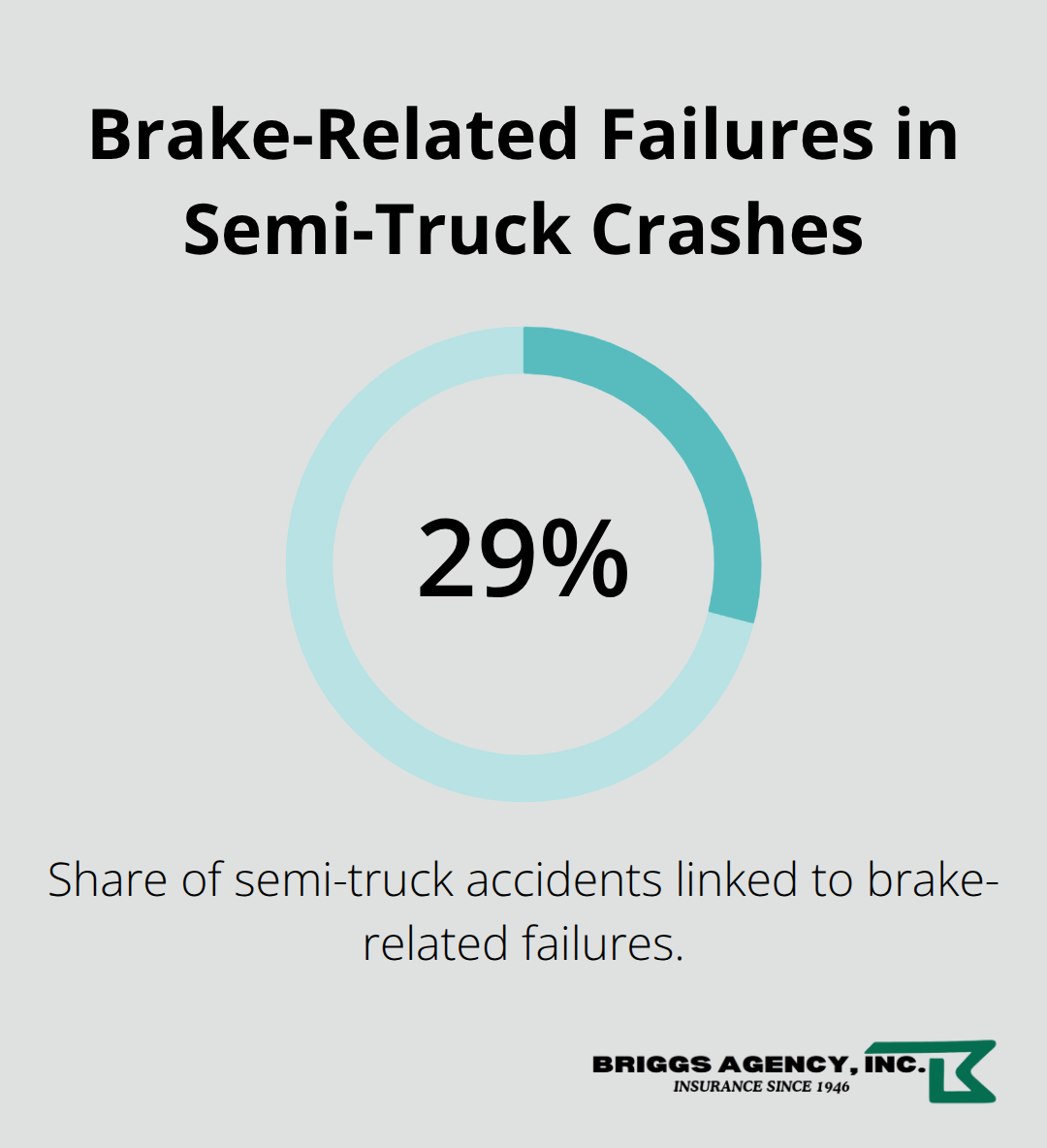
The FMCSA reports that brake-related failures account for 29% of semi-truck accidents, and when those failures cause injury, settlements climb fast. You need limits that match your actual exposure, not just the legal minimum.
Physical Damage and Deductible Strategy
Physical Damage coverage protects your tractor and trailer against collision, theft, fire, hail, windstorm, flood, and vandalism-the events that threaten your equipment investment directly. The critical mistake we see repeatedly is operators choosing deductibles without analyzing their cash flow impact. Increasing your deductible from $1,000 to $5,000 can reduce premiums by 20-30%, but only if you maintain emergency reserves to cover that deductible when a claim hits. Set aside the deductible amount in a dedicated fund before you raise it, then compare expected annual savings to your increased out-of-pocket risk.
Cargo Coverage and Hidden Exclusions
Motor Truck Cargo coverage protects the freight you haul, but standard cargo policies exclude high-value or hazardous loads like jewelry, explosives, tobacco, and live animals unless you purchase specific riders upfront. Most operators get blindsided by these gaps during claims. Define your typical loads and cargo values before renewal, then request riders for any exclusions that apply to your actual business. This step takes minutes but prevents thousands in uncovered losses.
Non-Trucking Liability and Owner-Operator Protection
Non-Trucking Liability coverage, often called bobtail coverage, protects owner-operators when driving without a load or between dispatch jobs-a gap that leaves you personally liable if an accident occurs during those unloaded miles. In Northwest Indiana, operators with clean safety records and comprehensive coverage including bobtail protection see premium reductions of 15-25% compared to those with claims history or gaps. That advantage reflects how insurers view your risk management maturity, not just compliance.
Technology and Broker Partnerships Drive Real Savings
Specialized trucking insurance brokers typically deliver 10-25% savings by classifying your operation correctly and identifying discounts you’d miss working alone. Combining strategies produces the best results: implement safety technology like telematics, dash cameras, and backup sensors for immediate 5-15% discounts, then work with a broker who understands Northwest Indiana trucking to optimize rates further. Telematics and GPS tracking reward your operation with lower premiums because they provide insurers with proof that you monitor driver behavior and route efficiency, reducing both accident risk and theft exposure. These investments in safety technology and professional guidance set the stage for identifying coverage gaps that could derail your operation-which brings us to the specific blind spots most trucking businesses overlook.
Coverage Gaps That Cost Northwest Indiana Truckers Money
Liability Limits That Fall Short of Real Exposure
Most Northwest Indiana trucking operators carry insurance, but they carry the wrong amounts or forget entire coverage categories until a claim exposes the mistake. Liability limits matter more than premium cost when a serious accident happens. A single crash involving multiple vehicles or severe injuries generates claims exceeding $500,000 to $2 million depending on injury severity and property damage, yet many operators maintain bare-minimum limits that leave personal assets unprotected. Federal law sets minimum liability requirements, but those minimums exist for legal compliance, not financial protection. You need limits that match your actual exposure. The state mandates a minimum of $750,000 in liability coverage for non-hazardous freight, jumping to $1,000,000 to $5,000,000 depending on your cargo type and routes. If you haul hazardous materials or operate near populated areas, your exposure runs higher than an operator moving pallets on rural routes. Calculate your worst-case scenario based on your cargo type, routes, and vehicle weight, then set limits above that number.
The Owner-Operator Bobtail Coverage Blind Spot
Owner-operators face a second critical gap that surprises them during claims. When you lease to an ICC-regulated carrier, your coverage responsibilities shift depending on lease terms. Some lease agreements require the carrier to cover your truck while dispatched, but they don’t cover you when you drive without a load or between jobs. Non-Trucking Liability coverage, also called bobtail coverage, fills that gap by protecting you during unloaded miles or when operating independently. Without it, an accident during those unloaded miles leaves you personally liable for settlements and medical bills. In Northwest Indiana, operators with comprehensive coverage including bobtail protection see premium reductions of 15-25% compared to those with gaps, because insurers recognize that thorough coverage reflects mature risk management.
Cargo Exclusions That Derail Claims
The third gap involves cargo exclusions that operators discover too late. Standard Motor Truck Cargo policies automatically exclude high-value or hazardous loads like jewelry, explosives, tobacco, and live animals unless you purchase specific riders upfront. Most operators face claim denials when the insurer determines that the load fell into an excluded category. Define your typical loads and cargo values before renewal, request riders for any exclusions that apply to your actual business, and verify those riders appear in your policy documents before you operate. This step takes minutes but prevents thousands in uncovered losses.
Final Thoughts
Finding the right Northwest Indiana trucking insurance requires more than comparing quotes online. Your operation has specific risks that generic policies miss, and the agent you choose shapes whether you receive adequate protection or discover gaps during a claim. Local agents who understand your regional hazards ask the right questions about your loads, drivers, equipment, and growth plans-conversations that reveal gaps a distant broker would overlook.
Rates and underwriting standards vary significantly across carriers, so request quotes from at least two or three insurers and have an experienced agent help you evaluate them. One carrier may offer better pricing for owner-operators with clean records, while another specializes in fleets with hazardous cargo. A broker who works with multiple carriers positions your operation in front of the right underwriter, not just the cheapest option. At Briggs Agency, Inc., we represent multiple top-rated carriers to compare options across different insurers rather than pushing you toward one company’s limited offerings.
As your business grows, your coverage must grow with it. Adding trucks, expanding routes, or shifting to higher-value cargo changes your risk profile and your insurance requirements, so notify your agent immediately when those changes occur. Work with an experienced local agent who takes time to understand your operation, implement safety technology that reduces your risk, and review your coverage annually as your business evolves.
The information provided in this blog is for general informational purposes only and does not constitute legal, financial, or insurance advice. Coverage options, terms, and availability may vary. Please consult with a licensed professional for advice specific to your situation.
Artificial intelligence may have been used to generate text and images in some blog articles.

