

Condo Property Coverage: Protecting Your Investment With Apartment Owner Insurance
Condo ownership comes with unique insurance challenges that many owners overlook until it’s too late. Your HOA’s master policy covers the building structure, but significant gaps remain that leave your personal investment exposed.
At Briggs Agency, Inc., we help condo owners understand exactly what condo property coverage they need and where their current policies fall short. This guide walks you through the coverage layers that actually protect your unit and belongings.
What Your Condo Insurance Actually Covers
Your Personal Unit and Belongings Need Individual Protection
Your HOA’s master policy protects the building’s structure-the walls, roof, and common areas-but it stops there. Your personal unit’s interior walls, fixtures you’ve installed, and everything inside belong to you. Condo property coverage, often called HO-6 insurance, fills this gap by protecting your belongings and the improvements you’ve made to your space. Many condo owners lack adequate individual coverage, leaving themselves vulnerable to significant financial loss.
Your policy should cover furniture, electronics, clothing, and other personal property at replacement cost, not actual cash value. This means you receive payment for what it costs to replace items today, not what you paid for them years ago. Liability coverage within your unit matters equally-if someone slips on your kitchen floor or your guest damages the building’s interior, your HO-6 policy covers legal expenses and medical bills up to your policy limit, typically $100,000 to $300,000.
What the Master Policy Actually Covers (and Doesn’t)
The master policy your HOA carries covers structural damage to the building itself, but most associations carry minimum coverage only. If a fire damages multiple units, the master policy may not fully cover reconstruction costs, and the shortfall gets passed to individual owners through special assessments. Loss assessment coverage protects you from unexpected bills when the HOA’s insurance falls short.
Many policies exclude items like upgraded flooring, custom cabinetry, or luxury finishes you’ve added. Ask your HOA for the declarations page showing coverage limits, deductibles, and what’s actually insured. Don’t rely on summaries from the board-review the master policy documents directly to understand what protection the building actually provides.
Closing the Gap Between Policies
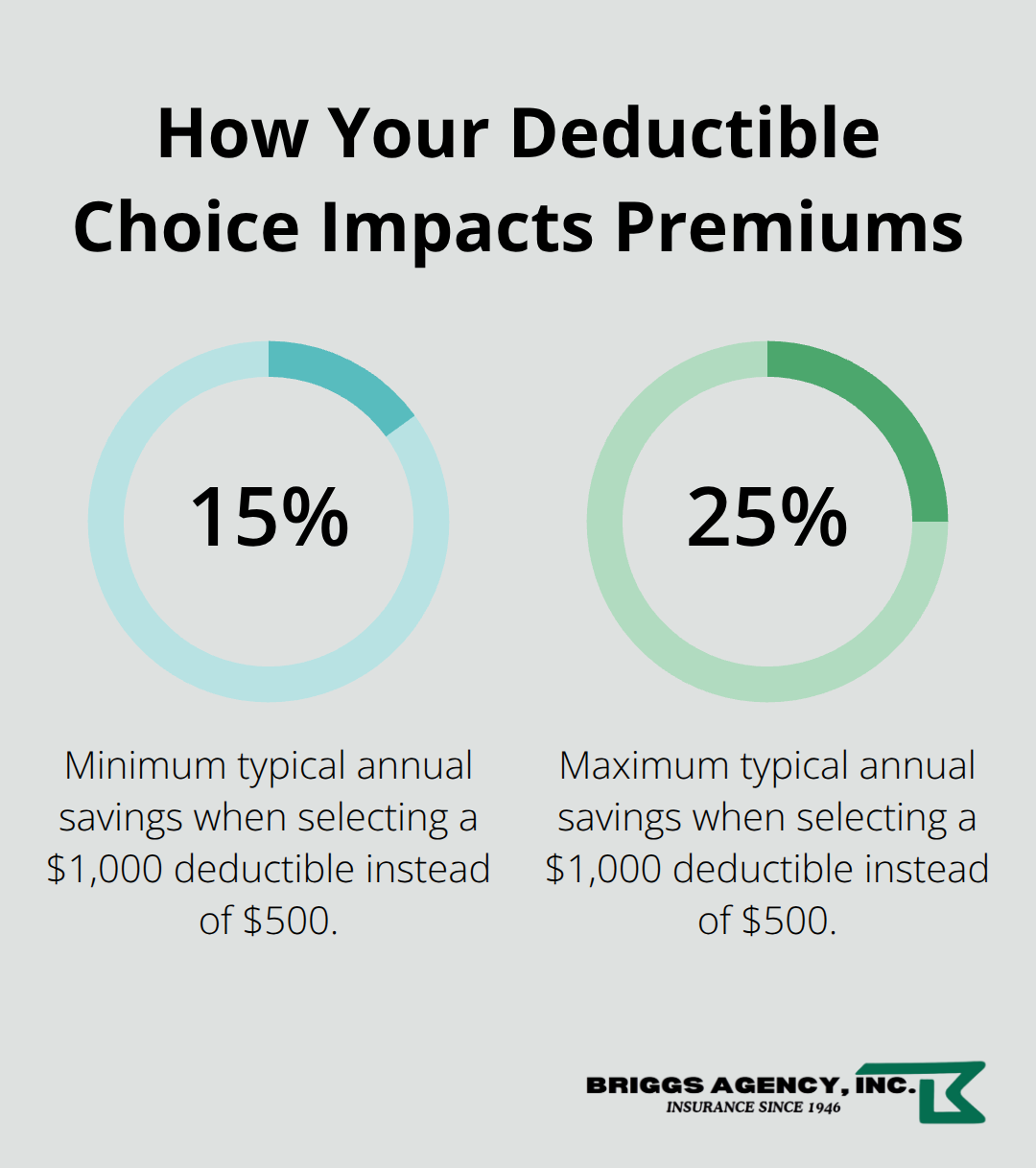
Your individual HO-6 policy must account for everything the master policy doesn’t cover, and the deductible you choose affects your premium significantly. Selecting a $1,000 deductible instead of $500 typically saves 15-25% annually. The gap between what the building covers and what you own is where most condo owners get caught off guard, so comparing your specific unit’s features against both policies reveals exactly what protection you need.
This comparison becomes even more important when you consider the special assessments and liability issues that can arise within your unit.
Where Your Coverage Actually Falls Short
Improvements You’ve Made Remain Your Responsibility
Most condo owners discover their insurance gaps only after a loss occurs, which is far too late. The reality is that standard HO-6 policies exclude many improvements you’ve made to your unit, and the master policy’s deductibles create unexpected financial obligations. Your upgraded flooring, custom cabinetry, granite countertops, and remodeled bathroom fall entirely on you to insure-the master policy won’t touch them.
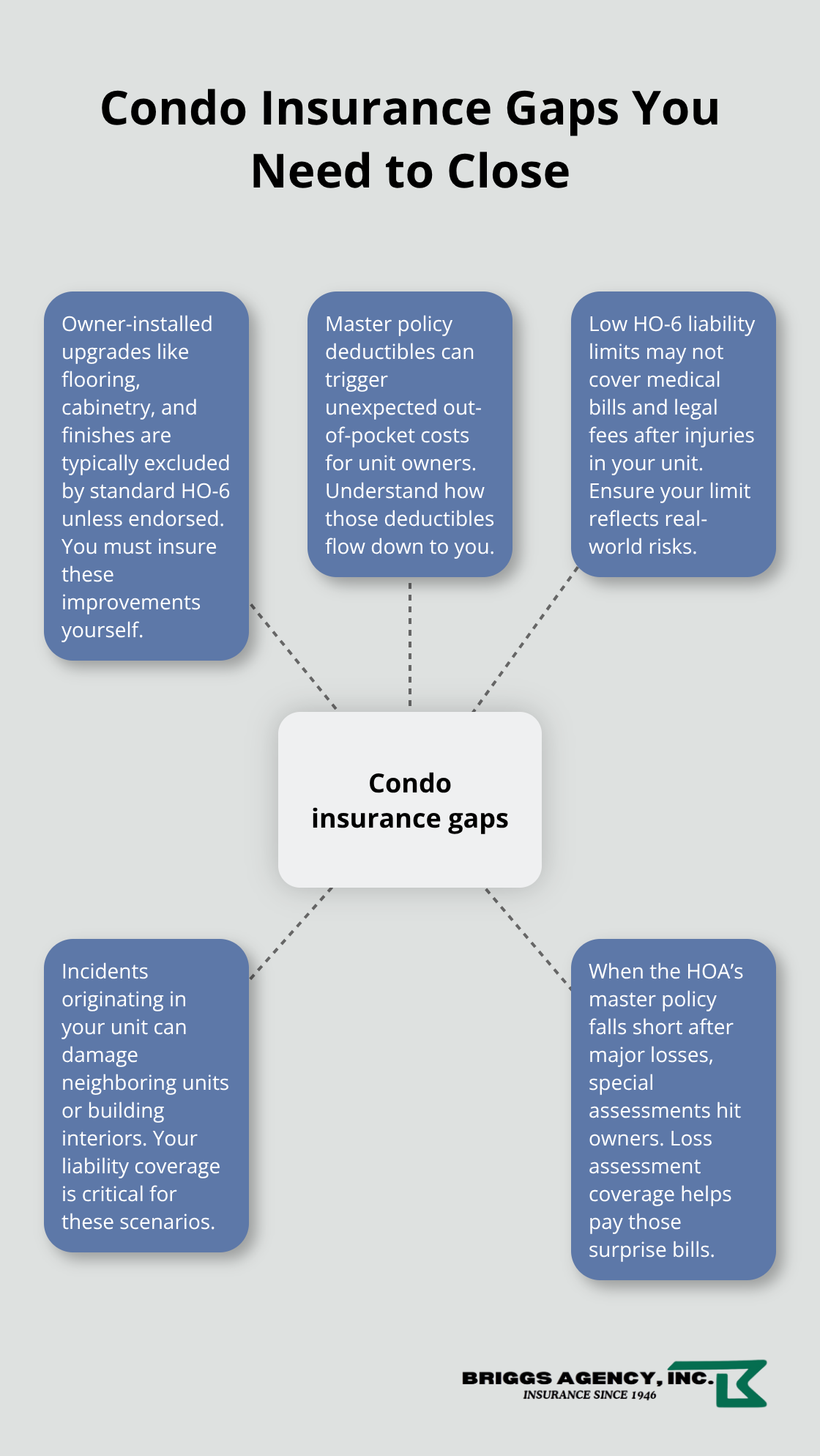
Many insurance companies specifically exclude owner-installed improvements unless you add endorsements to your policy. You need to request a full list of what improvements you’ve made and add scheduled personal property coverage or an endorsement for these upgrades. Without this step, you self-insure thousands of dollars in renovations.
Liability Within Your Unit Exposes You to Major Risk
Liability within your unit presents another serious gap that surprises condo owners. If your guest slips on your tile floor and sues for $50,000 in medical expenses and lost wages, your $100,000 liability limit covers it-but only if your policy actually includes liability coverage. Some bare-bones HO-6 policies limit liability to $25,000, leaving you massively exposed.
Additionally, if your unit causes damage to the building structure itself (say your bathtub overflows and damages the unit below), the master policy may not cover interior damage caused by your negligence. Your liability coverage becomes critical in these situations. Without adequate limits, a single incident can wipe out your personal assets.
Loss Assessment Coverage Protects Against Surprise Bills
Loss assessment coverage is where most owners get blindsided financially. When the HOA’s master policy doesn’t fully cover a major loss like hurricane damage or a roof failure affecting multiple units, the association passes the shortfall to individual owners through special assessments. You could receive a bill for thousands of dollars in just days, with no choice but to pay it.
We recommend loss assessment coverage of at least $5,000 to $10,000, though some HOAs with aging buildings should carry $25,000 or more. This protection prevents a single catastrophic event from creating unexpected financial strain. Understanding what special assessments your HOA might face helps you determine the right coverage level for your situation.
How to Choose the Right Condo Insurance Policy
Request Your HOA’s Master Policy Documents First
Start with the declarations page from your HOA’s master policy-not a summary from the board president, but the actual document from the insurance carrier. This page shows coverage limits, deductibles, and exclusions that directly affect what you need to purchase individually. Most associations carry minimum coverage only, which means the master policy’s limits fall short of actual reconstruction costs. If your building’s master policy has a $500,000 limit but reconstruction would cost $1.2 million after a major loss, you face a special assessment for the $700,000 gap. These numbers tell you exactly how much loss assessment coverage you need on your individual policy.
Compare the master policy’s deductible against your HO-6 deductible as well. If the building carries a $10,000 deductible and you choose a $1,000 deductible on your personal policy, you potentially pay twice for the same loss. Ask your HOA what structural improvements they exclude, since many associations won’t cover owner-installed upgrades regardless of coverage limits.
Compare Coverage Limits and Deductibles Across Multiple Carriers
The next step involves comparing actual coverage limits and deductibles across multiple carriers, then working with an agent who understands condo-specific risks. Don’t accept the lowest premium-a $35-per-month savings means nothing if your liability limit drops from $300,000 to $100,000. Try requesting quotes from at least three carriers with identical coverage parameters so you compare apples to apples. Include loss assessment coverage in every quote, then adjust based on your HOA’s age and condition.
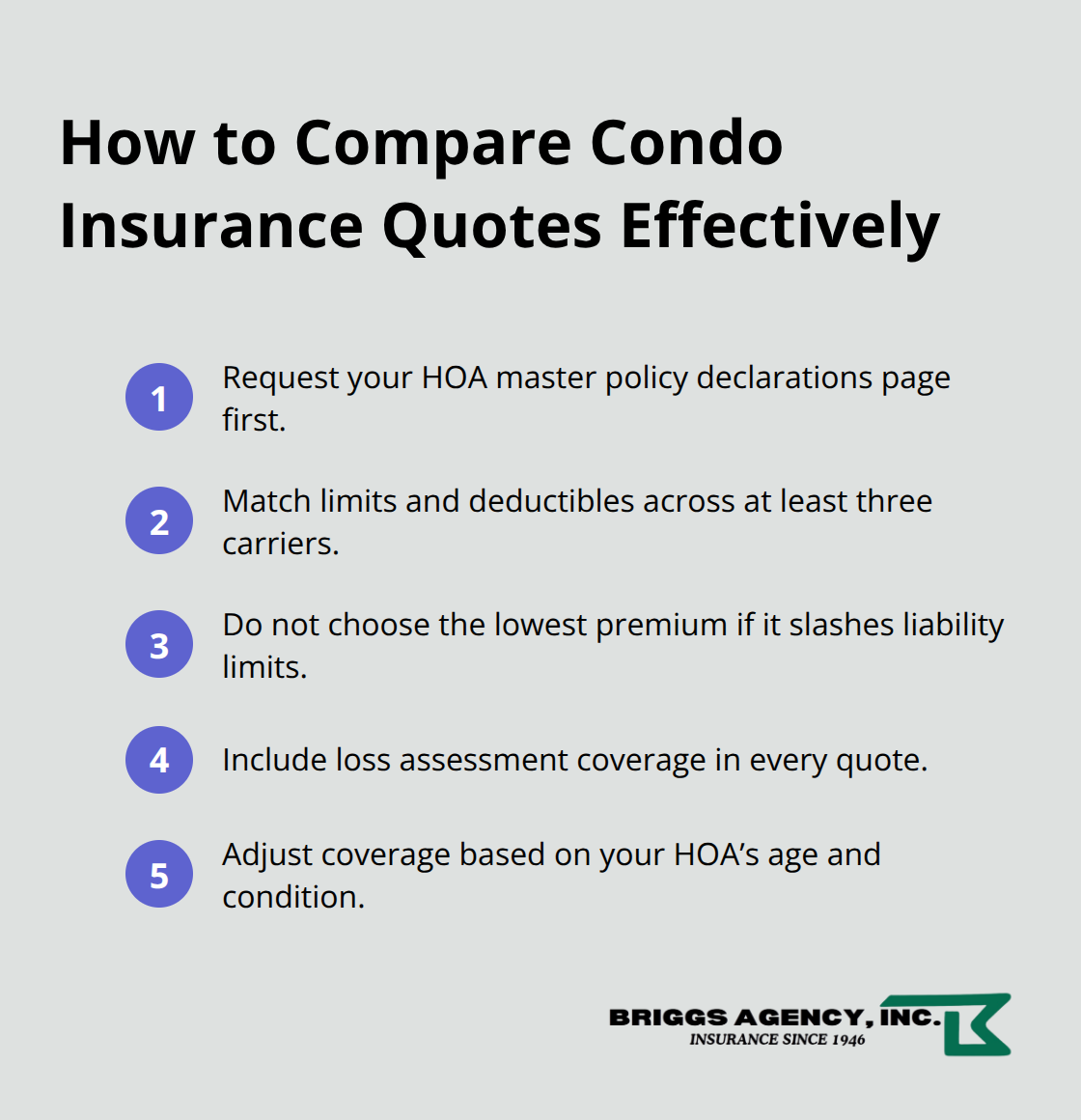
Older buildings with aging roofs or plumbing should carry loss assessment protection. This adjustment protects you from the special assessments that hit hardest when building systems fail.
Work With an Agent to Identify Your Specific Needs
An experienced agent should ask you detailed questions about improvements you’ve made, whether you rent out your unit occasionally, and whether you have high-value items like jewelry or art that need scheduled coverage. These specifics determine whether your policy actually protects your investment or leaves you underinsured when a claim happens. Your agent should also review whether your unit’s location within the building (corner unit, top floor, ground level) affects your risk profile and coverage needs.
We at Briggs Agency, Inc. represent multiple top-rated carriers, which allows our experienced local agents to compare options and tailor policies to deliver the right protection for your condominium investment. Your agent should explain how each carrier handles loss assessment claims and what timeline you can expect for payment after a special assessment occurs.
Final Thoughts
Condo property coverage protects your actual investment, not just the building’s structure. The gaps between your HOA’s master policy and your individual HO-6 coverage create real financial exposure that catches most owners unprepared. You now understand exactly where those gaps exist-from improvements you’ve made to liability risks within your unit to the special assessments that arrive without warning.
The right policy combines adequate personal property coverage, sufficient liability limits, and loss assessment protection tailored to your building’s age and condition. Your deductible choices directly affect your premium, but selecting the lowest price without reviewing coverage limits leaves you dangerously underinsured. A $50-per-month savings means nothing when a single claim reveals your policy doesn’t actually cover what you thought it did.
Start by requesting your HOA’s actual master policy documents, not summaries from the board. Compare that against quotes from multiple carriers using identical coverage parameters. Ask your agent about improvements you’ve made, your unit’s specific location risks, and whether your building’s systems suggest higher loss assessment coverage. Contact Briggs Agency, Inc. to review your current condo property coverage and identify exactly what protection your investment requires.
The information provided in this blog is for general informational purposes only and does not constitute legal, financial, or insurance advice. Coverage options, terms, and availability may vary. Please consult with a licensed professional for advice specific to your situation.
Artificial intelligence may have been used to generate text and images in some blog articles.

