
Tradesman liability coverage: A Practical Guide for Trades Pros
One accident on a job site can wipe out months of profit. That’s why tradesman liability coverage isn’t optional-it’s the foundation of a sustainable trades business.
At Briggs Agency, Inc., we’ve helped countless tradespeople understand what this coverage actually protects and why it matters for their bottom line. This guide walks you through the real risks you face, what your policy should cover, and how to choose limits that match your work.
Why Tradesman Liability Coverage Protects Your Bottom Line
One accident costs more than you think
One accident costs more than you think according to the National Safety Council. That’s before legal fees, settlements, or court judgments enter the picture. Without tradesman liability coverage, you absorb these costs personally, which means your business assets and personal savings face direct exposure. Contractors and tradespeople encounter injury claims regularly-electricians work at heights, plumbers navigate unfamiliar spaces, carpenters operate power tools around occupied homes. These aren’t worst-case scenarios; they’re routine job conditions that can go wrong quickly.
Property damage claims hit your profit margin hard
You install new flooring in a kitchen, and a tool slips through a newly renovated hardwood subfloor below. You run electrical work and accidentally damage the homeowner’s built-in cabinet during installation. You perform roofing work and a ladder punctures a customer’s deck. Property damage liability covers the cost of repairing or replacing what you damage during your work-and these repairs add up fast. A single incident costs $10,000 to $30,000 or more depending on what you damaged. Without coverage, you absorb that entire expense out of pocket, which directly reduces your profit margin and can force you to take on debt to stay operational.
Legal defense costs drain cash flow even when claims fail
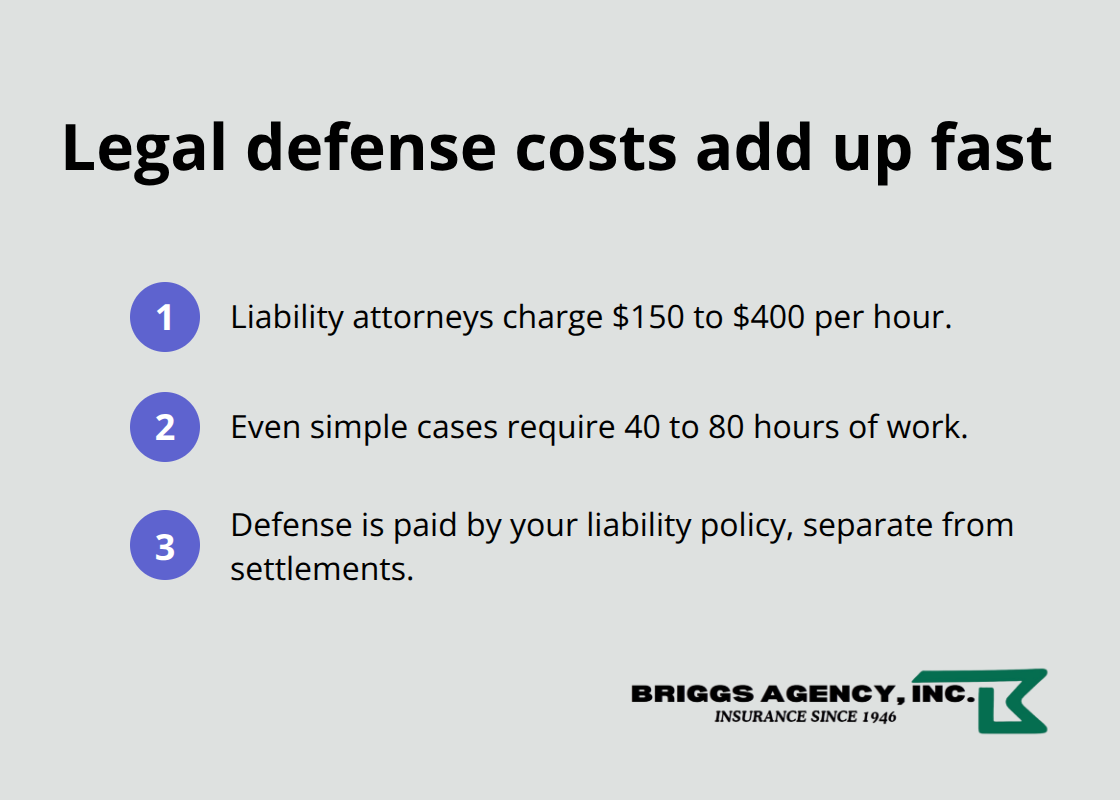
Here’s what most tradespeople miss: your insurance covers not just the settlement or judgment, but also the legal defense itself. Someone files a claim against you-even a questionable one-and you need a lawyer. Defense attorneys for liability cases typically charge $150 to $400 per hour, and a straightforward case consumes 40 to 80 hours of legal work before resolution. Your liability policy pays for that defense as part of your coverage, separate from any settlement amount.
Without this protection, you pay your attorney from your operating budget while simultaneously defending your business, which creates serious cash flow problems and forces difficult decisions about how to keep your crew paid.
Understanding what your policy actually protects
Tradesman liability coverage protects you against third-party claims-meaning claims from clients, customers, or bystanders, not your own employees. The policy covers bodily injury to clients and bystanders, damage to client property during work, and the medical expenses and legal defense costs that follow. Coverage limits typically range from $300,000 to $2 million depending on your trade and the scope of your work. Your deductible (usually $500 to $2,500) determines how much you pay out of pocket before insurance kicks in. Choosing the right limits and deductible requires understanding your specific risk exposure, which varies significantly between trades.
What Your Tradesman Liability Policy Actually Covers
Three claim categories protect your business
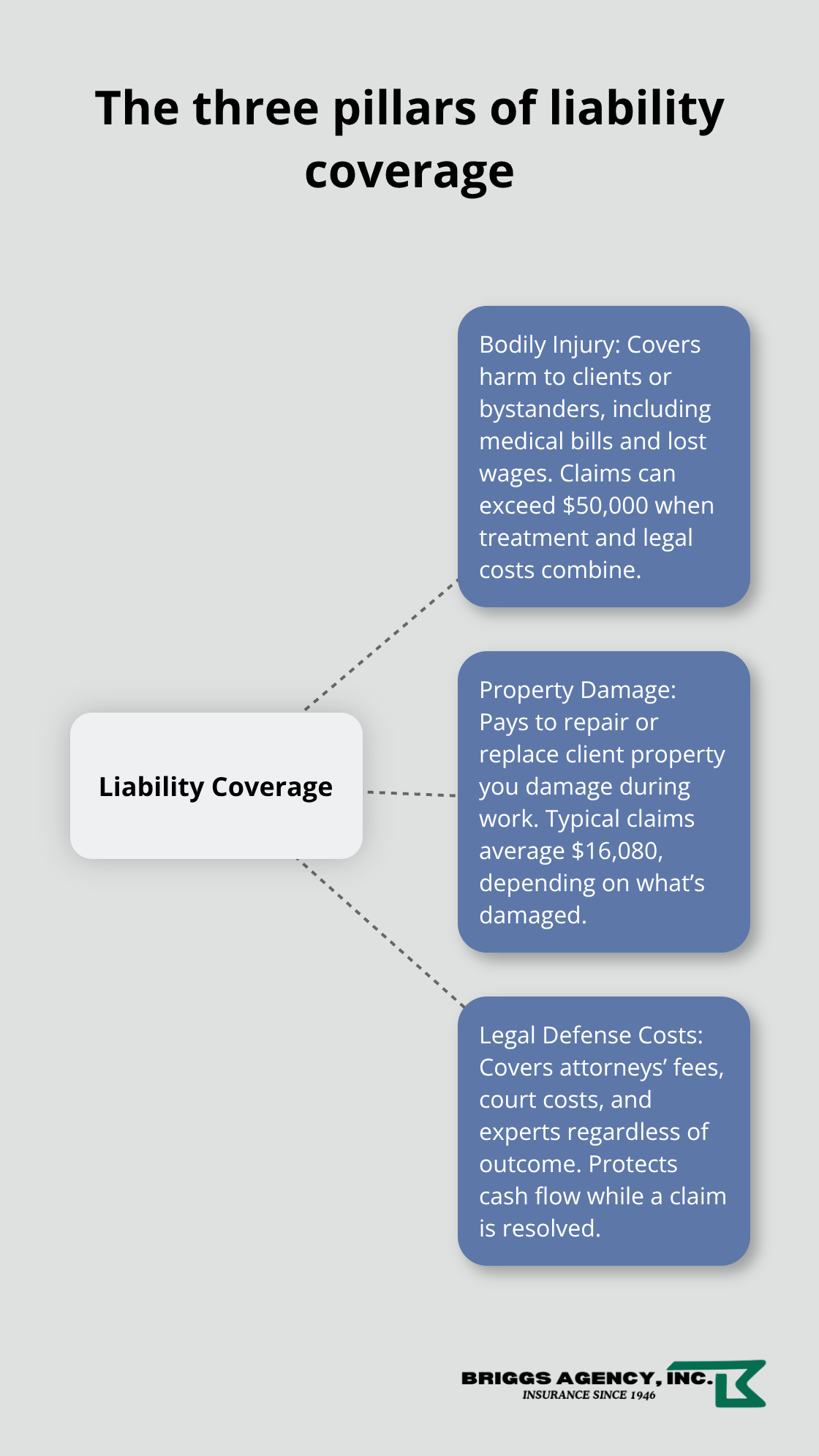
Tradesman liability coverage protects against three distinct categories of claims, and understanding what falls under each one prevents costly gaps in your protection. Bodily injury claims occur when your work causes physical harm to a client or bystander-a homeowner trips over your equipment and breaks an arm, an electrical fire from your installation sends a family member to the hospital, or a drywall saw blade injures someone nearby. Your policy covers medical bills, rehabilitation costs, lost wages during recovery, and pain-and-suffering settlements or judgments. These claims often exceed $50,000 once medical treatment, ongoing care, and legal settlements combine.
Property damage liability covers what you break
Property damage liability covers destruction or harm to the client’s home, belongings, or surrounding structures that occurs during your work. You puncture plumbing during a renovation, destroy landscaping while operating machinery, or damage flooring while moving heavy equipment-your policy pays for repairs or replacement. According to the Insurance Information Institute, property damage claims average $16,080 depending on what gets damaged and the cost to restore it. Without this coverage, you absorb these repair costs directly from your operating budget.
Defense costs accumulate before settlements arrive
The third category covers medical expenses and legal defense costs, which deserves emphasis here: your insurer pays your attorney’s hourly fees, court costs, and expert witness fees regardless of whether the claim succeeds. This separation matters tremendously because defense costs accumulate even before any settlement payment occurs. A straightforward liability case consumes 40 to 80 hours of legal work before resolution, and defense attorneys charge $150 to $400 per hour. Your policy handles these expenses separately from any settlement amount, which protects your cash flow during the claims process.
How claims overlap in real job site incidents
Most tradespeople underestimate how quickly these three categories overlap in real incidents. A single job site accident might trigger bodily injury claims from multiple people, simultaneous property damage to the client’s home, and substantial legal defense expenses if liability becomes disputed. Coverage limits determine your maximum protection per incident and per year-$300,000 per occurrence and $1 million annual aggregate represents a common baseline for general contractors, while electricians and plumbers often carry $500,000 to $1 million per occurrence given their higher-risk work environments. Your deductible applies per claim, meaning you pay that amount out of pocket before coverage activates.
Matching limits to your actual work
Most tradespeople choose $1,000 deductibles as a balance between lower premiums and manageable out-of-pocket exposure. Selecting appropriate limits requires honest assessment of your actual job values, crew size, and the types of properties you work in-high-value residential renovations demand higher limits than routine maintenance work, and commercial projects typically require limits exceeding $1 million. The right coverage limits depend entirely on your specific risk profile, which varies significantly between trades and job types. Understanding these differences helps you avoid both underinsurance (which leaves you exposed) and overinsurance (which wastes premium dollars). Once you know what your policy covers and what limits make sense for your work, the next step involves comparing actual policies and finding the right deductible for your situation.
How to Match Your Coverage to Your Actual Work
Start with your job value and crew size
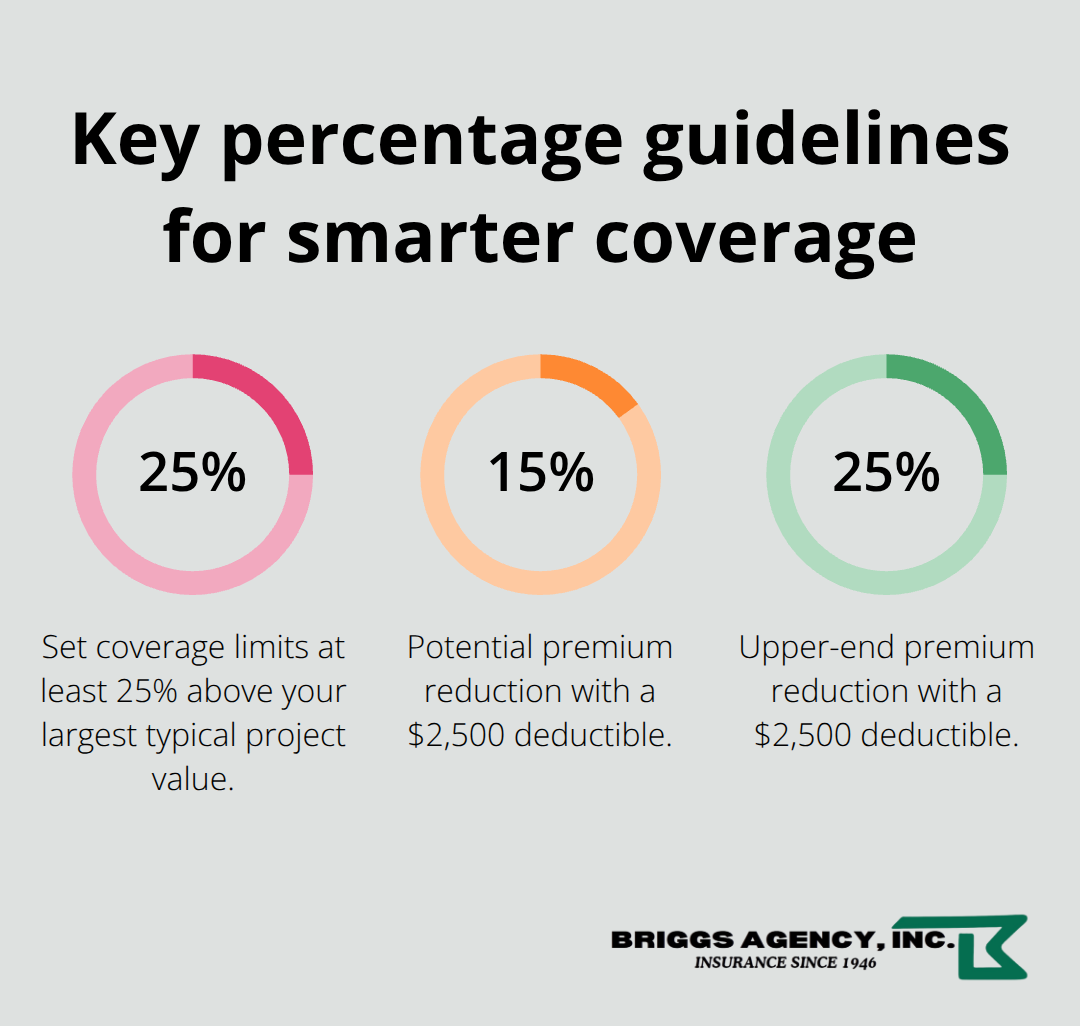
A solo electrician performing service calls faces different risks than a five-person crew handling major renovations, yet many tradespeople select coverage limits based on what competitors carry rather than what their actual work demands. Calculate your typical project value, your annual revenue, and the types of properties you work in most frequently. A contractor averaging $50,000 residential kitchen renovations needs different limits than one handling $500,000 commercial buildouts. Your coverage limit should exceed your largest typical project by at least 25 percent, which means a contractor with $50,000 average projects should carry minimum $1 million per occurrence coverage.
This buffer protects you when multiple claims stack up or when an injury claim exceeds initial estimates. If you rely on personal auto or liability insurance to cover vehicles used for business, look closely at the provisions as business-related liability may be excluded. Choosing inadequate limits doesn’t save money-it transfers risk directly to your personal assets.
Evaluate your deductible strategy based on cash reserves
A $500 deductible costs substantially less in premiums but means you absorb that amount per claim from operating funds, while a $2,500 deductible reduces premiums by 15 to 25 percent depending on your trade and location. Contractors with strong cash reserves and infrequent claims benefit from higher deductibles, but those with tighter margins or higher-risk work should stick with $1,000 deductibles as a practical middle ground.
Review your actual claim history over the past three years-if you’ve filed zero claims, a higher deductible makes financial sense, but if you’ve filed even one claim, the premium savings rarely justify the increased out-of-pocket exposure. Your insurance agent can pull your loss history and show you exactly how deductible changes affect your annual premium, allowing you to make decisions based on real numbers rather than guesses.
Avoid common coverage mistakes
Don’t let an agent push you toward limits or deductibles that don’t match your actual work patterns. Many tradespeople assume higher coverage always costs proportionally more in premiums, but many carriers offer minimal premium increases between $500,000 and $1 million limits. Upgrading often costs far less than you expect, which means the real expense lies in carrying insufficient protection rather than adequate coverage.
Final Thoughts
Tradesman liability coverage protects your business from the financial devastation that follows a single job site accident. Without it, one injury claim or property damage incident can eliminate months of profit, force you into debt, and threaten everything you’ve built. The three coverage categories-bodily injury, property damage, and legal defense costs-work together to shield your personal assets and keep your business operational when claims arise.
Selecting the right protection means matching your coverage limits to your actual work. A contractor handling $50,000 residential projects needs different limits than one managing $500,000 commercial buildouts, and your deductible strategy should reflect your cash reserves and claim history rather than just premium costs. Most tradespeople find that $1 million per occurrence coverage and $1,000 deductibles strike the right balance between protection and affordability, though your specific situation may differ based on crew size, project values, and property types.
Contact an agent who understands trades work and can review your current coverage against your actual risk exposure. We at Briggs Agency, Inc. represent multiple top-rated carriers, which means we compare options and find competitive pricing without sacrificing protection. Reach out to Briggs Agency, Inc. to discuss your tradesman liability coverage needs and ensure your business has the right protection in place.
The information provided in this blog is for general informational purposes only and does not constitute legal, financial, or insurance advice. Coverage options, terms, and availability may vary. Please consult with a licensed professional for advice specific to your situation.
Artificial intelligence may have been used to generate text and images in some blog articles.

