
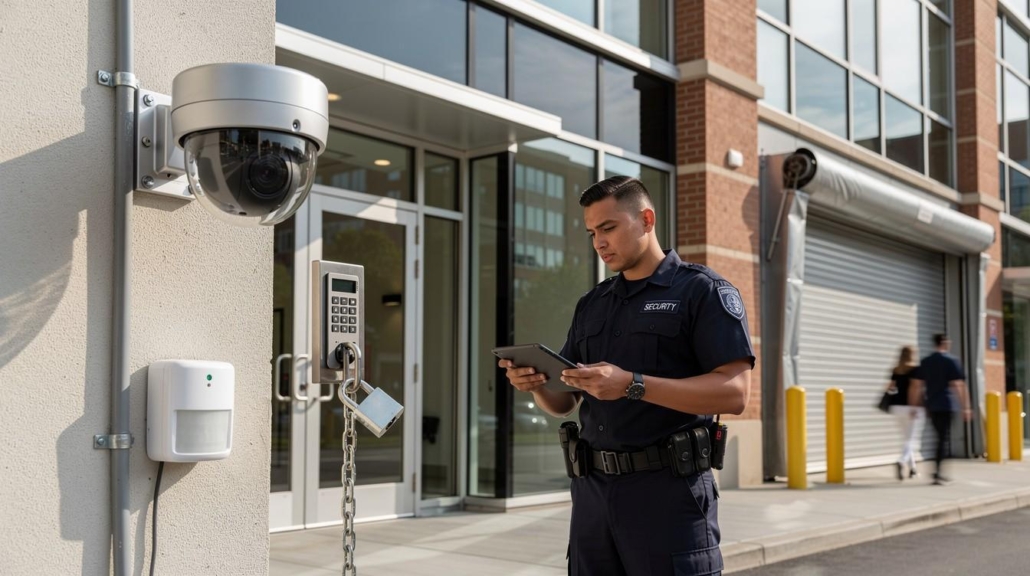
Commercial Property Protection: Comprehensive Coverage That Works
Your business faces real risks every day. From equipment damage to natural disasters, unexpected events can derail operations and drain finances fast.
Commercial property protection isn’t optional-it’s essential. At Briggs Agency, Inc., we help business owners understand what coverage actually protects their assets and why the right policy matters for long-term stability.
What Your Commercial Property Insurance Actually Covers
Your building, equipment, and income all face different threats, and commercial property insurance addresses each one separately. Understanding what’s protected under your policy prevents costly gaps when damage happens. We at Briggs Agency, Inc. work with business owners to map exactly what coverage they need, because a one-size-fits-all approach leaves too many vulnerabilities exposed.
Your Building Structure and Improvements
The physical structure of your business location is foundational. This covers the walls, roof, floors, permanent fixtures, and built-in systems like HVAC and electrical wiring. If a fire damages your storefront or a storm tears through your roof, building coverage pays for repairs or rebuilding at replacement cost. The National Association of Insurance Commissioners reports that property damage claims account for a significant portion of all commercial insurance claims, making this protection non-negotiable.
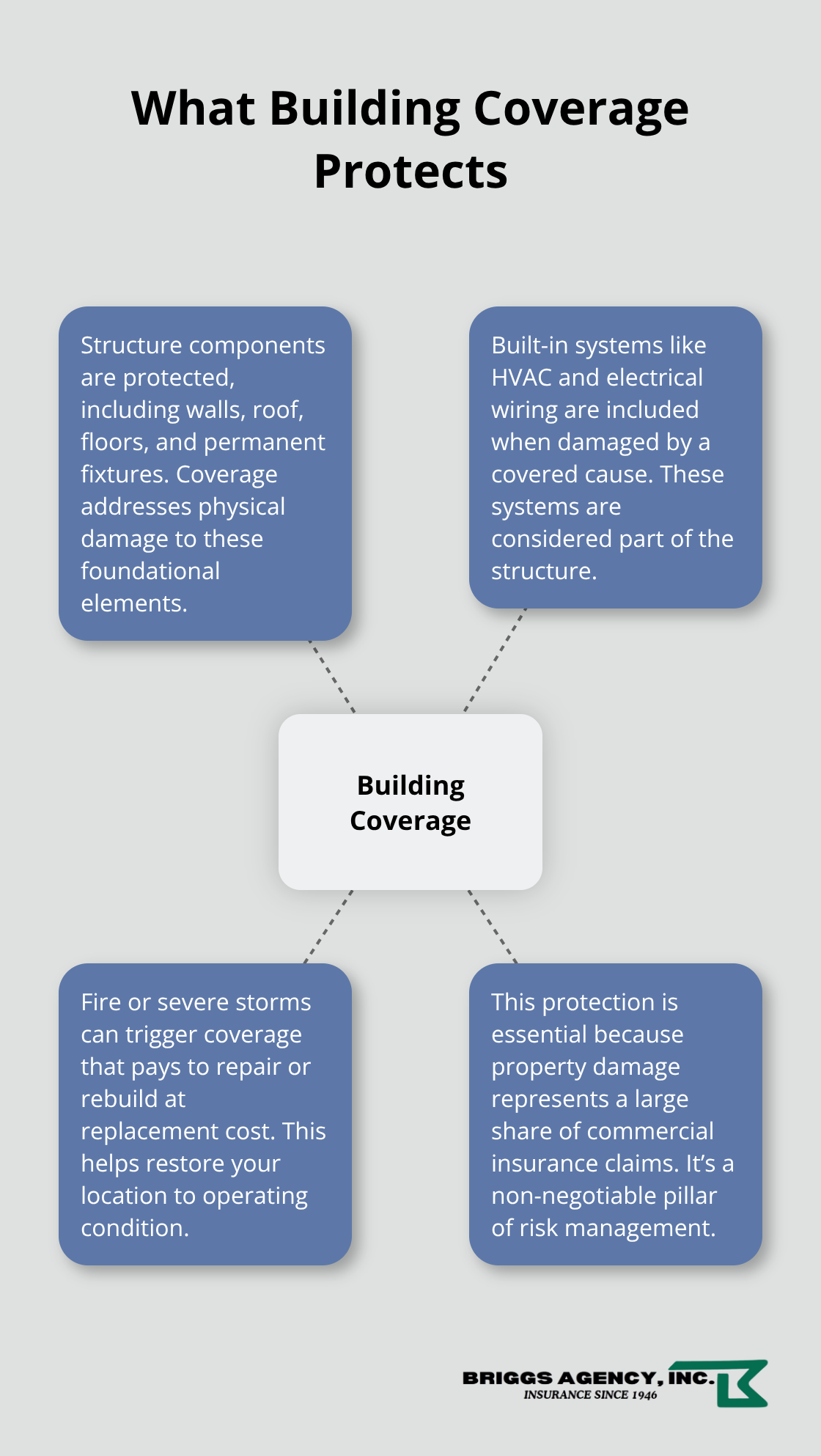
When you calculate your building’s coverage limit, don’t just estimate-obtain a professional property appraisal. Many business owners undervalue their structures and then face out-of-pocket costs when claims exceed their limits. Lenders almost always require this coverage as a condition of your commercial mortgage, so you’re likely mandated to carry it anyway.
Equipment, Inventory, and Business Assets
Your business personal property includes machinery, computers, furniture, inventory, and tools. This coverage is separate from building protection and protects everything you own that isn’t permanently attached to the structure. If a pipe bursts and floods your stockroom, or theft occurs, business personal property coverage steps in.
The challenge here is accurately valuing what you own. Many owners underestimate because they forget about older equipment or depreciated items still in use. An inventory audit every two years catches these gaps. Some policies limit coverage for high-value items like electronics or specialized equipment, so you may need additional endorsements for items worth more than standard limits allow. This is where an experienced agent matters-they identify what needs extra protection before a loss occurs.
Recovering When Operations Stop
Business interruption coverage protects your income when a covered event forces you to temporarily close. If a fire makes your location unusable for three months, this coverage pays your lost profits and ongoing expenses like payroll and rent. According to data from the Insurance Information Institute, small businesses that experience a major property loss and lack business interruption coverage are more likely to permanently close.
The coverage typically applies for a set period-30, 60, or 90 days-and you choose the timeframe based on how long you could survive without revenue. Calculate your daily operating costs, multiply by the number of days you’re vulnerable, and that’s your minimum coverage need. This protection is often overlooked because the loss hasn’t happened yet, but it’s frequently the difference between weathering a crisis and closing permanently.
Now that you understand what commercial property insurance covers, the next step is recognizing why the right policy matters for your business’s financial stability and long-term success.
Why Commercial Property Insurance Protects Your Bottom Line
Commercial property damage hits harder than most business owners expect. When a loss forces you to close, payroll continues, rent stays due, and customers shift to competitors. Businesses without adequate property coverage and business interruption protection face significant financial risk after a major loss. This isn’t theoretical risk-it’s financial reality that strikes fast and hard. Business owners often discover gaps in their coverage only after disaster strikes, facing tens of thousands in uninsured losses they never anticipated.
Your Lender Requires This Coverage
Your lender mandates commercial property insurance as a condition of your mortgage. Every commercial loan includes a requirement that you maintain coverage equal to the replacement value of the building. Your landlord’s lease agreement likely contains the same demand. These aren’t suggestions or recommendations-they’re contractual obligations.
Failure to maintain required coverage gives your lender the right to purchase a policy on your behalf and charge the premium to your loan account. This forced coverage costs significantly more than if you’d obtained it independently. Additionally, when a loss occurs and you’re underinsured, your lender receives payment first from any claim settlement before you access a dollar. Your coverage limit directly affects how much financial protection you actually retain after a loss. Calculating your true replacement cost-not an estimate-prevents this vulnerability.
Business Interruption Coverage Determines Survival
Business interruption coverage translates to survival when the unexpected happens. A manufacturing facility damaged by fire might need 60 to 90 days to rebuild and resume operations. Without interruption coverage, you pay all operating expenses from savings while earning zero revenue. Most small businesses cannot sustain that financial drain for more than a few weeks.
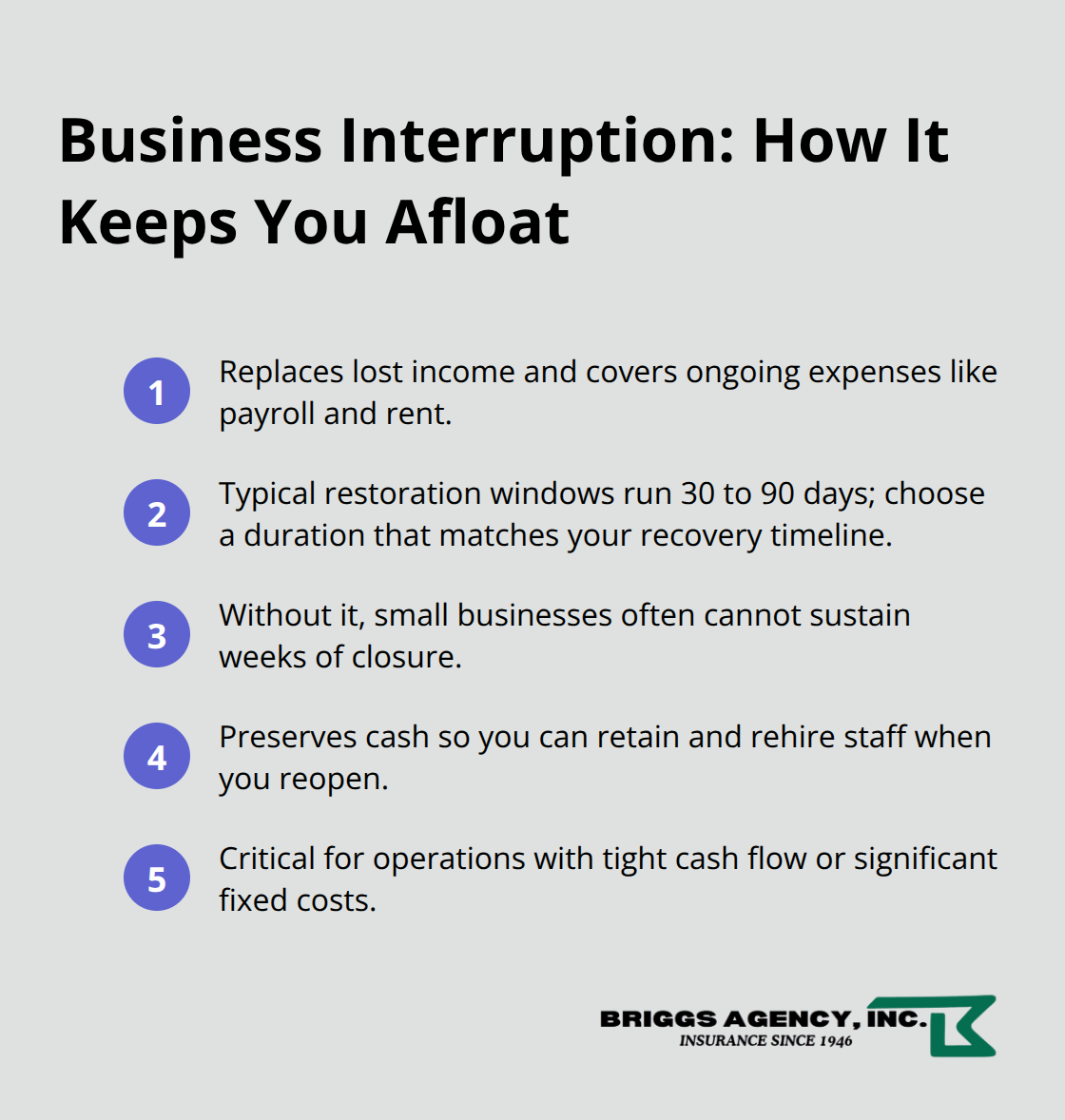
The coverage pays your fixed costs during the closure period, allowing you to preserve cash and rehire employees when you reopen instead of losing them permanently. This protection matters most for businesses with tight cash flow or significant fixed expenses. If your monthly overhead exceeds what you have in emergency reserves, interruption coverage isn’t optional-it’s the difference between a temporary setback and permanent closure.
Replacement Cost Versus Actual Cash Value
Two valuation methods determine what your insurer pays after a loss: replacement cost and actual cash value. Replacement cost coverage pays what it costs to rebuild or repair your property today, without deducting for depreciation. Actual cash value subtracts depreciation, meaning you receive less than the true cost to restore your business to its pre-loss condition.
Most commercial policies offer replacement cost coverage, but you must request it explicitly and pay the appropriate premium. An older building or equipment depreciates significantly, so actual cash value leaves you short when you need to rebuild. Verify which method your policy uses and confirm it matches your actual replacement needs. An undervalued building or equipment inventory creates a gap that no claim settlement can close.
Identifying What You Actually Own
Accurately valuing your business personal property requires a detailed inventory audit. Many owners underestimate their assets because they forget about older equipment still in use or overlook items stored in multiple locations. An inventory audit every two years catches these gaps before a loss occurs.
Some policies limit coverage for high-value items like electronics or specialized equipment, meaning you may need additional endorsements for items worth more than standard limits allow. Document everything with photos and receipts, then store this inventory list somewhere safe and separate from your business location. This preparation ensures you can file a complete claim quickly if loss strikes, rather than scrambling to remember what you owned.
Understanding what your coverage actually protects is only half the equation. The next step is selecting the right limits and deductibles that match your business’s specific needs and financial situation.
Selecting Coverage That Matches Your Actual Business
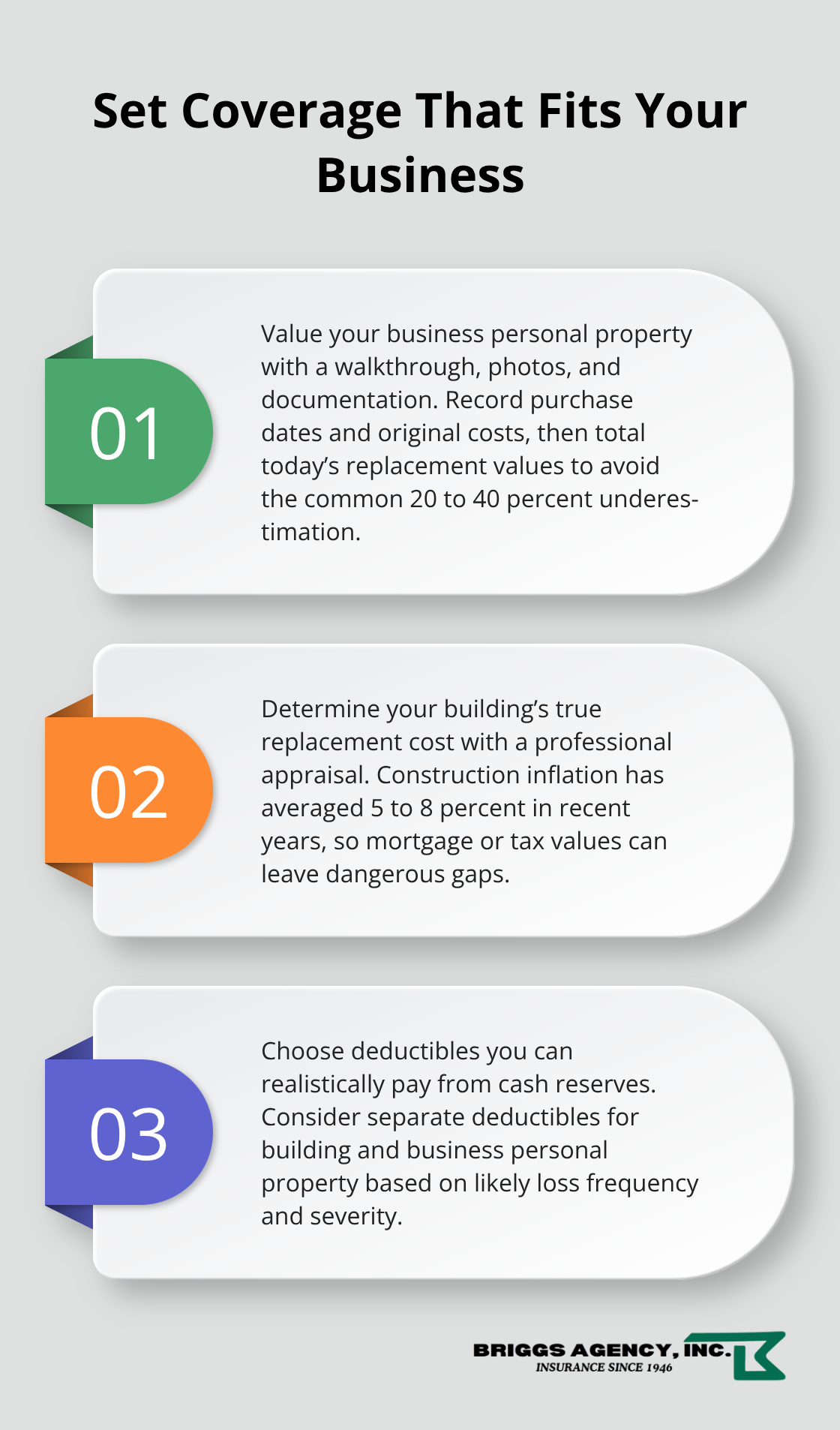
Start with a thorough asset inventory of everything your business owns. Walk through your location and photograph equipment, machinery, furniture, inventory, and tools. Document the purchase date and original cost for each item. Many owners underestimate their personal property value by 20 to 40 percent because they overlook older equipment still in regular use or items stored in secondary locations. Once you complete this inventory, calculate the total replacement cost in today’s dollars, not what you paid years ago.
A five-year-old computer may have cost $1,500 when purchased but costs $1,200 to replace now, while construction equipment often costs significantly more to replace due to inflation and model improvements. This accurate valuation becomes your baseline for determining personal property coverage limits.
Your Building’s True Replacement Cost
Your building’s replacement cost requires professional assessment, not guesswork. Obtain an appraisal from a qualified property appraiser who understands commercial construction costs in your area. Construction inflation averaged 5 to 8 percent annually over the past five years, meaning a building appraised three years ago significantly undervalues today’s rebuild cost. Many business owners use their mortgage value or tax assessment as their coverage limit, which creates dangerous gaps. A $500,000 mortgage on a building that costs $750,000 to fully rebuild leaves you $250,000 short when a total loss occurs.
Your lender’s insurance requirement protects their collateral, not your ability to actually rebuild. Verify your appraisal reflects current labor and material costs in your specific region, then set your coverage limit to that actual replacement value, not lower. This step prevents the financial devastation that strikes when you discover your coverage falls short after a loss.
Deductibles Control Your Out-of-Pocket Costs
Selecting your deductible involves a direct tradeoff between premium cost and financial responsibility. A $500 deductible costs more than a $2,500 deductible because you’re asking the insurer to cover more claims. Calculate how much you can comfortably pay from operating cash flow if a loss occurs. Many business owners select deductibles too low, paying unnecessary premiums, while others pick deductibles so high they couldn’t actually afford to pay them when damage happens.
A realistic deductible aligns with your emergency reserves. If you maintain $10,000 in cash reserves, a $5,000 deductible makes sense. If you operate month-to-month with minimal reserves, a lower deductible protects you from financial strain when claims arise. Consider separate deductibles for different coverage types-your building might carry a $2,500 deductible while business personal property uses a $1,000 deductible, depending on the likelihood and severity of different loss types. Work with an agent who explains how deductibles apply to each coverage section, because the relationship between deductible selection and your actual financial capacity determines whether your policy provides real protection or just theoretical coverage.
Coverage Limits Must Reflect Your True Exposure
Your coverage limits determine the maximum amount the insurer pays for a loss. Setting limits too low creates uninsured losses you’ll absorb personally. Underinsurance remains a primary problem for commercial property owners, with many carrying limits 30 to 50 percent below actual replacement value. This happens because owners underestimate their assets, fail to account for inflation, or select limits based on premium cost rather than actual need.
Business interruption coverage limits require different calculation logic than property coverage. Calculate your monthly fixed expenses (payroll, rent, utilities, insurance, loan payments), then multiply by the number of months you’d need to resume operations. If your monthly overhead is $15,000 and rebuilding typically takes 90 days in your industry, your minimum coverage should be $45,000. This covers your essential expenses during closure, preserving your ability to rehire staff and reopen rather than permanently closing because you couldn’t sustain the financial drain. Many owners select interruption limits based on what feels affordable rather than what they actually need, which defeats the purpose of carrying the coverage.
Working with an Experienced Agent
An experienced local agent compares options across multiple carriers and identifies coverage gaps before loss strikes. They understand your industry’s specific risks and recovery timelines, helping you calculate realistic limits based on your actual exposure. This hands-on guidance ensures coverage actually protects you when crisis strikes, rather than leaving you short when you need it most.
Final Thoughts
Commercial property protection requires three critical decisions: accurately valuing what you own, selecting coverage limits that match your actual replacement costs, and choosing deductibles you can realistically afford. Most business owners make at least one of these decisions incorrectly, discovering the gap only after a loss occurs. Your building’s replacement cost, business personal property inventory, and business interruption needs each demand separate calculation and honest assessment of your financial capacity.
Pull your declarations page and verify your building coverage matches a recent professional appraisal, not an estimate from years ago. Check whether your business personal property limit reflects an actual inventory audit or just a rough guess. Confirm your business interruption coverage extends long enough to sustain your operation during a realistic recovery period, and if any of these elements feel uncertain or outdated, your coverage likely contains gaps that could cost tens of thousands when damage strikes.
Contact Briggs Agency, Inc. to schedule a policy review and ensure your commercial property protection matches your actual business needs. Our experienced local agents represent multiple top-rated carriers and work with you to calculate realistic limits, select appropriate deductibles, and identify coverage gaps before loss occurs.
The information provided in this blog is for general informational purposes only and does not constitute legal, financial, or insurance advice. Coverage options, terms, and availability may vary. Please consult with a licensed professional for advice specific to your situation.
Artificial intelligence may have been used to generate text and images in some blog articles.

