

Crown Point Apartment Policy: Protecting Your Investment and Tenants
Owning an apartment building in Crown Point comes with real financial responsibility. Standard homeowners insurance simply won’t cut it when you’re managing multiple units and tenants.
We at Briggs Agency, Inc. help local property owners understand what a proper Crown Point apartment policy actually covers and why it matters for your bottom line. This guide walks you through the protection you need.
What Your Apartment Building Policy Actually Covers
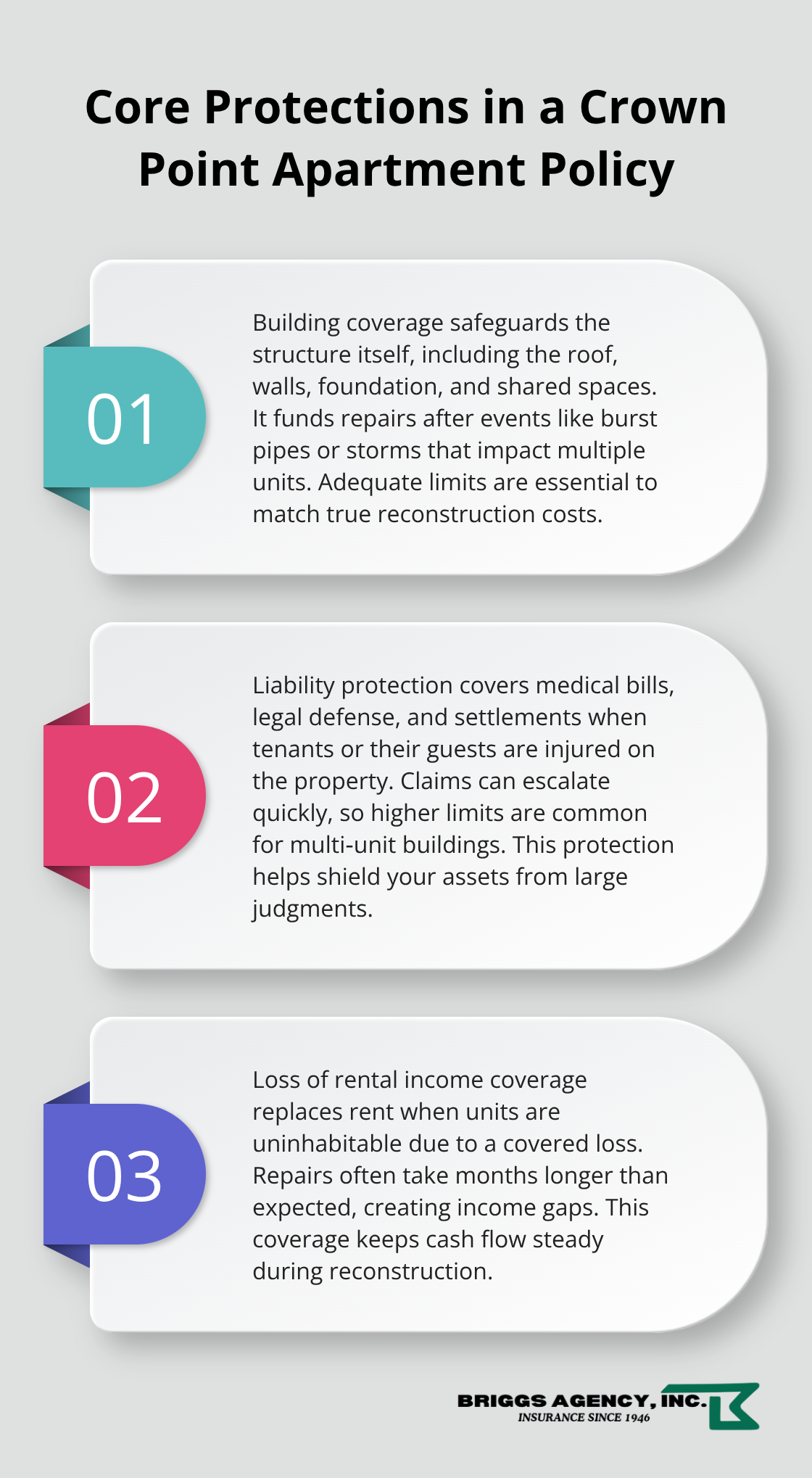
Apartment building insurance protects three distinct areas that homeowners policies ignore entirely. It covers structural damage to the building itself-the roof, walls, foundation, and common areas like hallways, stairwells, and the parking lot. When a pipe bursts in the basement and floods the laundry room, or a storm damages the roof affecting multiple units, your apartment policy pays for repairs. The coverage limits matter significantly here.
According to the National Association of Insurance Commissioners, the average apartment building replacement cost in Indiana involves reconstruction expenses after a loss. Most apartment owners underestimate their coverage needs, leaving themselves dangerously exposed.
Liability Protection When Tenants Get Injured
Liability coverage separates apartment policies from standard homeowners insurance. If a tenant slips on ice in the common stairwell and breaks their leg, they’ll likely sue the building owner. Your apartment policy covers medical expenses, legal fees, and settlements up to your policy limit. The Insurance Information Institute reports that premises liability claims average 15,000 to 25,000 dollars in medical costs alone, before legal representation. Indiana courts have awarded settlements exceeding 500,000 dollars in cases involving serious injuries in apartment common areas. Your policy should include at least 500,000 dollars in general liability coverage, though 1 million dollars is increasingly standard for multi-unit properties. This coverage also protects you if a tenant’s guest suffers injury on the property (which happens more frequently than most owners anticipate).
Income Protection When Units Sit Empty
Loss of rental income coverage reimburses you when a covered event makes units uninhabitable. A fire that damages three units and renders them unrentable for four months during repairs triggers this protection to replace the rent you would have collected. This matters tremendously because reconstruction timelines often exceed expectations. A study from the Insurance Journal found that apartment building repairs average six to nine months after major structural damage, creating significant income gaps for owners. If your building generates 8,000 dollars monthly in rent across twelve units, a six-month interruption costs 48,000 dollars in lost income. Most apartment owners carry this coverage with limits between 12 and 24 months of potential lost rent (depending on their risk tolerance and financial reserves).
Why Your Current Coverage Likely Falls Short
Standard homeowners policies cap coverage at 300,000 to 500,000 dollars-amounts that barely cover one unit in a modern apartment building. Multi-unit properties face exposure that single-family homeowners never encounter. The combination of higher replacement costs, expanded liability exposure, and income interruption risk means apartment owners need specialized protection. Your next step involves assessing whether your current policy actually matches your property’s real value and the income it generates.
Why Standard Homeowners Policies Fail Multi-Unit Properties
Standard homeowners policies were built for single-family homes, not apartment buildings. The coverage limits reflect that reality, and they’re dangerously inadequate for your situation. A typical homeowners policy caps dwelling coverage at 300,000 to 500,000 dollars, which sounds substantial until you calculate what it actually costs to rebuild an apartment building. Reconstruction costs for multi-unit residential properties average around $350 per square foot in Indiana. A twelve-unit building occupying 24,000 square feet would need 8.4 million dollars in replacement coverage. Your homeowners policy covers roughly one-tenth of that exposure. When a major fire or structural failure hits, you pay the difference from your own pocket.
Tenant Occupancy Creates Liability Gaps
Insurance companies exclude tenant-occupied units from standard homeowners policies for a specific reason: tenants create liability exposure that homeowners policies don’t address. If a tenant’s guest slips on common stairs or suffers injury in a shared hallway, the homeowners policy typically denies the claim outright. The policy language specifically excludes injuries that occur in areas where non-family members live or regularly access. This gap becomes catastrophic when you face a genuine liability lawsuit. Indiana courts have awarded judgments exceeding 750,000 dollars in premises liability cases involving apartment common areas. Your homeowners policy won’t cover a penny of that claim.
Common Areas Leave You Completely Exposed
Standard policies also fail to cover damage to common areas and shared spaces that directly affect your rental income. Hallways, stairwells, laundry facilities, parking lots, and roof structures supporting multiple units fall into a gray zone under homeowners coverage. If heavy snow collapses your parking structure and tenants can’t access units for three months, your homeowners policy won’t reimburse the lost rent. If water damage from a failed common roof affects five units simultaneously, standard coverage treats it as a single-unit loss rather than a building-wide event. Apartment building policies specifically address these shared spaces with separate coverage limits that match the actual replacement costs.
The Real Cost of Underinsurance
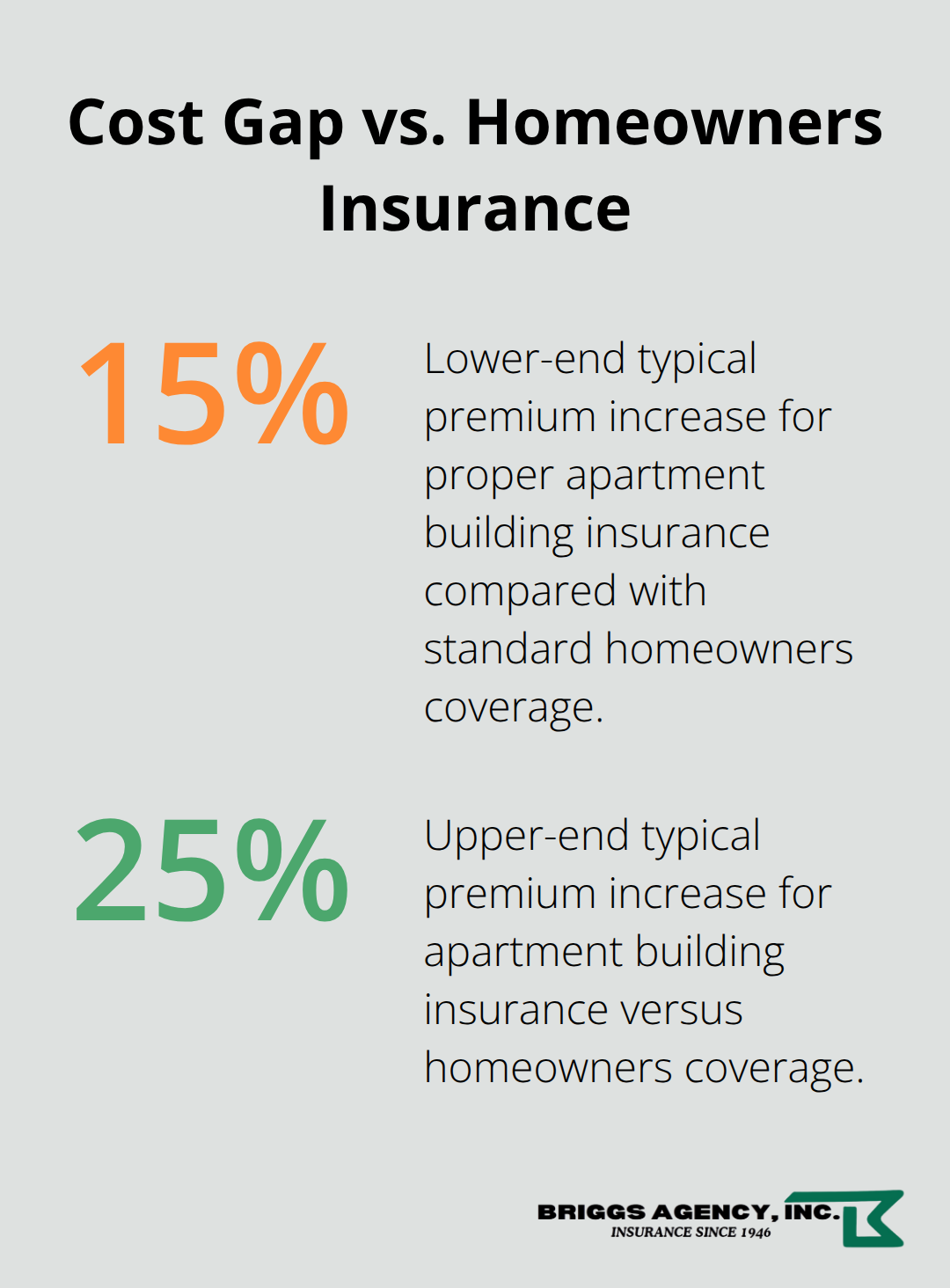
The cost difference between standard homeowners coverage and proper apartment building insurance typically runs 15 to 25 percent more annually, but that premium difference vanishes instantly when you face a claim that homeowners insurance denies. Your building’s income-producing nature demands protection designed for that reality. The question isn’t whether you can afford apartment building insurance-it’s whether you can afford what happens when standard homeowners coverage fails you.
Understanding what apartment building policies actually cover (and what homeowners policies leave unprotected) helps you make the right choice for your Crown Point property.
How to Choose the Right Apartment Building Insurance in Crown Point
Calculate Your Actual Coverage Needs
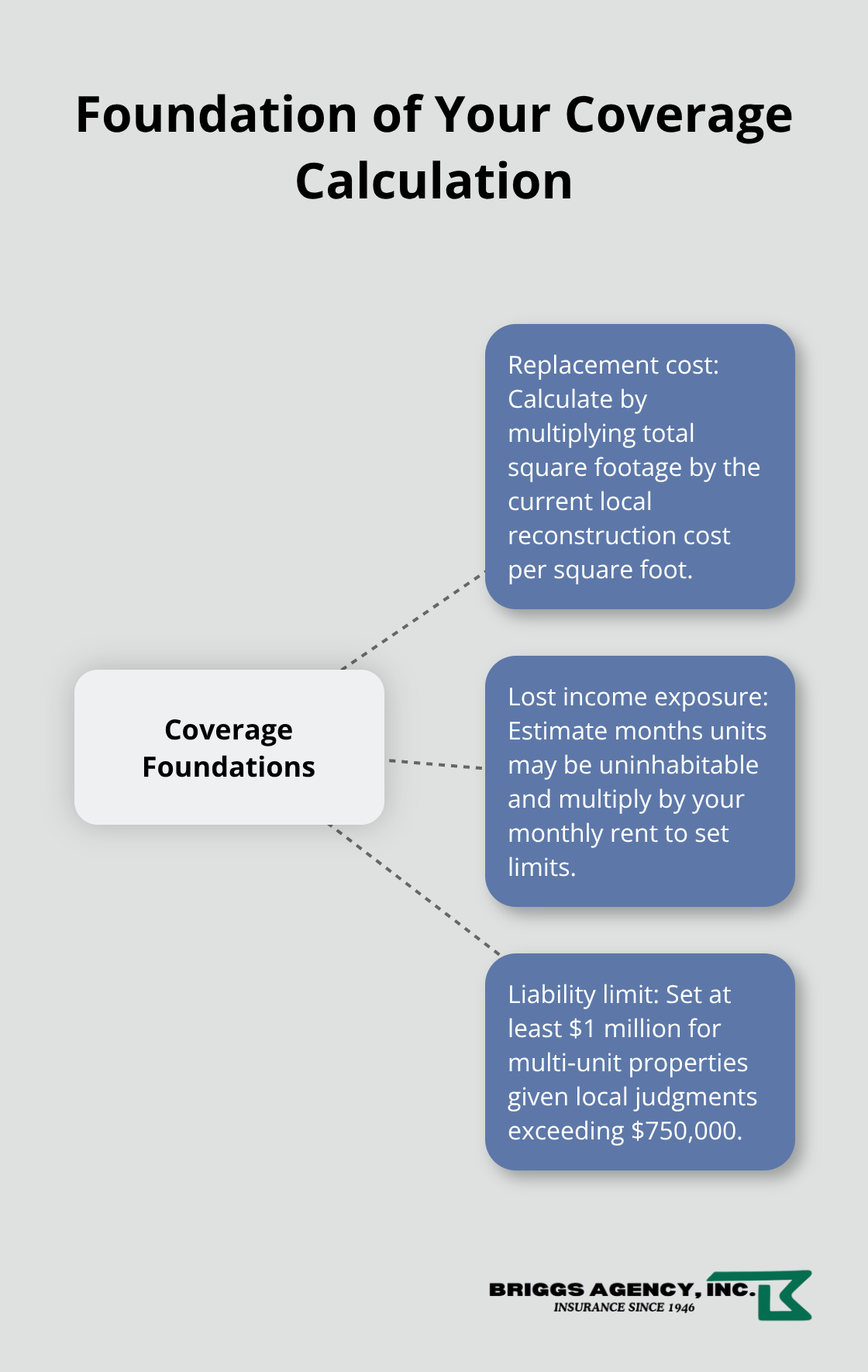
Calculating your actual coverage needs starts with honest numbers about your property. Most apartment owners guess at their requirements rather than measuring them precisely, which is why so many end up underinsured. Start with your building’s replacement cost-not its market value, but what it would genuinely cost to rebuild it from scratch today. Take your total square footage and multiply it by the current reconstruction cost per square foot in your area (Indiana averages around $350 per square foot for multi-unit residential). A twelve-unit building spanning 24,000 square feet needs approximately $8.4 million in dwelling coverage.
Next, calculate your annual rental income across all units and multiply by the number of months your building would likely sit empty during major repairs. If your building generates $96,000 annually in rent, you face $48,000 to $72,000 in potential lost income that your policy should cover.
Your liability exposure depends on tenant volume and local court history. Indiana courts have awarded settlements exceeding $750,000 in apartment premises liability cases, which means your general liability limit should sit at minimum $1 million for any multi-unit property. These three numbers-replacement cost, lost income exposure, and liability limit-form the foundation of what you actually need to request from carriers.
Request Quotes from Multiple Carriers
Comparing quotes requires discipline because insurance companies price policies differently based on building age, construction type, occupancy rates, and loss history. Request quotes from at least three carriers and ask each one the same detailed questions about what they exclude, what deductibles apply to different coverage types, and whether they offer discounts for safety features like fire suppression systems or security cameras. One carrier might charge $2,400 annually for your building while another quotes $3,200 for the same protection.
Don’t automatically choose the lowest price-instead, verify that each quote actually covers your replacement cost calculation and includes the liability limits you determined. A local agent who represents multiple carriers and understands Crown Point’s specific risks proves far more valuable than shopping online alone.
Work with a Local Agent Who Knows Your Market
An agent familiar with your neighborhood knows which carriers respond quickly to claims, whether they’ve denied coverage unfairly in the past, and which ones offer meaningful discounts for your specific property type. Your agent should also review your current policy line-by-line to identify gaps between what you’re paying for and what you actually need. We at Briggs Agency, Inc. represent multiple top-rated carriers, which allows our experienced local agents to compare options and match property owners throughout Crown Point with carriers that understand apartment building risks and price accordingly. An independent agent with access to several carriers can often find coverage options and pricing that online shopping cannot match.
Final Thoughts
Your Crown Point apartment policy protects your investment when standard homeowners insurance fails you completely. The coverage gaps we’ve outlined throughout this guide-replacement costs that exceed your policy limits, liability claims that drain your reserves, and income losses during reconstruction-demand specialized protection designed for multi-unit properties. Without proper apartment building insurance, you face financial devastation that no property owner can afford.
Choosing the right coverage requires more than comparing premiums online. You need an agent who understands Crown Point’s rental market, knows which carriers handle apartment claims fairly, and can match your specific property with appropriate limits and deductibles. That local expertise matters tremendously when you file a claim and need someone who advocates for you with the carrier.
We at Briggs Agency, Inc. have served Crown Point property owners since 1946, helping them navigate insurance decisions that protect their buildings and tenants. Our experienced local agents represent multiple top-rated carriers, which means we can compare options and find competitive pricing tailored to your property’s actual risks. Contact Briggs Agency, Inc. to discuss your apartment building insurance and ensure your investment receives the comprehensive protection it deserves.
The information provided in this blog is for general informational purposes only and does not constitute legal, financial, or insurance advice. Coverage options, terms, and availability may vary. Please consult with a licensed professional for advice specific to your situation.
Artificial intelligence may have been used to generate text and images in some blog articles.

