

Crown Point Contractor Coverage: Smart Protections for Builders
Running a construction business in Crown Point means managing real risks every single day. From job site accidents to equipment theft, the wrong coverage gap can drain your profits fast.
At Briggs Agency, Inc., we’ve helped local builders understand exactly what Crown Point contractor coverage they actually need. This guide walks you through the protections that matter most for your operation.
What Risks Actually Threaten Your Crown Point Construction Business
Job sites in Crown Point expose your business to specific, costly exposures that generic insurance won’t address. A worker steps on a nail and develops an infection requiring weeks off the job-that’s lost productivity and medical costs that workers’ compensation must cover. A subcontractor’s equipment damages a neighboring property during a residential framing project on Broadway-now you’re facing a liability claim that general liability needs to handle. Winter freeze-thaw cycles create scheduling delays and material waste on residential projects, forcing you to extend timelines and absorb labor costs. Equipment theft from job sites happens frequently enough that inland marine coverage becomes a practical necessity, not a luxury. Historic properties in Crown Point often contain asbestos or lead paint, exposing you to environmental liability claims if you’re not specifically protected. These aren’t hypothetical scenarios-they’re the daily realities that separate contractors who stay profitable from those who get wiped out by a single claim.
The Real Cost of Coverage Gaps
Most contractors drastically underestimate how much a single incident costs beyond the obvious medical bill or property damage. According to The Hartford, construction businesses pay about $113 per month on average for general liability insurance, which sounds cheap until you realize what happens without it. A $50,000 property damage claim from a work accident comes directly out of your pocket if you lack coverage.
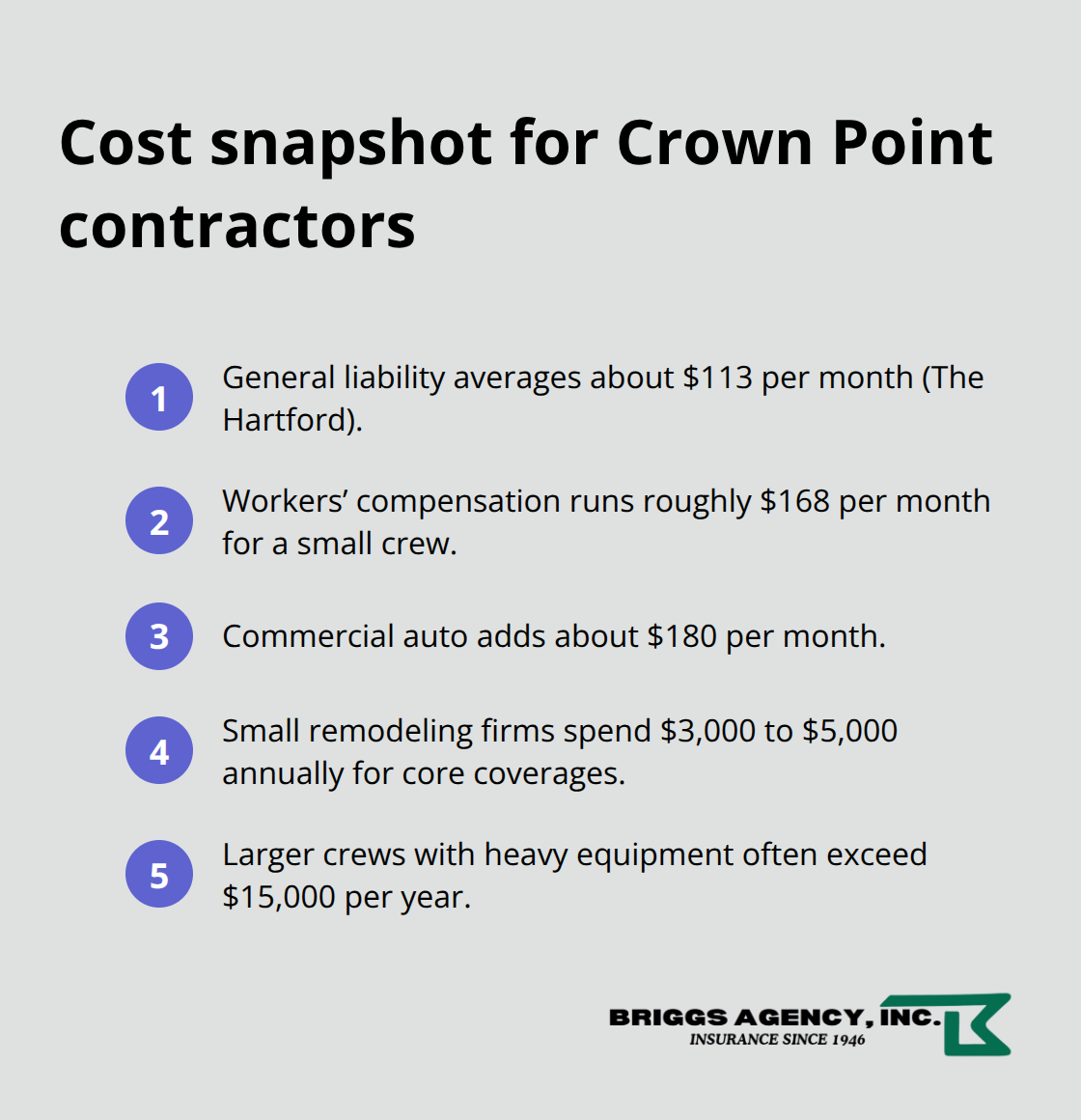
Workers’ compensation is required in Indiana for businesses with employees, and the cost-roughly $168 per month for a typical contractor operation-is far cheaper than paying medical bills and wage replacement yourself. Commercial auto coverage adds another $180 per month, but one vehicle accident without it can bankrupt a small operation. The Allen Thomas Group data shows small remodeling firms with one or two employees spend $3,000 to $5,000 annually for core coverages, while larger crews with heavy equipment exceed $15,000 yearly. That investment protects against catastrophic losses that would otherwise consume your entire year’s profit margin.
Coverage Built for Crown Point Construction Realities
General liability covers third-party bodily injury and property damage arising from your work-someone gets hurt on your job site or your crew damages a neighbor’s fence. Tools and equipment coverage protects saws, nail guns, scissor lifts, and other tools while in transit or stored at job sites, filling gaps that standard commercial property policies leave uncovered. Workers’ compensation covers medical expenses and disability benefits for on-the-job injuries, and it’s mandatory if you have employees. Professional liability protects design-build contractors from claims due to design flaws or work mistakes. Pollution liability specifically covers exposure to silica dust, lead paint, asbestos, or mold during demolition or renovation-critical for Crown Point’s older properties. Builder’s risk insures structures, materials, and work-in-progress during construction, ending when a certificate of occupancy is issued.
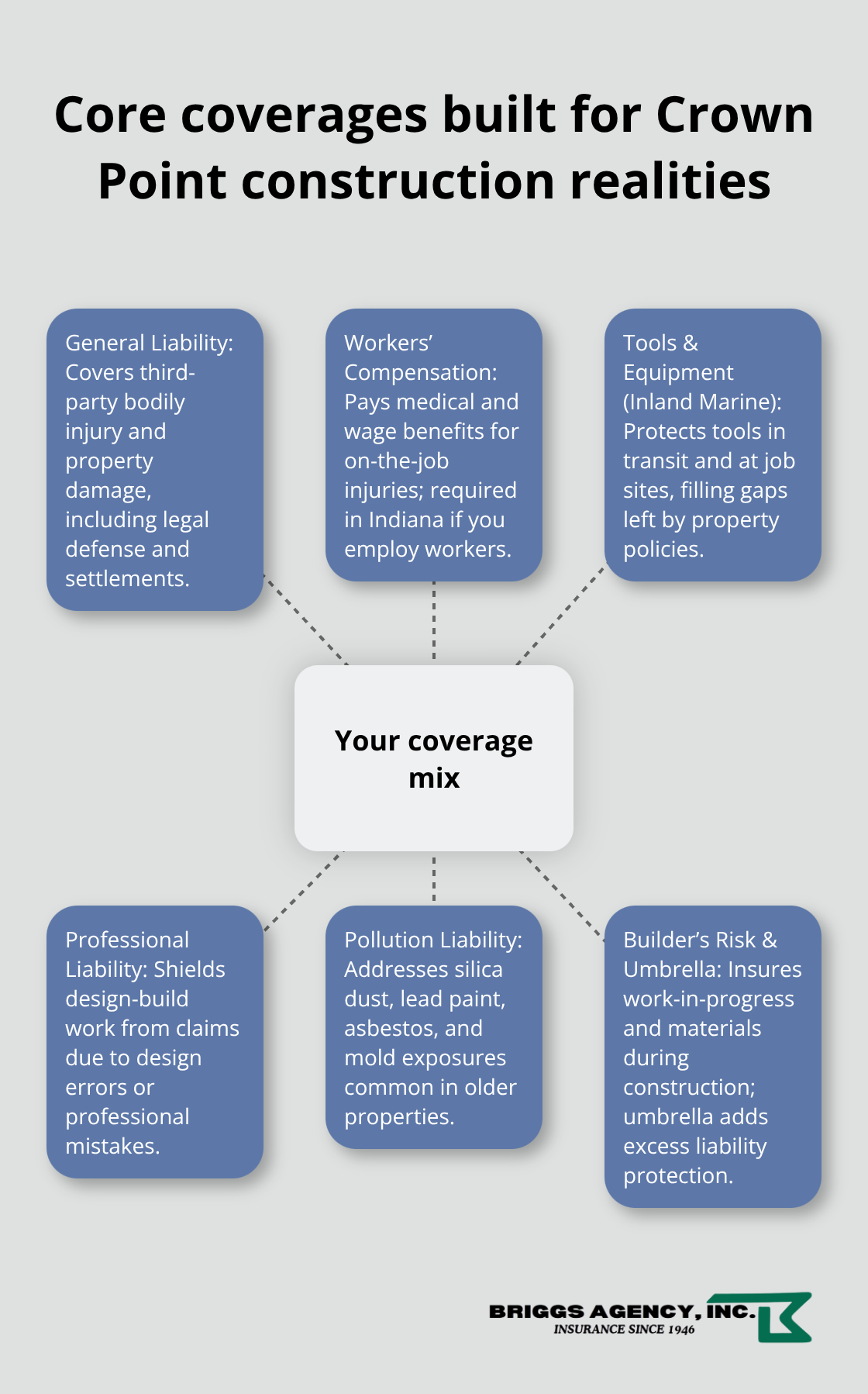
Umbrella liability extends excess protection above your primary policies, shielding personal assets from large verdicts.
Matching Coverage to Your Operation
The right combination depends entirely on your specific project types, crew size, and equipment value. A small residential remodeling crew needs different protections than a firm handling multi-trade commercial projects. Your project mix, the value of tools you transport to sites, and whether you employ workers or work solo all shape which coverages actually matter for your bottom line. An independent agency representing multiple carriers can compare options side-by-side and help you identify exactly which coverages protect your operation and which ones you can confidently skip. This approach saves money by eliminating unnecessary policies while ensuring you don’t face a coverage gap when you need protection most.
The Coverage Mix That Protects Crown Point Builders
General Liability: Your Foundation Protection
General liability forms the foundation for your operation because it covers third-party bodily injury and property damage claims that arise directly from your work. A subcontractor’s equipment damages a neighbor’s fence, a worker injures a homeowner during a residential project, or your crew causes water damage to adjacent property-general liability handles the legal defense and settlement costs. According to industry data, small businesses pay an average of $45 per month for general liability insurance, with annual policy costs ranging from around $250 to over $1,000 depending on your operation.
That cost scales based on your project type, crew experience, claims history, and the specific services you offer. Crown Point builders handling historic property work should factor in higher premiums because older homes carry elevated risk from asbestos, lead paint, and structural complications. General liability is non-negotiable because most clients require proof of coverage before allowing you on site, and many municipalities mandate it for contractor licensing. Without it, a single claim wipes out your savings and forces you to defend yourself without professional support.
Tools, Equipment, and Materials Protection
Tools and equipment coverage protects the saws, nail guns, scissor lifts, and specialized equipment you transport between job sites-coverage that standard commercial property policies explicitly exclude. Crown Point contractors face genuine theft risk at residential and commercial sites, plus weather damage from winter freeze-thaw cycles that damage equipment left exposed. Inland marine insurance covers your tools in transit and while stored at job sites, addressing the protection gap that property policies leave open.
Workers’ Compensation and Specialized Coverage
Workers’ compensation is mandatory in Indiana if you employ anyone, covering medical expenses and disability benefits for on-the-job injuries while shielding you from most employee lawsuits. The typical cost runs roughly $168 monthly for a small crew, making it far cheaper than absorbing medical bills and wage replacement yourself. Professional liability and pollution liability become critical for design-build contractors and firms handling renovation work on older properties where environmental exposures occur.
Finding the Right Mix Without Overpaying
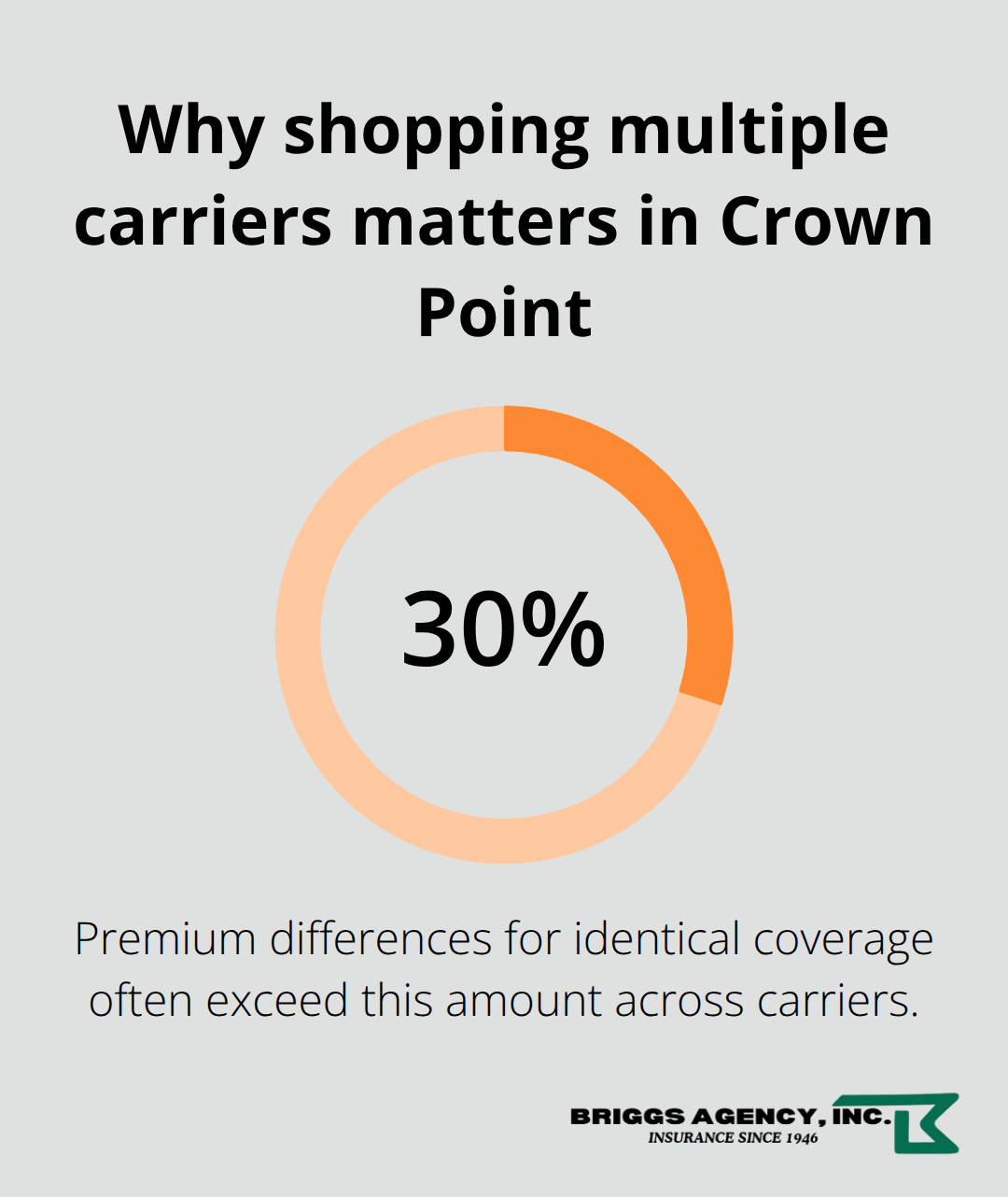
Premium differences for identical coverage often exceed 30 percent across carriers, and comparing quotes from multiple carriers reveals substantial savings opportunities. An independent agent representing top-rated carriers identifies which specialized policies actually apply to your specific operation rather than selling blanket protection you don’t need. Your project mix, crew size, equipment value, and whether you handle historic properties all shape which coverages protect your bottom line and which ones you can confidently skip.
The right coverage combination depends entirely on your specific operation-and understanding your actual exposures helps you assess which protections matter most when you evaluate quotes from different carriers.
How to Pick the Right Coverage for Your Crew
Map Your Actual Job Site Exposures
Start by identifying your actual job site exposures instead of purchasing a standard package and hoping it fits. A residential remodeling crew working on single-family homes faces completely different risks than a firm handling multi-trade commercial projects or historic property renovations. Document your typical project types over the last year-are you mostly interior remodels, new construction framing, demolition work, or a mix? List the tools and equipment you regularly transport to sites, the number of employees on your typical crew, and whether you handle design-build work or strictly follow architect plans.
Crown Point’s older housing stock means if you work on historic properties, you’re dealing with asbestos, lead paint, and mold exposure that requires specific pollution liability coverage. Your project mix directly determines which coverages protect your operation and which ones waste money. A solo remodeler working alone needs different protection than a firm with five employees and a $50,000 equipment inventory.
Understand What Each Policy Actually Covers
Comparing quotes from multiple carriers reveals massive price differences for identical coverage-premium variations often exceed 30 percent across carriers for the same policy limits and deductibles. Request quotes from at least three carriers and specify your exact project types, crew size, equipment value, and whether you handle specialized work like renovation or demolition. When you receive quotes, ignore the total premium for a moment and examine what each policy actually covers.
A $3,000 annual premium sounds better than $4,200 until you discover the cheaper option excludes pollution liability or carries a $2,500 deductible instead of $1,000. Ask each carrier about their experience with contractors in Crown Point specifically-an agent who understands local winter delays, historic property risks, and regional claim patterns steers you toward carriers that price fairly for your specific exposures.
Work with an Agent Who Knows Crown Point Construction
An independent agency representing multiple top-rated carriers completes this comparison work for you, identifying which specialized policies actually apply to your operation and where you can confidently skip unnecessary coverage. A local agent who knows Crown Point construction provides guidance on real exposures rather than generic sales pitches, and you avoid both the catastrophic mistake of under-insuring and the financial drain of over-insuring. Your project mix, crew size, equipment value, and whether you handle historic properties all shape which coverages protect your bottom line and which ones you can confidently skip.
Final Thoughts
The right Crown Point contractor coverage protects your operation from the specific exposures you face every day, not from generic risks that may never affect your business. A residential remodeler working solo needs completely different protections than a firm with five employees handling multi-trade commercial projects and historic property renovations. Your actual project types, crew size, equipment value, and whether you work on older homes determine which coverages genuinely protect your bottom line and which ones drain money without adding real protection.
Local expertise matters because an agent who understands Crown Point construction knows the winter freeze-thaw delays that extend timelines, the asbestos and lead paint exposures in historic properties, and the equipment theft patterns at local job sites. That knowledge shapes which carriers price fairly for your specific risks and which coverages actually apply to your operation. An independent agency representing multiple top-rated carriers completes the comparison work for you, identifying exactly which protections you need and where you can confidently skip unnecessary policies.
Premium variations frequently exceed 30 percent across carriers for identical coverage, meaning a few hours comparing quotes from multiple carriers saves thousands annually while ensuring you don’t face a coverage gap when you need protection most. Contact Briggs Agency, Inc. today to compare quotes and build the Crown Point contractor coverage that fits your crew and your budget.
The information provided in this blog is for general informational purposes only and does not constitute legal, financial, or insurance advice. Coverage options, terms, and availability may vary. Please consult with a licensed professional for advice specific to your situation.
Artificial intelligence may have been used to generate text and images in some blog articles.

