
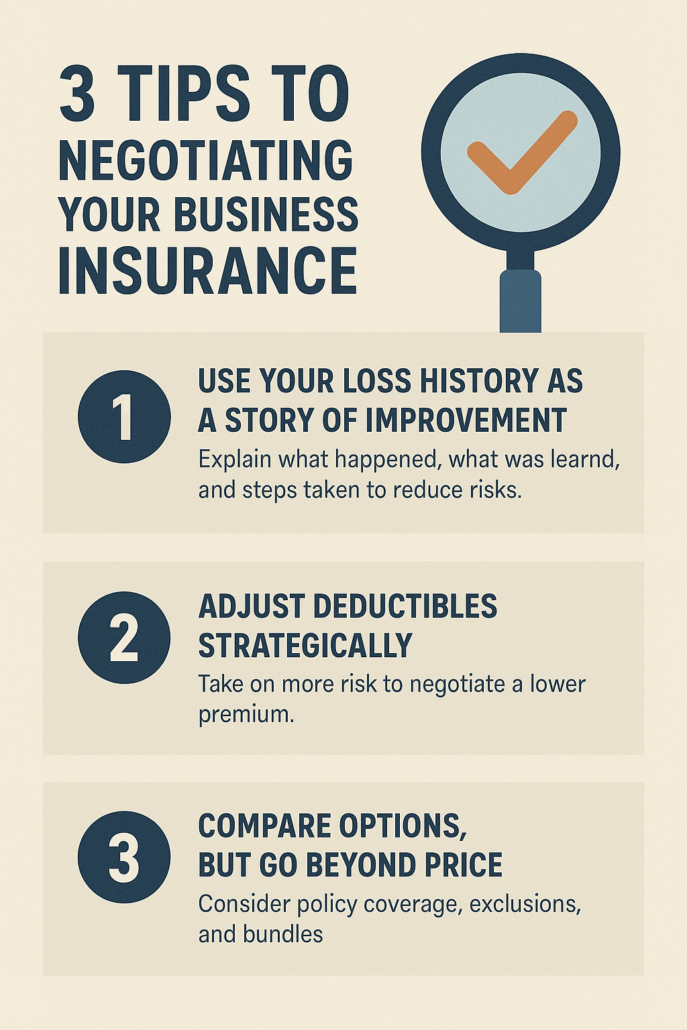
3 Tips to Negotiating Your Business Insurance
When it comes to protecting your business, insurance is not just a box to check. Property and casualty insurance is a major investment—and like any investment, you should approach it strategically. The good news is, small businesses have more room to negotiate with insurance carriers than many realize. By preparing the right information and presenting your business in the best light, you can often secure better terms, broader coverage, or more competitive pricing.
Here are three practical tips to help you negotiate your business insurance more effectively:
1. Use Your Loss History as a Story of Improvement
Insurance carriers place a lot of weight on your claims history. If your business has experienced losses in the past, don’t just hand over the numbers—use them as an opportunity to show growth.
Explain what happened, what was learned, and most importantly, what steps you’ve taken since to reduce the likelihood of similar issues. For example, if your business had a slip-and-fall claim, highlight how you’ve improved safety protocols, added signage, or trained staff. Turning a loss history into a story of proactive improvement helps underwriters see you as a lower risk moving forward.
2. Adjust Deductibles Strategically
Sometimes negotiating isn’t about asking for a lower premium outright—it’s about finding the right balance between risk and cost. By selecting a slightly higher deductible, you may be able to negotiate a significant premium reduction.
For example, moving from a $5,000 to a $10,000 deductible could lower your annual premium enough to free up cash flow for other business needs. If your claims history is strong, the tradeoff can save your business thousands over time. The key is to choose a deductible level your business can comfortably afford in the event of a loss, while using that flexibility as a bargaining tool during renewal.
3. Compare Options, But Go Beyond Price
It’s natural to shop around for the best premium—but don’t make the mistake of comparing quotes based on price alone. Two policies with the same premium might cover you very differently.
When negotiating, ask questions like:
-
Are replacement costs covered, or is coverage based on actual cash value?
-
What exclusions apply?
-
What deductibles are available, and how do they affect pricing?
-
Are there bundled coverage options (like property, liability, and auto) that could save money overall?
By looking beyond the bottom-line premium, you’ll be able to negotiate smarter—choosing the policy that truly protects your business without overpaying for unnecessary extras.
Final Thought
Negotiating business insurance doesn’t mean going toe-to-toe with an insurance company. It means preparing your story, highlighting your strengths, and understanding your options. Small businesses that take the time to approach insurance this way often end up with better coverage, better rates, and stronger long-term partnerships with their insurance providers.
At Briggs Agency, we specialize in helping small and mid-size businesses in Indiana and Illinois navigate this process. If you’re ready to negotiate smarter for your next renewal, we’d be glad to help.
Contact us to schedule an appointment to review your business insurance: https://briggsagency.com/quote/

