
HVAC Contractor Insurance
HVAC contractors keep homes and businesses comfortable throughout the year, but installing, repairing, and maintaining heating and cooling systems can expose a business to a variety of risks. Property damage, employee injuries, vehicle accidents, equipment losses, and liability claims are just some of the challenges an HVAC company may encounter.
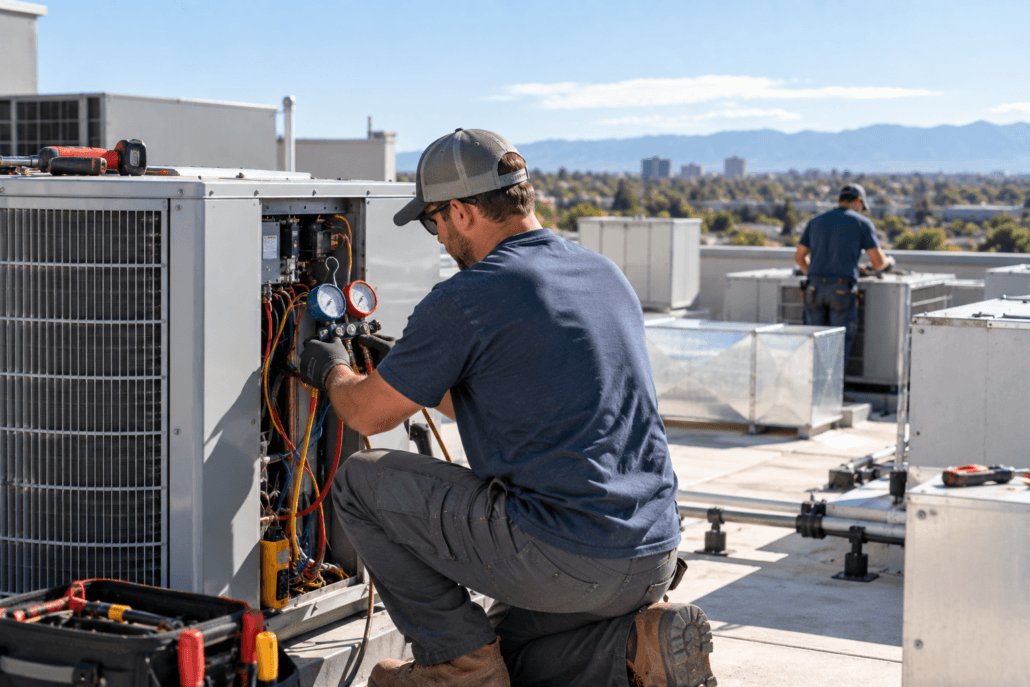 HVAC contractor insurance can help protect your business against certain risks associated with heating, ventilation, air conditioning, and refrigeration work. Whether you’re an independent HVAC technician or operate a company with multiple crews and service vehicles, an insurance program can be tailored around the way your business operates.
The appropriate coverage will depend on factors such as the services you provide, number of employees, vehicles, equipment, annual revenue, and whether you perform residential, commercial, or new construction work.
What Insurance Does an HVAC Contractor Need?
HVAC contractor insurance generally isn’t a single policy. Instead, an insurance program may include several types of commercial coverage selected according to the risks associated with your business.
General Liability Insurance
HVAC contractor general liability insurance may help protect your business against certain claims involving bodily injury or property damage resulting from your operations.
For example, an HVAC technician could accidentally damage flooring while moving equipment, a customer might be injured near a work area, or an installation problem could potentially result in damage to other property. Depending on the circumstances and policy terms, general liability insurance may provide coverage for qualifying claims.
General contractors, property managers, commercial customers, and homeowners may also require proof of liability insurance before allowing an HVAC contractor to begin work.
Workers’ Compensation Insurance
HVAC technicians may encounter ladders, heavy equipment, electrical components, confined spaces, extreme temperatures, and other workplace hazards.
Workers’ compensation insurance may provide benefits for qualifying employees who experience work-related injuries or illnesses. Requirements vary depending on the business structure and where the company operates.
Commercial Auto Insurance
Many HVAC companies rely heavily on service vans, pickup trucks, and other vehicles. Technicians may travel between multiple jobs each day while transporting tools, replacement parts, refrigerants, and equipment.
Commercial auto insurance may provide liability and physical damage coverage for qualifying business-owned vehicles. Additional coverage options may be available depending on how vehicles are owned and used.
HVAC contractors should also discuss tools and equipment carried inside service vehicles with their insurance agent because commercial auto insurance may not automatically cover the contents of a vehicle.
HVAC Tools and Equipment Insurance
HVAC contractors can have a substantial investment in tools, diagnostic equipment, and other portable property. Tools and equipment coverage, often provided through inland marine insurance, may help protect qualifying property while it is being transported, used at a jobsite, or temporarily stored away from the primary business location.
Coverage may be available for items such as:
- Diagnostic equipment
- Vacuum pumps
- Recovery machines
- Power tools
- Hand tools
- Generators
- Specialty HVAC tools
- Other portable equipment
Coverage limits, deductibles, and eligible property can vary by insurance policy.
Commercial Property Insurance
HVAC companies that own or lease an office, warehouse, shop, or storage facility may want to consider commercial property insurance.
Depending on the policy, commercial property coverage may help protect buildings, office equipment, inventory, HVAC units awaiting installation, supplies, and other business property against certain covered losses.
Commercial Umbrella or Excess Liability Insurance
Some HVAC contractors may benefit from additional liability limits beyond those available under their primary policies.
Commercial umbrella or excess liability insurance may provide additional limits over certain underlying insurance policies. Higher limits might also be required when working for general contractors, developers, municipalities, property management companies, or larger commercial customers.
Insurance for Different Types of HVAC Contractors
HVAC companies can perform many different services, and those operations may affect insurance eligibility, coverage, and cost.
Insurance options may be available for contractors specializing in:
- Residential heating and cooling
- Commercial HVAC systems
- Air conditioning installation and repair
- Furnace installation and repair
- Heat pump installation and service
- Ductwork installation
- HVAC maintenance and inspections
- New construction HVAC installation
- Refrigeration systems
- Emergency HVAC services
Specialized operations may require additional coverage or different underwriting considerations. Contractors should accurately describe the services they perform so their insurance program reflects their actual business operations.
HVAC Contractors and Completed Work
HVAC contractors can potentially face claims after a project has been completed. A problem involving an installation, connection, or other completed work could potentially result in property damage or other losses after the technician has left the jobsite.
General liability policies may include products-completed operations coverage for certain qualifying claims arising from completed work. However, coverage depends on the circumstances of the loss and the specific terms, conditions, limits, and exclusions of the policy.
Because completed operations can represent an important exposure for HVAC businesses, contractors should discuss this coverage with an insurance professional.
HVAC Contractors and Subcontractors
Some HVAC businesses use subcontractors for portions of their projects. Insurance companies may have specific requirements regarding subcontracted work and the amount or type of work that can be subcontracted.
HVAC contractors may need to obtain certificates of insurance from subcontractors and verify that appropriate insurance is maintained. Written agreements and additional insured requirements may also be appropriate depending on the project and contractual requirements.
The use of subcontractors should be accurately disclosed when obtaining insurance so the policy can be structured around the contractor’s actual operations.
Protect Your HVAC Business
An HVAC company can represent a significant investment in vehicles, tools, equipment, inventory, employees, and professional reputation. Business insurance can help provide financial protection when certain unexpected accidents or losses occur.
The coverage appropriate for one HVAC contractor may be very different from another. Factors such as residential versus commercial work, annual revenue, payroll, subcontractor usage, equipment, vehicles, and claims history can all influence insurance needs and pricing.
Working with an independent insurance agent can provide access to multiple insurance companies and coverage options, making it easier to build an insurance program appropriate for the specific needs of an HVAC business.
HVAC Contractor Insurance FAQs
What insurance does an HVAC contractor need?
An HVAC contractor’s insurance program may include general liability, workers’ compensation, commercial auto, tools and equipment, and commercial property insurance. Depending on the business, umbrella or excess liability and other specialized coverage may also be appropriate.
Does HVAC contractor insurance cover damage to a customer’s property?
General liability insurance may provide coverage for certain qualifying property damage claims resulting from HVAC operations. Whether a particular loss is covered depends on the circumstances and the terms, conditions, limits, and exclusions of the policy.
Does HVAC contractor insurance cover tools and equipment?
Coverage for HVAC tools and portable equipment may be available through inland marine or contractors tools and equipment insurance. Depending on the policy, coverage may apply while qualifying equipment is at a jobsite, in transit, or temporarily stored away from the primary business location.
How much does HVAC contractor insurance cost?
HVAC contractor insurance costs can vary based on annual revenue, payroll, number of employees, services performed, residential versus commercial work, subcontractor usage, vehicles, equipment values, claims history, and selected coverage limits. Comparing options from multiple insurance companies can help identify coverage appropriate for the business.
